

Spanish Personal Pronouns and Possessive Adjectives

Presentation
•
World Languages
•
9th Grade
•
Practice Problem
•
Easy

Michelle Richau
Used 89+ times
FREE Resource
8 Slides • 11 Questions
1
Spanish Personal Pronouns and Possessive Adjectives
In this presentation, you will learn about two new grammar topics. This presentation includes quiz questions throughout and at the end. Feel free to take your own notes as you go.
2
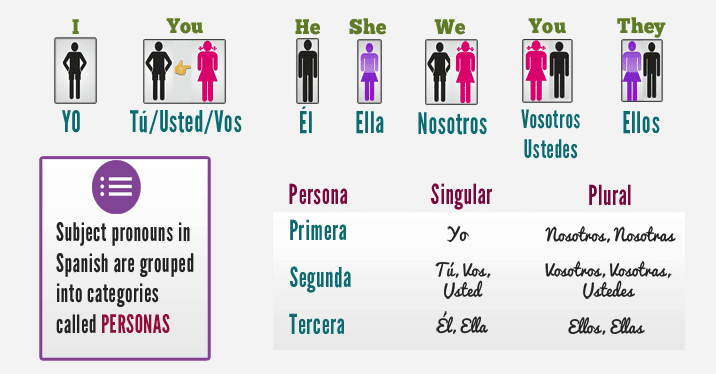
Personal pronouns are the ones we use to talk about people.
In English, we use: I, you, he, she, we, and they.
In Spanish, there's a little bit more to know.
Personal Pronouns
3
Match
Match the following English to Spanish pronouns.
I
You (informal)
You (formal)
She
They
Yo
Tú
Usted
Ella
Ellas
Yo
Tú
Usted
Ella
Ellas
4
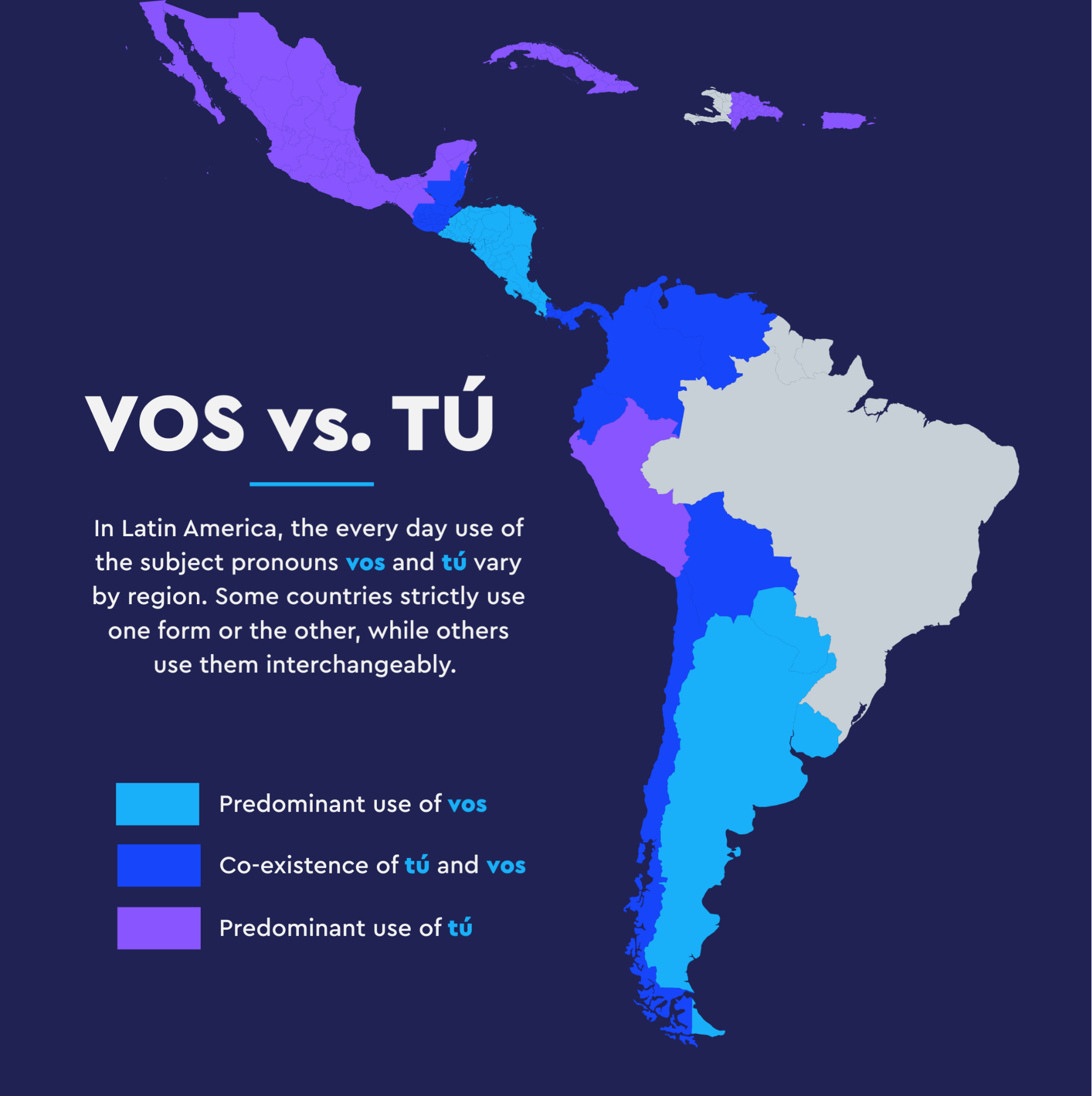
In Spanish, there are 5 total yous.
2 informal yous vary by location.
You may have noticed a lot of yous!
Additionally, usted is the formal you.
Ustedes means you all and is the plural form, for addressing any group. Vosotros is like ustedes, but used in Spain.
5
Drag and Drop
6
Third person forms
For a group of all females, use ellas to say they.
For mixed groups or only males, use ellos.
Plural
We already learned él is he, ella is she, and elle is they singular.
Use these to talk about someone else.
Singular
7

Possessive Adjectives
8

Use possessive pronouns to talk about anything that belongs to someone.
In English, we use: my, your, his, her, our, and their.
In Spanish, you MUST use one of these to show ownership. Apostrophes are NOT used in Spanish.
Possessive Adjectives
9

When you use a possessive adjective, it must agree in gender and number with what belongs to the person.
Notice that su(s) is the form for her, his, and their.
Using Possessive Adjectives
10
Match
Match the following personal adjectives to the items they match in gender and number.
Mis
Nuestras
Tu
amigos
casas
libro
amigos
casas
libro
11
Open Ended
How would you say: Her friends are Panamanian?
12
Review before the quiz!

The following slides have multiple choice questions for you to demonstrate what you learned. Feel free to go back first if you need to.
13
Multiple Choice
Which of the following is NOT a personal pronoun?
tú
vos
ustedes
nosotros
su
14
Multiple Choice
Which of the following is NOT a possessive adjective?
tú
su
nuestro
mi
15
Multiple Choice
Which of the following would be the correct way to say our before the word estudios?
nuestro
nuestra
nuestros
nuestras
16
Multiple Choice
Which word means we?
ustedes
nosotros
nuestros
vosotros
17
Multiple Choice
Cierto o falso: If you don´t want to use a possessive adjective, you can just use an apostrophe instead.
cierto
falso
18
Multiple Choice
Cierto o falso: There are five ways to say you in Spanish.
cierto
falso
19
Open Ended
Use this slide to summarize your learning on the topics of Spanish personal pronouns and possessive adjectives.
Spanish Personal Pronouns and Possessive Adjectives
In this presentation, you will learn about two new grammar topics. This presentation includes quiz questions throughout and at the end. Feel free to take your own notes as you go.
Show answer
Auto Play
Slide 1 / 19
SLIDE
Similar Resources on Wayground

14 questions
Effects of Exploration
Presentation
•
9th Grade
14 questions
French Revolution
Presentation
•
9th Grade
14 questions
West African Empires
Presentation
•
9th Grade
14 questions
Systems of Linear Equations
Presentation
•
9th Grade
13 questions
Spanish 1 / Reading C. Quiz / March 1st
Presentation
•
9th - 10th Grade
16 questions
Ser Review
Presentation
•
9th - 10th Grade
14 questions
TENER - Irregular Verbs Conjugations
Presentation
•
9th Grade
16 questions
Spanish Subject Pronouns
Presentation
•
8th Grade
Popular Resources on Wayground
6 questions
PRIDE Always and Everywhere
Presentation
•
12th Grade
20 questions
Lab Safety Quiz

Quiz
•
6th Grade
26 questions
KOR Review Kahoot Questions
Quiz
•
8th Grade
21 questions
Continents and Oceans
Quiz
•
6th Grade
12 questions
Unit Zero lesson 2 cafeteria
Presentation
•
9th - 12th Grade
20 questions
Parts of Speech
Quiz
•
5th Grade
10 questions
Riddles Riddles fun Riddles
Quiz
•
6th - 12th Grade
16 questions
Subject & Predicate
Quiz
•
5th Grade
Discover more resources for World Languages
20 questions
REGULAR Present tense verbs
Quiz
•
8th - 9th Grade
20 questions
Spanish alphabet
Quiz
•
9th - 12th Grade
25 questions
Spanish Cognates
Quiz
•
7th - 12th Grade
20 questions
Los meses, los dias, y la fecha
Quiz
•
9th - 12th Grade
20 questions
Spanish Adjectives Quiz
Quiz
•
9th Grade
28 questions
Ser vs estar
Quiz
•
9th - 12th Grade
40 questions
Spanish Present Tense Verbs
Quiz
•
9th Grade
15 questions
Presente Progresivo
Quiz
•
8th - 12th Grade