Search Header Logo
Self-Assess Digestive System and Enzymes

Self-Assess Digestive System and Enzymes

Assessment

Presentation

Biology

9th - 12th Grade

Medium

Digestion, Enzymes, NGSS.MS-LS1-7

Standards-aligned

Created by

Tamarah Files

Used 17+ times

FREE Resource

4 Slides • 16 Questions

1

media

2

media

3

media

4

Multiple Choice

Question image

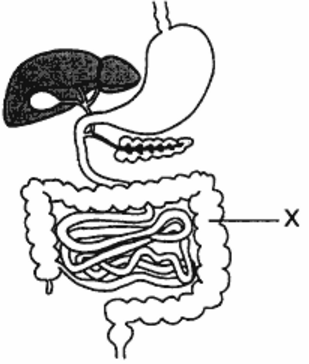
The diagram represents a portion of a human body. The principal function of structure X is to

1

produce amylase

2

produce pepsin

3

absorb water

4

absorb nutrients

5

Multiple Choice

The absorption of nutrients occurs in the:

1

mouth

2

stomach

3

small intestine

4

large intestine

6

Multiple Choice

Question image
What does the mouth do in the digestive process?
1

It takes food and breaks it down chemically and physically

2

It only breaks down chemically

3

It lets you breathe while you eat.

4

It only breaks down physically

7

Multiple Choice

Where is bile produced?

1

Kidney

2

Pancreas

3

Liver

4

Small intestine

8

Multiple Choice

Enzymes and acids are examples of 
1

mechanical digestion

2

chemical digestion

9

Multiple Choice

Where nutrients go after the small intestine has absorbed them.
1

bloodstream

2

stomach

3

esophagus

4

kidneys

10

Multiple Choice

Question image
What organ is this?
1

stomach

2

large intestine

3

small intestine

4

esophagus

11

Multiple Choice

REFLECTION

Do you understand the learning objective below?

Develop and use a model to illustrate the key functions of animal body systems, including food digestion, nutrient uptake, and transport through the body

1
2
3

12

media

13

Multiple Choice

Enzymes are
1

nucleic acids

2

proteins

3

lipids

4

carbohydrates

14

Multiple Choice

Question image
Based on the graph, what temperature does this enzyme work best? 
1

15 C

2

40 C

3

30 C

15

Multiple Choice

Which of the following binds to the active site of an enzyme? 
1

substrate

2

product

3

codon

4

none of the above

16

Multiple Choice

What is the function of an enzyme?
1

enzymes raise the activation energy needed to get a reaction started

2

they slow down chemical reactions

3

they speed up chemical reactions

4

enzymes combine products to form reactants 

17

Multiple Choice

What happens when enzymes are heated to a high temperature?
1

The enzymes die.

2

The shapes of the enzyme are altered or denatured

3

The enzymes' amino acid sequence changes.

4

The enzymes remain the same

18

Multiple Choice

Question image

Cells can only work if their enzymes are functioning. What can you infer from the graph?

1

Cells function best at low pH values

2

Cells function fine at all pH values

3

Cells function best at high pH values

4

Cells do not function well if the pH is too high or too low

19

Multiple Choice

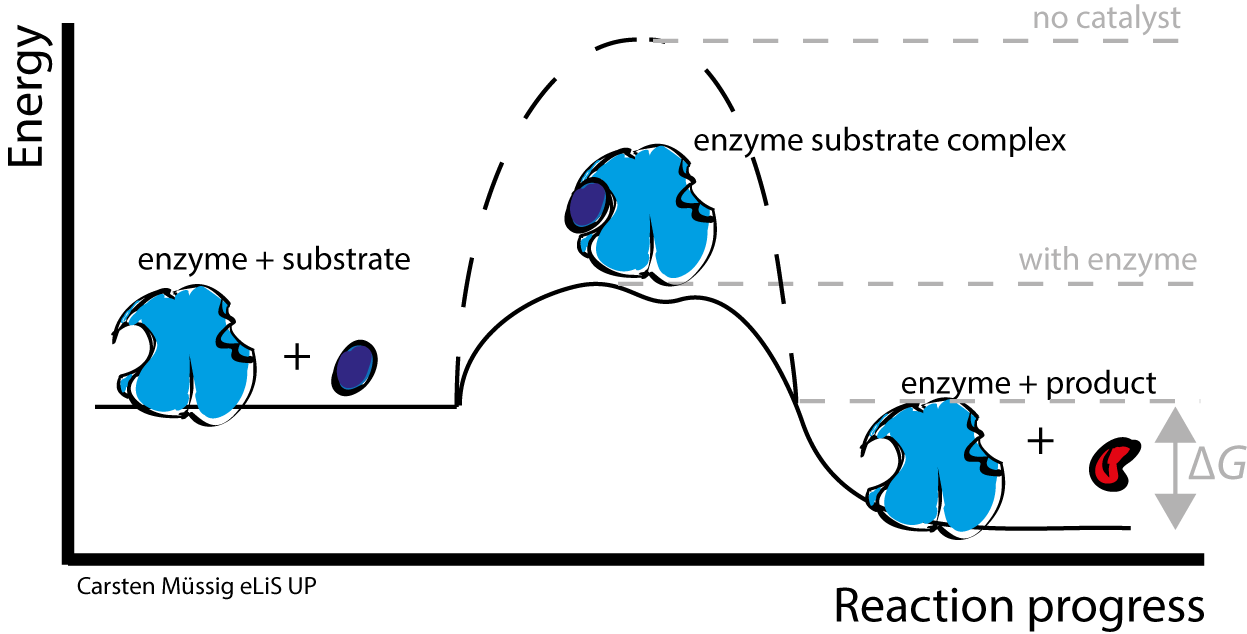
Question image
An enzyme speeds up a reaction by
1

lowering the activation energy.

2

raising the activation energy.

3

releasing energy.

4

absorbing energy.

20

Multiple Choice

REFLECTION

Do you understand the learning objective below?

1. Explain how enzymes speed up chemical reactions by lowering the activation energy of the reaction.

2. Describe the function of enzymes as biological catalysts.

1
2
3
media

Show answer

Auto Play

Slide 1 / 20

SLIDE