

Animal and Plant Cells

Presentation
•
Science
•
KG
•
Easy
+3
Standards-aligned

Vasilios Savopoulos
Used 7+ times
FREE Resource
8 Slides • 17 Questions
1
Cell Organelles & Plant vs Animal Cells
Year 7 Cellsational
2
What we will learn about...
Basic structure of a cell
Organelles and their functions
Difference between plant and animal cells
3
Open Ended
Do you know any cell organelles already? List them here. Have a guess!
4
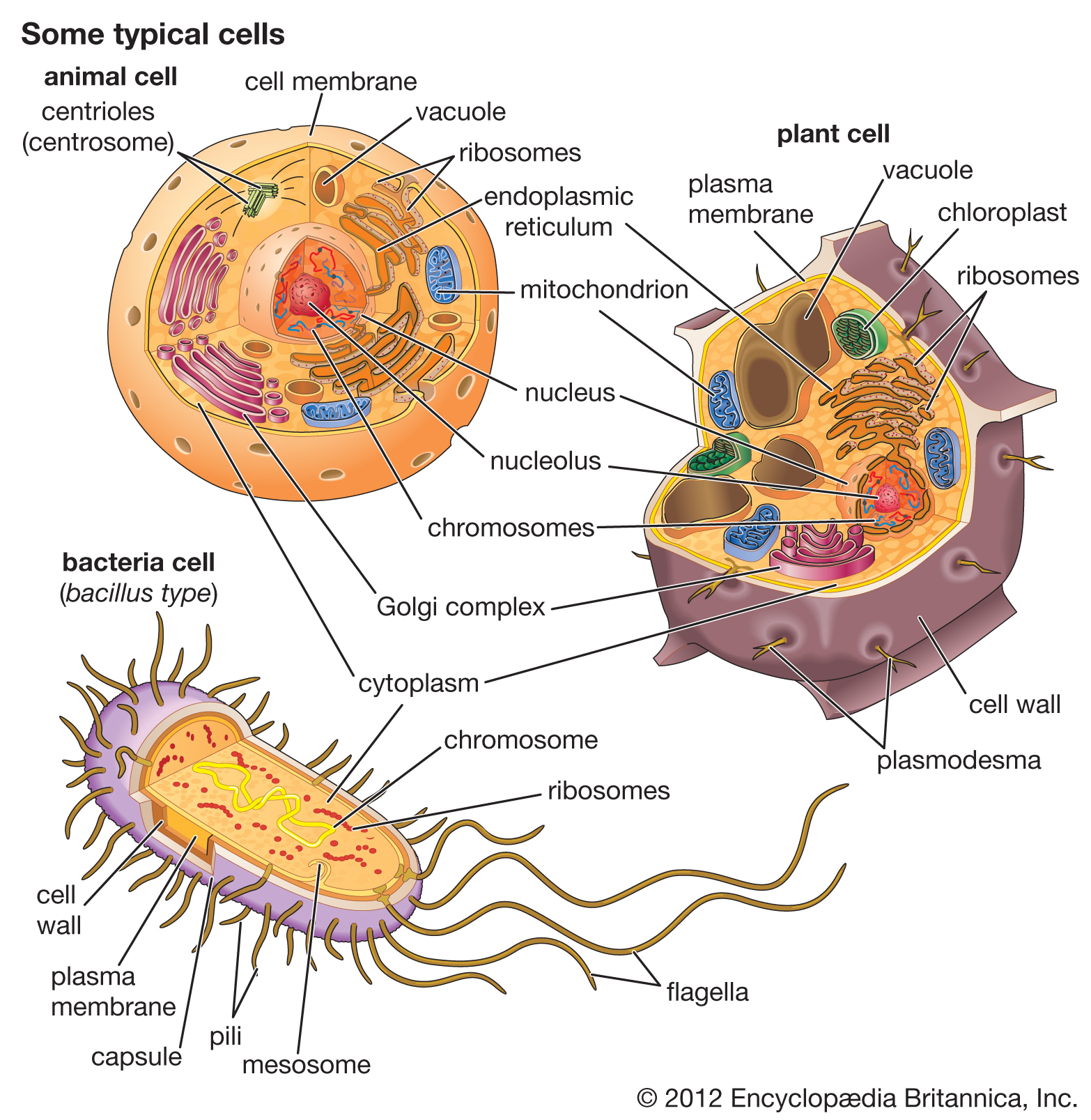
What are organelles?
'Little organs'
Parts of a cell that help it to function
Each one carries out a different function
Some are only in plant cells, and some are in both animal and plant cells
5
Organelles we need to know
Cell membrane
Cell wall
Nucleus
Chloroplast
Cytoplasm
Mitochondria
Vacuole

6
Multiple Choice
To provide protection and form for the plant cell is a function of _________.
Cell Wall
Cytoplasm
Nucleus
Mitochondria
7
Multiple Choice
Breaks down food to release energy. Known as the power plant of the cell.
Endoplasmic Reticulum
Mitochondria
Ribosomes
Cell Wall
8
Cell Wall and Cell Membrane
Only plant cells have a cell wall, it provides rigid structure and support
Animal and plant cells have a cell membrane. It allows substances to move in and out of the cell
Both of them are the 'border' to the cell


9
Nucleus, Cytoplasm, Mitochondria
All 3 found in plant and animal cells
Nucleus is like the brain of the cell. It controls everything. It holds all the genetic material in the cell (the DNA)
The cytoplasm is a clear jelly like substance that fills all the 'empty spaces' - it contains nutrients
Mitochondria are the powerhouses of the cell. They produce energy for the cell to use.


10
Chloroplasts and Vacuole
Only found in plant cells
Chloroplasts are the site of photosynthesis, and give plants their green colour
Vacuoles are a storage facility. They store extra nutrients, like water and sugar. Sometimes animal cells have these, but they are much smaller and not permanent.


11

12
Multiple Choice
To store water, glucose (sugar) materials (building blocks) or wastes is a function of _________.
Cell Wall
Vacuole
Chloroplast
Mitochondria
13
Multiple Choice
The clear, jelly-like material in a cell that supports and protects the cell’s organelles.
Cytoplasm
Cell Membrane
Nucleus
Mitochondria
14
Multiple Choice
Where can you find the chloroplast?
Only Plants
Only Animals
Plants & Animals
Animals & Bacteria
15
Multiple Choice
Why is the nucleus important?
It give the cell its energy
It stores genetic information
It uses sunlight for food
It makes the proteins
16
Poll
How confident do you feel about this content?
Super confident! I get it all
Pretty confident, I get most things
Average, I'm unsure about a couple of things
I don't feel at all confident
17
Multiple Choice
True
False
I don't know
If you say so
18
Multiple Choice
pregnant
pre-existing
paternal
pin size
19
Multiple Choice
they never move
they aren't needed for humans
they are not made of cells
they don't break down
20
Multiple Choice
All organisms are composed of one or more cells.
The cell is the basic unit of structure and organization in organisms.
Cells spontaneously arise from carbon and nutrients carried in the bloodstream.
All cells come from pre-existing cells.
21
Multiple Choice
Cell Wall
Cell Membrane
Nucleus
Mitochondria
22
Multiple Choice
vacuole
nucleus
cell membrane
cell wall
23
Multiple Choice
The protective outer layer that controls what enters and leaves the cell.
Stores information on DNA molecules / Directs and controls the activities of the cell.
A folded membrane that moves materials around inside cells / Also acts as the site of manufacturing materials needed by the cell.
The smallest organelle with a huge job / Makes proteins, which are the building blocks of the body.
24
Multiple Choice
Regulates what enters and leaves the cell
Flexibility
Protective barrier
Structure and support
25
Multiple Choice
make protein
store genetic information
storage of salt, H2O, food, and waste
transports material outside the cell
Cell Organelles & Plant vs Animal Cells
Year 7 Cellsational
Show answer
Auto Play
Slide 1 / 25
SLIDE
Similar Resources on Wayground

20 questions
Short-Term & Long-Term Environmental Changes
Presentation
•
8th Grade
20 questions
The Earth's Layers
Presentation
•
7th - 8th Grade
20 questions
Separation of Mixtures
Presentation
•
6th - 9th Grade
20 questions
Skeletal System
Presentation
•
6th - 8th Grade
20 questions
Properties of Water
Presentation
•
9th - 12th Grade
20 questions
Acids and Bases
Presentation
•
6th - 9th Grade
20 questions
Scientific Method
Presentation
•
8th - 9th Grade
20 questions
Parts of an Atom
Presentation
•
8th Grade
Popular Resources on Wayground
24 questions
PBIS-HGMS Day 10

Quiz
•
6th - 8th Grade
10 questions
HCS SCI 03 Summer School Review 3
Quiz
•
3rd Grade
11 questions
Home Scope
Quiz
•
7th - 8th Grade
15 questions
HCS SCI 05 Summer School Assessment 3 Review
Quiz
•
5th Grade
35 questions
Lufkin Road Middle School Student Handbook & Policies Assessment
Quiz
•
7th Grade
18 questions
Geo 11.3 Area of Circles and Sectors
Quiz
•
9th - 11th Grade