Sound
Presentation
•
Physics
•
6th - 8th Grade
•
Easy
+1
Standards-aligned

Janice Taylor
Used 46+ times
FREE Resource
14 Slides • 47 Questions
1
•What is
sound?
•How do we
hear sounds?
•How do
sounds travel?
2
Sound is a
form of
energy, and it
comes from
vibrations.
3
Multiple Choice
Sound is a form of energy produced by ______________.
Vibrations
Distances
Prisms
Forces
4
Multiple Choice
force
vibrations
instruments
5
Multiple Choice
energy
pitch
volume
6
Multiple Choice
An object that does not vibrate cannot produce
Sound
Light
Heat
Electricity
7
Sound is a type
of energy made
from vibrations.
These vibrations
create sound
waves
8
Multiple Choice
When people speak their ________ vibrate.
Ear drums
Vocal chords
Ears
Tongue
9
Multiple Choice
An object that does not vibrate cannot produce
Sound
Light
Heat
Electricity
10
Multiple Select
tick the sound sources:
11
Multiple Choice
-............................ makes the sound.
light
vibration
12
•What is
sound?
•How do we
hear sounds?
•How do
sounds travel?
13
14
Multiple Choice
vibrates the ear drum
bounces off the ear canal
rotates the ear drum
vibrates the ear canal
15
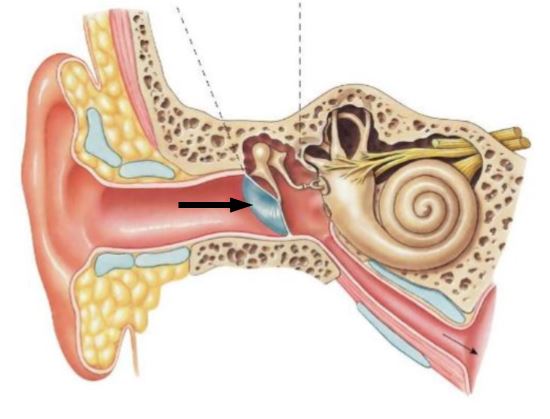
Multiple Choice
What is this?
Ear Drum
Ear Canal
Nerve
Cochlea
16
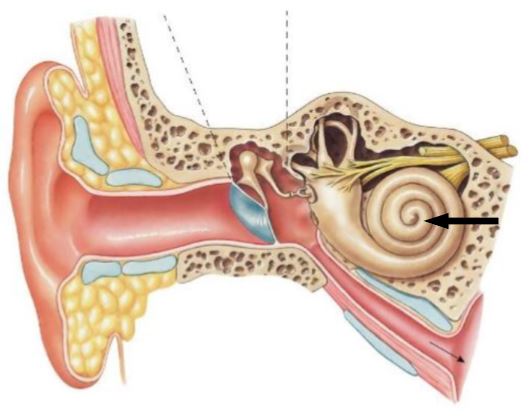
Multiple Choice
What is this?
Nerve
Ear canal
Cochlea
Ear Drum
17
Multiple Choice
How is your eardrum like a real drum?
It produces sound.
It vibrates.
It is frequently struck by the bones in your middle ear.
It is hollow.
18
Multiple Choice
Vibrations are absorbed in the doors and windows
Vibrations are reflected inside the room
Vibrations travel through the door and the window
Vibrations echo in the room
19
•What is
sound?
•How do we
hear sounds?
•How do
sounds travel?
20
Sound waves travel as vibrations passed between particles in solids, liquids and gases.
21
Multiple Choice
Sounds travels in waves
sound travels slow
sound travels fast
sound doesn't travel
22
Multiple Choice
Sound travels fastest in...
solids
liquids
gases
air
23
Multiple Choice
A place where no sound exists is...
in the air
under water
space
all of the above
24
Multiple Choice
gases
solids
liquids
25
Multiple Choice
Gas molecules are packed tightly.
Sound does not travel faster through a solid than a gas.
Solid molecules are packed tightly.
Gas molecules move slowly.
26
Multiple Choice
Space is too far away.
There is no matter in space.
Space is the final frontier
Space has planets.
27
Multiple Choice
Our eyes trick us
Light travels faster than sound
they're two separate things
28
Multiple Choice
Sarah and Maria made a telephone using two cans and a string. It was a very long string. Maria went upstairs in her house and Sarah stayed downstairs. Maria spoke softly into the can. "I can hear you!' Sarah said back. How can this happen?
Sound waves travel through a vacuum.
Sound waves travel from high to low.
Sound waves travel through solids like the string.
Maria talked so loudly that Sarah could hear her without the phone.
29
Multiple Choice
Which sentence BEST describes how sound moves?
Sound can move through solids, liquids, or gases.
Sound can move through empty space or through matter.
Sound can move through solids and liquids but not through gases.
Sound can move through liquids and gases but not through solids.
30
Multiple Choice
How can I produce a sound?
heating an object
hitting an object
moving the mouth
looking an object
31
Multiple Choice
When you hear people in another room
When you hear things underwater
When you are talking to the person next to you
Sound cannot travel through solids
32
Multiple Choice
A kind of energy that travels in waves that you hear
Sound
Crest
Light
Pitch
33
•What is amplitude,
pitch and frequency of a sound?
•How do we measure pitch and frequency of sounds?
34
Amplitude is the volume of a sound wave shown by the height of the wave. Frequency of the wave determines the pitch. High frequency waves produce a higher pitch.
35
Volume or loudness of a sound is measured in decibels.
Frequency of the sound wave is measured in Hertz.
36
Multiple Choice
Amplitude (loudness)
Pace (speed)
Key
Tone
37
Multiple Choice
vibration
volume
pitch
frequency
38
Multiple Choice
vibration
pitch
volume
frequency
39
Multiple Choice
What is the frequency of a sound measured in?
Gigabytes
bits
Hertz
Bytes
40
Multiple Choice
Large vibrations cause ... sounds
Loud
Quiet
Low
Lowest
41
Multiple Choice
Pitch means.....
How far or close a sound is
How sound travels
How high or low a sound is
How vibrations happen
42
Multiple Choice
decibels
liters
sound waves
inches per minute
43
•What is an echo?
•How do animals use echoes?
•How do humans use echoes?
44
Sound waves can be reflected. We hear this reflected sound as an echo.
Hard, smooth surfaces are good at reflecting sound while soft, rough surfaces are good at absorbing sound.
45
Multiple Choice
A wave
An echo
46
Multiple Choice
Reflect
Absorb
47
Multiple Choice
How are echos made?
Echos are made when sound waves are absorbed
Echos are made when sound waves enter our ear
Echos are made when sound waves are reflected off a surface
48
Multiple Choice
Why don't we hear an echo in rooms with lots of furniture?
Because if sound waves meet a hard surface they are absorbed.
Because if sound waves meet a soft surface they are absorbed.
Because sound waves bounce back
Because sound waves don't exist
49
Multiple Choice
Fill in the blank. Sound waves can only bounce off smooth, ____ objects?
Rubber
Soft
Squishy
Hard
50
Some animals such as bats, whales, dolphins and porpoises use a technique called echolocation to locate objects in their environment. They emit high frequency sound waves and use the echoes to find the object.
51
Humans use echoes in oceanography, medicine
and aviation. Boats use sonar to measure depth of the ocean. Radar is used to locate aircraft and ultrasound used
to scan babies.
52
Multiple Choice
Some animals use this to navigate and hunt
frequency
echolocation
vibration
53
Multiple Choice
Mouse
Dog
Bat
54
Multiple Choice
too loud
too quiet
high frequency
low frequency
55
Multiple Choice
Shipping
Military
Medical use
Firefighter
56
Multiple Choice
True
False
57
Multiple Choice
Ultrasound waves are sound waves that are too low pitched for the human ear to hear.
True
False
58
Multiple Select
Which of these animals use(s) echolocation? Choose all that apply.
bats
dolphins
elephants
cats
owls
59
Multiple Choice
________________________ is the use of echos, or reflected sound, to find objects.
ultrasound
sonography
echolocation
reflexology
60
Multiple Choice
_______________________ is a a system that uses sound waves to determine locations of objects.
GPS
sonar
ultrasound
echolocation
61
Multiple Choice
How does an echo occur?
sound travels faster than light
sound bounces off solids
sound is absorbed by solids
•What is
sound?
•How do we
hear sounds?
•How do
sounds travel?
Show answer
Auto Play
Slide 1 / 61
SLIDE

Similar Resources on Wayground
59 questions
Unit 1, Lessons 1-5: Staves, Notes, Pitches
Presentation
•
6th - 8th Grade
57 questions
Newton's 3rd Law Lesson
Presentation
•
6th - 8th Grade
57 questions
Producers, Consumers, Decomposers, Detritivores
Presentation
•
6th - 8th Grade
54 questions
Food Chains
Presentation
•
5th - 8th Grade
54 questions
Impressionism
Presentation
•
6th - 8th Grade
54 questions
1st Quarter - Module 1 - Week 1
Presentation
•
7th Grade
58 questions
Theoretical and Experimental Probability
Presentation
•
7th Grade
54 questions
Vertebrates & Invertebrates
Presentation
•
7th Grade
Popular Resources on Wayground
20 questions
STAAR Review Quiz #3
Quiz
•
8th Grade
20 questions
Equivalent Fractions
Quiz
•
3rd Grade
6 questions
Marshmallow Farm Quiz
Quiz
•
2nd - 5th Grade
20 questions
Main Idea and Details
Quiz
•
5th Grade
20 questions
Context Clues
Quiz
•
6th Grade
20 questions
Inferences
Quiz
•
4th Grade
19 questions
Classifying Quadrilaterals
Quiz
•
3rd Grade
12 questions
What makes Nebraska's government unique?
Quiz
•
4th - 5th Grade
Discover more resources for Physics
10 questions
Genetics Vocabulary Pre-Test (2026 Version)
Quiz
•
8th Grade
15 questions
Absorption, Reflection, Refraction
Quiz
•
4th - 6th Grade
23 questions
Acap Physical Science Review
Quiz
•
8th Grade
10 questions
Digital vs Analog
Quiz
•
8th Grade
11 questions
Magnets and Electromagnets Milestone Review
Quiz
•
4th - 7th Grade
22 questions
Kinematics (Motion) Quiz
Quiz
•
8th Grade