

Body Systems

Presentation
•
Science
•
7th - 8th Grade
•
Practice Problem
•
Medium
Standards-aligned

Camilla McKindlay
Used 25+ times
FREE Resource
34 Slides • 22 Questions
1
Body Systems

2
3
What is a Cell?
Your body is made up of trillions of tiny building blocks called cells.
They are so small that you cannot see them without a microscope.
Your cells are where most of your body's work is carried out.
Cells need raw materials to work with.
Your body is organised in a wat that makes sure that the cells are supplied with the raw materials they need.

4
Multiple Choice
5
Multiple Choice
6
7
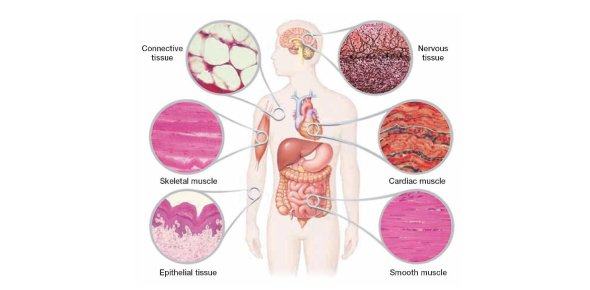
Tissues
Cells of the same type, that carry out the same job in the body are grouped together to form tissues.
An example of tissues are musles and nerves.
8
Organs
At the next level of organisation, tissues are grouped to form organs.
An example of an organ is the stomach or brain.
An organ is a structure that contains at least two different types of tissue that work together to complete a task.
Organs are arranged into organ systems that have two or more different organs that work together.

9
Multiple Choice
10

11
Multiple Choice
12
Systems of the body
Respiratory system - takes in oxygen
Digestive system - makes food available in a form the body can use
Circulatory system - carries the food and oxygen to the cells where it is needed
Excretory system - gets rid of the waste
Muscular and Skeletal system - supports the body and enables it to move

13
Multiple Choice
14
The Digestive System

15
The digestive system
The food you eat taste good but is not in a form that can be used by your cells. Breat, meat, fruit and veg like those in a bun, are made of complex chemicals. These have to be broken down, or digested, into simple, soluble chemicals that can be used by your cells to provide energy and for growth and repair.
Digestion is the process of breaking down food into a usebale form and making hte nutrients avaliable.

16
Digestive System
Digestion takes place in your digestive system.
Your digestive system consists of two main parts

17
A digestive tract
The pathway the food takes through a series of organs.
The first part of the digestive trat is the mouth

18
Organs off to the side of the digestive tract
These organs produce chemicals that assist with digestion

19

20
Fill in the Blanks
21
Multiple Select
22
23
Mechanical digestion
When food is broken down into smaller pieces (eg cutting a slice of bread into smaller pieces)
Mechanical digestion is a physical change because no new substances are made

24
Chemical Digestion
Large, complex substances in the food are broken down into simpler chemicals
Chemical digestion produces new, smaller chemicals that the body can absorb
Chemical digestion is a chemical change because new substances are produced.

25
26

In The Mouth
27
In the mouth
The process of digesetion starts with your teeth.
Four types of teeth are: incisors, canines, premolars and molars
Incisors: the four pairs of teeth at the front and their job is to bite off pieces small enough to chew
Premolars and Molars: these teeth grind the food into smaller and smaller pieces as you chew
Canine: No significant function in humans. In animals these teeth are used to hold food as it is torn apart

28
Biting and chewing food is mechanical digestion, but chemical digestion can also happen in the mouth
As food is being digested mechanically, it is mixed with saliva
Saliva is watery liquid produced by the salivary glands
Saliva contains a chemical that starts to change any starch (complex sugar) in the food to glucos (a simple and easily absorbed sugar).
Saliva moistens the food, making it slippery, slimy and easy to swallow
The tongue rolls the food into a ball (called bolus), which is pushed down into the next part of the system, the oesophagus.

29
Fill in the Blanks
30
Fill in the Blanks
31
Multiple Choice
32
Multiple Choice
33
Multiple Choice
34
Multiple Select
35

36

Swallowing
37
Swallowing
Your oesophagus is a long muscular tube that has the mouth at one end and the stomach at the other
Muscles of the oesophagus contract behind the ball of food to push it down the tube. The muscles then relax
The process of food being pushed down the oesophagus is known as peristalsis
The epiglottis is a flap of skin that closes the end of the windpipe to ensure the food does not go to your lungs
Sphin separates the oesophagus from the stomach. It opens to allow food to pass through, then closes to stop food or stomach juices from flowing back up. It can be seen in the picture to the right.

38

39
The Stomach
Is shaped like a bag
Food is stored in the stomach for 1-6 hours
The muscular walls of the stomach contract and relax, churning the food (this is what causes your stomach to make noises). This further digest the food mechanically along with mixing in gastric juice.

40
The Stomach
Gastric juice is produced by pecial cells in the stomach wall. Gastric juice contains:
hydrochloric acid - a strong acid that kills many of the bacteria that may have entered the body with the food
mucus - creates a layer on the lining of the stomach and prevents the stomach digesting itself
digestive juices - contains chemicals that start the digestion of protein, the main nutrient found in meat.

41
Open Ended
42
Multiple Choice
43
Multiple Select
44
Multiple Select
45
Small Intestine
The duodenum is the first part of your small intestine.
Two tubes entering the duodenum carry chemicals important for digestion.
These tubes come from the pancreas and the liver.

46
Small Intestine
The pancreas is not part of the digestive tract.
The pancreas produces pancreatic juice.
Pancreatic juice contains chemicals that help digest carbohydrates (starches and sugars), fats and protein.

47
Small Intestine
The liver is the body's largest internal organ and performs over 500 different chemical processes.
It is a vital organ, meaning that you cannot survive without it.
The process in the liver that is improtant for digestion, is it produces bile
Bile is a greenish liquid responsible for mechanical digestion of fats
Bile works in a way similar to dishwashing detergent. It causes large pieces of fat in the food to be broken down into tiny pieces so they can be digested more easily.

48
Multiple Choice
49
Multiple Choice
50
Multiple Select
51
Multiple Choice
52
Multiple Choice
53
The small intestine
The walls of the duodenum are muscluar
The muscles squeeze and churn food, breaking it down and making sure the digestive chemicals are mixed through
The chemicals change the food into a form that can be used by the body. By the time the food is entering the lower part of the small intestine, it is in the form of very tiny particles.

54
The small intestine
After the first part of the small intestine (duodenum) is a very long, narrow tube.
This is the longest part of your digestive tract - uo to 6m long!
The small intestine is called small due to its diameter (3cm), not its length.
In this part of the small intestine, the digested food is absorbed into the body
The inner lining of the small intestine is lined with villi (villus for one), which are microscopic 'fingers' that allow nutrients to pass
Within the villi are capillaries (tiny blood vessels that are only one cell thick), which allow the nutrients to move from the digestive system into the blood.

55

56
Small Intestine
The nutrients that pass from the small intestine are:
Fatty acids and glycerol produced from digestion
Amino acids from the digestion of proteins
Glucose from the digestion of carbohydrates
Glucose is your bodies main source of energy

Body Systems
Show answer
Auto Play
Slide 1 / 56
SLIDE


