Search Header Logo
Galaxies and the Universe I SP23

Galaxies and the Universe I SP23

Assessment

Presentation

•

Science

•

11th Grade

•

Hard

Created by

John Stewart

Used 2+ times

FREE Resource

24 Slides • 12 Questions

1

media

2

Multiple Choice

Which of these describes a star?

1

a mass in which fusion occurs through the strength of gravity

2

an object that can reflect light in space so that we can see it

3

a huge ball of gas undergoing combustion

4

a small fragment of glowing crystal left over from a supernova

3

Multiple Choice

How close is the nearest star (besides the Sun) from us?

1

4.2 light-years

2

4.2 million kilometers

3

420 light-years

4

420 million kilometers

4

media

5

media

6

Multiple Choice

What is the name for a cloud of gas and dust in space?

1

nebula

2

planet

3

protoplanetary disk

4

Oort cloud

7

media

8

media

9

media

10

Open Ended

Why do scientists categorize things like types of animals or minerals?

11

media

12

media

13

media

14

media

15

media

16

media

17

Multiple Choice

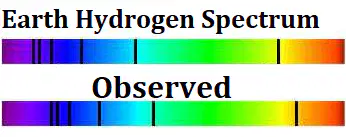
Question image

The image shows the hydrogen emission spectrum on the top and a spectrum of an observed object in space on the bottom. Which of these statements is true?

1

The observed object is red-shifted, so it is moving away.

2

The object is red-shifted, so it is moving toward us.

3

The object is blue-shifted, so it is moving away.

4

The object is blue-shifted, so it is moving toward us.

18

media

19

media

20

media

21

Drag and Drop

When a very large star goes supernova, it will leave behind a

. When a medium large star goes supernova, it will leave behind a ​
. When a small star leaves the red giant stage, it will leave behind a ​
.
Drag these tiles and drop them in the correct blank above
black hole
neutron star
white dwarf
red dwarf
blue giant
black dwarf
white hole
wormhole
brown dwarf
electron star

22

media

23

media

24

media

25

media

26

media

27

media

28

media

29

Balloon Expansion Demonstration

30

Lightning Round!​

31

Multiple Choice

We call groups of stars that make patterns like Orion and the Big Dipper in the night sky ___.

1

constellations

2

the Zodiac

3

galaxies

4

nebulae

32

Multiple Choice

How long is a day on the Moon?

1

29.5 Earth days

2

15 Earth days

3

365.25 Earth days

4

7 Earth days

33

Multiple Select

Which of these planets has at least one moon?

1

Mercury

2

Venus

3

Earth

4

Mars

34

Multiple Choice

Which solar system body besides Earth has lakes?

1

Titan

2

Neptune

3

Io

4

Pluto

35

Multiple Choice

Which of these solar system bodies is not a dwarf planet?

1

Triton

2

Pluto

3

Ceres

4

Eris

36

Multiple Choice

Which layer of the Sun produces the light we see on Earth?

1

photosphere

2

corona

3

core

4

radiative zone

pattern-tertiary
media

Show answer

Auto Play

Slide 1 / 36

SLIDE