
Changing Ecosystems

Presentation
•
Science
•
8th Grade
•
Practice Problem
•
Easy
Standards-aligned

Allison Cimarusti
Used 7+ times
FREE Resource
9 Slides • 3 Questions
1

Changing Ecosystems
How do ecosystems change over time?
2

Vocabulary
Dynamic system: any system that is characterized by constant change
Ecological succession: the predictable way that ecosystems change from one
type to another over time
Evidence: information obtained by observation or experimentation
3

1. Ecosystems Change Over Time
Dynamic system: any system that is characterized by constant change
-Small or large changes
-Gradual or sudden
Gradual change happens as resources fluctuate and populations rise and fall.
Ecological succession: the predictable way that ecosystems change from one
type to another over time
-Doesn’t happen overnight
4

1. Ecosystems Change Over Time
Sudden changes to ecosystems happen very quickly (ex.volcanic eruptions)
-Can be natural (hurricanes, fires, floods) or human-caused (pollution,
construction, farming)
-Can cause temporary or permanent changes
5
Multiple Choice
What is a dynamic system?
A system that never changes
A system that constantly changes
A system that has changed before
A system that will change eventually
6

2. Changes to Living Parts of Ecosystems
Prairie dogs
-Ground dwelling squirrels
-Dig elaborate tunnels that provide shelter for sleeping, hiding, and raising young
-Grassland environments
Prairie dog populations are harmed when their ecosystems are destroyed by humans, which effects
the population of other burrowing animals.
These changes in different populations are evidence that the living parts of ecosystems affect one
another.
-Populations of species that benefit from prairie dogs decrease; populations of species that don’t
benefit from prairie dogs increase
Evidence: information obtained by observation or experimentation
7
Open Ended
Name one species that benefits from prairie dogs and explain how:
8

3. Changes to Nonliving Parts of Ecosystems
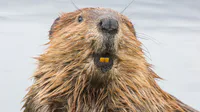
Beavers chop down trees to build dams to create non-flowing water to live in
-Trees being cut down allows for more sunlight to reach the ground where
the trees used to be
-Dams being built creates ponds where rivers used to be and species that
live in still water can reside there
These changes to the nonliving parts of the ecosystem change populations of
organisms in the ecosystem, these changes then change the populations that
live in those ecosystems.
9
Open Ended
Summarize how beavers effect nonliving parts of their ecosystem:
10

4. Rebuilding Wetland Buffers
Storms in the Gulf of Mexico cause flooding that typically creates large coastal
wetlands with the sediment brought from the flood that protect areas from that
flooding. People have changed the path of the river and some places don’t get
those sediments anymore, or the protection.
1990s - engineers wanted to find a way to rebuild the wetlands to protect from
flooding and provide habitats for wildlife.
Criteria: restore wetlands
Constraints: expensive, could cause additional flooding
11

4. Rebuilding Wetland Buffers
Sediment Diversions Rebuild Wetlands
In the 1940s (Louisiana) workers dug a channel to divert water from a river into
the Gulf to divert that river away from communities and avoid flooding.
-Diverting the river caused the river to deposit sediment into the Gulf and
new wetlands were formed (at a rate of 2.8 sq. km. per year)
-The wetlands continue to expand create habitats and protecting
communities from flooding
12

4. Rebuilding Wetland Buffers
Protecting Local Communities from Flooding
The Wax Lake solution wouldn’t work well in New Orleans
-Permanent river diversion is difficult to construct in high populated areas
-Levees are used to prevent flooding but they don’t allow the flow of sediment or water
-Making a hole in a levee can be dangerous and cause more flooding
The Caernarvon Freshwater Diversion built into a levee is a door that opens and closes
-Allows for flow of water and sediment when there is no flooding and can be closed
when there is a risk of flooding
-Caused wetlands to start to grow again (so good solution! 🙂
)
Changing Ecosystems
How do ecosystems change over time?
Show answer
Auto Play
Slide 1 / 12
SLIDE
Similar Resources on Wayground

10 questions
Density Practice Live Lesson
Presentation
•
8th Grade
7 questions
Category 1 Review (8.5B)
Presentation
•
8th Grade
9 questions
Praise, Criticism, or Feedback
Presentation
•
8th Grade
10 questions
Coordinate Plane Reflections
Presentation
•
8th Grade
10 questions
UA3 Test Corrections 8.7A
Presentation
•
8th Grade
11 questions
Engineering Design Process
Presentation
•
7th Grade
8 questions
The Chesapeake Bay Resources Review
Presentation
•
8th Grade
11 questions
Moon Phases
Presentation
•
8th Grade
Popular Resources on Wayground
10 questions
Safety Day 2026 – Student Review

Quiz
•
9th Grade
21 questions
Continents and Oceans
Quiz
•
6th Grade
20 questions
Parts of Speech
Quiz
•
5th Grade
16 questions
Subject & Predicate
Quiz
•
5th Grade
25 questions
Multiplication Facts
Quiz
•
5th Grade
12 questions
Map Skills
Quiz
•
3rd Grade
22 questions
Continents and Oceans
Quiz
•
5th Grade
15 questions
Rounding Decimals
Quiz
•
5th Grade
Discover more resources for Science
20 questions
Newton's Laws of Motion
Quiz
•
8th Grade
15 questions
potential and kinetic energy
Quiz
•
8th Grade
21 questions
Newton's Laws of Motion
Quiz
•
8th Grade
20 questions
Elements, Compounds and Mixtures
Quiz
•
8th Grade
10 questions
Exploring Chemical and Physical Changes

Interactive video
•
6th - 10th Grade
20 questions
Physical vs Chemical Changes
Quiz
•
8th Grade
20 questions
Conduction, convection, and Radiation Practice
Quiz
•
8th Grade
21 questions
Waves and Wave Properties
Quiz
•
6th - 8th Grade