

The Geological Time Scale

Presentation
•
Science
•
9th - 12th Grade
•
Practice Problem
•
Easy
+3
Standards-aligned

Jennifer Lodge
Used 3+ times
FREE Resource
59 Slides • 17 Questions
1
What is the Geologic Time Scale?
We divide time in to different units depending on how long a time frame we are looking at
We don't calculate a road trip in seconds, or how long it took to build a skyscraper in minutes
When we look at very long periods of time like the history of Earth, we need large units to reflect that
Grade 8 Ohio | Lesson 6.4 & 6.5

2
What is the Geologic Time Scale?
The Geologic Time Scale: A record of the geologic events and the evolution of life forms as shown in the fossil record.
Inference are made on the principle of uniformitarianism
processes operate today also operated in the past
Example: Gravity always existed
Grade 8 Ohio | Lesson 6.4 & 6.5

3
What is the Geologic Time Scale?
The Geologic timescale was first developed comparing index fossil world wide
allowed scientists to set a relative age of rocks
radioactive dating later helped to get more exact ages in some instances
Grade 8 Ohio | Lesson 6.4 & 6.5
4
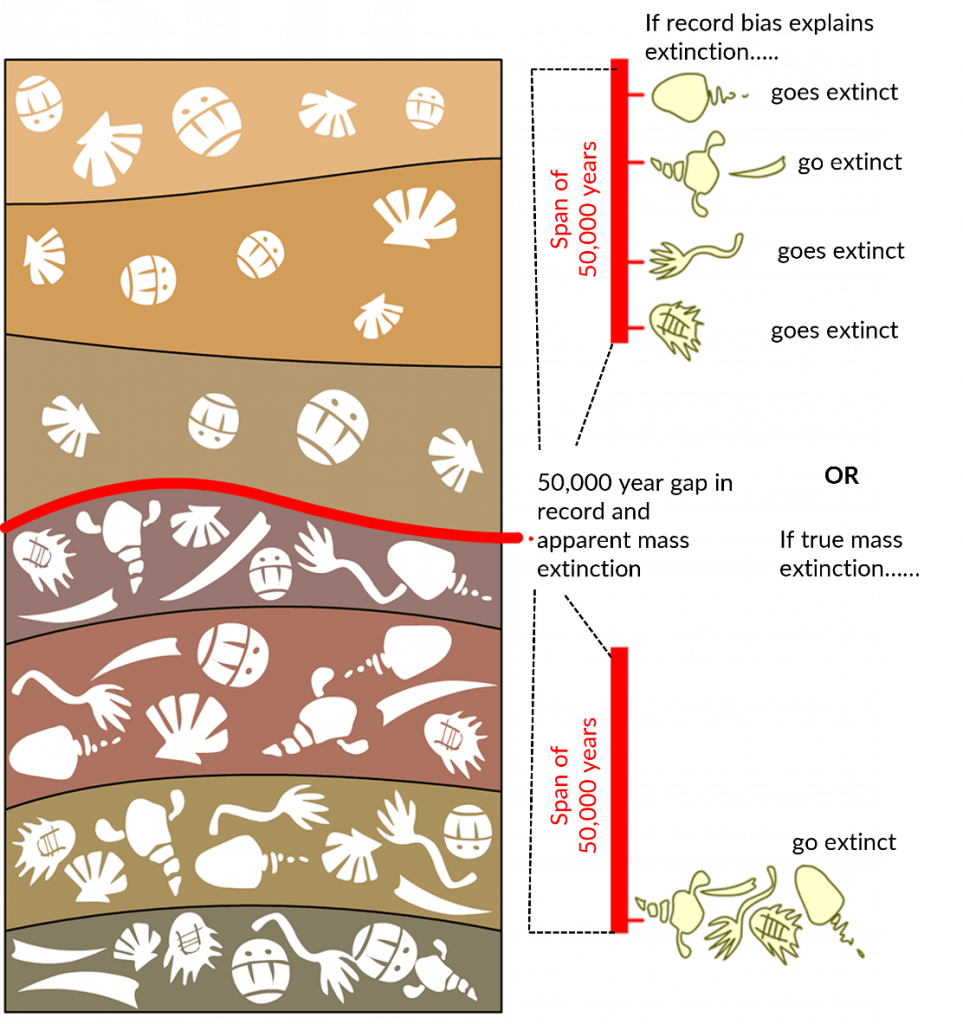
Dividing Geologic Time
In the fossil record, scientists found major changes in lifeforms happening at certain times
These changes are used to set beginning and end points for certain times
Grade 8 Ohio | Lesson 6.4 & 6.5
5
Precambrian Time
The beginning of Geologic time
~88% of Earth's History
Ended 542 million years ago (MYA)
Few Fossils survive
Grade 8 Ohio | Lesson 6.4 & 6.5

6
Eras
We Divide all time after the precambrian time into three large periods of time known as Eras
Paleozoic
Mesozoic
Cenozoic
Grade 8 Ohio | Lesson 6.4 & 6.5

7
Periods
Period: A unit of geologic time that is part of an era
Example: The Mesozoic era is made up of three periods
Triassic
Jurassic
Cretaceous
Named for areas where rocks and fossils from that period were first described
Grade 8 Ohio | Lesson 6.4 & 6.5

8
Drag and Drop
9
The Formation of the Earth
The oldest rocks on Earth have been found to be 4 billion years old, but Earth was formed before that
Earth collided with something else in space
One piece broke off and formed the moon at the same time
Analyzing Earth and moon Rocks show both to be about 4.6 Billion Years Old
Grade 8 Ohio | Lesson 6.4 & 6.5

10
The First Atmosphere
Early Earth was made up of gases like hydrogen and helium
Not conducive to life
Solar flares from the sun destroyed the first atmosphere
Grade 8 Ohio | Lesson 6.4 & 6.5

11
The Second Atmosphere
Two things formed the Earths 2nd atmosphere which contains
Volcanic Eruptions
Collisions with comets
Comet: A ball of dust & ice that orbits the sun
The second atmosphere contains Carbon dioxide, oxygen, nitrogen, and other trace gases
Grade 8 Ohio | Lesson 6.4 & 6.5

12
The Oceans & Continents
When the Earth first formed, it was to hot for water to remain in liquid state
As the Earth cooled, water condensed to form the oceans
The cooling also allowed rocks to harden and form the tectonic plates
Grade 8 Ohio | Lesson 6.4 & 6.5

13
Early Organisms
The exact beginning of life is unknown
Fossils show single celled organisms lived 3.5 billion years ago, and all other life evolved from them
Early lifeforms received energy from the sun through photosynthesis, which released Oxygen into the atmosphere
Some Oxygen bonded to create Ozone, which blocks out Ultraviolet waves
Grade 8 Ohio | Lesson 6.4 & 6.5

14
Multiple Choice
Earth Formed approximately _____ billion Years ago
4.6
1000
400
3.5
15
Multiple Choice
The first life on Earth appeared approximately _____ billion Years ago
4.6
1000
400
3.5
16
Dropdown
17


18
Multiple Choice
What Eon, Era, Period and Epoch are you living in today?
Phanerozoic, Cenozoic, Quaternary, Holocene
Triassic, Jurassic, and Cretaceous
The Cambrian period
19
You have likely changed a lot since you were born. Just imagine all of the changes the Earth has been through since it formed 4.6 bya!

20
Timelines are a tool that can show the relative order in which these events happened, from the earliest to the most recent. Ands it can tell us the actual, or absolute date when each occurred.

21
Learning about events and when they happened helps us piece together our biological history. We can see connections and major progressions in evolution and biodiversity.

22
Multiple Choice
The geologic time scale is divided into units of time based on what?
a specific amount of time
the evolution of humans
major or catastrophic events
no one knows
23

24
Multiple Choice
Who is the Greek god of the Underworld?
Zeus
Hades
Poseidon
Athena
25

26

27

28
Multiple Choice
Check for comprehension: Which Eon marked the first oxygen and life forms on the Earth
Hadean
Archean
Proterozoic
29

30

31
Multiple Choice
What is the supercontinent proposed by Wegener from last time?
Laurasia
Gondwanaland
Pangaea
Rodinia
32

33

34

35

36

37
38
39

40

41

42

43

44
Multiple Choice
What period marked the first vertebrates?
Cambrian
Ordovician
Mississipian
Permian
45
Multiple Choice
What period marked the first mass extinction?
Cambrian
Ordovician
Mississipian
Permian
46

47
48
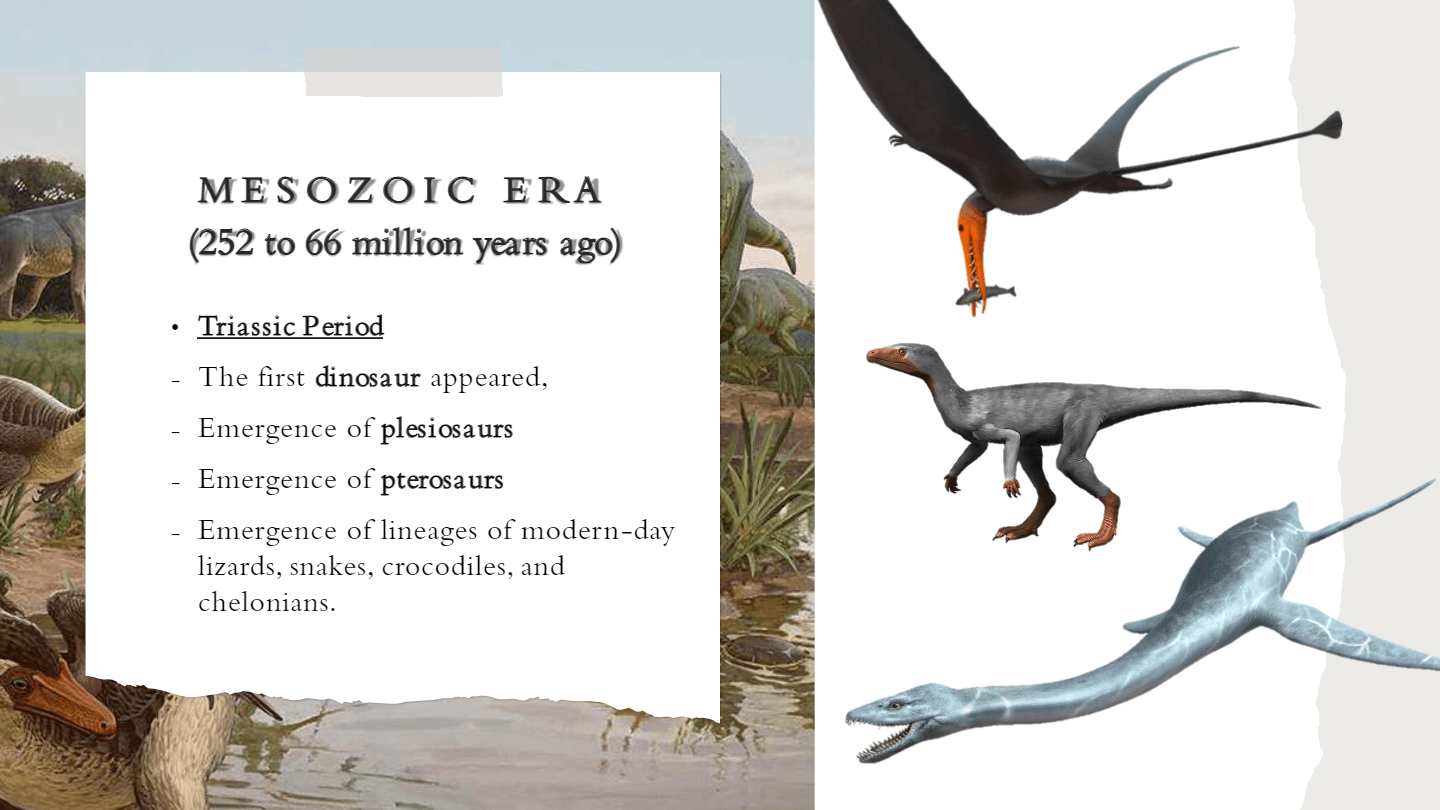
49

50

51

52

53
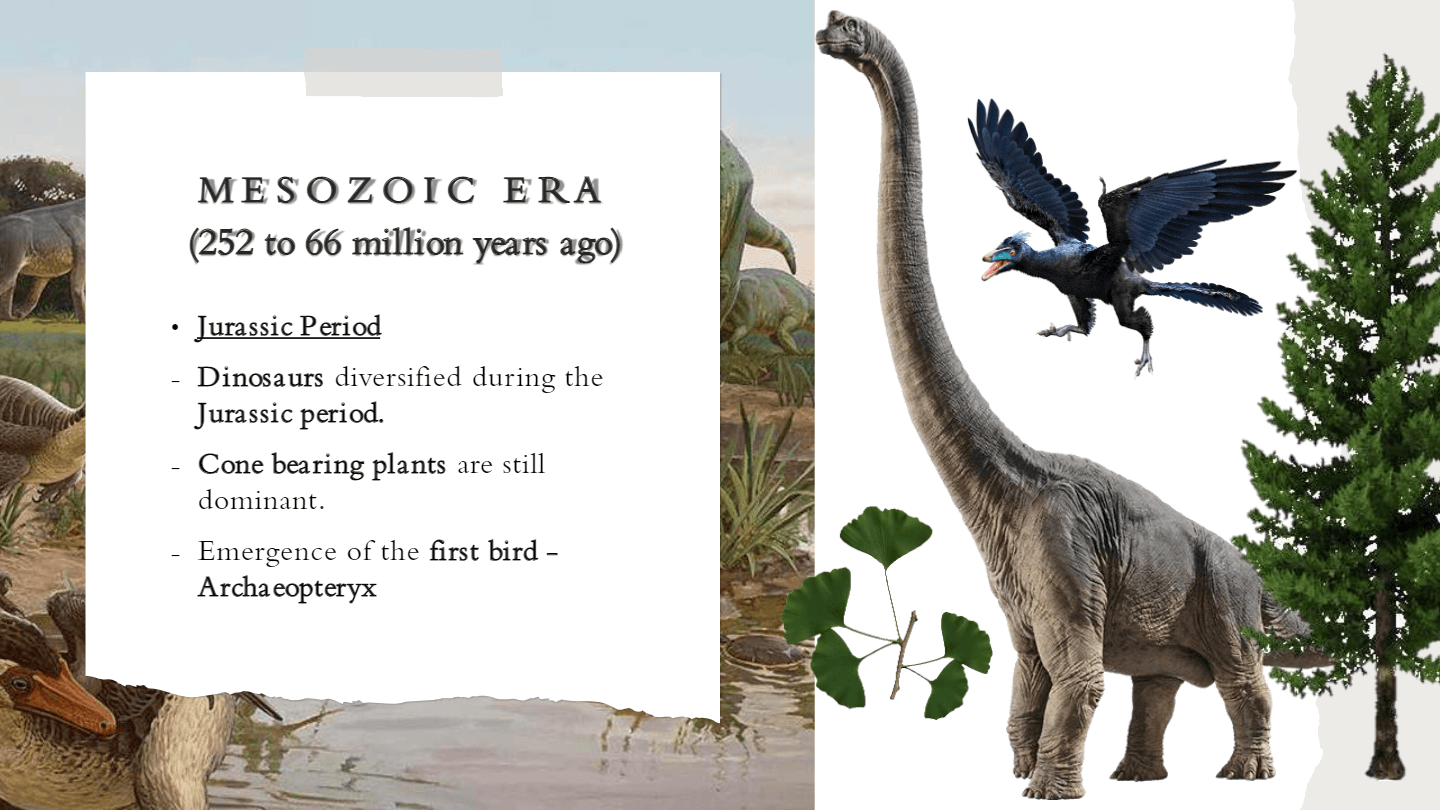
54

55
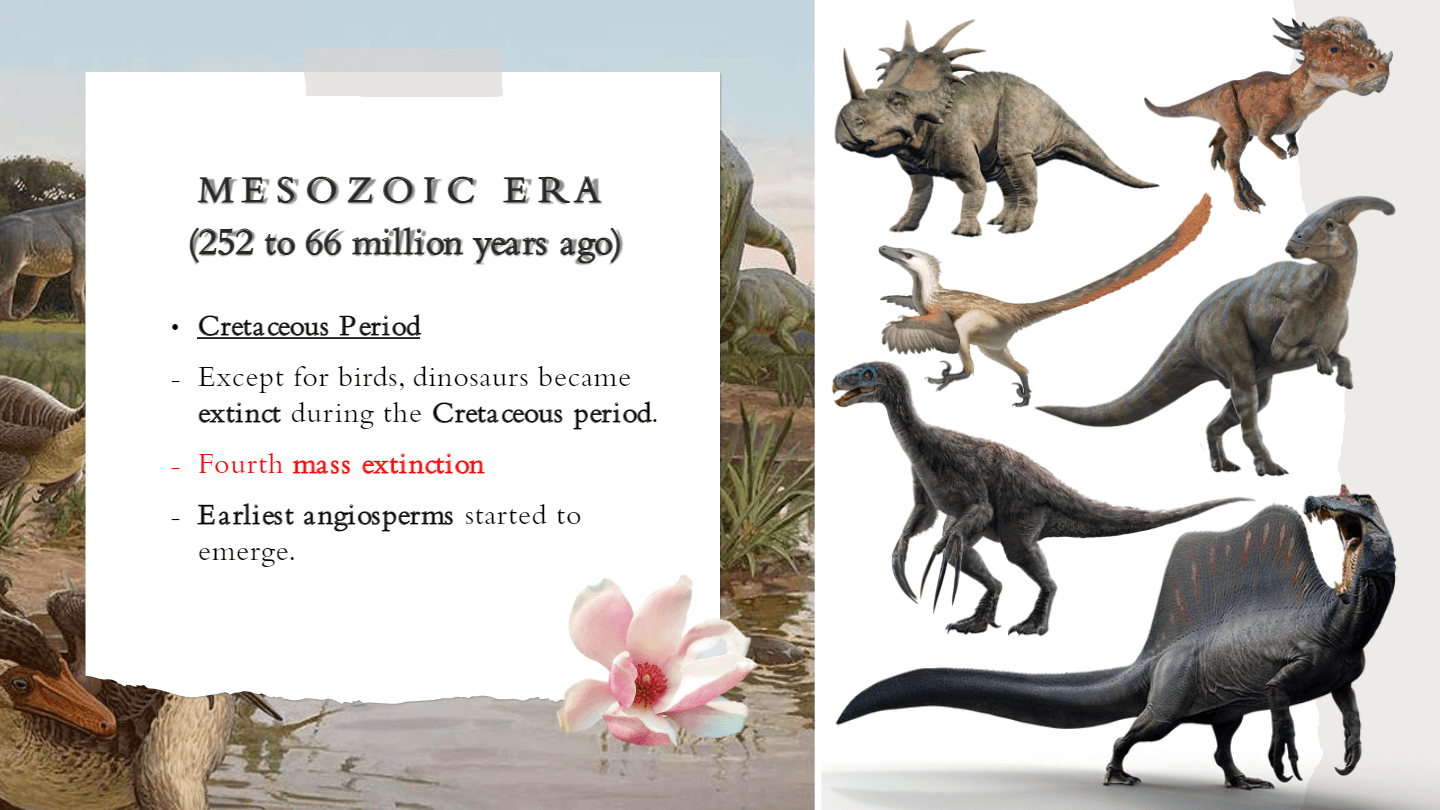
56
Multiple Choice
What period marked the first mammals?
Jurassic
Triassic
Cretaceous
57
Multiple Choice
What period marked the first birds?
Jurassic
Triassic
Cretaceous
58
Multiple Choice
What period marked the fourth mass extinction?
Jurassic
Triassic
Cretaceous
59

60

61

62

63

64
65

66

67

68

69

70

71

72

73

74
Multiple Choice
What epoch marked the first primates?
Paleogene
Neogene
Quaternary
75
Multiple Choice
What period marks the present?
Paleogene
Neogene
Quaternary
76
Poll
What time period interested you the most?
Precambrian
Paleozoic
Mesozoic
Cenozoic
What is the Geologic Time Scale?
We divide time in to different units depending on how long a time frame we are looking at
We don't calculate a road trip in seconds, or how long it took to build a skyscraper in minutes
When we look at very long periods of time like the history of Earth, we need large units to reflect that
Grade 8 Ohio | Lesson 6.4 & 6.5
Show answer
Auto Play
Slide 1 / 76
SLIDE
Similar Resources on Wayground

69 questions
PELUANG
Presentation
•
10th - 12th Grade
72 questions
Unit 1 Review
Presentation
•
9th - 12th Grade
73 questions
Marine Mammals 2
Presentation
•
9th - 12th Grade
68 questions
EOC Review: Struggling topics
Presentation
•
9th - 12th Grade
71 questions
FFA Introduction
Presentation
•
9th - 12th Grade
68 questions
One Variable Statistics
Presentation
•
9th - 12th Grade
70 questions
Irregular verbs and narrative tenses (DBH4)
Presentation
•
9th - 12th Grade
69 questions
Retirement Planning
Presentation
•
9th - 12th Grade
Popular Resources on Wayground
10 questions
How much do you know about our Portrait of an Eagle?

Quiz
•
10th Grade
10 questions
Fast Food Slogans
Quiz
•
6th - 8th Grade
21 questions
Continents and Oceans
Quiz
•
6th Grade
20 questions
Parts of Speech
Quiz
•
5th Grade
16 questions
Subject & Predicate
Quiz
•
5th Grade
25 questions
Multiplication Facts
Quiz
•
5th Grade
12 questions
Map Skills
Quiz
•
3rd Grade
22 questions
Continents and Oceans
Quiz
•
5th Grade
Discover more resources for Science
10 questions
Exploring Chemical and Physical Changes

Interactive video
•
6th - 10th Grade
20 questions
Atomic Structure
Quiz
•
9th Grade
10 questions
Decoding the Periodic Table of Elements
Interactive video
•
6th - 10th Grade
10 questions
Exploring the Periodic Table
Interactive video
•
6th - 10th Grade
14 questions
Physical and Chemical Changes
Quiz
•
10th Grade
22 questions
Periodic Table Review
Quiz
•
9th - 12th Grade
20 questions
Observation vs. Inference
Quiz
•
7th - 9th Grade
14 questions
Periodic Trends
Interactive video
•
11th Grade