Petroski - Physical Science LEAP Review
Presentation
•
Science
•
8th Grade
•
Easy
+15
Standards-aligned

Amber Petroski
Used 8+ times
FREE Resource
10 Slides • 48 Questions
1
Physical Science LEAP Review
This review will cover:
Vocabulary
Thermal Energy Transfer
Equilibrium
2
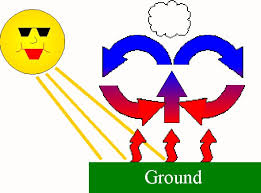
Convection - Heat transfer within a fluid. Hotter (less dense) material moves up, while colder (less dense) material moves down. Flowing energy.
How do things change temperature?
3
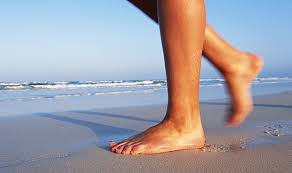
Conduction - The transfer of heat through matter by kinetic energy. Touch Energy.
How do things change temperature?
4
Radiation - Energy transfer by kinetic energy through space. Energy from a distance.
How do things change temperature?
5
Multiple Choice
When heat transfers through waves.
When heat transfers from objects that are touching.
a hot liquid or air that expands, becomes less dense, and rises or becomes more dense, and sinks.
Heat traveling from the sun
6
Multiple Choice
conduction current
radiation
condition current
convection current
7
Multiple Choice
high to low
low to high
high to high
It can travel high to low and low to high.
8
Multiple Choice
Conduction
Radiation
Convection
Density
9
Multiple Choice
conduction
convection
radiation
Insolation
10
Multiple Choice
conduction
convection
radiation
11
Multiple Choice
conduction
convection
radiation
12
Multiple Choice
conduction
convection
radiation
13
Multiple Choice
conduction
convection
radiation
14
Multiple Choice
conduction
convection
radiation
15
Multiple Choice
conduction
convection
radiation
16
Multiple Choice
conduction
convection
radiation
17
Multiple Choice
movement of energy that occurs due to differences in temperature and density
radiation
conduction
convection
18
Multiple Choice
Steam is rising from a cup of hot coffee.
A hot biscuit is warming the plate it is on.
The sun is shining through a window and warming a table.
Grilling a hot dog over a campfire.
19
Multiple Choice
the heat coming from a campfire
a spoon in a bowl of soup becoming warmer
warmer water at the surface of a swimming pool
a hamburger being warmed by a campfire
20
Multiple Choice
by contact
by flow of fluid in liquid or gas
by waves or rays
this is not an energy-transfer process
21
Match
Match these heat transfers
Conduction
Convection
Radiation
Conduction
Convection
Radiation
22
Dropdown
23
A group of atoms joined together in a particular way.
Molecules make up all matter in all states.
Molecules
24
More kinetic energy = molecules move faster = hotter
Less kinetic energy = molecules move slower = colder
Molecules do not stop moving unless at absolute zero.
Molecules
25
Movement energy.
Average kinetic energy of an object shows its temperature.
The higher the kinetic energy the higher the temperature of an object
Kinetic Energy
26
A number that summarizes a set of data that can be computed by adding all the numbers in a list and dividing by the number of numbers in the list
Average
27
Fill in the Blanks
Type answer...
28
Fill in the Blanks
Type answer...
29
Fill in the Blanks
Type answer...
30
Collision is when two molecules hit each other
Transfer is to move from one object to another or from one place to another
Kinetic energy transfers through molecules bumping into one another
Collision and Energy Transfer
31
Multiple Choice
Which is an example of energy moving an object from place to place?
water in a bowl
wind blowing a grain of sand
a batter ready to hit a baseball
a drummer ready to hit a drum
32
Dropdown
33
Multiple Choice
The cold energy from your hand transferred to your friend's hand through conduction.
The heat energy from your friend's hand transferred to your hand through conduction.
The cold energy from your hand transferred to your friend's hand through convection.
The heat energy from your friend's hand transferred to your hand through convection.
34
Multiple Choice
The total energy of all the particles in a sample of matter is called —————
Total Energy
Thermal Energy
Kinetic Energy
Particle Energy
35
Multiple Choice
Thermal energy is transferred from————-
A cooler object to a hotter one
A hotter object to a cooler one
36
Multiple Choice
Molecules with more kinetic energy move ———- than molecules with less kinetic energy
Lower
Faster
Higher
Slower
37
Multiple Choice
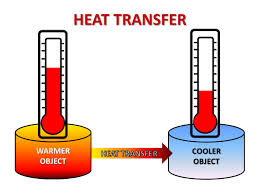
In this picture, heat is being transferred from sample B to sample A. When will the heat transfer stop?
Heat transfer will keep on until object B has zero thermal energy
Heat transfer will not stop, it will keep going
Heat transfer will stop when sample A and sample B have reached the same temperature.
38
Multiple Choice
In this example, explain the movement of thermal energy in the glass.
Heat is moving from the lemonade to the glass
Heat is moving from the lemonade to the ice
Cold is moving from the ice to the lemonade
Cold is moving from the ice to the glass
39
Multiple Choice
Which sample has the higher temperature?
Sample B because it has more thermal energy and more molecules
Sample B because the molecules are brown
Sample A because the molecules are moving faster and have more average kinetic energy
Sample A because yellow is such a hot color
40
Multiple Choice
If you brought sample A and B close together , in what direction would heat be transferred?
From sample A to sample B
From sample B to sample A
Heat would not be transferred.
sample A and sample B would both transfer heat to each other.
41
Multiple Choice
In this picture, heat is being transferred from sample B to sample A. When will the heat transfer stop?
Heat transfer will keep on until object B has zero thermal energy
Heat transfer will not stop, it will keep going
Heat transfer will stop when sample A and sample B have reached the same temperature.
42
A state in which kinetic energy is balanced so that one is not greater than the other (they are equal)
Equilibrium
43
Multiple Choice
After these two samples achieve equilibrium the temperature will be 30.
true
false
44
Multiple Choice
Once heat transfer is complete the temperature here will be
16 degrees
12 degrees
10 degrees
45
Multiple Choice
Which image shows the difference between the speed of molecules in hot and cold water?
46
Multiple Choice
EVERYTHING is made of ______.
molecules
energy
cells
microorganisms
47
Match
Warmer temperature
Cooler temperature
Temperature
molecules moving faster
molecules moving slower
average speed of the molecules
molecules moving faster
molecules moving slower
average speed of the molecules
48
Multiple Choice
Temperature is the measure of the _________ speed of a thing/substance.
average
median
fastest
slowest
49
Multiple Select
Molecules move at the same speed no matter what the temperature.
True
False
50
Multiple Choice
System
a set of interacting parts forming a complex whole
a small part that is meant to show what the whole is like
when something stays mostly the same over time
51
Multiple Choice
transfer
energy that moves
to move from one object to another or one place to another
the ability to make things move or change
52
Multiple Choice
collision
when something stays mostly the same over time
a group of atoms joined together in a particular way
the moment when two objects hit each other
53
Multiple Choice
stability
a building in which livestock, especially horses, are kept.
when something stays mostly the same over time
the strength to stand or endure
54
Multiple Choice
temperature
the amount of movement that atoms store
The transfer of energy from one form to another
A measure of the average speed of the molecules of a substance.
55
Multiple Choice
Infer
to state your opinion
to reach a conclusion using evidence and reasoning
to write your answers
56
Multiple Choice
Equilibrium
a balanced state in which a system is stable, such as when two samples are at the same temperature
when two things exchange molecules
when two things are balanced and weigh the same
57
Multiple Choice
change
when something becomes different over time
when something reaches equilibrium
when something stops growing
58
Multiple Choice
When two samples come in contact the energy will flow
from the cold one to the warmer one.
from the warmer one to the cooler one.
energy does not move.
Physical Science LEAP Review
This review will cover:
Vocabulary
Thermal Energy Transfer
Equilibrium
Show answer
Auto Play
Slide 1 / 58
SLIDE

Similar Resources on Wayground
53 questions
Unit 2 Lesson 1 (without questions): Geologic Change Over Time
Presentation
•
8th Grade
48 questions
Introduction to Electromagnetic Waves
Presentation
•
8th Grade
51 questions
Microorganism- friend and foe
Presentation
•
8th Grade
51 questions
Speed, Velocity and Acceleration IA Review #3
Presentation
•
8th Grade
51 questions
Energy, Motion, & Newton's Laws
Presentation
•
8th Grade
53 questions
Zones of Ocean
Presentation
•
8th Grade
51 questions
Hurricanes and El Nino
Presentation
•
8th Grade
54 questions
MMS L1
Presentation
•
8th Grade
Popular Resources on Wayground
15 questions
Grade 3 Simulation Assessment 1
Quiz
•
3rd Grade
22 questions
HCS Grade 4 Simulation Assessment_1 2526sy
Quiz
•
4th Grade
16 questions
Grade 3 Simulation Assessment 2
Quiz
•
3rd Grade
19 questions
HCS Grade 5 Simulation Assessment_1 2526sy
Quiz
•
5th Grade
17 questions
HCS Grade 4 Simulation Assessment_2 2526sy
Quiz
•
4th Grade
20 questions
Equivalent Fractions
Quiz
•
3rd Grade
24 questions
HCS Grade 5 Simulation Assessment_2 2526sy
Quiz
•
5th Grade
20 questions
Math Review
Quiz
•
3rd Grade
Discover more resources for Science
20 questions
8th Grade Science STAAR Review
Quiz
•
8th Grade
16 questions
Interactions within Ecosystems
Presentation
•
6th - 8th Grade
20 questions
Earth Day
Quiz
•
3rd - 12th Grade
30 questions
GMAS Physical Science Review
Quiz
•
8th Grade
100 questions
GMAS Science Review
Quiz
•
8th Grade
5 questions
History of Earth Day
Passage
•
6th - 8th Grade
100 questions
STAAR Review
Quiz
•
8th Grade
10 questions
Exploring Earth's Seasons and Their Causes
Interactive video
•
6th - 8th Grade