

IGCSE CIE Chemistry - Rates of reaction

Presentation
•
Chemistry
•
10th Grade
•
Practice Problem
•
Medium

MAD VLAD
Used 7+ times
FREE Resource
16 Slides • 16 Questions
1
And Limiting factors
2

3

4
Replace this text with your body text.
Duplicate this text as many times as you would like.
Subheader text
Replace this text with your body text.
Duplicate this text as many times as you would like.
Subheader text

5
Activation Energy - minimum amount of energy colliding particles must have to react.
Collision theory -
particles must collide, with surface energy, at the proper orientation.
Higher number of collision, higher the reaction rate.

6

7
Multiple Choice
true
false
8
Multiple Choice
The energy needed for a reaction to occur
The minimum amount of energy needed for a reaction to potentially occur
The energy added by a catalyst
The energy possessed by the products
9
Multiple Choice
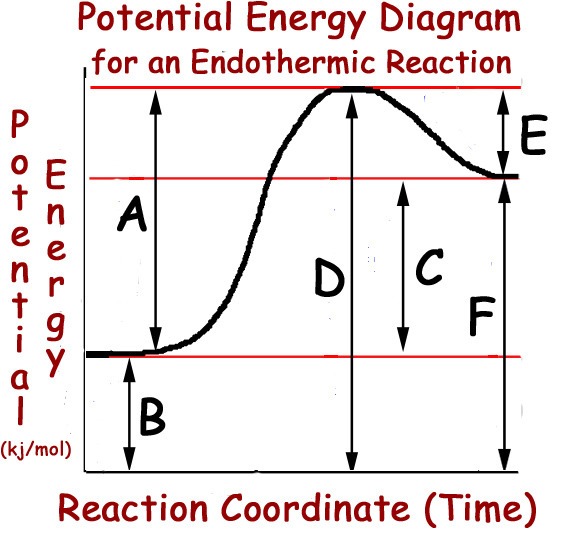
A
B
C
D
10
Multiple Choice
What is collision theory?
Molecules must collide in the correct orientation with enough energy to bond.
Molecules need enough energy to collide and react.
Atoms constantly collide and react.
The minimum energy needed for atoms to react
11
Multiple Choice
True
False
12
Multiple Choice
What is the rate of reaction?
How much energy is needed for a reaction to occur.
The energy required to break a bond.
The time it takes for a reaction to occur.
Collision Theory
13
14

15

16

17
Multiple Choice
What is the purpose of a catalyst?
Helps to slow down a reaction
Raises the activation energy
Lowers the activation energy
Is consumed by the reaction
18
Multiple Choice
What factors effect rate of reaction?
Temperature, Concentration, Pressure and Energy
Surface Area, Concentration, Energy and Pressure
Temperature, Pressure, Concentration and Surface area
Pressure, Surface area, Density and Energy
19
Multiple Choice
Increasing the temperature of your solution will.......
Not affect the rate of reaction.
Speed up the rate of reaction
Slow down the rate of reaction
20
Multiple Choice
Slow collision frequency
Allow less effective collision between the particles
Cause particles to lose speed
Increase collision between the particles thus increasing the rate.
21
Multiple Choice
concentration
surface area
temperature
reactants
22
Multiple Choice
catalyst
product
reactant
solute
23
Multiple Choice
it increases the amount of reactants
it lowers the activation energy
it increases the energy of particle collisions
it increases the frequency of particle collisions because there are more collision sites
24
The rate of reaction is simply the speed at which a reaction takes place.
The units of the rate of reaction: g s-1 or cm3 / dm3 s-1, which can then be converted into mol dm3 s-1.
25

26

27
it is easier to see the pattern that they make.

28
29
How fast a reaction goes

30
Multiple Choice
Why does a higher temperature increase the rate of a reaction?
it increases both the frequency and energy of particle collisions
it only increases the frequency of particle collisions
it only increases the energy of particle collisions
it reduces the activation energy of the reaction
31
Multiple Choice
Grinding a seltzer tablet into powder increases the rate of reaction due to increased
concentration
surface area
temperature
reactants
32
Multiple Choice

The following graph shows two different reaction pathways for the same overall reaction at the same temperature. Which pathway is slower and why?
Red, because the activation energy is larger
Blue, because the activation energy is lower
both reaction progress at the same rate
And Limiting factors
Show answer
Auto Play
Slide 1 / 32
SLIDE
Similar Resources on Wayground

23 questions
Limiting Reactants/Excess Reactants
Presentation
•
10th Grade
23 questions
Feedback loops and Homeostasis
Presentation
•
10th Grade
27 questions
Chapter 3.1
Presentation
•
10th Grade
27 questions
Subatomic Particles
Presentation
•
10th Grade
22 questions
Classifying Reactions
Presentation
•
10th Grade
27 questions
Thermochemistry
Presentation
•
10th Grade
28 questions
13.1 Rates of Reaction
Presentation
•
10th Grade
25 questions
Intro to the Periodic Table Part 1
Presentation
•
10th Grade
Popular Resources on Wayground
10 questions
Safety Day 2026 – Student Review

Quiz
•
9th Grade
21 questions
Continents and Oceans
Quiz
•
6th Grade
20 questions
Parts of Speech
Quiz
•
5th Grade
16 questions
Subject & Predicate
Quiz
•
5th Grade
25 questions
Multiplication Facts
Quiz
•
5th Grade
12 questions
Map Skills
Quiz
•
3rd Grade
22 questions
Continents and Oceans
Quiz
•
5th Grade
15 questions
Rounding Decimals
Quiz
•
5th Grade
Discover more resources for Chemistry
20 questions
electron configurations and orbital notation
Quiz
•
9th - 12th Grade
25 questions
Writing and Naming Binary Ionic compounds
Quiz
•
10th Grade
20 questions
COUNTING ATOMS
Quiz
•
10th Grade
20 questions
Physical or Chemical Change/Phases
Quiz
•
8th Grade - University
15 questions
Periodicity Module Exam Practice Quiz
Quiz
•
9th - 12th Grade
20 questions
Naming Ionic Compounds
Quiz
•
10th Grade
45 questions
Chem Unit 3 Review
Quiz
•
10th Grade
16 questions
History of the Atomic Theory
Quiz
•
10th Grade