Search Header Logo
Review#1

Review#1

Assessment

Presentation

Physics

9th - 12th Grade

Hard

Created by

Amanda Segovia

FREE Resource

58 Slides • 97 Questions

1

Newton's Laws of Motion

media

2

media

3

media

4

Multiple Choice

Which force produces a change in motion?
1

Unbalanced force

2

Balanced force

3

Gravitational force

4

Frictional force

5

Multiple Choice

What is Newton's First Law known as? The Law of
1

Friction

2

Mass

3

Inertia

4

Gravity

6

Multiple Choice

What kind(s) of objects have inertia?
1

all objects with mass

2

only objects at rest

3

only objects in motion

4

only objects whose motion is being changed

7

Multiple Choice

While you’re ice-skating with your friends, you push off from one end of the rink and slide forward. Based on Newton’s first law of motion, what is true?

1

You will lose your balance and fall over before you reach the middle of the ice rink.

2

You will continue to slide across the ice until a force makes you stop or change direction.

3

The force of gravity will make you keep your velocity until your friends make you stop.

4

The size of your ice skates will determine how quickly or slowly you travel across the ice.

8

Multiple Choice

One object has twice as much mass as another object. The first object also has also twice as much...
1

velocity

2

gracitational acceleration

3

inertia

4

all of these

9

Multiple Choice

A _______ is a push or pull.
1

Newton

2

Acceleration

3

Momentum

4

Force

10

Multiple Choice

What is Newton's First Law of Motion?
1

F = m x a

2

Every action has an equal an opposite reaction

3

An object at rests stays, an object in motion stays in motion

4

Friction

11

Multiple Choice

Which has more inertia--
1

Truck

2

Cat

3

Ant

4

Skateboard

12

media

13

media

14

Multiple Choice

45 meters per second squared is the--
1

Acceleration

2

Mass

3

Weight

4

Force

15

Multiple Choice

20 N is the ----
1

Mass

2

Force

3

Acceleration

4

Weight

16

Multiple Choice

1000 kg is the -----
1

Force

2

Mass

3

Acceleration

4

Weight

17

Multiple Choice

According to Newton's Second Law, if you increase the force applied to an object:
1

It accelerates more

2

It doesn't move

3

You get more inertia

4

It decelerates

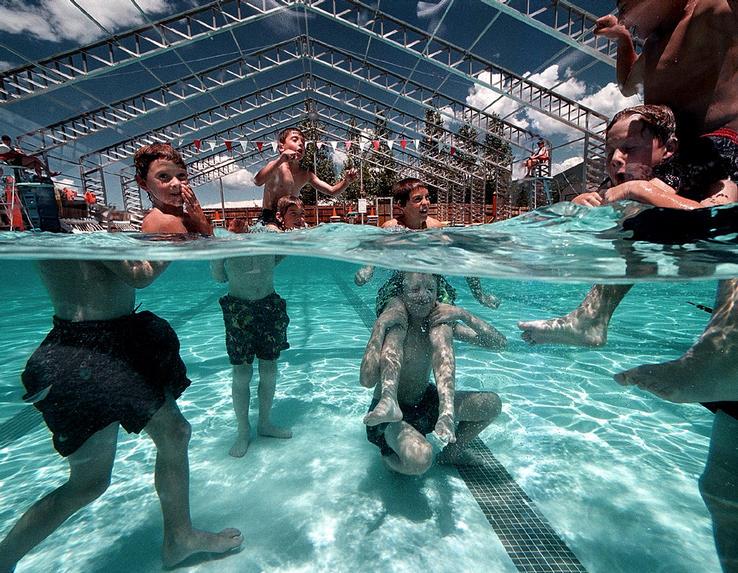
18

Multiple Choice

What is Newton's Second Law of Motion?
1
F = m x a
2
Action/Reaction
3
Object in motion will stay in motion, object at rest will stay at rest
4
Velocity

19

Multiple Choice

Question image
When a heavy football player and a light one run into each other, who exerts more force?
1

The heavy one

2

The light one

3

They are equal

4

There is no such thing as force 

20

States that a force on an object is equal to the mass (the amount of matter in an object) times the acceleration of the force acting on it.

  • Equation:​

Newton's Second Law of Motion

​F = mass x acceleration

F = ma​

​F

​m

a

21

Math Response

What is the force that a 873 kg dragster attains when he accelerates at an average of 45 m/s2?

Type answer here
Deg°
Rad

22

Math Response

How much force do you exert if you push a 25 kg box at a rate of 3.5 m/s2?

Type answer here
Deg°
Rad

23

Math Response

What is the mass of a swimmer that accelerates towards the water at 10 m/s2 and hits the water with a force of 3200 N?

Type answer here
Deg°
Rad

24

Math Response

What is the mass of a cat that accelerates at 1.0 m/s2 after a force of 100 Newtons has hit it?

Type answer here
Deg°
Rad

25

Math Response

If a weather balloon has a mass of 5 kg and is released with a 98 N force upward, what is the acceleration of the balloon?

Type answer here
Deg°
Rad

26

media

27

media

28

media

29

Multiple Choice

Question image

When a small car pushes a big truck, the truck applies an equal and opposite force on the car.

1

False

2

True

30

Multiple Choice

Question image

How is this an example of Newton’s Third law?

1

Only the ball is using the head

2

They are both exerting an equal force on each other

3

Only the head is pushing the ball

31

Multiple Choice

Action-reaction pairs can cause a change in motion.

1

True

2

False

32

Multiple Choice

Question image

Force always come in________

1

waves

2

triplets

3

pairs

33

Multiple Choice

Question image
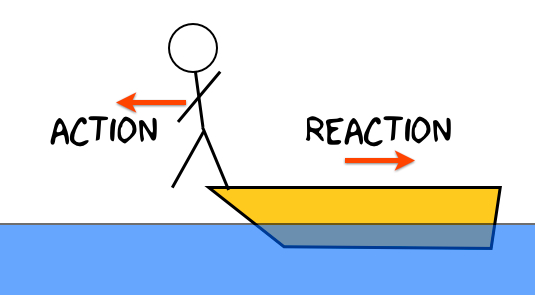
A person steps out of the boat and onto the dock.  As the person moves forward onto the dock, the boat moves backward.  Which statement best describes the backward motion of the boat as the person steps forward?
1

For every action there is an equal and opposite reaction.

2

Every mass exerts a force on every other mass.

3

An object at rest tends to stay at rest.

4

Friction opposes the motion of an object.

34

Multiple Choice

Question image

What happens to the balloon if the air is released ?

1

Balloon goes right

2

Balloon goes up

3

Balloon goes down

4

Balloon goes left

35

Multiple Choice

Question image

A book pushes down on a table with a force of 5N, the table..

1

Pushes back with a force of 5N

2

Pushes back with a force less than 5N

3

Pushes back with a forcec greater than 5N

4

Does nothing. A table has no force.

36

Multiple Choice

Question image
What law of motion does this picture represent?
1

Newtons 1st law

2

Newtons 4th law 

3

Newtons 3rd law 

4

Newtons 2nd law

37

Multiple Choice

Question image
The law in the picture represents---
1

Newton's 1st law

2

Newton's 2nd law

3

Newton's 3rd law

4

Newton's 4th law

38

Multiple Choice

What pulls a ball back to earth?

1

Gas

2

Friction

3

Gravity

4

Molecules

39

Free-Body Diagrams

By Kyle Sheahon

40

For example, friction and weight act on you at all times. To figure out how (or if) things are going to move, we need to add up all the forces acting on them.

The sum of all the forces acting on an object is called the NET FORCE.​

We never feel one force at a time.

41

media
  • Free-body diagrams help us add up all the forces in order to determine the NET Force.

  • This helps us to predict how the object will move.

Free-Body Diagrams

42

Let's look at the forces acting on an box sitting on a table.

media
  • ​This box is sitting at rest.

  • The force of gravity is equal to the normal force.​

  • Normal Force - the force that a surface exerts on an object that is pressing on it.​

  • The normal force is equal and opposite to the force pressing the object into the surface.

43

The book is not moving, so the forces must be equal.

media
  • When the forces being applied to an object are equal, the object isn't moving.

  • This means that these are Balanced Forces.

  • Balanced Forces - forces that result in a net force (total force) of zero.​

44

When forces are balanced, their NET force is zero. This means the object is in equilibrium.

media
  • Equilibrium - the state in which the net force on an object is zero.

  • If the object is not in equilibrium. The object will move!

45

Multiple Choice

Question image

Is this a balanced force?

1

Yes

2

No

46

Draw

Circle the guy who successfully pushes the box.

47

Multiple Choice

Question image

What is the NET Force?

1

10 N

2

5 N

3

10 N to the right.

4

5 N to the right.

48

media

Forces are not just defined by how strong they are but the direction they are moving.

  • ​Forces are vectors, which means it has both a magnitude (strength) and direction.

  • You will always describe a force with its strength and direction.

  • Vector - a quantity that has both a magnitude and direction.​

49

media

Let's look at the forces acting on an airplane in flight.

  • ​The plane is at constant speed because the Drag force and the Thrust force are balanced.

  • The plane is at constant height because the Lift force and the Weight are balanced.​

50

Draw

Circle the resident of Bikini Bottom who successfully pushes the box.

51

Fill in the Blank

Question image

What is the resulting force?

52

Multiple Choice

Question image

Is the rope in equilibrium?

1

Yes

2

No

3

Not enough info.

53

Fill in the Blank

Question image

If the guy is pushing the box with a force of 25 N, and the friction force on the box is 15 N, what is the Net force he is pushing the box?

54

Fill in the Blank

Question image

Is Joe moving this box?

55

Fill in the Blank

Question image

If the boy in the hat pulls with a force of 28 N, and the other boy pushes with a force of 12 N, what is the NET Force?

56

media

57

media

58

Multiple Choice

Momentum is...

1

rolling down a hill.

2

the amount of motion an object has.

3

the force that an object has.

4

the speed of an object.

59

media

60

Multiple Choice

The equation for momentum is?

1

momentum = force - mass

2

momentum = acceleration / mass

3

momentum = mass x acceleration

4

momentum = mass x velocity

61

Multiple Choice

Like velocity, acceleration, and force, momentum is described by its direction as well as its quantity. This Means it is a _______

1

scalar quantity

2

vector quantity

62

media

63

Multiple Choice

What is true about the relationship between mass and momentum.

1

The less mass an object has, the more momentum it will have.

2

The more mass an object has, the less momentum it will have.

3

The more mass an object has, the more momentum it will have.

4

Mass has nothing to do with momentum.

64

media

65

Multiple Choice

Even if an object has a smaller mass, it can have a larger momentum if it has a high _______.

1

velocity

2

displacement

3

weight

66

media

67

Multiple Choice

Question image

If both dogs have the same velocity, which one has the greater momentum?

1

The brown dog

2

The white dog

68

Multiple Choice

Question image

Which has more momentum: a 3.0 kg sledgehammer swung at 1.5m/s, or a 4.0 kg sledgehammer swung at 0.9 m/s?

1

the 3.0 kg sledgehammer

2

the 4.0 kg sledgehammer

69

Multiple Choice

A golf ball travels at 16 m/s while a baseball moves at 7 m/s. The mass of the golf ball is 0.045 kg and the mass of the baseball is 0.14 kg. Which has a greater momentum?

1

golf ball

2

baseball

70

Fill in the Blank

What is the momentum of a bird with a mass of 0.018 kg flying at 15 m/s?


_______ kgm/s

.

71

Multiple Choice

How much momentum does a 5kg basketball have as it travels 10 m/s to the basket?

(p=mv)

1

p=10 kgm/s

2

p=15 kgm/s

3

p=50 kgm/s

4

p=5 kgm/s

72

Multiple Choice

Which of these two objects have more momentum as they travel to their destination?

(p=mv)


A 100 kg car traveling at 5 m/s


or


A 5 kg ping pong traveling at 1000 m/s

1

the 100 kg car

2

the 5 kg ping pong

73

Impulse

  • Impulse = Force x time

  • I = Ft

  • Impulse is also known as the CHANGE in the total momentum of a system.

74

Multiple Choice

What is the Impulse of a Pin applying -2 N of force to a bowling ball for 1.5 seconds?

1

2 Ns

2

2.5 Ns

3

-2.5 Ns

4

-3 Ns

75

Multiple Choice

The momentum of a bowling ball before it hits the pins is 50 kgm/s. The momentum of the ball AFTER it hits the pins is 35 kgm/s.

What is its impulse? (change in momentum)

pf-pi=pt

1

25 kgm/s

2

15 kgm/s

3

20 kgm/s

4

-15 kgm/s

76

media

77

media

78

media

79

media

80

media

81

media

82

Multiple Choice

A large moving ball collides with a small stationary ball. The momentum

1

of the large ball decreases, and the momentum of the small ball increases.

2

of the small ball decreases, and the momentum of the large ball increases.

3

of the large ball decreases, and the momentum of the small ball decreases.

4

does not change for either ball.

83

Multiple Choice

If 2 objects collide and stick together, what will happen to their velocities?
1

velocities will increase

2

velocities will decrease

3

velocities will stay the same

4

none of the above

84

Multiple Choice

While playing pool, Emma notices that the pool balls bounce apart.  What type of collision is this?
1

Elastic

2

Inelastic

3

Explosive

4

Force

85

Multiple Choice

Jorge noticed a collision outside the coffee shop where two cars collided and stuck together.  What type of collision did he observe?
1

Elastic

2

Inelastic

3

Completely inelastic

4

none

86

Multiple Choice

The Law of Conservation of Momentum states:

1

The total momentum before a collision is equal to the total momentum after a collision.

2

The total momentum before a collision is greater than the total momentum after a collision.

3

The total momentum before a collision is less than the total momentum after a collision.

4

The total momentum before a collision is not related to the total momentum after a collision.

87

Equation:

88

Multiple Choice

The total momentum of two objects before collision is 450 kg.m/s. What will be their total momentum after collision?

1

0 kg.m/s

2

350 kg.m/s

3

175 kg.m/s

4

450 kg.m/s

89

Multiple Choice

An 1 kg object moving to the right at 2 m/s collides inelastically with a 1 kg object moving to the left at 2 m/s. The final velocity of both objects will be

1

0 m/s

2

1 m/s

3

2 m/s

4

4 m/s

90

Fill in the Blank

A 0.250 kg cart moving at 0.400 m/s has how much momentum?

91

Multiple Choice

A 10kg toy truck moves at 5m/s East. It collides head-on with a 5kg toy car moving 10 m/s moving west. What is the total momentum of the system?

1

0 kgm/s

2

30 kgm/s

3

50 kgm/s

4

10 kgm/s

92

Fill in the Blank

A 125-kg car moving at 12 m/s hits a 200-kg car moving at -13 m/s. If the first car bounces back at -12.5 m/s, what is the velocity of the second car after the collision?

93

Quantities that are a zero at (b)

  • Displacement

  • Force

  • Acceleration

  • Elastic Potential Energy

media

94

Simple Harmonic Motion

By Stacy King

95

Equilibrium ​position

  • ​resting (non moving)

  • ​balanced forces

Oscillating Motion

media

96

External force that alters the equilibrium ​position

​Forced Vibration

media

97

A force that acts on the oscillating object to restore ​it back to equilibrium

​​Restoring Force

media

98

Periodic motion

  • The motion repeats itself over and over again in cycles.

What does the graph of position versus time look like?

Oscillation

media

99

Multiple Choice

Which graph do you think would represent oscillation?

1
2
3
4

100

The graph indicates the repeating cycles

Graphic Analysis of Oscillation

media

101

Multiple Select

MORE THAN 1 is correct.

Which of these would be considered oscillators?

1
2
3
4

102

A full cycle is one complete back and forth motion.

The period is the time it takes to complete one full cycle.

Period T is measured in seconds.

Cycles and Periods

media

103

Multiple Choice

What is the period of the Earths rotation?

1

24 hrs

2

48 days

3

24 days

4

48 hrs

104

Frequency is how many cycles are completed each second.

Frequency f is measured in hertz, or Hz.​

Frequency

media
media

​Write This Down

105

Fill in the Blank

Question image

Javier is on a swing. His feet brush the ground every 3.0 seconds.

What is Javier’s frequency?

____Hz

106

Fill in the Blank

Question image

Marie has a spring-mass system with a frequency of 4 Hz.  What is the system’s period?

___s

107

Oscillations occur in systems with stable equilibrium.

Stable systems have restoring forces that act to return them to the equilibrium position if they are displaced.

Restoring Force

media

108

Multiple Choice

Question image

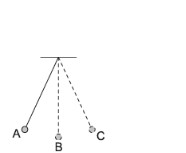
What provides the restoring force for a simple pendulum?

1

Gravity

2

Centripetal

3

Friction

109

Fill in the Blank

An object has a frequency of 50 Hz.  What is the period?

110

​The maximum displacement of the object from equilibrium

X signifies the displacement variable​ and is measured in meters....

​Amplitude

media

111

Multiple Choice

Question image
What is the amplitude of the graph? 
1

1

2

3

3

6

4

9

112

Equilibrium

  • restoring force is zero

​Displacement

  • ​restoring force is toward the line of equilibrium

Force and Position

media

113

Kinetic- energy due to motion

Potential-​ energy that is stored

Total mechanical energy​- energy acquired by the objects upon which work is done

Some text here about the topic of discussion.

​Energy and Oscillation Pendulum

media

114

KE = ​1/2 mv2

KE increases as the object moves toward equilibrium ​

Some text here about the topic of discussion.

Calculating Kinetic Energy Pendulum

media

115

PE= mgh​

​Potential energy is greatest at maximum displacement

Some text here about the topic of discussion.

Calculting Potential Energy​ Pendulum

media

116

Multiple Choice

Where does a pendulum have maximum potential energy?

1

at the bottom of its arc

2

at the end of its swing

3

as it rises up

4

as it falls

117

Fspring = -k•x​

restorative Force is dependent on displacement and the springs ability to stretch (k= the springs constant)

Motion of Mass on a Spring Hooke's Law

media

118

Multiple Choice

A spring has a spring constant of 450 N/m. How far is the spring compressed if 150 N of force are used?

1

2.2 m

2

3m

3

5.0 m

4

0.3 m

119

Multiple Choice

When is the pendulum at maximum velocity

1

At its lowest point

2

At its highest point

3

It moves at a constant velocity

4

It is at rest

120

Multiple Choice

When does the mass move at maximum velocity in a mass-spring system?

1

At equilibrium

2

At the farthest point from the equilibrium

3

At its hightest point

4

At its lowest point

121

Multiple Select

Question image

A pendulum oscillates as shown. At which of the following positions is the potential energy equal to the total energy?

1

A

2

B

3

C

4

Not enough information

122

Multiple Choice

When does the mass move at 0 velocity in a mass-spring system?

1

At equilibrium

2

At the farthest point from the equilibrium

3

At its hightest point

4

At its lowest point

123

There are 2 categories of waves

​Mechanical Waves

  • Require a medium

  • cannot travel through space

  • ex: sound, ocean waves

​Electromagnetic Waves

  • Don't require medium

  • can travel through space

  • ex: light, uv rays, radio waves​

124

There are 2 types of waves

​Transverse Waves

  • travel up and down

  • perpendicular to flow of energy​

​Longitudinal Waves

  • Travel side to side

  • parallel to flow of energy

125

Transverse Waves

media

​Know the 4 parts of the transverse wave

Crests and Troughs are used for measuring wavelength

Amplitude is how high the wave goes​

126

Longitudinal Waves

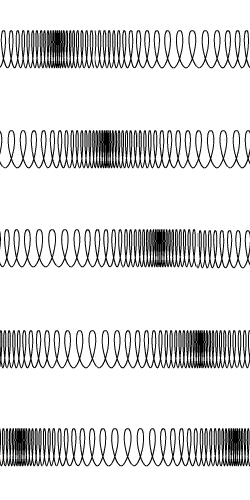
​Know the 2 parts of the wave

Compressions and Rarefactions are used for measuring wavelength

​​

media

127

Multiple Choice

Question image

What is number 2 called?

1

crest

2

trough

3

wavelength

4

amplitude

128

Multiple Choice

Question image

What is number 3 called?

1

crest

2

trough

3

wavelength

4

amplitude

129

Measuring Wavelength

Make sure you can measure the wavelength when given a picture of a wave​

Always remember you are measuring from one point to that same point later in the wave

​​

media

130

Fill in the Blank

Question image

What is the wavelength of the wave shown in the picture?

131

Multiple Choice

Question image

If this wave was traveling at a speed of 3m/s what would be the frequency of the wave?

1

3 Hz

2

1.5 Hz

3

1.33 Hz

4

0.75Hz

132

Multiple Choice

What type of wave requires a medium?

1

Electromagnetic

2

Gamma

3

Mechanical

4

Radio

133

Calculating velocity of waves

Velocity (m/s)

Frequency (Hz)

wavelength (m)​

​​

Ex:​

A tuning fork has a frequency of 120 Hz, and the wavelength of the sound produced is 4 meters. What is the velocity of the wave rounded to the nearest whole number? 

media

134

Calculating frequency

f = Frequency (Hz)

T = Period (s)​

​​

This equation is used when you need to find frequency and all you have is time. Also can be rearranged to find period if you have the frequency by switching the f and the T in the equation

media

135

Fill in the Blank

A wave with a frequency of 800 Hz is traveling at a speed of 900 m/s. What is the wavelength rounded to the nearest tenth?

v=λ×fv=\lambda\times f

136

Fill in the Blank

A wave has a frequency of 12.56 Hz. What is the period of the wave?

(round to the nearest hundredths)

f=1Tf=\frac{1}{T}

137

Fill in the Blank

A wave has a wavelength of 155 meters and is moving at a speed of 230 m/s. What is its frequency? (round to the nearest hundredths place)

v=λ×fv=\lambda\times f

138

Fill in the Blank

What is the velocity of a wave if it has a period of 3.4 s and a wavelength of 2 m?

(round to the nearest hundredths place)

f= 1Tf=\ \frac{1}{T} v=λ×fv=\lambda\times f

139

Electromagnetic spectrum

media

140

Multiple Choice

Question image

Which wave would have the highest frequency

1

microwaves

2

x-rays

3

blue light

4

Infra red

141

Wave interactions: Reflection

media

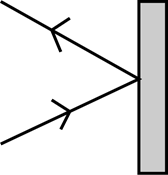
​Reflection happens when a wave hits a surface and bounces off.

If the wave comes in at an angle, it will bounce away at that same angle​

142

Wave interactions: Diffraction

​Diffraction happens when a wave hits an opening or a corner and bends around the corners causing it to spread in all directions on the other side.

media

143

Wave interactions: Refraction

​Refraction happens when a wave changes mediums causing it to change in speed and bend as a result.

media

144

Multiple Choice

Which of the following electromagnetic waves has the lowest frequency?

1

gamma ray

2

infrared wave

3

visible light wave

4

microwave

145

Multiple Choice

Question image

The _______________ determines the color of visible light.

1

wavelength (and frequency)

2

speed

3

amplitude

4

particles of the medium

146

Multiple Choice

Question image
A student placed a pencil in a cup of water.  The pencil appears broken because light-
1

always travels in a straight line

2

bends when it passes through water

3

makes the water in the glass evaporate

4

reflects the pencil on the water's surface

147

Multiple Choice

Question image
The illustration shows a light ray striking an object.
In the illustration, the light ray striking the object is-
1

absorbed

2

stopped

3

reflected

4

refracted

148

Multiple Choice

Question image
1

Reflection

2

Refraction

149

Multiple Choice

Question image
Does the frog reflect or absorb green?
1

Reflect

2

Absorb

150

Multiple Choice

Question image
Does the bird reflect or absorb orange?
1

Reflect

2

Absorb

151

Multiple Choice

When a wave bends or spreads past a medium, this is referred to as
1

Reflection

2

Refraction

3

Radiation

4

Diffraction

152

Multiple Choice

The material in which a wave passes through is called____
1

radiation

2

particles

3

medium

4

space

153

Multiple Choice

Question image
What kind of wave is this?
1

Transverse

2

Longitudinal

154

Multiple Choice

Frequency is measured in _______________.
1

Newtons

2

Meters

3

ouch! That hurts!

4

Hertz

155

Multiple Choice

Question image
Why does the lower part of the child appear so much different in size from the upper part?
1

The light rays that travel through water and then into air are refracted.

2

The light rays that travel through water and then into air are enlarged.

3

The light rays that travel through air and then into water are reflected.

4

The light rays that travel through air and then into water are reduced.

Newton's Laws of Motion

media

Show answer

Auto Play

Slide 1 / 155

SLIDE