Gr 10 Review activity pt 1
Presentation
•
Geography
•
9th - 12th Grade
•
Medium
Brian Daley
Used 2+ times
FREE Resource
13 Slides • 55 Questions
1
WELCOME TO
GEOGRAPHY CLASS
WITH MR DALEY
2
Quotes to live by…
3
Is the EXTRA
4
5
6
Exam Preps and Consideration
INSTRUCTIONS FOR THE EXAMINATION
Do not open this booklet until you are told to do so.
Write your name at the top of this page and each page of this booklet.
Answer ALL questions. There are TWO (2) Sections in this booklet.
1.
Section A - For each of questions 1 through 35, there are FOUR suggested
answers given A, B, C, D. You are to circle the letter next to the correct
answer. Each question carries one mark.
2.
Sections B - For each question, answer the question in the space provided.
Ensure that you pay attention to the marks provided in the question.
7
Topics to Review
● Movement on the Earth’s Surface
● Rock Cycle
● Vulcanicity
● Earthquake
● Faulting and Folding
● Elements of Weather and Instruments
Do you have any
issues or concerns?
8
Movement of the Earth’s
Surface
9
Details under this topic
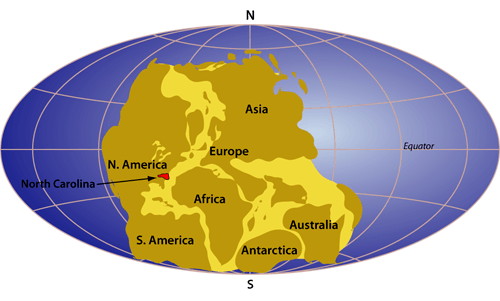
● What is the Theory of Continental Drift?
● Pieces of evidence which support the Theory.
● Problem with the Theory of Continental Drift
● What is Plate Tectonics.
● What causes the Plates to Move
● Plate Boundaries, Landforms and Geological Processes
associated with the Boundaries
10
Multiple Choice
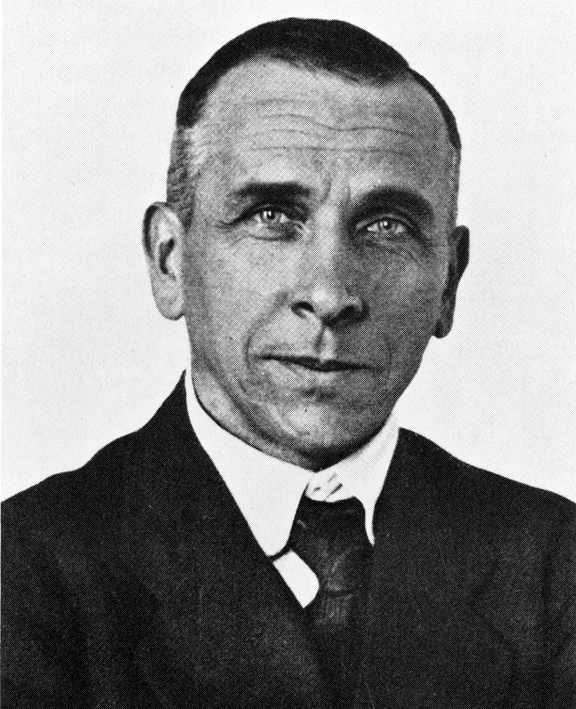
Harry Hess
Galileo
Alfred Wegener
Newton
11
Multiple Choice
plate tectonics
continental drift
pangea
glacier scaring
12
Multiple Choice
The continents were once joined in a super-continent and have moved over time
Continents are stationary and do not move
The Earth is broken into lithospheric plates that move due to convection currents
none of the above
13
Multiple Choice
He could not explain HOW the continents moved
He didn't have evidence
His data was wrong
He didn't use the right technology to gather data
14
Multiple Choice
big land mass
old land
all land
15
Multiple Choice
It shows that the continents must have been in a different location.
It doesn't.
I shows that it was colder at the equator in the past.
It shows that it was warmer at the equator in the past.
16
Multiple Choice
continental and oceanic
ocean and basin
lower and upper
thick and thin
17
Multiple Choice
Inner Core
Mantle
Crust
Outer Core
18
Multiple Choice
Inner Core
Mantle
Crust
Outer Core
19
Multiple Choice
Divergent Plate Boundary
Convergent Plate Boundary
Transform Plate Boundary
Subversive Plate Boundary
20
Multiple Choice
Divergent Plate Boundary
Convergent Plate Boundary
Transform Plate Boundary
Subversive Plate Boundary
21
Multiple Choice
Subduction
Erosion
Deposition
Convection
22
Multiple Choice
Subduction
Erosion
Deposition
Convection
23
Multiple Choice
Energy from the Sun
Magnetic Pole Reversal
Convection currents in the mantle
Faults in Mountain Ranges
24
Multiple Choice
Plate
Divergent
Convergent
Transform
25
Multiple Choice
Pull apart
Come together
Slide past each other
subducting
26
Multiple Choice
Earthquakes
Volcanoes
Mountains
Rift Valleys
27
Multiple Choice
Rift Valley
Mid-Ocean Ridge
Island Arc
Flat land
28
Multiple Choice
Volcano
Mountain
Rift
Island Arc
29
Multiple Choice
Mesosphere
Asthenosphere
Mantle
Lithosphere
30
Multiple Choice
The would all increase
The would all decrease.
Nothing, the layers are made of the same material throughout
Temperature would decrease, but pressure and density would increase
31
Rock Cycle
32
Details under this topic
● Rocks vs Minerals
● Types of Rocks
● Formation of Rock Types
● Rock Cycle
33
Multiple Choice
Metamorphic Rock
Sedimentary Rock
Extrusive Rock
Igneous Rock
34
Multiple Choice
Sedimentary
Igneous
Metamorphic
35
Multiple Choice
Sedimentary
Igneous
Metamorphic
36
Multiple Choice
Sedimentary
Igneous
Metamorphic
37
Multiple Choice
erosion
weathering
sediments
38
Multiple Choice
Igneous, Metamorphic, Sedimentary
Metamorphic, Igneous, Cementation
magma, lava, crystals
39
Multiple Choice
Which rock is formed form the cooling of volcanic ash on Earth's surface?
intrusive igneous
foliated metamorphic
extrusive igneous
organic sedimentary
40
Multiple Choice
This is a natural solid that is made of one or more minerals.
Mineral
Fossil
Rock
Sediment
41
Multiple Choice
This is the continuous process of rock changing from one type to another.
Igneous rocks
Sedimentary rocks
Metamorphic rocks
Rock Cycle
42
Multiple Choice
What type of rock might contain evidence of past life?
Sedimentary Rock
Igneous Rock
Metamorphic Rock
43
Multiple Choice
Which of the following lists the steps an igneous rock undergoes in order to become a sedimentary rock, in the correct order?
Deposition, erosion, melting, cooling
Erosion, weathering, eruption, cooling
Dissolving, deposition, cooling, fracture
Weathering, erosion, deposition, cementation
44
Multiple Choice
Limestone is a sedimentary rock. During the rock cycle, limestone is changed into marble, a metamorphic rock. The processes that act on limestone and change it into marble are
weather and erosion
heat and pressure
compacting and cementing
melting, cooling, and hardening
45
Multiple Choice
If a lot of heat is applied to a rock, it will turn into
magma
rocks
sediment
metamorphic rocks
46
Vulcanicity
47
Details under this topic
● Definition
● Location
● Formation
● Features - Intrusive and Extrusive
● Volcanoes as a Natural Hazard
48
Multiple Choice
The long tube in the ground that connects the magma chamber to Earth's surface is called the _____________.
Crater
vent
magma chamber
49
Multiple Choice
Once magma reaches the Earth's surface it is called ____.
magma
lava
pyroclastic material
ash
50
Multiple Choice
What do we call molten hot liquid rock while it is still below the Earth's surface?
Igneous
Lava
Magma
51
Multiple Choice
A dead volcano is called _____
active
extinct
dormant
52
Multiple Choice
A sleeping volcano is called ______
active
extinct
dormant
53
Multiple Choice
Volcanoes are found:
on land
underwater
on islands
all of the above
54
Multiple Choice
The source of all lave is _____
vent
crater
magma chamber
55
Multiple Choice
The top of the main vent where lava flows through is the ___
crater
vent
conduit
56
Multiple Choice
Which of the following factors associated with huge volcanic eruptions may cause the decrease in the Earth’s average temperature for a few years?
heat
light
acid rain
volcanic ash
57
Multiple Choice
A thick layer of volcanic ash can be heavy enough to collapse the roofs of buildings because ash ________.
is solid.
cannot be blown by winds
becomes heavier as it cools
consists of tiny fragments of rocks that becomes heavy as they pile up.
58
Multiple Choice
A volcano ________ when it become active, explode and send hot lava.
rises
erupts
runs down
59
Multiple Choice
Igneous rocks that form underground are called ______________.
intrusive
extrusive
60
Multiple Choice
The largest intrusive feature is a
dike
sill
laccolith
batholith
61
Multiple Choice
What is the following feature seen at letter A?
Sill
Batholith
Stock
Laccolith
62
Multiple Choice
This forms when magma hardens in a volcano's pipe.
a dike
a sill
a lava plateau
plug
63
Multiple Choice
Which type of igneous intrusion forms parallel or in between the preexisting layers of rock?
Sill
Dike
Batholith
Stock
64
Multiple Choice
dormant and inactive.
extreme and unpredictable.
scary!
faster than usual.
65
Multiple Choice
the Ring of Fire.
the North and South Pole.
the United States.
Eastern Europe.
66
Multiple Choice
causes major damage and harms humans.
poses a danger to any part of the earth.
changes the physical features of the earth.
impacts everyday life for humans.
67
Multiple Choice
glaciation
erosion
precipitation
formation of mountains
68
Multiple Choice
weathering and erosion can change the land
build up the land
destroy things, but they can also build up the land
break down the land
WELCOME TO
GEOGRAPHY CLASS
WITH MR DALEY
Show answer
Auto Play
Slide 1 / 68
SLIDE

Similar Resources on Wayground
64 questions
Unit 2 Notes: Newton's Laws of Motion
Presentation
•
9th - 12th Grade
62 questions
Binary Numbers (Binary to Dec / Hex)
Presentation
•
9th - 12th Grade
62 questions
CA Remediation AKS 7a/7b
Presentation
•
9th - 12th Grade
63 questions
Algebra Ch. 3 Review
Presentation
•
9th - 12th Grade
64 questions
Informal Commands
Presentation
•
9th - 12th Grade
62 questions
Quadratic Basics LESSON
Presentation
•
9th - 12th Grade
65 questions
Respect Lesson - Biology class - Wayground
Presentation
•
9th - 12th Grade
66 questions
Using the subjunctive in context
Presentation
•
9th Grade - University
Popular Resources on Wayground
15 questions
Grade 3 Simulation Assessment 1
Quiz
•
3rd Grade
22 questions
HCS Grade 4 Simulation Assessment_1 2526sy
Quiz
•
4th Grade
16 questions
Grade 3 Simulation Assessment 2
Quiz
•
3rd Grade
19 questions
HCS Grade 5 Simulation Assessment_1 2526sy
Quiz
•
5th Grade
17 questions
HCS Grade 4 Simulation Assessment_2 2526sy
Quiz
•
4th Grade
20 questions
Equivalent Fractions
Quiz
•
3rd Grade
24 questions
HCS Grade 5 Simulation Assessment_2 2526sy
Quiz
•
5th Grade
20 questions
Math Review
Quiz
•
3rd Grade
Discover more resources for Geography
20 questions
AP Human Geography Unit 4 Test
Quiz
•
9th Grade
45 questions
AP Human Geography Exam Review (Most Missed Past Exam Questions)
Quiz
•
9th Grade
46 questions
AP Human Geography Unit 4 Review
Quiz
•
9th - 12th Grade
42 questions
AP Human Geography Unit 2
Quiz
•
9th Grade
26 questions
AP Human Geography Unit 1
Quiz
•
9th Grade
59 questions
APHG Unit 1 Review
Quiz
•
9th Grade
19 questions
Agricultural Revolutions
Quiz
•
9th Grade
20 questions
AP Human Geography Unit 2 Review
Quiz
•
9th Grade