

Western Art Music: Romantic Period (Part 2)

Presentation
•
Performing Arts
•
11th Grade
•
Hard

Jan Thorne
Used 5+ times
FREE Resource
4 Slides • 0 Questions
1
1820-1900
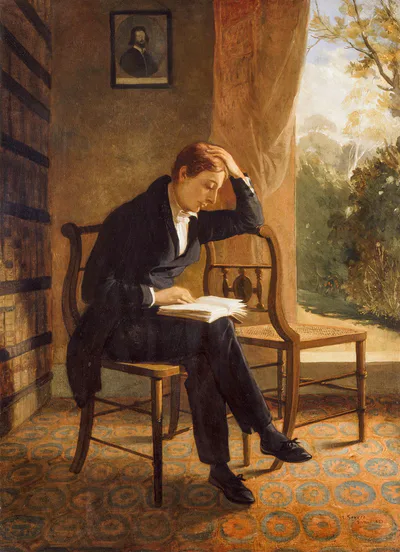
Romantic Composers & Their Public
Genre Definitions
2
INNER WORLD
The Napoleonic Wars (1789-1814) and the French Revolution meant that many members of the aristocracy could not longer fund musicians, opera houses, orchestras etc.
Musicians lost jobs in small states when they merged into bigger nations politically and borders shifted.
Romantics wrote primarily for a middle-class audience.
Music schools or Conservatories were established in the early part of the century.
OUTER WORLD
Beethoven inspired Romantics with the "free artist" image and ideal; they wrote music to fulfil an inner need rather than a commission. Sometimes their works would sit on a shelf for years before they could be performed.
Some were looking to leave a legacy, to leave something beautiful, stirring, or important behind artistically.
Composers came from other walks of life rather than learning the craft from parents/forebears. They had to convince their parents that they could make it as musicians.
3
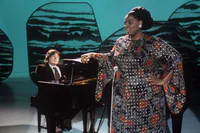


A musical setting of a poem for solo voice and piano, where the voice and piano are partners in the intrepretation and story-telling. Both the melody and the accompaniment can be descriptive of the scene.
The form can be strophic, modified strophic or through-composed, depending on the poem's structure and meaning.
A song cycle is a set of art songs with unifying text or musical ideas.
ART SONG (lied)
A relatively short piece which is descriptive of a particular mood or non-musical subject.
These pieces often have a descriptive title, e.g. Nocturne, Elegy, that give a hint to the mood/scene.
Schumann's Carnaval is a set of character pieces where each piece is either descriptive of a scene of love, of a friend, or of the different sides of his own personality.
CHARACTER PIECE
An etudy is a study - a piece that teaches the player some aspect of technique. A concert etude is a study that is written for the concert hall, and is thus composed with more musicality and showmanship than an ordinary technical study.
Concert etudes are impressive, musically rich and large in scale, all while still teaching and showing off technique.
Chopin's Etudes Op. 10 and 25. are a prime example of etudes for public performance.
CONCERT ETUDE
4


An orchestral piece written in the style of an overture without being attached to a stage production.
A concert overture is usually based on a literary theme, e.g. Mendelssohn's A Midsummer Nights Dream Overture or Tchaikovsky's Romeo and Juliet.
The music is programmatic and evocative of the various scenes and emotions of the story or text.
CONCERT OVERTURE
A symphonic poem or tone poem is a piece of orchestral music, usually in a single continuous movement, which illustrates or evokes the content of a poem, short story, novel, painting, landscape, or other (non-musical) source.
A tone poem aims to capture the listener's imagination and evoke scenes, ideas and moods in one continous movement. In a sense it is a reflection of romantic intensity: rather than spreading ideas over multiple movements, all emotions and ideas are pulled together - often abandoning form in favour of substance, i.e. using strict sonata form was less important than coveying the ideas and emotions of the subject matter.
TONE POEM (symphonic poem)
1820-1900
Romantic Composers & Their Public
Genre Definitions
Show answer
Auto Play
Slide 1 / 4
SLIDE
Similar Resources on Wayground

1 questions
CÂU HỎI HỘI THI AN TOÀN GIAO THÔNG
Presentation
•
KG
1 questions
Caramelized Petit Fours
Presentation
•
11th Grade
2 questions
Consciência Negra.
Presentation
•
11th Grade
3 questions
Interpretação de Textos
Presentation
•
11th Grade
2 questions
Reunião 6- Ed Financeira
Presentation
•
KG
1 questions
Trying
Presentation
•
11th - 12th Grade
1 questions
Actividad solidaria 5to
Presentation
•
11th Grade
1 questions
Fight the spread of communism
Presentation
•
11th Grade
Popular Resources on Wayground
21 questions
Continents and Oceans

Quiz
•
6th Grade
20 questions
Parts of Speech
Quiz
•
5th Grade
16 questions
Subject & Predicate
Quiz
•
5th Grade
25 questions
Multiplication Facts
Quiz
•
5th Grade
12 questions
Map Skills
Quiz
•
3rd Grade
22 questions
Continents and Oceans
Quiz
•
5th Grade
15 questions
Rounding Decimals
Quiz
•
5th Grade
20 questions
Brand Labels
Quiz
•
5th - 12th Grade
Discover more resources for Performing Arts
20 questions
Brand Labels
Quiz
•
5th - 12th Grade
10 questions
Exploring the 4 Major Macromolecules and Their Functions

Interactive video
•
9th - 12th Grade
20 questions
Cell Transport
Quiz
•
9th - 12th Grade
20 questions
Metric Conversions
Quiz
•
11th Grade
20 questions
Budgeting
Quiz
•
9th - 12th Grade
20 questions
Investing
Quiz
•
9th - 12th Grade
25 questions
Spanish Speaking Countries Map Quiz Review
Quiz
•
9th - 12th Grade
15 questions
PRESENTE CONTINUO
Quiz
•
9th - 12th Grade