9/6 Virus Structure and Reproduction
Presentation
•
Biology
•
12th Grade
•
Easy
Standards-aligned
Aleyah Lyles
Used 6+ times
FREE Resource
30 Slides • 20 Questions
1
2
3
4
5
6
7
8
9
Multiple Choice
A virus is
living
non living
dead
10
Multiple Choice
They use oxygen
They have genetic material
They grow
They digest food
11
Multiple Choice
False
True
12
13
14
15
16
17
Multiple Choice
A virus is considered non-living because...
They do not have DNA
It does not have all the characteristics of life
They can't evolve
They make you sick
18
Multiple Choice
What part of a virus houses the genetic material (DNA/RNA)?
tail
nucleus
capsid
lipid
19
Multiple Choice
nucleic acid strand surrounded by a protein coat
a tail surrounded by a protein coat
a tail surrounded by a carbohydrate coat
nucleic acid strand surrounded by a carbohydrate coat
20
Multiple Choice
endospore
decomposer
plasmid
bacteriophage
21
22
23
24
25
26
27
28
29
Drag and Drop
30
Multiple Choice
What is the main function of the surface markers on a virus?
They aid in respiration
They help the virus grow
They help the virus invade its host by attaching to specific sites on the host
They help the virus digest food molecules
31
Multiple Choice
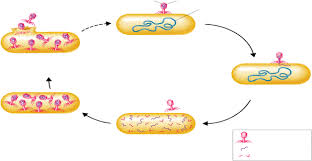
The viruses genetic material (DNA) starts to take over the functions of the cell
The host cell bursts open, releasing the new viruses
The virus injects its genetic material into the cell
A virus attaches to the surface of a host cell
32
33
34
35
36
37
38
39
40
41
Match
Match the following pictures to their names:
Eukaryotic Cell
Prokaryotic Cell
Bacteriophage virus
Flu virus
Eukaryotic Cell
Prokaryotic Cell
Bacteriophage virus
Flu virus
42
Multiple Choice
Which replication cycle has a long/slow incubation period?
Lytic Cycle
Lysogenic Cycle
43
Multiple Choice
they are both living
they are both cells
they can both cause disease
they are both non-living
44
Multiple Choice
phagocytosis
lytic cycle
lysogenic cycle
formation of antibodies
45
Multiple Choice
Which viral cycle kills its host cell by lysing (exploding)?
lytic
mitosis
lysogenic
S phase
46
Multiple Choice
What do viruses have to do in order to replicate (make copies)?
cell division
infect a host cell
mitosis
binary fission
clone itself
47
Multiple Choice
Lysogenic Cycle
Lytic Cycle
Binary Fission
Conjugation
48
Multiple Choice
Which virus life cycle allows the virus to combine DNA producing half viral DNA and half host cell DNA?
lytic
lysogenic
49
Hotspot
Look at the image and select the, "DNA OR RNA."
50
Multiple Select
Which of these statements are true? (more than one answer)
Viruses cannot reproduce on their own
Viruses can reproduce on their own
Viruses cannot metabolize energy
Viruses can metabolize energy
Viruses need a host cell to reproduce and metabolize energy
Show answer
Auto Play
Slide 1 / 50
SLIDE

Similar Resources on Wayground
43 questions
Virus
Presentation
•
11th Grade
44 questions
03 The Carbon and Water Cycle
Presentation
•
12th Grade
40 questions
9.1 Sexual Reproduction in Flowering Plants
Presentation
•
12th Grade
44 questions
DNA & Chromosomes
Presentation
•
12th Grade
47 questions
IA study guide 3 of 3
Presentation
•
12th Grade
46 questions
SISTEM PENCERNAAN
Presentation
•
11th Grade
43 questions
BIO110- Chapter 5
Presentation
•
University
Popular Resources on Wayground
15 questions
Grade 3 Simulation Assessment 1
Quiz
•
3rd Grade
22 questions
HCS Grade 4 Simulation Assessment_1 2526sy
Quiz
•
4th Grade
16 questions
Grade 3 Simulation Assessment 2
Quiz
•
3rd Grade
19 questions
HCS Grade 5 Simulation Assessment_1 2526sy
Quiz
•
5th Grade
17 questions
HCS Grade 4 Simulation Assessment_2 2526sy
Quiz
•
4th Grade
20 questions
Equivalent Fractions
Quiz
•
3rd Grade
24 questions
HCS Grade 5 Simulation Assessment_2 2526sy
Quiz
•
5th Grade
20 questions
Math Review
Quiz
•
3rd Grade
Discover more resources for Biology
16 questions
AP Biology: Unit 1 Review (CED)
Quiz
•
9th - 12th Grade
20 questions
AP Biology: Unit 3 Review (CED)
Quiz
•
9th - 12th Grade
21 questions
AP Biology: Unit 6 Review (CED)
Quiz
•
9th - 12th Grade
14 questions
AP Biology: Unit 4 Review (CED)
Quiz
•
9th - 12th Grade
20 questions
Food Chains and Food Webs
Quiz
•
7th - 12th Grade
30 questions
AP Biology Unit 8 Review
Quiz
•
9th - 12th Grade
15 questions
Evidence of Evolution
Quiz
•
8th - 12th Grade
15 questions
Pedigrees
Quiz
•
7th - 12th Grade