

Russian revolution

Presentation
•
History
•
9th Grade
•
Practice Problem
•
Easy

Ayisha Faheema
Used 3+ times
FREE Resource
28 Slides • 14 Questions
1


Socialism in Europe and the
Russian Revolution
Chapter 2
2


Learning Aims /Objectives
●To discuss in many parts of the world including Europe and Asia,
new ideas about individual rights and who controlled social power
began.
●To focus on one historical event in which there was an attempt at a
radical transformation of society.
3


The Age of Social Change
●After the revolution in many parts of the world including Europe
and Asia, new ideas about individual rights and social power began
●The significance of the French Revolution talked around the world
●The developments in the many colonies reshaped ideas of societal
change.
●Some of them wanted a complete transformation of society.
4
Open Ended
What were the major ideas that propogated around the globe during the revolutions.
Write the three ideas.
5
Open Ended
What were the importat political organizations named in the Russia ?
6


The important political traditions of the nineteenth century
1.
Liberals
2.
Radicals and
3.
Conservatives
7


Liberals
●The group which looked to change society were the liberals.
●Liberals wanted a nation which tolerated all religions.
●They opposed the uncontrolled power of dynastic rulers
●They wanted to safeguard the rights of individuals against governments.
●They argued for a representative, elected parliamentary government
● a well-trained judiciary that was independent of rulers and officials
●They did not believe in universal adult franchise,
●They opposed the privileges of great landowners and wealthy factory owners
8
Open Ended
Write any two features of Liberals
9


Radicals
●Radicals wanted a nation in which government was based on the
majority of a country’s population
●Supported women’s suffragette movements (A movement to give
women the right to vote)
●They were not against the existence of private property
10


Conservatives
●In the 18th Century, Conservatives had been generally opposed to the
idea of change.
●By the19th Century, they accepted that some change was inevitable
●They believed that the past had to be respected and change had to be
brought about through a slow process
●Conservatives were opposed to radicals and liberals
11
Open Ended
Write any two features of conservatives
12


Learning Aims /Objectives
●To analyse the Industrial Society and Social Change
●To study about the Marxism and the coming of Socialism to
Europe
13


Need for a social change:-
●Liberals and radicals searched for solutions to these issues
●They opposed to the privileges the old aristocracy had by birth.
●They firmly believed in the value of individual effort, labour and enterprise.
●Freedom of individuals was ensured,
●The poor could labour,
●Those with capital could operate without restraint
●They believed that societies would develop.
●Many working men and women who wanted changes in the world rallied
around liberal and radical groups and parties in the early nineteenth century.
14


France, Italy, Germany and Russia, they became revolutionaries and
worked to overthrow existing monarchs.
Some nationalists, liberals and radicals wanted revolutions to put an
end to the kind of governments established in Europe in 1815
By the mid - nineteenth century in Europe, socialism was a
well-known body of ideas that attracted widespread attention.
The Coming of Socialism to Europe
15


Socialism
Socialists had different visions of the future
https://docs.google.com/document/d/1y67QF8GvnB33Ofuu4pgudVIAqvIoqGg-dfMF0ihp5dU/edit?
usp=sharing
16
Poll
Did you finish the worksheet?yesy
yes
no
17


Support for Socialism
By the 1870s, socialist ideas spread through Europe.
To coordinate their efforts, socialists formed an international body –
namely, the Second International.
They set up funds to help members in times of distress and demanded a
reduction of working hours and the right to vote
Till 1914, socialists never succeeded in forming a government in Europe
Represented by strong figures in parliamentary politics, their ideas did
shape legislation
18


Workers in England and Germany began forming associations to fight for
better living and working conditions
In Germany, these associations worked closely with the Social Democratic
Party (SPD) and helped it win parliamentary seats
In Britain, socialists and trade unionists formed a Labour Party
In France, formed a Socialist Party
19


Learning Aims /Objectives
To explain the features of February revolution
To explain the features of october revolution
To analyse stalinism and collectivism
20
It's time to revise !
PRE TEST
21
Multiple Choice
____ wanted a nation which tolerated all religions
Conservatives
Liberals
Radicals
22
Multiple Choice

Identify the shaded part in the globe
European Russia
Australia
Northern America
Indonasia
23
Multiple Choice
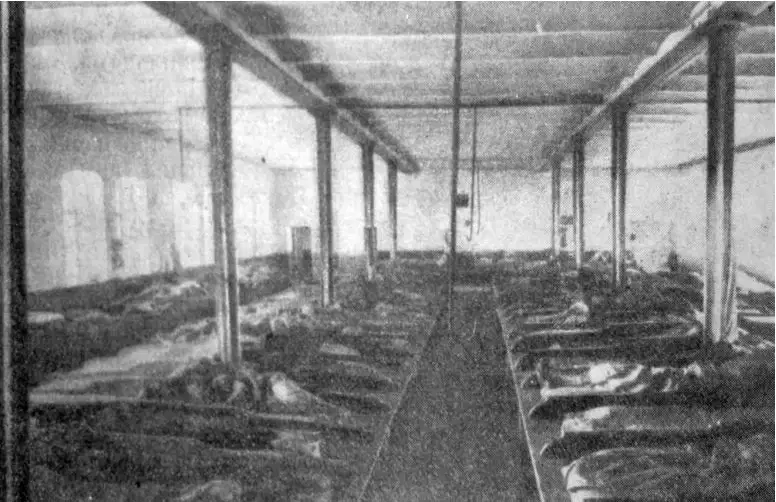
Choose the correct answer for the given statement.
''Workers sleeping in bunkers in pre revolutianary Russia''
Statement is correct
Statemant is wrong
I didnot understand this picture
24
Open Ended
Write a note on Russian Monorchy
25
Multiple Choice
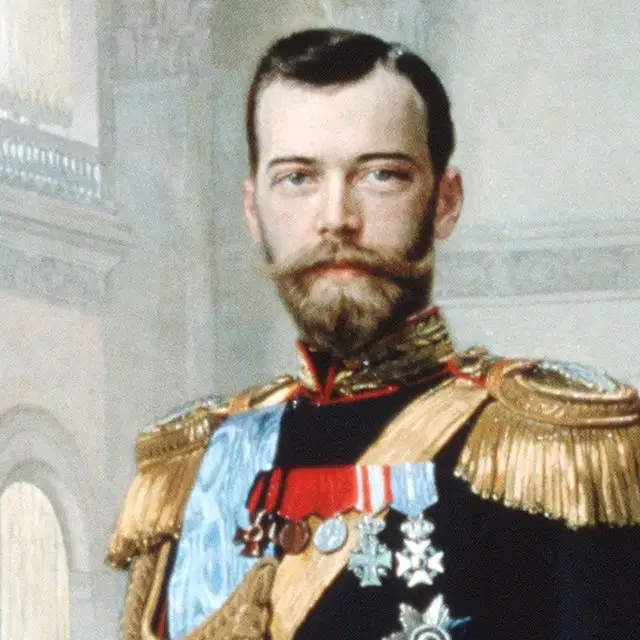
Identify the figure
Sir John Marshall
Tsar Nicholas II
Vadimar Lenin
26

LOB
Explain the features of February Revolution and October Revolution
27
Do now..!
Briefly explain the petrograd protest in your experimental side of NB
28

Refer the TB page: 35&36
29
Open Ended
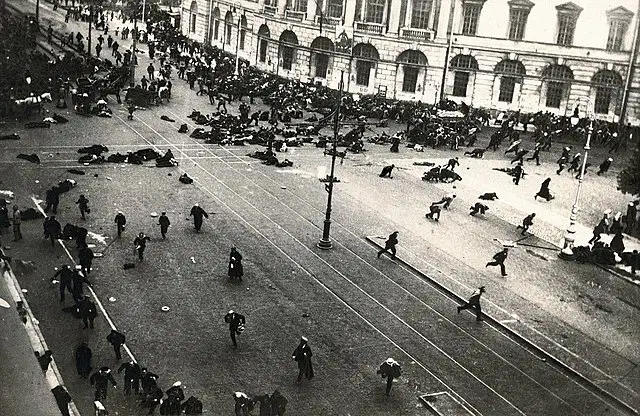
Explain the petrograd protest.
1. Physical Situation of the public
2. Role of women
3. Protest on different days
(Write in NB too)
30

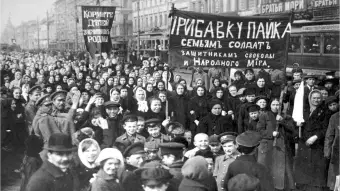

The February Revolution in Petrograd
In Russia, the February Revolution (known as such because of Russia's use of the Julian calendar) begins when riots and strikes over the scarcity of food erupt in Petrograd. ... By
1917, most Russians had lost faith in the leadership ability of the Tsar’s (czarist) regime.
On 22 February, a lockout took place at a factory on the right bank. The next day, workers in fifty factories called a strike in sympathy. In many factories, women led the way to strikes. This came to be called the International Women’s
Day
31
Multiple Select
Vacabulary of the day:
Curfew means: a rule that everyone must stay at home between particular times, usually at night, especially during a war or a period of political trouble
I have noted in my NB.
The word is very familiar to me.
I cant write now.
32
Poll
Vacabulary of the day:
Curfew means: a rule that everyone must stay at home between particular times, usually at night, especially during a war or a period of political trouble
I have noted in my NB.
The word is familiar to me
33
Poll
EXIT CARD
I understood clearly!
I will read today, then i will come to know more!
I am confused!
It is tough for me!
I didnt listen today!
34


Petrograd had led the February Revolution that brought down the
monarchy in February 1917
On Sunday, 25 February, the government suspended the Duma.
Politicians spoke out against the measure
On the 26th, Demonstrators returned in force to the streets of the
left bank
On the 27th, the Police Headquarters were ransacked
On 2 March, Soviet leaders and Duma leaders formed a
Provisional Government to run the country.
35


The Revolution of October 1917
On 16 October 1917, Lenin persuaded the Petrograd Soviet and the Bolshevik
Party to agree to a socialist seizure of power.
A Military Revolutionary Committee was appointed by the Soviet under Leon
Trotskii to organise the seizure
On 24 October. Sensing trouble, Prime Minister Kerenskii had left the city to
summon troops
The Military Revolutionary Committee ordered its supporters to seize
government offices and arrest ministers.
36


What Changed after October?
1.
Most industry and banks were nationalised in November 1917
2.
Land was declared social property and peasants were allowed to seize the
land of the nobility
3.
Banned the use of the old titles of aristocracy
4.
New uniforms were designed for the army and officials
5.
The Bolshevik Party was renamed the Russian Communist Party .
6.
Russia became a one-party state.
7.
The secret police punished those who criticised the Bolsheviks.
37


Making a Socialist Society
Five Year Plans was introduced : The government fixed all prices to promote
industrial growth
● Centralised planning led to economic growth
●Industrial production increased
●New factory cities came into being.
●An extended schooling system developed,
●Cheap public health care was provided.
38


Stalinism and Collectivisation
●Stalin, who headed the party after the death of Lenin,
●Serving in the Russian Civil War before overseeing the Soviet
Union's establishment in 1922, Stalin assumed leadership over the
country following Lenin's death in 1924.
39


●Stalin introduced firm emergency measures
●He believed that rich peasants and traders in the countryside were holding
stocks in the hope of higher prices. Speculation had to be stopped and
supplies confiscated.
●In 1929, the Party forced all peasants to cultivate in collective farms
●The bulk of land and implements were transferred to the ownership of
collective farms. Peasants worked on the land, and the kolkhoz profit was
shared
40


❖
Between 1929 and 1931 peasants resisted the authorities and destroyed
their livestock
❖
Those who resisted collectivisation were severely punished
❖
By 1939, over 2 million were in prisons or labour camps. Most were
innocent of the crimes
41


The Global Influence of the Russian
Revolution and the USSR
●The possibility of a workers’ state fired people’s imagination across
the world.
●In many countries communist parties were formed, like the
Communist Party of great Britain.
●The Bolsheviks encouraged colonial people to follow their
experiment.
42


CONCLUSION
Socialism in Europe and the
Russian Revolution
Chapter 2
Show answer
Auto Play
Slide 1 / 42
SLIDE
Similar Resources on Wayground

34 questions
Linear, Quadratic, or Exponential?
Presentation
•
9th Grade
36 questions
Subject Verb Agreement
Presentation
•
KG - 9th Grade
35 questions
Byzantine Empire
Presentation
•
9th Grade
38 questions
Mitosis
Presentation
•
9th Grade
37 questions
European Imperialism Intro
Presentation
•
9th Grade
37 questions
Imperialismo
Presentation
•
9th Grade
36 questions
Good and Bad Roman Emperors Day 2
Presentation
•
9th Grade
37 questions
Macromolecules
Presentation
•
9th - 10th Grade
Popular Resources on Wayground
25 questions
The Ultimate College Knowledge Quiz

Quiz
•
8th Grade
20 questions
Math Review
Quiz
•
3rd Grade
15 questions
Fast food
Quiz
•
7th Grade
20 questions
Math Review
Quiz
•
6th Grade
20 questions
Context Clues
Quiz
•
6th Grade
20 questions
Inferences
Quiz
•
4th Grade
19 questions
Classifying Quadrilaterals
Quiz
•
3rd Grade
20 questions
Figurative Language Review
Quiz
•
6th Grade
