

Working Conditions & Unions

Presentation
•
Social Studies
•
11th Grade
•
Practice Problem
•
Easy

Victoria Malcolm
Used 4+ times
FREE Resource
10 Slides • 8 Questions
1
10/4
2
Do Now
When looking for a job, what things do you look for? (like conditions, pay, hours,etc.)
*Please turn in your worksheet from yesterday on the counter by the sink!*
3
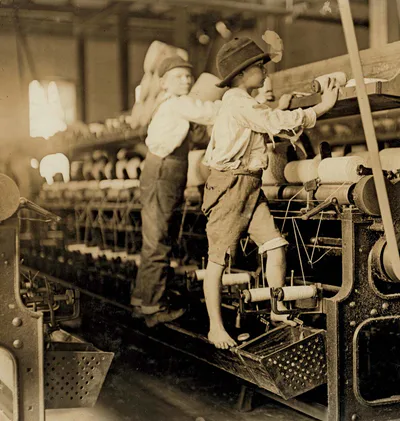
We are learning to describe the experiences of factory workers circa 1900.
Success Criteria
I can visualize what it was like to work in a factory around 1900.
I can identify evidence of the working conditions around 1900 in primary sources.
I can share my thinking about working conditions with my class and listen for similarities to what I discovered.
Learning Target
4
Reading (pg 77-82)
Source #1, pg 77 = Joseph, Kaden, Coleeena, Holden, Joe, Eliana
Source #2, pg 78 = Aarion, Jaydin, Kara, Savannah, Nick, Jermaine
Source #3, pg 79-80 = Isaiah, Noelle, Sydney, Elizabeth, Kaliyah, Mi'Lesia
Source #4, pg 81-82 = Simone, Anesiah, Zaniyah, Dori, Austin, Jordan
5
Look for:
How many hours did workers work?
How much money did they make?
Was the work environment safe?
Was the work environment healthy?
How old were the workers described?
Highlight or underline anything that will help you answer these questions!
6
Open Ended
What source did you read? (1-4) What kind of workers are being described? (For example, workers on the railroad or in a dress shop, children or adults, etc)
7
Open Ended
What is the workspace described in your reading like?
8
Open Ended
About how long was the workday for the workers described? How much money did they make?
9
Open Ended
What health risks to workers are mentioned in the text?
10
Poll
If you had to choose one, which of the described places would you rather work?
1 & 4- Sewing Shop
2 & 3- Coal Mine/ Sorting
11
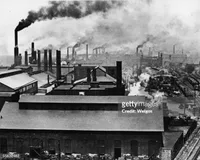
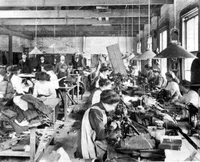
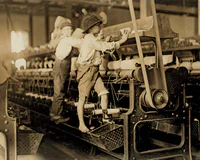
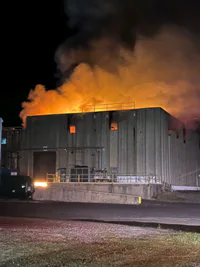
Injuries and fires were common due to fatigue, bad equipment, or poor training. In 1882, about 675 laborers died PER WEEK.
Dangers
Workers often did mind-numbing tasks for 12+ hrs a day, 6-7 days a week.
Long Hours
Workers had no benefits and were paid very little. Some were paid by pieces produced instead of hours.
Low Wages
Wages were so low that families needed every member to work. In the 1880s, kids made up 5% of industrial labor force.
Child Labor
12
Open Ended
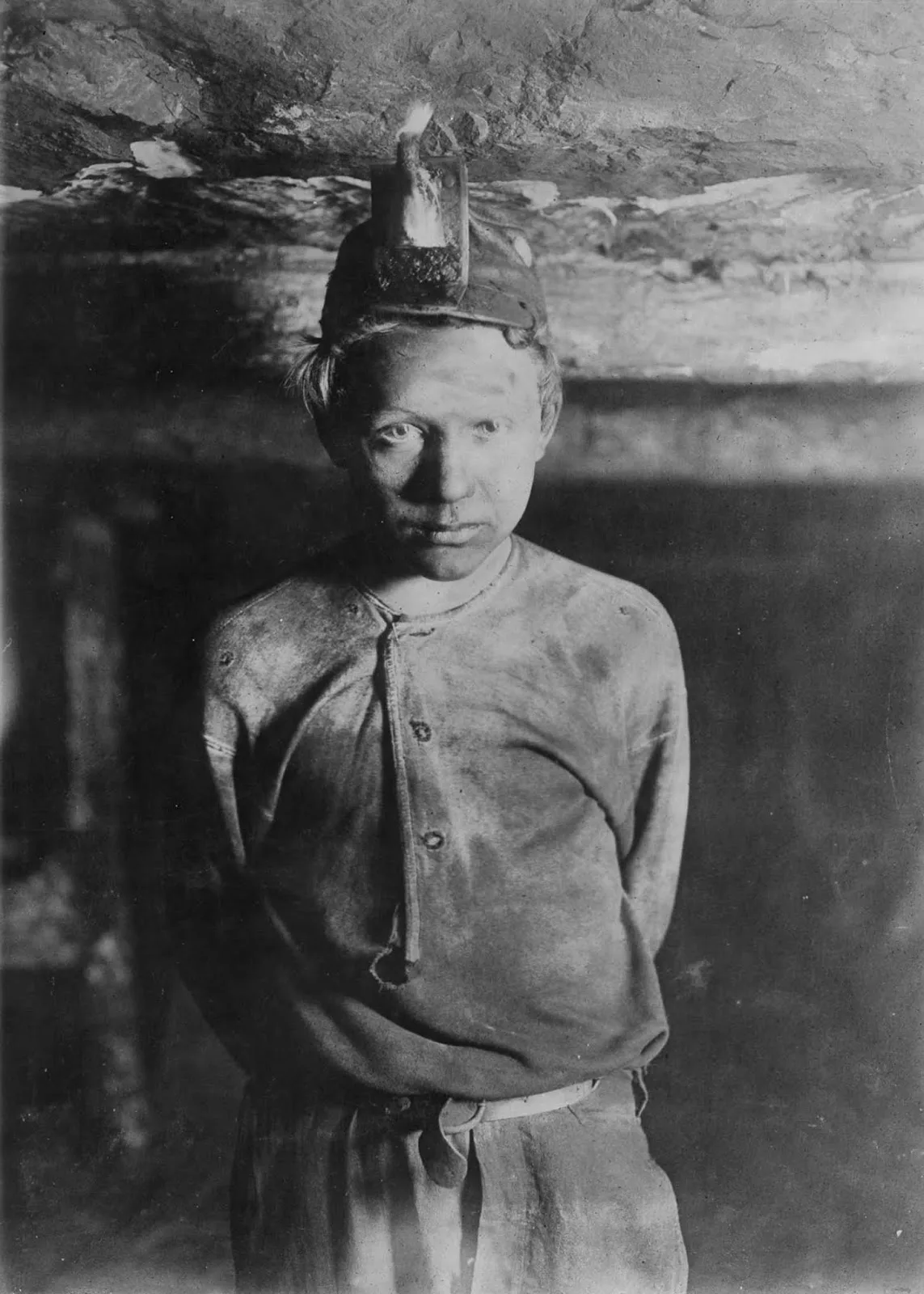
Imagine that you were a worker during this time. What improvements would you want in your workplace?
13
Turn to page 83 in your coursepack.
US has capitalist/free market system.
Industrialists said working conditions were designed to make a profit
In a true free market, government is not supposed to interfere.
Sherman Anti-Trust Act(1890) outlawed monopolies (kind of)
14
Open Ended
How did industrialists justify the poor working conditions for their laborers?
15
So what can workers do?
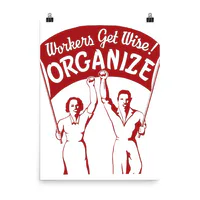
Join together for strength and fight back.
Created labor unions to fight for workers' interests
Boycotts- get customers to refuse product or service
Strikes- work stoppage to force employers to meet demands
Collective Bargaining- negotiate as a group
16

Some thought the economic system should be changed as capitalism seemed to create inequality.
Pg 84
Is capitalism the best system?
17
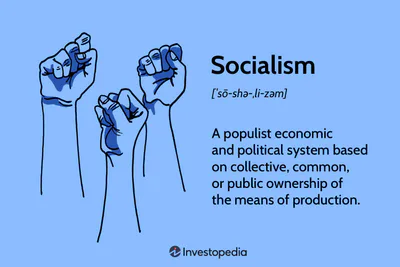
The goal is equal distribution of wealth.
Government ownership of some essential industries like healthcare, gas, electricity.
What is socialism?
18
Open Ended
Why do you think that industrialists feared a socialist economic system?
10/4
Show answer
Auto Play
Slide 1 / 18
SLIDE
Similar Resources on Wayground

14 questions
Simplifying Radicals and Exponentials- Ms. Jones Algebra 11
Presentation
•
11th Grade
13 questions
ENGLISH SPM PRACTICE
Presentation
•
11th Grade
15 questions
SI Units
Presentation
•
11th Grade
16 questions
Nationalism in Europe
Presentation
•
10th Grade
14 questions
Key Supreme Court Cases: RACE
Presentation
•
11th - 12th Grade
13 questions
ICFES PRACTICE - QUESTIONS TYPE 3
Presentation
•
11th Grade
13 questions
Graphing Quadratics
Presentation
•
11th Grade
14 questions
Electron Math
Presentation
•
9th - 12th Grade
Popular Resources on Wayground
10 questions
How much do you know about our Portrait of an Eagle?

Quiz
•
10th Grade
10 questions
Fast Food Slogans
Quiz
•
6th - 8th Grade
21 questions
Continents and Oceans
Quiz
•
6th Grade
20 questions
Parts of Speech
Quiz
•
5th Grade
16 questions
Subject & Predicate
Quiz
•
5th Grade
25 questions
Multiplication Facts
Quiz
•
5th Grade
12 questions
Map Skills
Quiz
•
3rd Grade
22 questions
Continents and Oceans
Quiz
•
5th Grade
Discover more resources for Social Studies
17 questions
1.3 Review
Presentation
•
11th Grade
8 questions
Smith Unit 5 Quick Check #1 Big Business, Monopolies &Technology
Quiz
•
11th Grade
46 questions
Unit 1 Test REVIEW Ancient Greece and Rome
Quiz
•
9th - 12th Grade
36 questions
Unit 5 Key Terms
Quiz
•
11th Grade - University
63 questions
Progressive Common Assessment
Quiz
•
11th Grade
12 questions
supply and demand shifters
Quiz
•
9th - 12th Grade
10 questions
0.6 Statistics in Psychology
Quiz
•
11th Grade
16 questions
Unit 3 Personal Finance Guided Notes
Presentation
•
9th - 12th Grade