

Romanticism and Transcendentalism

Presentation
•
Other
•
KG - Professional Development
•
Practice Problem
•
Medium

Heather Crain
Used 2+ times
FREE Resource
7 Slides • 7 Questions
1
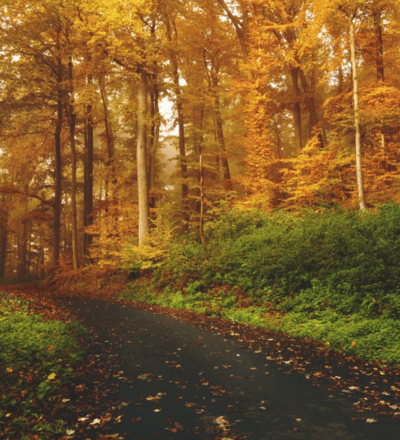
"According to Emerson, the highest for of language was the language of nature."
Trancendentalism & Romanticism
2
How do journeys influence perspective?

Essential Question
3
After an initial reading about Transcendentalism and Romanticism, students will be able to identify characteristics of the literary focus.
Learning Objective
4
Vocabulary
Romanticism - a movement in literature and art during the late 18th and early 19th centuries that celebrated nature rather than civilization.
Industrialism - an economic system built on large industries rather than on agriculture or craftsmanship.
Transcendentalism - a system of philosophy emphasizing the intuitive and spiritual above the empirical and material.
Trancendental Club - people in the 19th century who created Transcendentalism.
5
Vocabulary
Symbolism - the use of concrete objects to represent abstract ideas or qualities.
Allegory - an expressive style that uses fictional characters and events to describe a subject.
Free verse - poetry that does not rhyme and does not have regular meter.
6
Optimism & Individualism
Kinship with Nature
The Power of Darkness
Romanticism & Transcendentalism Major Concepts
7
What was America "caught up in" when Romantic ideals arrived in Europe?
2. What was the first essay to expound (explain in detail) the ideals of Transcendentalism? Who wrote it?
3. What styles or forms did Romantics and Transcendentalists prefer?
Text Talk Questions: Highlight the answers in your textbook.
8
Multiple Choice
The following passage (paragraph 3) mainly adds to the development of the text by:
"When Romantic ideals reached America in the early nineteenth century, the nation was caught up in a massive westward expansion and was simultaneously trying to define what it was to be American, both to itself and to the world. As American cities and towns grew, people had more time for philosophical and creative endeavors and began to write original works of fiction and poetry, as well as contemplative essays."
describing the conditions under which Romanticism gained popularity in America
showing that Romanticism resulted in happier and more creative individuals
claiming that the Romantic movement inspired exploration and colonial expansion in America
defining the basic concepts and beliefs held by Romantic artists
9
Multiple Choice
What is the central idea of the following passage (paragraph 13)?
"So where’s the romance? American Romanticism and Transcendentalism are not about romance, per se, but they do have something to do with love—the love of truth, the love of beauty, and the love of nature. Like romantic love, Romanticism is characterized by optimism, idealism, and intuition. Romanticism and Transcendentalism, however, direct all of this love and optimism not toward another person, but toward the natural world and the divine within ourselves. The ideals of “big R” Romanticism, as well as Transcendentalism, are woven into the fabric of the American psyche. We can see their effects in movies about people who retreat to nature to become closer to themselves or reassess their life’s purpose. We see these themes played out in stories about rugged individualists."
Romanticism is the singular most influential social and philosophical movement in the United States.
Romanticism has lost significance and relevance in our increasingly technology-based world.
The principles and values of Romanticism are still present in modern America and everyday life.
In recent years, Romantic ideas and beliefs have widely replaced traditional religious practices.
10
Multiple Choice
Which of the following statements about Unitarians is best supported by the text?
They believed in adhering to strict Christian tradition, such as regular church services and male clergy.
They claimed that art and literature distracted individuals from religious spirituality.
They believed that the inherent sin in human nature could only be purified through the natural world.
They were positive about the possibility of human beings.
11
Multiple Choice
Free verse was a popular poetic form during the Romantic period mainly because...
Romantics rejected traditional education and schooling, so they often did not know many other poetic forms
Walt Whitman was the most famous Romantic poet and he wrote only in free verse
Romanticism rejected structure and established customs, in favor of individualism and creativity
it was believed that free verse best mimicked the unstructured flow and ebb of the natural world
12
Match
Match the following
A relatively short piece of writing that attempts to grapple with an idea, explain something, or argue a point.
Religious movement that perceived God as a singular being and had an optimistic view of human nature
Non-metrical, non-rhyming form of poetry that tends to follow the natural cadence of speech
Group of authors who contemplated sin, the nature of human fallibility, and the intrinsic challenges of social reform
Essay
Unitarianism
Free verse
the Dark Romantics
Essay
Unitarianism
Free verse
the Dark Romantics
13
Reorder
Reorder the following
"Big R" romanticism - as opposed to "little r" romanticism - dealt with big emotions and ideas.
Spanning from 1820 until the end of the Civil War in 1865, American Romanticism was highly concerned with the individual and the literature of the era depicted the experiences of the common man in colloquial language.
Transcendentalism centered on the belief that there was a part of the self that transcended the physical senses and logic, was highly in tune with nature, and brought individuals a kind of direct, divine knowledge.
We are considering how we want the world to be and how, as individuals, we can contribute to the greater good.
14
Open Ended
What do Romanticism and Transcendentalism have in common?
"According to Emerson, the highest for of language was the language of nature."
Trancendentalism & Romanticism
Show answer
Auto Play
Slide 1 / 14
SLIDE
Similar Resources on Wayground

13 questions
Affirmative Tú Commands
Presentation
•
8th Grade
9 questions
Army JROTC
Presentation
•
9th - 12th Grade
11 questions
Food Safety and Sanitation Chapter 2.1-2.2
Presentation
•
10th - 12th Grade
12 questions
Honesty
Presentation
•
3rd Grade
10 questions
World Cup People
Presentation
•
1st - 5th Grade
11 questions
Kitchen Safety
Presentation
•
1st - 12th Grade
10 questions
SENAM IRAMA
Presentation
•
8th Grade
10 questions
Food label Notes
Presentation
•
9th Grade
Popular Resources on Wayground
24 questions
PBIS-HGMS Day 10

Quiz
•
6th - 8th Grade
10 questions
HCS SCI 03 Summer School Review 3
Quiz
•
3rd Grade
11 questions
Home Scope
Quiz
•
7th - 8th Grade
15 questions
HCS SCI 05 Summer School Assessment 3 Review
Quiz
•
5th Grade
35 questions
Lufkin Road Middle School Student Handbook & Policies Assessment
Quiz
•
7th Grade
18 questions
Geo 11.3 Area of Circles and Sectors
Quiz
•
9th - 11th Grade
Discover more resources for Other
24 questions
PBIS-HGMS Day 10
Quiz
•
6th - 8th Grade
10 questions
HCS SCI 03 Summer School Review 3
Quiz
•
3rd Grade
11 questions
Home Scope
Quiz
•
7th - 8th Grade
15 questions
HCS SCI 05 Summer School Assessment 3 Review
Quiz
•
5th Grade
35 questions
Lufkin Road Middle School Student Handbook & Policies Assessment
Quiz
•
7th Grade
18 questions
Geo 11.3 Area of Circles and Sectors
Quiz
•
9th - 11th Grade