Search Header Logo
4.6 Glaciers Lesson

4.6 Glaciers Lesson

Assessment

Presentation

Science

1st - 5th Grade

Easy

NGSS
MS-ESS1-1, MS-ESS2-4, MS-ESS2-2

+7

Standards-aligned

Created by

Jeffrey Reed

Used 10+ times

FREE Resource

27 Slides • 10 Questions

1

media
media

4.6 Glaciers

​continental glacier

​alpine glacier

2

​How Does Ice Shape the Earth?

  • Glacier= mass of moving ice formed by compacted snow

  • ​Large glaciers slowly move downhill.

    • ​They pick up materials as they move, which they later drop as they melt

      • Glacial drift= movement of materials by glaciers

  • ​They also cause scratches and abrasions on the rocks they pass.

media
media

3

​Types of Glaciers

  • Alpine glacier-forms in a mountainous area.

    • Often form in a V-shaped valley.

    • ​Widen it into a U-shape.

  • ​Alpine landforms:

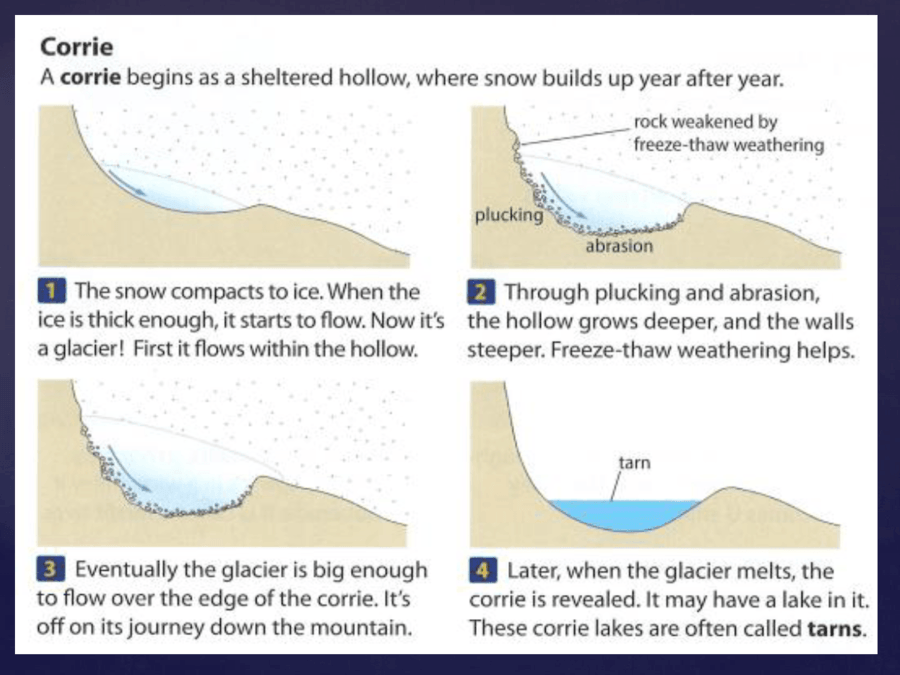
    • Cirque= bowl-shaped depression

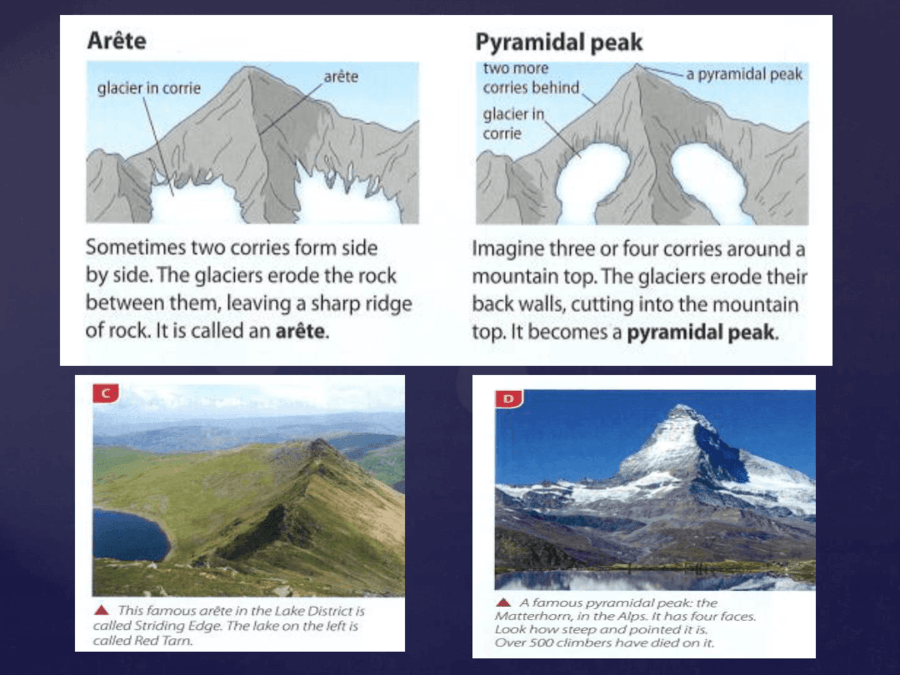
    • Arete= ridge between 2 cirques

    • Horn= 3 or more aretes joined together

media
media

4

media

5

media
media
media

​Antarctica

Continental glaciers are continuous masses of ice that are much larger than alpine glaciers.

-cover relatively flat ground.
-cause flatter, less rugged landforms

6

Multiple Choice

An alpine glacier can turn a V-shaped valley into what shape?

1

A-shaped

2

U-shaped

3

W-shaped

4

S-shaped

7

Multiple Choice

Question image

What is another name for the bowl shape left behind by an alpine glacier?

1

Arete

2

Horn

3

Cirque

4

Sand dune

8

​Continental Glaciers

  • ​Form over a large, mostly flat area

  • ​Flatten and smooth the land as they move

  • ​Continental landforms:

    • Erratics= large boulders deposited by a glacier

    • Kettle lakes= lakes formed by chunks of ice left behind by a glacier

media
media
media

9

​Kettle Lakes

10

Erratics

11

Multiple Choice

Question image

Which type of glacier causes flatter, less rugged landforms?

1

Continental

2

Alpine

12

Multiple Select

Question image

Which of these landforms would most likely be formed by a continental glacier? (you may select more than one)

1

Arete

2

Cirque

3

Erratic

4

Kettle lake

13

​Weathering

Ice- ​Glacier- a large body of ice is pulled down the mountain by gravity, taking large chunks of rock from the mountain with it.

media

14

Land is constantly being worn down by wind, water, and ice.

This valley was carved out by a glacier millions of years ago.

​This arch was carved by high wind over thousands of years.

media
media

15

Multiple Choice

Question image

What is this?

1

mountain

2

ocean

3

valley

4

glacier

16

17

A glacier is like a bulldozer.

As glaciers grow they push soil and rocks. As the glacier melts, it lifts soil and rocks and moves them.

media

18

Ice Erosion

  • Glaciers carry rocks, soil, and sediments.

  • As the glaciers slowly move, it carries the sediments along with it.

  • Avalanches carry the sediments along with the snow down the mountainside.

media

19

​Moraines

20

Glacial Deposits

  • Moraines are formed when a glacier melts and the debris that it had been carrying get dropped in a new place.

media
media

​debris - small pieces of rock

21

Glacier National Park

media

22

media

23

media

24

media

​Basin - a large hole in the ground that can contain water - scientifically called a corrie.

25

media

26

media

27

media

28

media

29

media

30

Multiple Choice

Question image

What is the name of the armchair shaped hollow created by glacial erosion on a mountain side?

1

Arete

2

Corrie

3

Pyramidal Peak

31

Multiple Choice

Question image

Where 2 corries develop side by side, the glaciers eros the rock leaving a knife-like edge. What is this called?

1

A pyramidal peak

2

An arete

3

A tarn

32

Multiple Choice

Question image

Name this landform

1

Corrie

2

Arete

3

Scree

33

Multiple Select

Question image

Name this feature

1

Corrie

2

Coombe

34

Multiple Choice

Question image

Glacier tend to flow down a river valley.

1

TRUE

2

FALSE

35

​Chinese Glaciers

​China's glaciers are mainly located in the west and north, with a total area of 59,406 square kilometers.

media
media
media

36

media

​A whopping 750 billion tons of ice is melting every year due to global warming.

That's 24,000 tons of melting water being added to the world's oceans every single second or the same as 10 olympic swimming pools 24/7/365.

37

media
media

4.6 Glaciers

​continental glacier

​alpine glacier

Show answer

Auto Play

Slide 1 / 37

SLIDE