midterm review: Combined
Presentation
•
Biology
•
9th Grade
•
Medium
ERICA VEGA
Used 1+ times
FREE Resource
16 Slides • 62 Questions
1
2
Multiple Choice
Which statement best describes how a virus replicates?
A virus divides into two identical virus particles before infecting the host cell
A virus enters a host cell and uses the materials from the host cell to produce new virus parts
Multiple virus parts fuse and form a large particle that falls apart, releasing new virus parts
Multiple virus parts break down in component parts, when then reassemble into new virus copies
3
4
Categorize
Happens very fast
Happens very slowly
Kills cells quickly
Kills cells after a long period of time
Has a lag phase
No more than 5 steps
Integrates with host DNA
Organize these options into the right categories
5
Multiple Choice
Which statement best describes how a virus replicates?
A virus divides into two identical virus particles before infecting the host cell.
A virus enters a host cell and uses the materials from the host cell to produce new virus particles.
Multiple virus particles fuse and form a large particle that breaks apart, releasing new virus particles.
Multiple virus particles break down in component parts, which then reassemble into new copies of the virus.
6
Multiple Choice
Which of these describes the similar functions of capsids and nuclear membranes?
Both transport proteins throughout the structure
Both provide energy for activities in the structure
Both protect genetic information for the structures
Both code for the proteins needed for reproduction of the structures
7
8
Multiple Choice
Which characteristic best distinguishes these cells as either prokaryotic or eukaryotic?
The organization of the genetic material
The location of the cytpolasm
The role of the cell membrane
The function of the flagella
9
Multiple Select
What is the only thing that viruses have in common with prokaryotic and eukaryotic cells? Select all that apply
cell membrane
a nucleus
genetic material
Viral envelopes
proteins
10
Multiple Choice
Which table headings should the student use for the two groups?
1. Animal Cells
2. Plant Cells
1. Prokaryotic Cells
2. Eukaryotic cells
1. Mobile Cells
2. Motile Cells
1. Fungal Cells
2. Bacterial Cells
11
12
Multiple Choice
Which biomolecule has amino acids as their monomer?
Carbohydrate
Nucleic acid
lipid
protein
13
Multiple Select
What is the function of proteins? Select two answers
Catalyze a reaction
Store genetic information
First source of energy
Build muscle
Insulation for animals
14
Multiple Choice
A banana is an example of which biomolecule
carbohydrate
lipid
protein
nucleic acid
15
Multiple Select
Function of lipids? Select two answers
Allow for transportation of molecules in and out the cell
Speeds up reactions
catalyst
Long term energy storage
Hormone production
16
Draw
Draw a nucleotide
17
Multiple Choice
A student makes a Venn diagram to compare the functions of carbohydrates and lipids. Which cellular function of carbohydrates and lipids should be placed in the shared section of the Venn diagram?
Hormone production
Structural support of cell walls
Energy storage
Catalyst for chemical reactions
18
Multiple Choice
Which of the following is NOT a characteristic of Cancer?
It divides uncontrollably
It needs a host to reproduce
It forms tumors
It is a failure of the cell cycle
19
20
Multiple Choice
DNA is replicated during ______ of the cell cycle.
G1 Phase
S Phase
G2 Phase
G0 Phase
21
Multiple Choice
22
Multiple Choice
Which of the Biomolecules make up the cell membrane?
protein
lipid
carbohydrate
nucleic acid
23
Multiple Choice
What is the correct equation for cellular respiration?
O2 + C6H12O6 -> CO2 + H2O + Energy
O2 + C6H12O6 + Energy -> CO2 + H2O
CO2 + H2O -> O2 + C6H12O6 + Energy
CO2 + H2O + Energy -> O2 + C6H12O6
24
Multiple Select
What are the three parts of the nucleotide? Select all that apply.
Nitrogenous base
Glycerol
Amino Acid
Phosphate group
5 Carbon Sugar
25
Cholorplast
Mitochondria
H2O
CO2
O2
Glucose (C6H1206)
26
Multiple Choice
The completed DNA puzzle/model resembles a
rubber band
ladder
egg
spiral
27
Multiple Select
What does X represent? select all that apply
CO2
H2O
Glucose
O2
sunlight
28
Multiple Choice
What is the monomer for DNA?
glucose or monosaccharides
glycerol and fatty acids
amino acids
Nucleotides
29
Multiple Choice
9B Which statement accurately describes the energy needs for photosynthesis and cellular respiration?
Solar energy is needed for cellular respiration but not for photosynthesis.
Chemical energy in the form of glucose is needed for both cellular respiration andphotosynthesis.
Chemical energy in the form of glucose is needed for photosynthesis, and solar energy is needed for cellular respiration.
Solar energy is needed for photosynthesis, and chemical energy in the form of glucose is needed for cellular respiration.
30
Multiple Choice
What is the backbone of DNA made of?
glucose and sucrose
amino acids and lipids
deoxyribose (sugar) and phosphate
carbon and helium
31
32
Multiple Choice
What are the 4 nitrogenous bases?
U T C G
A T C G
A C G R
A T C P
33
Multiple Choice
What is the bond between nitrogen bases?
Carbon
Nitrogen
Hydrogen
Oxygen
34
Multiple Choice
Cytosine always binds with
adenine
thymine
cytocine
guanine
35
Multiple Choice
A model of DNA is shown:
Which part of the DNA model is most directly associated with the coding of genetic information?
36
Multiple Choice
The entire structure of DNA looks like a ladder twisted into a spiral. This shape is known as a
double helix
spun ladder
spiralled
DNA
37
38
Multiple Choice
6A: Different traits such as hair texture are determined by differences in:
the location of sugar groups in DNA
the sequence of nucleotides in DNA
the number of nitrogenous bases in DNA
the molecules attached to the phosphate in DNA
39
40
Multiple Choice
Which sequence of DNA bases would pair with this partial strand
5'-CAT TCA CTG-3'
3'-ATG TGA CAG-5'
5'-GTA AGT GAC-3'
3'-GTA AGT GAC-5'
5'-CAT TCA CTG-3'
41
42
Multiple Choice
43
Multiple Choice
Where do plants get the energy for photosynthesis to take place?
nutrients in the soil
the sun
chlorophyll
bee pollination
44
Multiple Choice
CGAUCGAUCAAG
This is a segment of DNA.
This is a segment of RNA.
It is impossible to tell if this is DNA or RNA.
45
Multiple Select
What two things are the product (end result) of photosynthesis?
chloroplast
glucose
oxygen
carbon dioxide
46
Multiple Choice
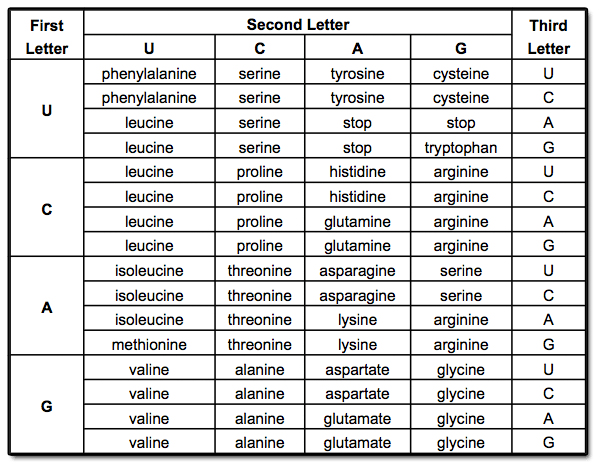
What is the correct amino acid sequence for the mRNA code AUGCCAGUAUGA?
Met-Pro-Val-Stop
Met-Ala-Arg-Stop
Tyr-Gly-His- Leu
Tyr-Gly-Arg-His
47
Plant (flowering) Reproduction
48
Multiple Choice
The "female" reproductive structure of flowers is called...
Filament
Anther
Pistil
Stamen
49
Multiple Choice
Located at the top of the filament and creates pollen grains.
Pistil
Stamen
Anther
Filament
50
Multiple Choice
This structure is sticky and helps catch pollen grains!
Stigma
Style
Stamen
Ovary
51
Multiple Choice
The "male" reproductive structure on flowers is called...
Style
Ovule
Pistil
Stamen
52
Vascular System:carries materials all over the plant
53
Multiple Choice
What part of the plant soaks up water for photosynthesis?
roots
petals
leaf
stem
54
Multiple Choice
Where do the leaves and stems of plants get their green color from?
glucose
oxygen
carbon dioxide
chlorophyll
55
56
Multiple Choice
Photosynthesis is to chloroplasts as cellular respiration is to
chloroplast
cytoplasm
mitochondria
nucleus
57
58
Multiple Choice
Which process makes glucose?
cellular respiration
photosynthesis
59
60
Multiple Choice
What are the inputs (reactants) of photosynthesis?
carbon dioxide, water, sunlight
oxygen and glucose
soil and nutrients
sugar and yeast
61
Match
Match the following
Translation
Transcription
Dna replication
Translation
Transcription
Dna replication
62
Multiple Choice
63
64
Multiple Choice
65
Multiple Choice
Find the amino acid that this segment of DNA codes for: CTA
Leucine
Serine
Aspartic Acid
Histine
66
Multiple Choice
mRNA occurs during this process
Translation
Transcription
Replication
Delivery
67
Multiple Choice
68
Multiple Choice
69
Multiple Choice
70
Multiple Choice
71
Multiple Choice
72
Multiple Choice
73
Multiple Choice
74
Multiple Choice
lipids
carbohydrates
protein
sugar
75
Multiple Choice
76
Multiple Choice
The image above shows an amino acid attached to which type of molecule?
mRNA
rRNA
tRNA
Protein
77
Open Ended
What amino acid is represented by the codon UUA?
78
Draw
Transcribe the following DNA to mRNA
Transcribe the DNA strand below:
TAC ATT CGA AAA
Show answer
Auto Play
Slide 1 / 78
SLIDE

Similar Resources on Wayground
75 questions
1-2細胞的構造與功能-細胞胞器
Presentation
•
10th Grade
79 questions
Ecology
Presentation
•
9th Grade
78 questions
F3 Module Unit 5 Can industrial development be more sustainable?
Presentation
•
9th Grade
74 questions
Y10 Lesson 1.5 Forces in Motion
Presentation
•
9th Grade
68 questions
Byzantine Empire
Presentation
•
9th Grade
68 questions
Bio 8.2
Presentation
•
9th Grade
71 questions
1st 6 Weeks Test Review
Presentation
•
9th Grade
69 questions
การหมุนเวียนสารในระบบนิเวศ
Presentation
•
9th Grade
Popular Resources on Wayground
20 questions
"What is the question asking??" Grades 3-5
Quiz
•
1st - 5th Grade
20 questions
“What is the question asking??” Grades 6-8
Quiz
•
6th - 8th Grade
10 questions
Fire Safety Quiz
Quiz
•
12th Grade
20 questions
Equivalent Fractions
Quiz
•
3rd Grade
34 questions
STAAR Review 6th - 8th grade Reading Part 1
Quiz
•
6th - 8th Grade
20 questions
“What is the question asking??” English I-II
Quiz
•
9th - 12th Grade
20 questions
Main Idea and Details
Quiz
•
5th Grade
47 questions
8th Grade Reading STAAR Ultimate Review!
Quiz
•
8th Grade
Discover more resources for Biology
24 questions
BIOLOGY STAAR REVIEW
Quiz
•
9th Grade
30 questions
Biology STAAR Review #3
Quiz
•
9th Grade
16 questions
AP Biology: Unit 1 Review (CED)
Quiz
•
9th - 12th Grade
50 questions
Biology EOC Review
Quiz
•
9th Grade
25 questions
photosynthesis and cellular respiration
Quiz
•
9th Grade
20 questions
AP Biology: Unit 3 Review (CED)
Quiz
•
9th - 12th Grade
20 questions
Enzymes
Quiz
•
9th Grade
20 questions
Food Chains and Food Webs
Quiz
•
7th - 12th Grade