

Types of Borders and Shape of States

Presentation
•
Social Studies
•
9th Grade
•
Practice Problem
•
Easy

Piper Breves
Used 3+ times
FREE Resource
9 Slides • 10 Questions
1

Boundaries and Shape of States
2
Why have borders?
To be considered a state there must be:
●A permanent population
●A recognized government
●Identified borders
●A way to defend those borders

3
Multiple Choice
Which of the following is not required to be a legitimate state?
Having clear boundaries
Enforcing the boundaries
Having an official language
Having a permanent population
4
How does a state create boundaries?
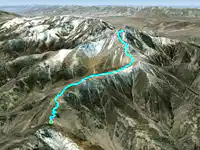
Define - description of what is used to determine the border and its location.
Delineate - creating the actual boundary on a map
Demarcate - showing evidence on the physical landscape of the border (like a wall or fence)
Administrate - Rules and procedures to allow people across the border


5
Categorize
A natural boundary forming (a river, mountainn, ect)
Requiring a visa to cross a border
Allowing EU passport holders to cross a border
A border wall
A border fence
The mowed grass line between Canada and the US
A sign marking the border between France and Germany
A border on a map
A cultural boundary forming between different religions or language
6
What are the different types of boundaries?
Antecedent: based on earlier cultural boundaries (ante= before)
Subsequent: boundary drawn after settlers move in
Consequent: between different cultural groups that have a conflict to separate them
Natural: based on physical features
Geometric: straight lines
Relict: an old boundary that you see evidence of but no longer formally exists
Superimposed: boundaries that are placed by an outside group that is not from the area



7
Categorize
The Rio Grande
North and South Korea demilitarized zone
Dividing India (Hindu) and Pakistan (Muslim)
Israel and Palestine borders
Northern Ireland (British) and Ireland (Irish)
US/Canada boundary
Himalaya Mountains
8
Categorize
Almost all boundaries in Africa
Berlin Wall
US/Canada Boundary
the northern Texas boundaries
9
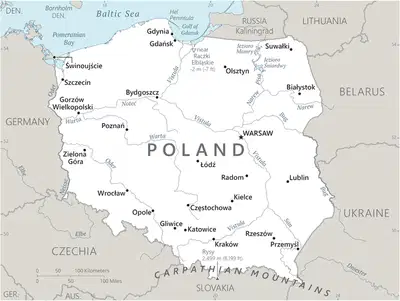
.All boundaries about the same distance from the center of the state
State Shapes: Compact
10

A prorupted state has a "tail" that branches off the main part
It usually connects the state to resources, like water
State Shapes: Prorupted
11
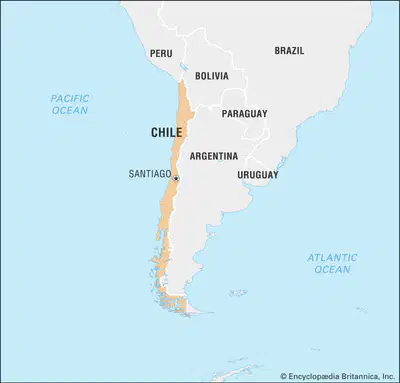
An elongated state is long and thin
State shape: Elongated
12
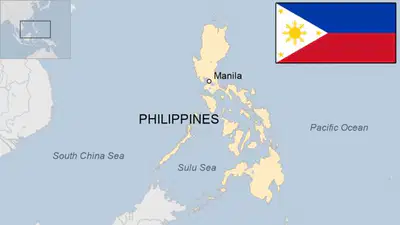
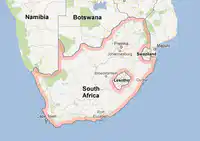
A fragmented state is broken into smaller pieces, such as islands or an ethnic enclave near another state
State Shapes: Fragmented
13
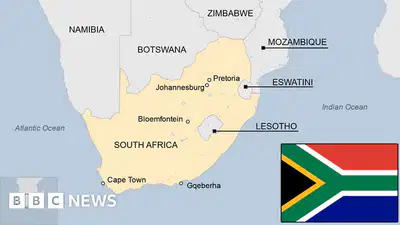
A perforated state has a whole other state inside of it
State shape: Perforated
14
Match
Match the following
Compact
Prorupted
Elongated
Fragmented
Perforated
Compact
Prorupted
Elongated
Fragmented
Perforated
15
Match
Match the following
Compact
Fragmented
Perforated
Prorupted
Elongated
Compact
Fragmented
Perforated
Prorupted
Elongated
16
Labelling
Label the types of states in South America
Prorupted
Compact
Elongated
17
Labelling
Label the type of states in Central America
Elongated
Compact
18
Labelling
Label the type of states
Perforated
Compact
Prorupted
Fragmented
19
Labelling
Label the type of states
Elongated
Compact
Fragmented
Prorupted
Boundaries and Shape of States
Show answer
Auto Play
Slide 1 / 19
SLIDE
Similar Resources on Wayground

15 questions
Migration Patterns: Unveiling Ravenstein's Laws
Presentation
•
9th Grade
15 questions
#CON - Principles of the Constitution
Presentation
•
8th Grade
16 questions
Washington Leads a New Nation
Presentation
•
8th Grade
16 questions
Introduction to the Age of Exploration
Presentation
•
8th Grade
13 questions
Concept 5: Westward Expansion SS8H4e.
Presentation
•
8th Grade
15 questions
Federalist Papers and the Bill of RIghts
Presentation
•
9th Grade
13 questions
Voting Activity
Presentation
•
9th Grade
Popular Resources on Wayground
15 questions
Grade 3 Simulation Assessment 1

Quiz
•
3rd Grade
22 questions
HCS Grade 4 Simulation Assessment_1 2526sy
Quiz
•
4th Grade
16 questions
Grade 3 Simulation Assessment 2
Quiz
•
3rd Grade
19 questions
HCS Grade 5 Simulation Assessment_1 2526sy
Quiz
•
5th Grade
17 questions
HCS Grade 4 Simulation Assessment_2 2526sy
Quiz
•
4th Grade
20 questions
Equivalent Fractions
Quiz
•
3rd Grade
24 questions
HCS Grade 5 Simulation Assessment_2 2526sy
Quiz
•
5th Grade
20 questions
Math Review
Quiz
•
3rd Grade
Discover more resources for Social Studies
50 questions
US History EOC Review
Quiz
•
9th - 12th Grade
83 questions
AP Human Geography Unit 4 Review
Quiz
•
9th Grade
16 questions
LHS - Africa Review
Quiz
•
9th Grade
40 questions
Stuffa
Quiz
•
9th - 12th Grade
20 questions
Renewable vs. Nonrenewable Resources
Quiz
•
9th Grade
23 questions
Unit 5: Executive Branch
Quiz
•
9th - 12th Grade
29 questions
Test Review – South Asia
Quiz
•
9th Grade
27 questions
27 Amendments
Quiz
•
5th - 9th Grade