Search Header Logo
VSEPR theory

VSEPR theory

Assessment

Presentation

•

Chemistry

•

University

•

Medium

•
NGSS
HS-PS1-3, HS-ESS2-5

Standards-aligned

Created by

Luis Bello

Used 14+ times

FREE Resource

16 Slides • 14 Questions

1

Valence Shell Electron Pair Repulsion.

Understanding the secrets behind how electrons are arranged in an atom and their impact on chemical properties.

2

​- Welcome to the lecture on VSEPR Theory!

- VSEPR stands for Valence Shell Electron Pair Repulsion theory.

- It is a fundamental concept in chemistry used to predict molecular geometry.

- Understanding VSEPR theory helps us visualize how atoms are arranged in a molecule.


3

Molecular Geometry

- Molecular geometry refers to the three-dimensional arrangement of atoms in a molecule.

- It determines a molecule's shape, which in turn affects its chemical and physical properties.


4

VSEPR Theory - Basic Idea

- VSEPR theory is based on the idea that electron pairs (bonding and non-bonding) around a central atom will arrange themselves in a way to minimize repulsion.

- This leads to specific molecular geometries.


5

Electron Pair Repulsion

- Electrons repel each other due to their negative charges.

- Bonding pairs and lone pairs of electrons will arrange themselves to be as far apart as possible.


6

Electron Pair Arrangement

- Two types of electron pairs: bonding pairs (shared between atoms) and lone pairs (non-bonding pairs).

- The arrangement of these pairs determines molecular geometry.


7

VSEPR Geometries

- There are several basic VSEPR geometries:

  1. Linear

  2. Trigonal Planar

  3. Tetrahedral

  4. Trigonal Bipyramidal

  5. Octahedral


8

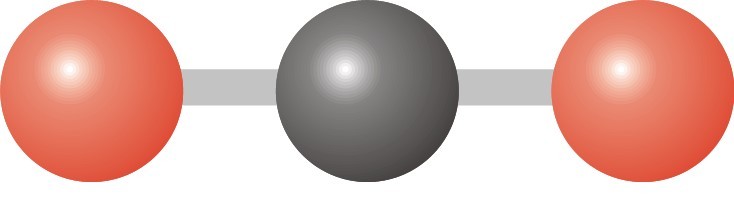
Linear Geometry (AX2)

 - Example: BeCl2
- Explanation of the arrangement of bonding and non-bonding pairs.


media

9

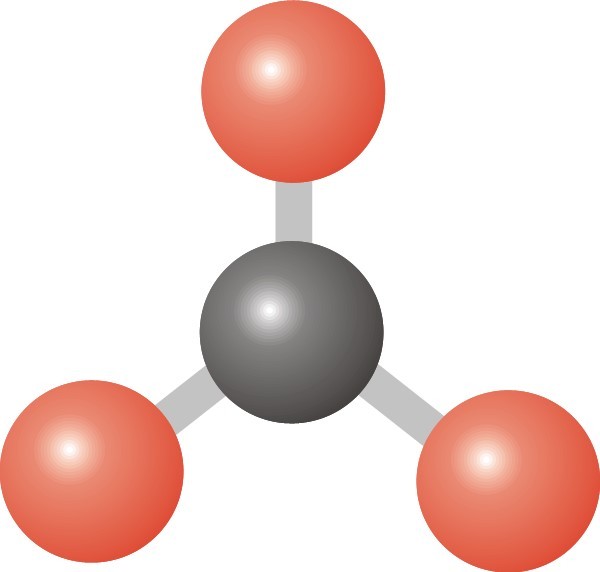
Trigonal Planar Geometry (AX3)

 - Example: BF3
- Explanation of the arrangement of bonding and non-bonding pairs.


media

10

Tetrahedral Geometry (AX4)

 - Example: CH4
- Explanation of the arrangement of bonding and non-bonding pairs.


media

11

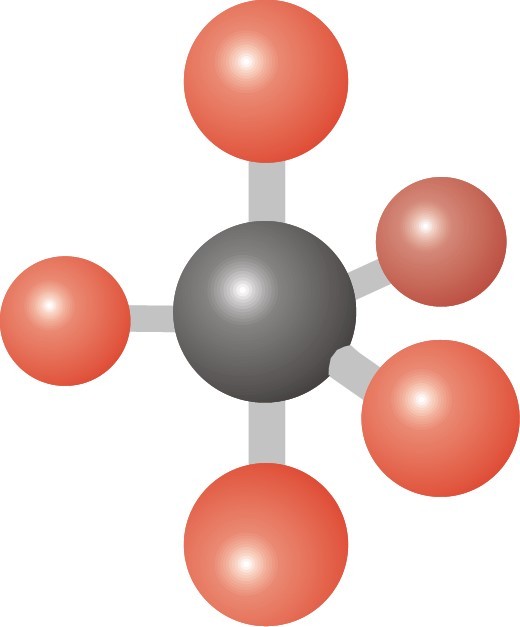
Trigonal Bipyramidal Geometry (AX5)

 - Example: PCl5
- Explanation of the arrangement of bonding and non-bonding pairs.


media

12

Octahedral Geometry (AX6)

 - Example: SF6
- Explanation of the arrangement of bonding and non-bonding pairs.


media

13

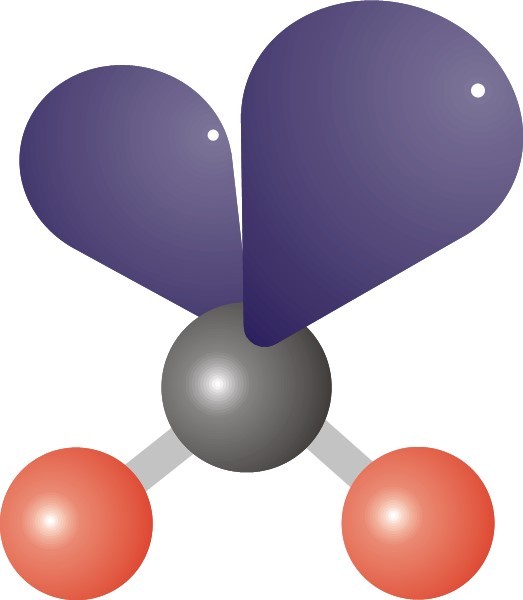
Bent and Trigonal Pyramidal Geometry (AX6)

 - Example: H2O (bent) and NH3 (trigonal pyramidal)
- Explanation of the arrangement of bonding and non-bonding pairs.


media
media

14

media

15

media

16

Multiple Choice

 A lone pair is defined as
1
A pair of bonding electrons
2
One non-bonding electron
3
A pair of non-bonding electrons
4
A pair of electrons on the central atom

17

18

Multiple Choice

What is the VSEPR theory used to predict?
1
Bond Strength
2
Polarity
3
Molecular Shape
4
Electronegativity

19

Multiple Choice

Which of the following shapes has an unshared pairs of electrons on the central atom? 
1
Bipyramidal
2
Bent
3
Trigonal Planar
4
Tetrahedral

20

Multiple Choice

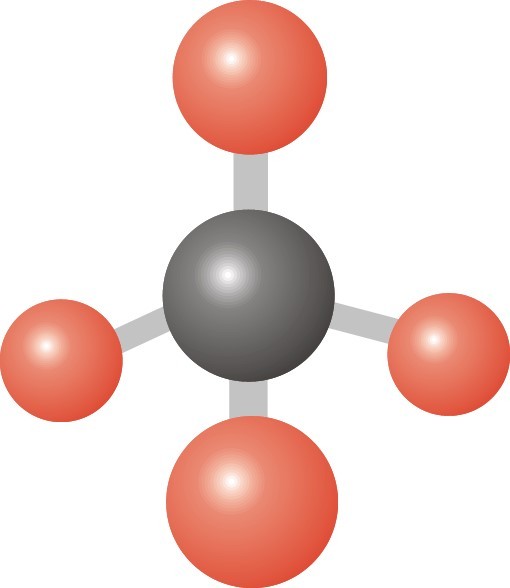
Question image
Which molecule would have this molecular geometry?
1
BF3
2
CH4
3
PCl5
4
CO2

21

Multiple Choice

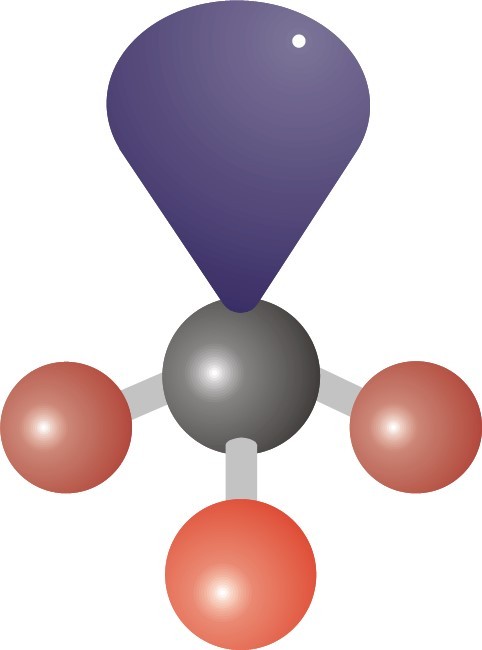
Question image
What molecule could this be? 
1
BF3
2
CH4
3
H2O
4
CO2

22

Multiple Choice

Question image
What molecule could this be? 
1
H2O
2
CCl4
3
PCl5
4
NaCl

23

Multiple Choice

Question image
Who could this be? 
1
CO2
2
NH3
3
H2S
4
CH4

24

Multiple Choice

Question image
Who could this molecule be?
1
CH4
2
CO2
3
PCl5
4
BF3

25

Multiple Choice

Question image
Who could this be?
1
H2O
2
NH3
3
CO2
4
CH4

26

Multiple Choice

What molecular geometry would PH3 have?

1

Trigonal Pyramidal

2

Trigonal Bipyramidal

3

Bent

4

Linear

27

Multiple Choice

Question image
Consider the molecule below.  Determine the molecular geometry at each of the 2 labeled carbons.
1
C1 = tetrahedral, C2 = linear
2
C1 = trigonal planar, C2 = bent
3
C1 = bent, C2 = trigonal planar
4
C1 = trigonal planar, C2 = tetrahedral

28

Multiple Choice

How many electrons are shared in a triple bond?
1
6
2
3
3
6 pairs
4
5

29

Multiple Choice

Question image

What shape would this have?

1

Trigonal planar

2

Pyramidal

3

Tetrahedral

4

Bent

30

Multiple Choice

Question image
Choose the correct shape for this molecule:
1
linear
2
Trigonal pyramidal
3
Bent
4
Tetrahedral

Valence Shell Electron Pair Repulsion.

Understanding the secrets behind how electrons are arranged in an atom and their impact on chemical properties.

Show answer

Auto Play

Slide 1 / 30

SLIDE