Search Header Logo
Skeletal System Functions and Structures Review

Skeletal System Functions and Structures Review

Assessment

Presentation

Physical Ed

12th Grade

Easy

Created by

Arthur EnloeHS

Used 687+ times

FREE Resource

20 Slides • 58 Questions

1

Skeletal System Functions Review

media

2

media

3

media

OSTEOCLASTS - a large multinucleated bone cells that absorb bone tissue during growth and healing.

OSTEOBLASTS - cells that form new bones and grow and heal existing bones.

​OSTEOCYTES - these cells are derived from osteoblasts, they exist within the bone matrix and help to nourish bone tissue and regulate other bone cells

Osteoid is an unmineralized organic tissue that eventually undergoes calcification and is deposited as lamellae or layers in the bone matrix.

4

media

The skull is made up of many bones. There are 8 bones in the skull itself and 14 bones in the face area. They join together to form a solid, bony cavity that protects and supports the brain. The areas where the bones join together are called the sutures.

The bones are not joined together firmly at birth. This allows the head to change shape to help it pass through the birth canal. The sutures gradually gain minerals and harden, firmly joining the skull bones together. This process is called ossification.

In an infant, the space where 2 sutures join forms a membrane-covered "soft spot" called a fontanelle (fontanel). The fontanelles allow the brain and skull to grow during an infant's first year.

​medlineplus.org

5

Osteoblasts group into clusters and form an ossification center. Osteoblasts begin secreting osteoid, an unmineralized collagen-proteoglycan matrix that can bind calcium. The binding of calcium to osteoid results in the hardening of the matrix and entrapment of osteoblasts. This entrapment results in the transformation of osteoblasts to osteocytes. As osteoid continues to be secreted by osteoblasts, it surrounds blood vessels, forming trabecular/cancellous/spongy bone. These vessels will eventually form the red bone marrow. Mesenchymal cells on the surface of the bone form a membrane called the periosteum. Cells on the inner surface of the periosteum differentiate into osteoblasts and secrete osteoid parallel to that of the existing matrix, thus forming layers. These layers are collectively called the compact/cortical bone.

​nih.gov

​The fontanel closes via ossification. During ossification the following happens

6

Multiple Choice

Special bone-forming cells that begin the mineralization process are referred to as what?

1

osteoporosis

2

osteoclast

3

ossification

4

osteoblast

7

Multiple Choice

_____________________ cells break down bone during exercise so that it can be remodeled into new bone cells.
1
osteoclast
2
osteoblast
3
ossification
4
osteoporosis

8

Multiple Choice

Hemopoesis refers to what?

1

the production of blood

2

The storage of calcium and phosphorus

3

Red marrow

4

Yellow marrow

9

Multiple Choice

The skeletal system contains (or stores) what minerals ?

1

the production of blood

2

calcium and phosphorus

3

Red marrow

4

Yellow marrow

10

media

11

Multiple Choice

Question image
What part of the bone is indicated by the number 1?
1
diaphysis
2
endosteum
3
spongy bone
4
epiphysis

12

Multiple Choice

Question image
What part of the bone is indicated by the number 6?
1
diaphysis
2
epiphysis
3
spongy bone
4
periosteum

13

Multiple Choice

Question image
What part of the bone is indicated by the number 8?
1
compact bone
2
spongy bone
3
epiphysis
4
diaphysis

14

Multiple Choice

Question image

Which part of the bone is indicated by the number 9?

1

Spongy bone

2

Yellow bone marrow

3

Compact bone

4

Epiphysis

15

Multiple Choice

Question image

Which part of the bone is indicated by the number 2?

1

spongy bone

2

epiphysis

3

diaphysis

4

compact bone

16

Multiple Choice

What is the soft spot on an infant's head, where the bones have not yet grown together, called?

1

furuncle

2

foramina

3

fontanel

4

foramen

17

Multiple Choice

Age, diet, exercise, and hormones affect the production of calcium in bones.

1

true

2

false

18

Multiple Choice

During ossification osteoblasts become trapped in the bone matrix and become what kind of cells?

1

Osteoclasts

2

Osteocytes

3

Osteobons

4

Osteophages

19

media

20

media

There are flat bones in the skull (occipital, parietal, frontal, nasal, lacrimal, and vomer), the thoracic cage (sternum and ribs), and the pelvis (ilium, ischium, and pubis). The function of flat bones is to protect internal organs such as the brain, heart, and pelvic organs.

21

media

You will not need to know all of the irregular bones. You just need to know that they have unusual shapes that are associated with their anatomical functions.

media

​The complex anatomy of the vertebrae is directly related to its' complex function

22

media

Long bones are the most common bones in the body. they are longer than they are wide.

media

Short bones include the carpal bones of the hands that allow movement of the wrist, and the tarsal bones of the feet that allow movement of the foot. Short bones are shaped roughly as a cube and contain mostly spongy bone

23

media
media

A sesamoid bone is a small bone commonly found embedded within a muscle or tendon near joint surfaces, existing as focal areas of ossification and functioning as a pulley to alleviate stress on that particular muscle or tendon.

24

Multiple Choice

Question image

What kind of bone is this?

1

Long Bone

2

Short Bone

3

Sesamoid Bone

4

Irregular Bone

25

Multiple Choice

Question image

What kind of bone is this?

1

Long Bone

2

Short Bone

3

Sesamoid Bone

4

Irregular Bone

26

Multiple Choice

Question image

What kind of bone is this?

1

Long Bone

2

Short Bone

3

Sesamoid Bone

4

Irregular Bone

27

Multiple Choice

Question image

What kind of bone is this?

1

Long Bone

2

Short Bone

3

Sesamoid Bone

4

Irregular Bone

28

Multiple Choice

Question image

What kind of bone is this?

1

Long Bone

2

Short Bone

3

Sesamoid Bone

4

Irregular Bone

29

Multiple Choice

Question image

What kind of bone is this?

1

Long Bone

2

Short Bone

3

Sesamoid Bone

4

Irregular Bone

30

Multiple Choice

Question image

What kind of bone is this?

1

Long Bone

2

Short Bone

3

Sesamoid Bone

4

Irregular Bone

31

media
  • Epiphysis - end of a long bone.

  • Diaphysis - shaft of a long bone.

  • Medullary (Marrow) Cavity - space in the middle of the diaphysis.

  • Periosteum - Lining of the outside of the bone.

  • Endosteum - Lining of the medullary cavity. Contains yellow marrow.

  • Spongy Bone - porous bone at the epiphysis. Contains red marrow.

  • Compact Bone - dense and strong bone that makes up the diaphysis.

32

Multiple Choice

Red bone marrow is found in what type of bone?

1
spongy bone
2
compact bone

33

Multiple Choice

Question image
Structure H
1
articular cartilage
2
periosteum
3
yellow bone marrow
4
support the bone

34

Multiple Choice

The production of blood cells is called
1
homeostasis
2
hematopoiesis
3
hemostasis
4
homologous

35

Multiple Choice

Question image
Structure #11 is 
1
diaphysis
2
periosteum
3
articular cartilage
4
artery

36

Multiple Choice

Question image
Structure #2 is_______ &  mainly made of this type of bone ___________
1
epiphysis, compact bone
2
epiphysis, spongy bone
3
diaphysis, compact bone
4
diaphysis, spongy bone

37

media

38

media

39

media

40

media

41

Drag and Drop

The pelvic and pectoral girdles are considered part of the ​
skeleton. The ​
girdle is much sturdier and provides far less mobility than the other.
Drag these tiles and drop them in the correct blank above
appendicular
Pelvic
rib
axial

42

Multiple Choice

The bones of the fingers and toes are called ___.

1

carpals

2

phalanges

3

tarsals

4

metacarpals

43

Multiple Choice

Which bone is a part of the appendicular skeleton?

1

Cranium

2

Spinal Cord

3

Ethmoid

4

Patella

44

Multiple Choice

Question image
The human skeleton can be subdivided into two parts, what part is made up of the skull, sternum, vertebral column and rib cage?
1
appendicular
2
axial

45

Multiple Choice

Which is not part of the vertebral column

1

Sternum

2

Cervical

3

Thoracic

4

Lumbar

5

Sacrum

46

Multiple Choice

There are 12 of these

1

Thoracic Vertebra

2

Ribs

3

Cervical Vertebra

4

Transverse Foramen

47

Multiple Choice

What bones protect your heart and chest?
1
spine
2
skull
3
ribcage
4
arm

48

Multiple Choice

Bones of the thoracic cavity that are attached to vertebrae only (not attached to sternum or another rib by costal cartilage); lowest two false ribs
1
floating ribs
2
false ribs
3
true ribs
4
loose ribs

49

Multiple Choice

How many pairs of ribs are found in the typical human? 

1
12
2
5
3
10
4
8

50

Multiple Choice

How many pairs of true ribs are there? 
1
12
2
2
3
5
4
7

51

Multiple Choice

Bones of the thoracic cavity that articulate directly to the sternum and vertebrae
1
true ribs
2
false ribs
3
floating ribs
4
strong ribs

52

Multiple Choice

How many vertebra are found in the typical cervical spine?

1

5

2

7

3

10

4

12

53

Multiple Choice

There are 12 of these and they articulate with ribs
1
Thoracic vertebrae
2
Cervical Vertebrae
3
Lumbar Vertebrae
4
Sacral vertebrae

54

Multiple Choice

Which of the following would be found in the lower back?
1

Cervical

2

Thoracic

3

Lumbar

55

Multiple Choice

Question image

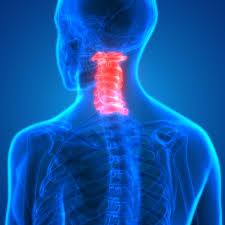
Which section of the vertebrae is highlighted

1

thoracic

2

cervical

3

lumbar

4

sacral

56

Multiple Choice

Question image

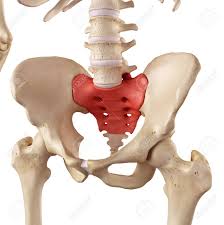
Which section of the vertebral column is highlighted

1

lumbar

2

cervical

3

coccyx

4

sacrum

57

media

​Synarthrosis are immovable joints such as the sutures in the skull. Diarthrosis are freely movable (ball and socket, pivot, hinge joints fit here). Amphiarthroses are slightly movable joins. Examples of amphiarthroses include the vertebral articulations and the symphisis pubis in the pelvis.

58

media

  • Ball and socket joint. Permitting movement in all directions, the ball and socket joint features the rounded head of one bone sitting in the cup of another bone. Examples include your shoulder joint and your hip joint.

  • Hinge joint. The hinge joint is like a door, opening and closing in one direction, along one plane. Examples include your elbow joint and your knee joint.

  • Condyloid joint. The condyloid joint allows movement, but no rotation. Examples include your finger joints and your jaw.

  • Pivot joint. The pivot joint, also called the rotary joint or trochoid joint, is characterized by one bone that can swivel in a ring formed from a second bone. Examples are the joints between your ulna and radius bones that rotate your forearm, and the joint between the first and second vertebrae in your neck.

  • Gliding joint. The gliding joint is also called the plane join. Although it only permits limited movement, it’s characterized by smooth surfaces that can slip over one another. An example is the joint in your wrist.

  • Saddle joint. Although the saddle joint does not allow rotation, it does enable movement back and forth and side to side. An example is the joint at the base of your thumb.

59

media

​Bone, muscle, cartilage, tendons, ligaments, membranes, and synovial fluid all come together to make our joints stable and functional.

60

media

61

Multiple Choice

Question image
Connects bone to bone
1
Ligament
2
Tendon
3
Cartilidge

62

Multiple Choice

Question image
The knee joint is
1
Hinge
2
Gliding
3
Ball and socket
4
Pivot

63

Multiple Choice

Question image
The shoulder joint is
1
Hinge
2
Gliding
3
Ball and socket
4
Pivot

64

Multiple Choice

Carpals and tarsals are examples of this type of joint

1
condyloid
2
gliding
3
hinge
4
saddle

65

Multiple Choice

Classifying joints as synarthrotic, amphiarthrotic, or diarthrotic represents  
1
location in the body
2
the composition of the joint
3
the number of bones that joint affects
4
degree of movement possible at the joint

66

Multiple Choice

Which of the following is a joint that can freely move?
1
fibrous
2
cartilaginous
3
synovial

67

Multiple Choice

This type of joint allows the your first two vertebrate to rotate as in shaking your head no
1
condyloid
2
gliding
3
pivot
4
saddle

68

Multiple Choice

Hip and shoulder have examples of this type of joint
1
ball and socket
2
condyloid
3
hinge
4
gliding

69

Multiple Choice

The elbows, knees and phalanges are examples of this type of joint
1
ball and socket
2
condyloid
3
gliding
4
hinge

70

Multiple Choice

Question image
Movement away from the mid-line is called _____________.
1
abduction
2
adduction
3
internal rotation
4
external rotation

71

Multiple Choice

Question image
Turning the hand so that the palm is upward or facing anteriorly (in anatomical position).
1
supination
2
pronation
3
flexion
4
dorsiflexion

72

Multiple Choice

Question image
Identify the joint action being performed.
1
Extension
2
Flexion
3
Abduction
4
Adduction

73

Multiple Choice

Which of the following movements could occur at the hip joint?  
1
Abduction and adduction 
2
Rotation 
3
Flexion and extension 
4
All of the above 

74

Multiple Select

Which of the following is part of a Synovial joint

1

Synovial membrane

2

Joint cavity

3

Ligament

4

Cartilage

75

Multiple Choice

When kicking a football the knee

1

Flexes

2

Extends

3

Abducts

4

Adducts

76

Multiple Choice

Question image
Identify the joint action being performed.
1
Extension
2
Flexion
3
Abduction
4
Adduction

77

Multiple Choice

Question image
Identify the joint action being performed.
1
Circumduction
2
Lateral Rotation
3
Medial Rotation
4
Eversion

78

Multiple Choice

Fibrous joints are?
1
freely moveable
2
partially moveable
3
immovable

Skeletal System Functions Review

media

Show answer

Auto Play

Slide 1 / 78

SLIDE