
Exploring the Structure of Atoms

Presentation
•
Chemistry
•
10th Grade
•
Practice Problem
•
Hard
Standards-aligned

Jeanette Rodriguez
Used 2+ times
FREE Resource
9 Slides • 4 Questions
1
Understanding the fundamental building blocks of matter and their arrangement within atoms. Discover the secrets of atomic structure and its impact on the world around us.
2
Exploring Atomic Structure
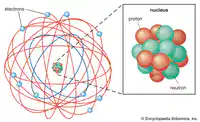
Atoms consist of a nucleus at the center, containing protons and neutrons, while electrons orbit around the nucleus. The relative volumes of the atom and its parts are vast, with the nucleus and electrons occupying negligible space. This emptiness poses a challenge as opposite charges attract. Classical physics fails to explain the existence of this 'nuclear atom'.
3
Structure of Atoms
4
Multiple Choice
What are the components of an atom?
Protons, neutrons, and electrons
Protons and neutrons
Protons and electrons
Neutrons and electrons
5
Atom Components
Trivia: Did you know that an atom is made up of protons and neutrons? These particles are located in the nucleus, while electrons orbit around it. The number of protons determines the element, while the number of neutrons can vary, creating different isotopes.
6
Multiple Choice
What is at the center of an atom?
Protons and neutrons
Electrons
Positrons
Neutrinos
7
Atom's Center:
Protons and neutrons are at the center of an atom. They make up the nucleus, which is surrounded by electrons. Other particles like positrons and neutrinos are not at the center. The nucleus contains most of the atom's mass, while the electrons occupy the space around it.
8
The Problem with the Nuclear Model
If electrons orbit the nucleus like planets orbit the sun, they would constantly be accelerating and emitting light. This would cause the electron to lose all its kinetic energy and fall into the nucleus, leading to the collapse of all atoms in the universe.
9
Multiple Choice
What would happen if electrons constantly emitted light and lost all their kinetic energy?
Atoms would collapse and the universe would cease to exist.
Electrons would stop orbiting the nucleus.
Atoms would become unstable and release harmful radiation.
Electrons would gain more kinetic energy and move farther away from the nucleus.
10
Electrons and the Universe
Trivia: If electrons constantly emitted light and lost all their kinetic energy, atoms would collapse and the universe would cease to exist. This is because electrons play a crucial role in maintaining the stability of atoms and preventing them from collapsing. Without electrons, matter as we know it would not exist.
11
Exploring Atomic Structure
1. Electrons continuously orbiting the nucleus would collapse due to energy radiation. This is not observed.
2. Atoms do not emit light continuously.
3. When atoms emit energy, only specific colors are observed. Most colors are absent.
Problem with the Nuclear Model
12
Multiple Choice
What is the problem with the Nuclear Model?
Electrons continuously orbiting the nucleus would collapse due to energy radiation.
Atoms emit light continuously.
When atoms emit energy, all colors are observed.
Atoms do not emit light continuously.
13
The Problem with the Nuclear Model
Trivia: According to the Nuclear Model, electrons continuously orbiting the nucleus would collapse due to energy radiation. This concept challenged the stability of atoms and led to the development of the Quantum Mechanical Model. Quantum mechanics revolutionized our understanding of atomic structure and paved the way for modern physics.
Understanding the fundamental building blocks of matter and their arrangement within atoms. Discover the secrets of atomic structure and its impact on the world around us.
Show answer
Auto Play
Slide 1 / 13
SLIDE
Similar Resources on Wayground

9 questions
Sig Figs Part 2
Presentation
•
10th Grade
10 questions
Endo/Exo
Presentation
•
10th Grade
10 questions
Stoich Day 3 Notes
Presentation
•
10th Grade
8 questions
Water
Presentation
•
10th Grade
9 questions
CER-Emission Spectra of Elements
Presentation
•
10th Grade
11 questions
Naming acids
Presentation
•
9th Grade
10 questions
konsep mol
Presentation
•
10th Grade
8 questions
Semicolons
Presentation
•
10th Grade
Popular Resources on Wayground
10 questions
Safety Day 2026 – Student Review

Quiz
•
9th Grade
21 questions
Continents and Oceans
Quiz
•
6th Grade
20 questions
Parts of Speech
Quiz
•
5th Grade
16 questions
Subject & Predicate
Quiz
•
5th Grade
25 questions
Multiplication Facts
Quiz
•
5th Grade
12 questions
Map Skills
Quiz
•
3rd Grade
22 questions
Continents and Oceans
Quiz
•
5th Grade
15 questions
Rounding Decimals
Quiz
•
5th Grade
Discover more resources for Chemistry
20 questions
electron configurations and orbital notation
Quiz
•
9th - 12th Grade
25 questions
Writing and Naming Binary Ionic compounds
Quiz
•
10th Grade
20 questions
COUNTING ATOMS
Quiz
•
10th Grade
20 questions
Physical or Chemical Change/Phases
Quiz
•
8th Grade - University
15 questions
Periodicity Module Exam Practice Quiz
Quiz
•
9th - 12th Grade
20 questions
Naming Ionic Compounds
Quiz
•
10th Grade
45 questions
Chem Unit 3 Review
Quiz
•
10th Grade
16 questions
History of the Atomic Theory
Quiz
•
10th Grade