
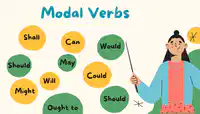
POSSIBILITY, OBLIGATION, NECESSITY,PERMISSION, PROHIBITION

Presentation
•
English
•
8th Grade
•
Practice Problem
•
Hard

GABRIELA SANDU
Used 5+ times
FREE Resource
8 Slides • 0 Questions
1
POSSIBILITY, OBLIGATION, NECESSITY, PERMISSION, PROHIBITION, ADVICE
2
POSSIBILITY
We can talk about possibility by using some modal verbs or some structures with modal value.
1. MAY (for specific situations)
eg. I may visit you tomorrow. (=Maybe I will visit you tomorrow.)
2. MIGHT (for specific situations)
eg. They might be at home. (=Maybe they are at home.)
3. COULD (for specific situations)
eg. She could call you back tonight. (=Maybe she will call you back.)(informal use)
3
POSSIBILITY
CAN (to make general statements about what is possible)
eg. It can be very cold here in winter. (= It is sometimes very cold here in winter.)
eg. You can easily get lost in this town. (= People often get lost in this town.)
We do not use can to express posibility about specific events!
A: Where's John?
B: I'm not sure. He may/might/could be (NOTcan) in his office.
4
We can talk about obligation and necessity by using:
1. MUST (obligation)
eg. You must get there before eight o’clock. (= This is an obligation imposed by the speaker.)
2. HAVE TO (obligation)
eg. We have to finish our projects by Friday. (= This is an obligation imposed by someone else.)
3. BE SUPPOSED TO (obligation)
eg. We’re supposed to switch off our phones in lessons. (= This is the rule, but we don’t always follow it.)
OBLIGATION AND NECESSITY
5
NEED TO (necessity)
eg. You need to clean your room. It'a a mess!
We can talk about no obligation or no necessity by using:
1. DON'T HAVE TO (no obligation)
eg. You don’t have to eat this if you don’t want to.
2. DON'T NEED TO (not necessary)
eg. We don't need to buy tickets - my dad will give us some.
OBLIGATION AND NECESSITY
6
We use dindn't need to and needn’t have to to talk about the past necessity of actions. There is a small but important difference between the structures.
1. DIDN'T NEED TO usually suggests that we didn’t do something because it wasn’t necessary.
eg. I didn’t need to go to the doctor. (I didn’t go.)
2. NEEDN'T HAVE TO means that we did something but actually it wasn’t necessary.
eg. We needn’t have cooked all this food - only four people turned up at the party. (We cooked a lot of food but it wasn’t necessary.)
NECESSITY:"didn’t need to / needn’t have"
7
We can talk about permission using LET or BE ALLOWED TO.
Let is active voice, while be allowed to is passive voice.
eg. The school lets us use the tennis courts at the weekend.
eg. We’re allowed to use the tennis courts at the weekend.
We can talk about prohibition using NOT BE ALLOWED TO or DON'T/DOESN'T LET. When we don’t know or don’t want to say who it is that prohibits something, we use ‘they’.
eg. Cyclists are not allowed to leave their bikes here.
eg. They don’t let cyclists leave their bikes here.
PERMISSION and PROHIBITION: "let"and "be allowed to"
8
We can give advice or say something is a good idea by using:
1. SHOULD (advice)
eg. You should leave now if you don’t want to miss your bus. I shouldn’t eat any more or I’ll feel sick.
2. HAD BETTER ( 'D BETTER) (strong advice)(bad consequences)
eg. We'd better go or we'll miss the train!
We can say something is not a good idea or give a warning by using:
1. SHOULDN'T
eg. They shouldn't buy that house. It's too expensive.
2. HAD BETTER NOT
eg. You'd better not do that or else!
ADVICE: "should" and "had better"
POSSIBILITY, OBLIGATION, NECESSITY, PERMISSION, PROHIBITION, ADVICE
Show answer
Auto Play
Slide 1 / 8
SLIDE
Similar Resources on Wayground

6 questions
Sonnet 29
Presentation
•
8th Grade
6 questions
Rotations on a Coordinate Plane
Presentation
•
8th Grade
6 questions
Reading Comprehension activity
Presentation
•
University
6 questions
World War 1
Presentation
•
8th Grade
1 questions
Unit 1
Presentation
•
8th Grade
6 questions
Flex/Flect Lesson 3
Presentation
•
8th Grade
6 questions
How to read and write dates in English
Presentation
•
8th Grade
6 questions
Invitation Card
Presentation
•
8th Grade
Popular Resources on Wayground
10 questions
How much do you know about our Portrait of an Eagle?

Quiz
•
10th Grade
10 questions
Fast Food Slogans
Quiz
•
6th - 8th Grade
21 questions
Continents and Oceans
Quiz
•
6th Grade
20 questions
Parts of Speech
Quiz
•
5th Grade
16 questions
Subject & Predicate
Quiz
•
5th Grade
25 questions
Multiplication Facts
Quiz
•
5th Grade
12 questions
Map Skills
Quiz
•
3rd Grade
22 questions
Continents and Oceans
Quiz
•
5th Grade
Discover more resources for English
25 questions
Making Inferences
Quiz
•
6th - 8th Grade
20 questions
Figurative Language Review
Quiz
•
8th Grade
30 questions
Central Idea practice Grade 7-8
Quiz
•
6th - 8th Grade
12 questions
Final Figurative Language Review
Presentation
•
6th - 8th Grade
20 questions
Sentences, Fragments, and Run-ons
Quiz
•
8th Grade
20 questions
TEXTUAL EVIDENCE & INFERENCES
Quiz
•
6th - 8th Grade
11 questions
Objective Summary Review
Quiz
•
6th - 8th Grade
17 questions
Plot
Quiz
•
8th Grade