Search Header Logo
Biomolecules - 1

Biomolecules - 1

Assessment

Presentation

Chemistry

University

Easy

Created by

Medium Verbatim

Used 2+ times

FREE Resource

27 Slides • 20 Questions

1

Biomolecules

Biomolecules are chemical compounds which are building blocks of life

2

media

3

media
media
media

4

media
media

5

media
media

6

​Monosaccharides are further classified on the basis of number of carbon atoms and the functional group present in them

media

7

Multiple Select

Which of the following elements are found in carbohydrates?

1

Carbon

2

Nitrogen

3

Hydrogen

4

Phosphorus

5

Oxygen

8

Multiple Select

Question image

What type of sugar is this? (Check all that apply)

1

Aldose

2

Ketose

3

Triose

4

Tetrose

5

Pentose

9

Multiple Choice

Which reaction is needed to break down complex sugars?

1

Hydration

2

Dehydration

3

Dehydrogenation

4

Hydrolysis

10

Multiple Choice

Question image

The monosaccharide in the picture above is a:

1

hexose

2

pentose

3

tetrose

4

heptose

11

12

media

Carbohydrates may also be classified as

Reducing sugars or Non-reducing sugars

To understand this, we need to understand their chemical structures.

13

media
media

14

media
media

15

media

16

Multiple Choice

Question image
Identify the biomolecule
1
Carbohydrate
2
Lipid
3
Protein
4
Nucleic Acid

17

Multiple Choice

Question image
This biomolecule would be used for
1
Building enzymes
2
Storing energy
3
Key source of energy
4
Storing genetic information

18

Multiple Choice

How many C-atoms are there in a pyranose ring?

1

3

2

5

3

6

4

7

19

​Enantiomers, Epimers and Anomers

20

media

21

media

22

media

23

media

24

media
media

25

Multiple Choice

Question image

How many stereoisomer that aldotriose have ?

1

16

2

8

3

4

4

2

26

Multiple Choice

Question image

What kind of stereoisomers are D-ribose and D-xylose

1

Enantiomer

2

Diastereomer

3

Epimer

4

Isomer

27

Multiple Choice

Which are a pair of enantiomer

1
2
3
4

28

Multiple Choice

The enantiomers for D-fructose is L-glucose.

1

True

2

False

29

Multiple Choice

Question image

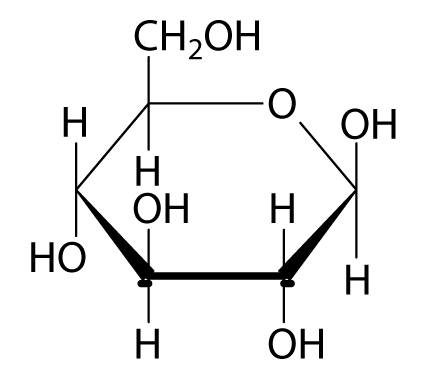
Identify whether this anomer is alpha (α) or beta (β)

1

Alpha (α)

2

Beta (β)

30

Multiple Choice

Glucose forms a six-membered ring in which —OH at ............. is involved in ring formation

1

C-1

2

C-2

3

C-3

4

C-4

5

C-5

31

Multiple Choice

Anomeric carbon in D-[+]-glucopyranose is

1

C-1

2

C-2

3

C-3

4

C-5

32

Multiple Choice

Question image

Which anomer of D- glucopyranose is this

1

alpha

2

beta

33

Multiple Choice

Question image

The monomer of amylose is

1

dextrorotatory D-glucopyranose [Alpha anomer]

2

laevorotatory D-glucopyranose [Alpha anomer]

3

dextrorotatory D-glucopyranose [Beta anomer]

4

laevorotatory D-glucopyranose [Beta anomer]

34

media

35

media
media

​Hydrolysis of sucrose brings about a change in the sign of rotation, from dextro (+) to laevo (–) and the product

is named as invert sugar

36

media

37

media

38

media

​Ring opening in Maltose

39

media

40

media

41

media

42

media

43

media

44

Multiple Choice

Carbohydrates are classified on the basis of their behaviour on hydrolysis and also as reducing or non-reducing sugar. Sucrose is a __________ .

1

monosaccharide

2

reducing sugar

3

non-reducing sugar

4

polysaccharide

45

Multiple Choice

___________________is a non reducing sugar

1

fructose

2

lactose

3

sucrose

4

glucose

46

Multiple Choice

What reagent tests for reducing sugars?

1

sugar solution

2

Biuret solution

3

Glucose solution

4

Benedict's solution

47

Multiple Choice

If Benedict's solution turns yellow/green, how much reducing sugar does the food contain?

1

lots of reducing sugars

2

trace amounts

3

none at all

Biomolecules

Biomolecules are chemical compounds which are building blocks of life

Show answer

Auto Play

Slide 1 / 47

SLIDE