Search Header Logo
Nervous System Lesson

Nervous System Lesson

Assessment

Presentation

Science

9th - 12th Grade

Medium

NGSS
MS-ESS1-1, MS-LS1-8, HS-LS2-3

+7

Standards-aligned

Created by

Robert Johnson

Used 12+ times

FREE Resource

7 Slides • 31 Questions

1

2

3

Multiple Choice

The long, fiber like part of a neuron which the cell sends information to receiving neurons
1
axon 
2
dendrite
3
axon terminal
4
gene

4

Multiple Choice

This releases neurotransmitters which are sent into the synaptic cleft for receptors on the dendrite to taste
1
axon
2
axon terminal
3
gene
4
neuron

5

Multiple Choice

A network of branches coming from individual cells.  They carry information and electrical signals in the brain and nervous system
1
axon
2
axon terminal
3
dendrite
4
neuron

6

Multiple Choice

This insulating material forms a layer, around the axon of a neuron.  It enables electrical signals to travel down the axon at higher speeds.
1
neuron
2
myelin sheath
3
dendrite
4
neurotransmitter

7

Multiple Choice

The tiny gap between neurons where nerve impulses are sent from one neuron to another.  It is where communication occurs between an axon and dendrite
1
synapse
2
axon terminal
3
impulse
4
myelin

8

Multiple Choice

How many nerve cells does the brain contain?
1
100 million
2
86 billion
3
86 million 
4
100 billion

9

10

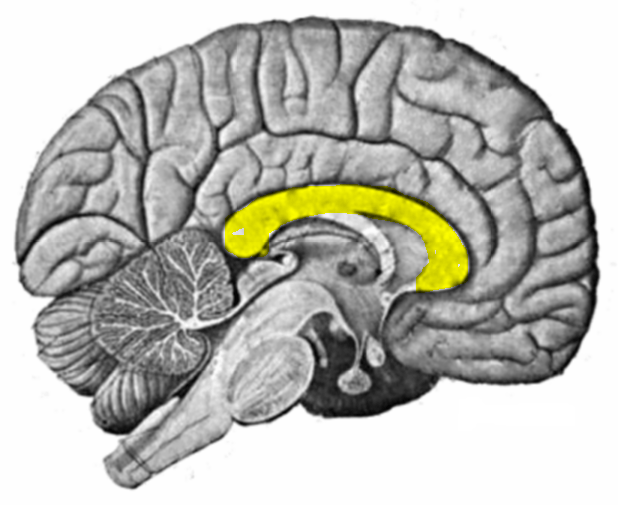
Multiple Choice

Question image
1

Hippocampus

2

Thalamus

3

Amygdala

4

Corpus Callosum

11

Multiple Choice

Question image
1
Frontal Lobe
2
Brain Stem
3
Cerebellum
4
Occipital Lobe

12

Multiple Choice

Question image
1
Cerebellum
2
Brain Stem
3
Occipital Lobe
4
Temporal Lobe

13

Multiple Choice

Question image
1
Corpus Callosum
2
Amygdala
3
Thalamus
4
Hypothalamus

14

Multiple Choice

Question image
1
Frontal Lobe
2
Parietal Lobe
3
Temporal Lobe
4
Occipital Lobe

15

16

Fill in the Blanks

media image

17

Fill in the Blanks

media image

18

Fill in the Blanks

media image

19

Fill in the Blanks

media image

20

21

Multiple Choice

Smell
1
Olfactory
2
optic
3
oculomotor

22

Multiple Choice

vision

1
olfactory
2
optic
3
oculomotor
4
accessory

23

Multiple Choice

movement of the eyeball and raised eyelid, focusing

1

hypoglossal

2

oculomotor

3

trochealar

4

olfactory

24

Multiple Choice

chewing, sensation in the teeth and face

1

trigeminal

2

trochlear

3

optic

4

oculomotor

25

Multiple Choice

hearing, balance (equilibrium)

1

Vestibulocochealar (auditory)

2

oculomotor

3

optic

4

vagus

26

27

28

Multiple Choice

When a neuron is resting, the inside of the axon has a ____________ charge.
1
positive
2
negative

29

Multiple Choice

When a neuron is not engaged in an impulse.
1
Resting potential
2
Action potential
3
Neural potential
4
Synaptic potential

30

Multiple Choice

Neurotransmitters are released from the
1
Dendrites
2
Post-synaptic neuron
3
Presynaptic neuron
4
Axon

31

Multiple Choice

In order for a neuron to have an action potential, the neuron must receive more
1
excitatory neurotransmitters
2
inhibitory neurotransmitters
3
agnostic neurotransmitters
4
antagonistic neurotransmitters

32

Multiple Choice

Excess neurotransmitters in the synapse that goes back into the presynaptic neuron.
1
Resting potential
2
Reuptake
3
Retroactivity
4
Repolarization

33

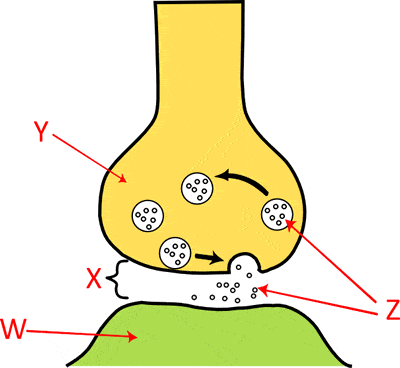
Multiple Choice

Question image
W
1
Axon Terminal Button
2
Neurotransmitters
3
Dendrite
4
Synapse

34

Multiple Choice

Question image
Y
1
Axon Terminal Button
2
Neurotransmitters
3
Dendrite
4
Synapse

35

Multiple Choice

What is the chemical used by a neuron to transmit an impulse across a synapse to another nerve cell?
1
Neurotransmitters
2
Synapse
3
Threshold
4
Impulse

36

Multiple Choice

Question image
-70 mV is the measure of a
1
Threshold Potential
2
Action Potential
3
Resting Potential
4
End Point Potential

37

Multiple Choice

Question image
When a membrane potential reaches +30mV, ________ channels open, ________ occurs, and ________ channels close.
1
Sodium, depolarization, potassium
2
Potassium, depoloarization, sodium
3
sodium, repolarization, potassium
4
postassium, repolarization, sodium

38

Multiple Choice

The brain's supporting cells are called: 
1
glial cells
2
mitochondria
3
neurons
4
nuclei

Show answer

Auto Play

Slide 1 / 38

SLIDE