
Diffusion Review
Presentation
•
Biology
•
KG
•
Medium
Nicole Vilardi
Used 6+ times
FREE Resource
7 Slides • 23 Questions
1
Multiple Choice
2
Multiple Choice
3
Multiple Choice
4
Multiple Choice
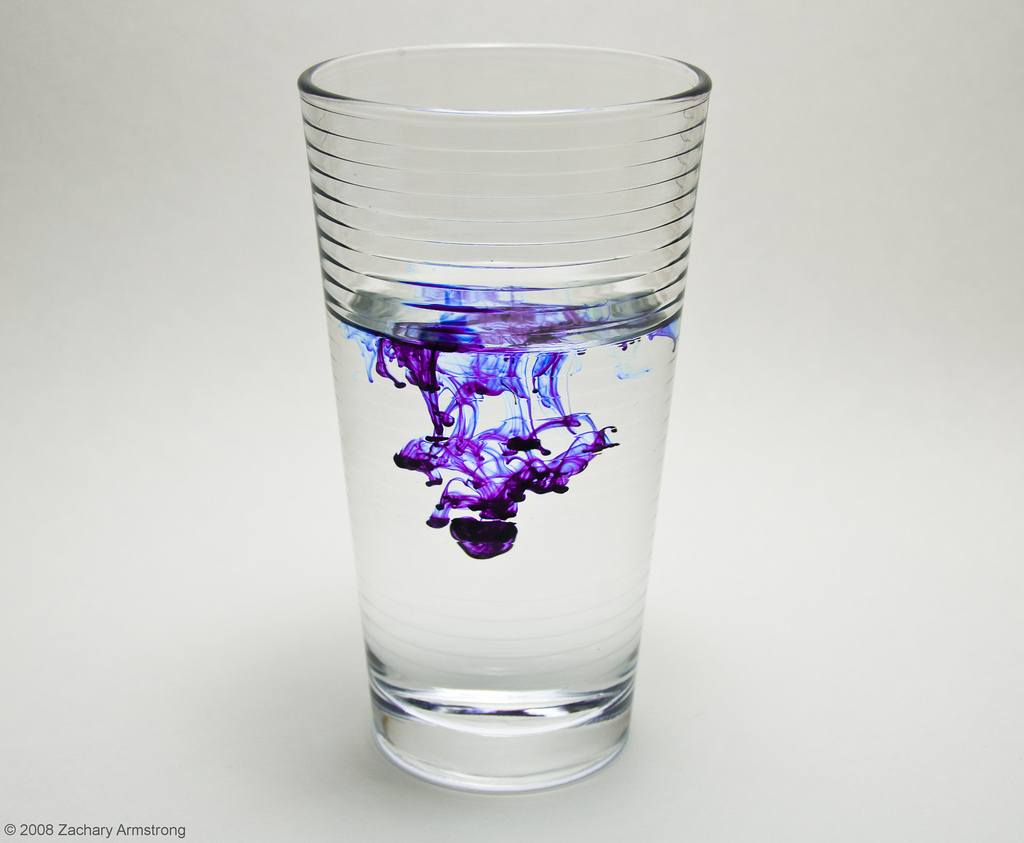
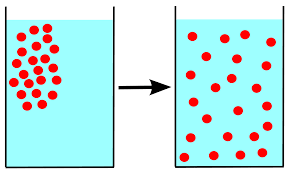
What is DIFFUSION?
5
Multiple Choice
6
Multiple Choice
Cell membranes are said to be selectively permeable. Which statement best explains what selectively
permeable means?
The cell membrane prevents any harmful substance from entering the cell.
The cell membrane lets certain substances enter the cell and keeps certain substances out of the cell.
The cell membrane has pores that let only water and glucose into the cell and carbon dioxide out.
The cell membrane allows only large molecules to diffuse into the cell.
7
Why does the body need Oxygen?
Oxygen is used to make ATP, the cell's form of energy, in CELLULAR RESPIRATION
8
Multiple Choice
Why does the body need Oxygen?
to stay hydrated
to make glucose in photosynthesis
to stay awake in class
to make ATP energy in cellular respiration
9
Step 1) RESPIRATORY SYSTEM (O2)
1. Oxygen is moved to the lungs by inhalation
2. Oxygen moves from the lungs to the bloodstream through the heart by diffusion
10
Step 2) CIRCULATORY SYSTEM (O2)
3. Red blood cells carry Oxygen in the blood to body cells in different parts of the body
11
Multiple Choice
Which of the following is the correct order of O2 movement?
heart --> lungs --> mouth --> body cells
mouth --> heart --> body cells --> lungs
mouth --> lungs --> heart --> body cells
lungs --> heart --> body cells --> mouth
12
Step 3) CELLULAR RESPIRATION
4. Oxygen moves from the bloodstream to the body cell by diffusion
5. Body cells use Oxygen to make ATP in the mitochondria
6. Carbon dioxide is made by the body cell as a waste product of cellular respiration
7. Carbon dioxide moves from the body cell to the bloodstream by diffusion
13
Step 4) CIRCULATORY SYSTEM (CO2)
8. Carbon dioxide is carried in the bloodstream back to the heart
9. CO2 passes from the heart to the lungs by diffusion
14
Step 4) RESPIRATORY SYSTEM (CO2)
10. CO2 leaves the lungs through the trachea to the mouth and nose in a process called exhalation
15
Multiple Choice
What is a waste product of cellular respiration?
ATP
O2
CO2
Glucose
16
Multiple Choice
Which two systems work together to bring O2 into the body and CO2 out of the body?
circulatory and digestive
respiratory and circulatory
digestive and integumentary
respiratory and integumentary
17
Multiple Choice
Where does Oxygen go after it enters the lungs?
it moves to the mouth through exhalation
it stays in the lungs
it moves to the bloodstream through diffusion
it moves to the body cells through diffusion
18
Multiple Choice
Without the respiratory system, body cells would not receive Oxygen from the air. How would an organism make energy in the cells?
cells would make lungs to get O2 to make ATP
cells would not change, they can still get O2 from the bloodstream
cells would not make energy without O2
cells would do anaerobic respiration to make ATP without O2
19
Multiple Choice
Where does Oxygen go after it enters the lungs?
it moves to the mouth through exhalation
it stays in the lungs
it moves to the bloodstream through diffusion
it moves to the body cells through diffusion
20
Materials diffuse through small blood vessels in the placenta from the mother's blood to the fetus.
Exchange of Materials between a mother and her fetus
21
Multiple Choice
What is the name of the organ that diffuses materials such as oxygen, nutrients, and wastes from the mother's blood to her fetus?
umbilical cord
mammary gland
placenta
ovary
22
Multiple Choice
23
Multiple Choice
Molecules A and B are commonly found in plant cells. When tested, it was discovered that molecule A quickly passed through the artificial plant cell membrane. Molecule B did not pass through.
The locations of molecules A and B at the beginning of the experiment are shown. Which statement best describes what was observed when the setup was examined 20 minutes later?
Molecule A remained inside the artificial cell and molecule B remained outside.
Only molecule A was found both inside and outside the artificial cell.
Only molecule B was found both inside and outside the artificial cell.
Both molecules A and B were found inside and outside the artificial cell.
24
Multiple Choice
Which one of the following diagrams indicates the areas where each of these substances would be located
after 20 minutes?
25
Multiple Choice
After two hours, the color of the liquid in the beaker shown did not change. This shows that
glucose molecules combined to produce starch in the artificial cell
glucose moved from the artificial cell into the beaker
starch did not pass out of the artificial cell
starch was digested to glucose in the artificial cell
26
Multiple Choice
The diagram represents one of many microscopic air sacs in a human lung. The alveolus (air sac) is the place where oxygen (O2) and carbon dioxide (CO2) move into or out of the blood, as represented in the diagram. Alveolus CO2 O2 Out In Capillary Which statement best explains why these gases are able to move in the directions shown in the diagram?
The CO2 moves out of the capillary and into the alveolus to make more room for the blood to carry O2.
The O2 is needed by the cells, so it is actively transported into the blood. The CO2, which is not needed, is actively transported out of the blood.
The blood coming to the lungs is low in CO2 and high in O2, so the gases each diffuse from a lower to a higher concentration in this area
The blood coming to the lungs is high in CO2 and low in O2, so the gases each diffuse from a higher to a lower concentration in this area.
27
Multiple Choice
Identify the substance/molecule that will not diffuse.
Starch
Glucose
Iodine
28
Multiple Select
Identify the substance(s)/molecule(s) that will diffuse.
Starch
Glucose
Iodine
29
Multiple Choice
What is the starch indicator?
Iodine
Bromothymol Blue
Benedict's Solution
Glucose
30
Multiple Choice
What color does the starch indicator turn when it comes in contact with starch?
blue-black
blue
orange-red
yellow
Show answer
Auto Play
Slide 1 / 30
MULTIPLE CHOICE

Similar Resources on Wayground
21 questions
Animal Behavior
Presentation
•
7th Grade
21 questions
Germ Theory EOC Review
Presentation
•
9th - 12th Grade
21 questions
Food and Digestion Review
Presentation
•
6th - 7th Grade
23 questions
6C: Protein Synthesis
Presentation
•
9th Grade
24 questions
Skeletal system
Presentation
•
8th Grade
22 questions
G9 Chap 1.3 - Methods of Science
Presentation
•
9th Grade
22 questions
Natural Selection & Speciation
Presentation
•
9th Grade
25 questions
Human Impact
Presentation
•
10th Grade
Popular Resources on Wayground
20 questions
STAAR Review Quiz #3
Quiz
•
8th Grade
20 questions
Equivalent Fractions
Quiz
•
3rd Grade
6 questions
Marshmallow Farm Quiz
Quiz
•
2nd - 5th Grade
20 questions
Main Idea and Details
Quiz
•
5th Grade
20 questions
Context Clues
Quiz
•
6th Grade
20 questions
Inferences
Quiz
•
4th Grade
19 questions
Classifying Quadrilaterals
Quiz
•
3rd Grade
12 questions
What makes Nebraska's government unique?
Quiz
•
4th - 5th Grade
Discover more resources for Biology
31 questions
Easter Trivia
Quiz
•
KG - 12th Grade
20 questions
Capitalization in sentences
Quiz
•
KG - 4th Grade
10 questions
GMAS ELA Review
Quiz
•
KG - University
10 questions
How to Catch a Dinosaur
Quiz
•
KG - 5th Grade
10 questions
2D and 3D Shapes Review
Presentation
•
KG - 3rd Grade
20 questions
Place Value
Quiz
•
KG - 3rd Grade
26 questions
Customary Measurement
Quiz
•
KG - University
10 questions
Kindergarten Count to 100
Quiz
•
KG