
Midterm review Lesson

Presentation
•
Biology
•
12th Grade
•
Practice Problem
•
Medium
+5
Standards-aligned

Alfred Allen
Used 5+ times
FREE Resource
11 Slides • 7 Questions
1

MONDAY MID-TERM REVIEW
Open up your study guide in Canvas
Next slide, ready? What is one animal you would find in the Savannah?
2
Draw
What animals are in a Savanna grassland biome
3

AMAZON FOOD CHAIN
• The exit ticket from Friday was a food chain in the Amazon Estuary, what is
true about the pink dolphins eating shrimp in that order.
👍 10% is lost to the surroundings through metabolism
🦈90% is transferred to the next trophic level
🛸10% is transferred to the next trophic level
🧉 100% is transferred to the next trophic level
4
Multiple Choice
What is true about the pink dolphins eating shrimp in that order.
👍 10% is lost to the surroundings through metabolism
🦈90% is transferred to the next trophic level
🛸10% is transferred to the next trophic level
🧉 100% is transferred to the next trophic level
5

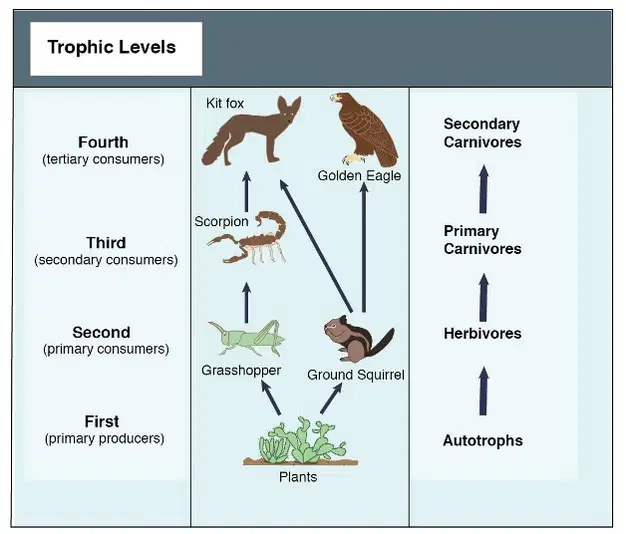
10% RULE ENERGY PYRAMID
•The ten percent rule of energy transfer states
that each level in an ecosystem only gives 10% of
its energy to the levels above it. This law explains
much of the structural dynamics of ecosystems
including why there are more organisms at the
bottom of the ecosystem pyramid compared to
the top. To understand this further, let's look at
the structure of an ecosystem pyramid.
6
7
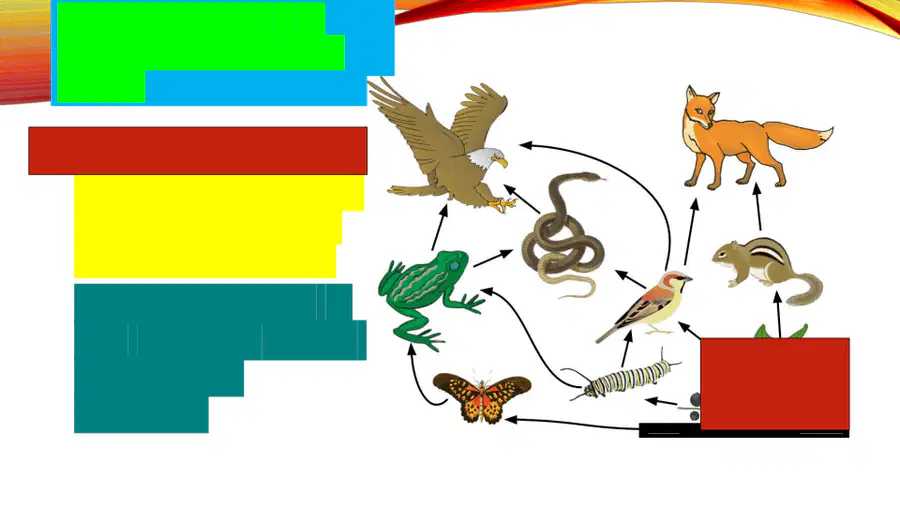
DYNAMICS OF AN
ECOSYSTEM (FOOD
WEBS)
• What is the term to
the missing piece
of the food web?
•What happens if
the missing piece
really was
missing?
This Photo by Unknown Author is licensed under CC BY-SA-NC
2 question challenge
8
Dropdown
9
Open Ended
In three sentences explain, What happens to the energy pyramid if the producers were taken out of it(energy pyramid).
1. what happens to the level above the producers
2. what happens according to the ten percent rule
3. What is the outcome to the energy(oxygen or glucose) in the trophic level
10

DID YOU MENTION
• The food web would fall apart because producers
make the energy available to the ecosystem.
• Hot Question: what would happen if the
primary consumer would I
disappear
11

READY FOR THE POWER OF
8
• The next slide is going to have eight knowledge
tasks that will empower you to destroy the
mighty Mid-term Monster this week.
•Ready?
This Photo by Unknown Author is licensed under CC BY-SA-NC
12
CHALLENGE ACCEPTED
10 points
5 points
Know the difference between carnivore and
herbivore
What are the green house gases?
How does biodiversity effect humans?
What helps plants absorb nitrogen?
Where does the nitrogen come from before plants
use it?
What is an abiotic factor?
What content would make up an ecosystem?
Know the levels of organization.
What is the 10% rule
What the difference between keystone species
and endangered species
Know the importance of wetlands
Know the difference between
What is the effect of El Nino
Where does El Nino effect?
13
Match
Match the following
carnivore
herbivore
detritivore
first level of the ecological heirarchy
second level of the ecological heirarchy
carnivore
herbivore
detritivore
first level of the ecological heirarchy
second level of the ecological heirarchy
14

STUDY GUIDE
• Make sure it is submitted for a grade
• Assessment too
• SLC
15
Multiple Choice
What is wetland important for
They provide a place for predators to find prey
wetlands provide absorption of excess nutrients, sediments, and minerals before they reach rivers
Wetlands make more nutrients, sediments, and minerals to make eutriphication happen in bigger bodies of water
fasting moving body of fresh water
16
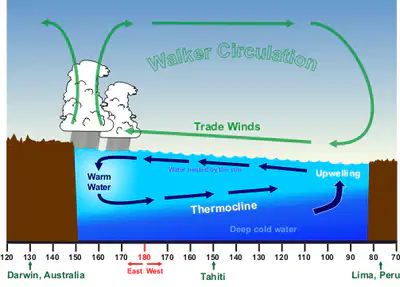
El Nino what areas are effected by it? Which way does the tradewinds travel?
17
Multiple Choice
What can be identified about ice ages
Ice ages are a long-term climate change that occurs every 100,000 years
Ice ages only happened once and never again
Ice ages are a short-term climate change every 100,000 years
Ice ages are long-term climate change every 100 years
18

JAMBOARD EXIT TICKET
MONDAY MID-TERM REVIEW
Open up your study guide in Canvas
Next slide, ready? What is one animal you would find in the Savannah?
Show answer
Auto Play
Slide 1 / 18
SLIDE
Similar Resources on Wayground

13 questions
TRANSCRIPTION
Presentation
•
11th Grade
13 questions
Mixed Conditional
Presentation
•
12th Grade
14 questions
CAPTION TEXT
Presentation
•
12th Grade
12 questions
SECOND CONDITIONAL
Presentation
•
12th Grade
12 questions
Living Things
Presentation
•
KG
14 questions
Presentation
Presentation
•
12th Grade
11 questions
Teenager 5 Session 24: Pronunciation & Speaking
Presentation
•
KG
11 questions
Algebra - Lesson Negative Exponents
Presentation
•
12th Grade
Popular Resources on Wayground
10 questions
Safety Day 2026 – Student Review

Quiz
•
9th Grade
21 questions
Continents and Oceans
Quiz
•
6th Grade
20 questions
Parts of Speech
Quiz
•
5th Grade
16 questions
Subject & Predicate
Quiz
•
5th Grade
25 questions
Multiplication Facts
Quiz
•
5th Grade
12 questions
Map Skills
Quiz
•
3rd Grade
22 questions
Continents and Oceans
Quiz
•
5th Grade
15 questions
Rounding Decimals
Quiz
•
5th Grade
Discover more resources for Biology
20 questions
Cell Transport
Quiz
•
9th - 12th Grade
8 questions
DNA vs. RNA
Presentation
•
9th - 12th Grade
16 questions
Epithelial tissues
Quiz
•
11th - 12th Grade
15 questions
DNA Structure and Replication
Quiz
•
9th - 12th Grade
20 questions
Ecological Succession Review
Quiz
•
9th - 12th Grade
3 questions
Enzymes & Energy
Quiz
•
9th - 12th Grade
38 questions
Mitosis & Meiosis
Quiz
•
9th - 12th Grade
37 questions
DNA/RNA practice part 2
Quiz
•
9th - 12th Grade