

5th Grade Science 2nd 9 weeks Study Guide

Presentation
•
Science
•
5th Grade
•
Easy
+16
Standards-aligned

Kaitlyn James
Used 4+ times
FREE Resource
20 Slides • 30 Questions
1
Atomic Structure:
Protons: Positively charged particles found in the nucleus of an atom.
Neutrons: Neutral particles found in the nucleus of an atom.
Electrons: Negatively charged particles found in the electron cloud surrounding the nucleus.

2
Understanding Atoms
Atoms are the building blocks of matter
They are made up of protons, neutrons, and electrons
Protons have a positive charge (+)
Neutrons have no charge (neutral)
Electrons have a negative charge (-)
Atoms are held together by electromagnetic forces
3
Multiple Choice
What are atoms made up of?
Protons and neutrons
Protons, neutrons, and electrons
Electrons and neutrons
Protons and electrons
4
Negatively Charged Particles
Electrons: The negatively charged particles found in the electron cloud surrounding the nucleus are called electrons. They are much smaller and lighter than protons and neutrons. Electrons play a crucial role in chemical reactions and the formation of chemical bonds. They are also responsible for the flow of electric current in conductors.
5
Multiple Choice
What are the negatively charged particles found in the electron cloud surrounding the nucleus?
Protons
Neutrons
Electrons
Photons
6
Newton's Laws of Motion
7
Multiple Choice

A rocket pushes burning gases DOWN which causes the rocket to launch UP. Which law is this?
1st Law: Law of Inertia
2nd Law: Law of Acceleration
3rd Law: Law of Action- Reaction
8
Multiple Choice
An object in motion stays in motion and an object at rest stays at rest UNLESS
acted on by a balanced force.
acted on by an unbalanced force.
9
Multiple Choice
What is the formula for the 2nd law of motion?
a=lw
F=m/a
F=ma
10
Multiple Choice
Which law of motion states that for every action, there is an equal and opposite reaction?
First Law
Second Law
Third Law
Fourth Law
11
Multiple Choice
12
Multiple Choice
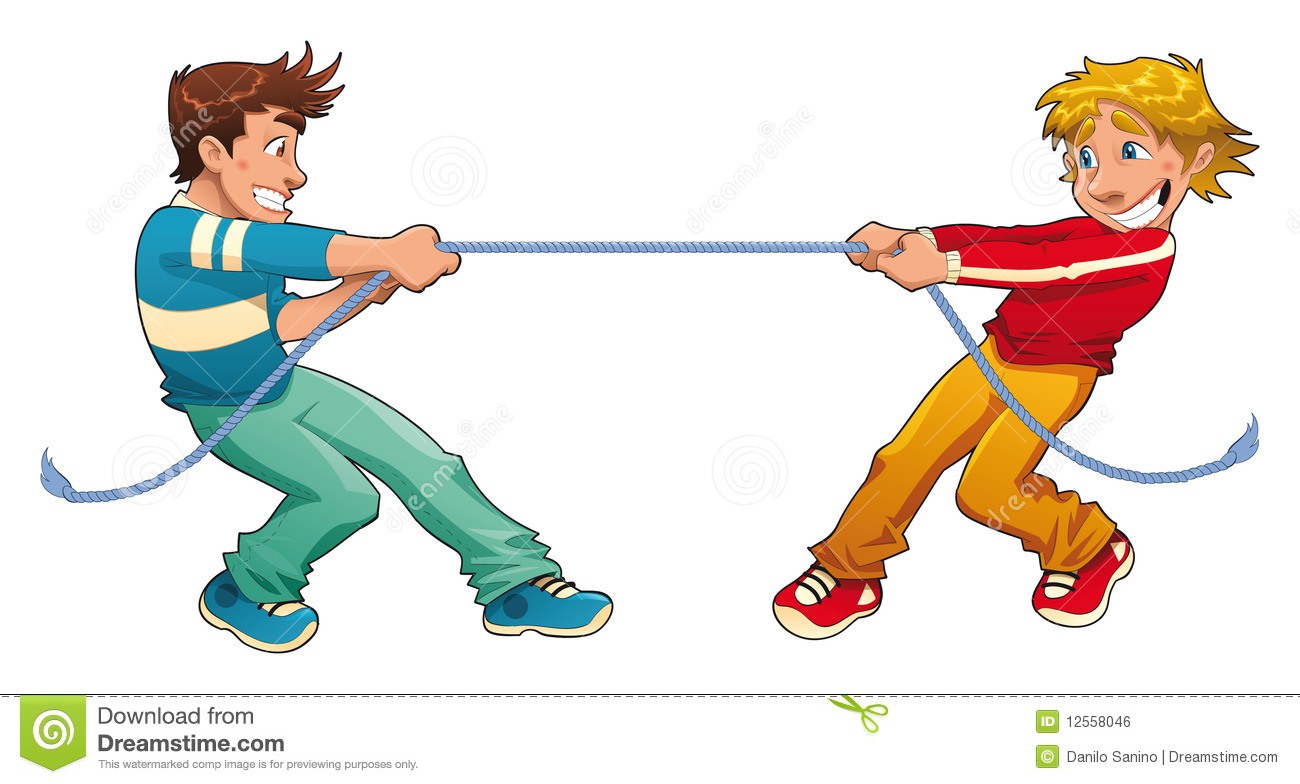
Henry and Michael are participating in a tug of war competition. If both of them are pulling with the same amount of force, what will happen?
Henry will win.
They will not move at all.
Michael will win.
Both will fall down.
13
Multiple Choice

14
Multiple Choice

If Eric pushes his car and Steve pushes his lawnmower with an equal amount of force, which object will accelerate more?
Eric's car because it has more mass
Steve's lawnmower because it has less mass
Eric's car because it has less mass
Steve's lawnmower because it has more mass
15
Asteroids are large space rocks. They are locate in the Asteroid Belt between Mars andJupiter
Comets are small icy objects that orbit the sun. Comets are located in the Kuiper Belt or Oort Cloud. They have a tail because the light from the Sun reflects off of the vaporized gas particles from the ice melting.
Meteors are small space rocks and dust.
Meteoroids are called "shooting stars because they burn up when they enter Earth's atmosphere.


16
Multiple Select
What are comets MAINLY made out of - Select ALL that apply
Metal
Dust
Ice
Reindeer
17
Multiple Choice
Where are comets found?
The Asteroid Belt
Between The Sun and Earth
Between Mars and Jupiter
Kuiper Belt/Ort Cloud
18
Multiple Choice
Is made of dust and rock and burns up in Earth's atmosphere
Comet
Meteor
Asteroid
19
Multiple Choice
Most of them are located between Mars and Jupiter
Comet
Meteor
Asteroid
20
Multiple Choice
Made up of rock similar to the rock that formed the planets
Comet
Meteor
Asteroid
21
Geocentric model: was a model where ancient astronomers believed that Earth was as the center of the solar system. They believed that everything including stars, planets and the sun revolved around Earth.
Heliocentric model: after astronomers learned more about the solar system they developed another model called the heliocentric model. This model placed the sun at the center of the solar system not Earth. Therefore everything revolved around the sun including planets, and moons.


22
He thought Earth was the center of the universe and that the Sun, Moon, planets, and all the fixed stars revolved around it. Aristotle's ideas were widely accepted by the Greeks of his time.

23
Multiple Choice

He thought Earth was the center of the universe and that the Sun, Moon, planets, and all the fixed stars revolved around it. His ideas were widely accepted by the Greeks of his time. Who was he?
Ptolemy
Copernicus
Aristotle
Galileo
24
He believed in an Earth-centered, or "geocentric" model. Ptolemy thought that all celestial objects — including the planets, Sun, Moon, and stars — orbited Earth. He believed Earth, was the center of the universe, did not move at all.

25
Copernican system, in astronomy, model of the solar system centered on the Sun, with Earth and other planets moving around it, formulated by Nicolaus Copernicus, and published in 1543. It correctly described the Sun as having a central position relative to Earth and other planets.

26
Multiple Choice

I formed the model which positioned the Sun near the center of the Universe, motionless, with Earth and the other planets orbiting around it in circular paths. Who am I?
Aristotle
Copernicus
Galileo
Ptolemy
27
Using his telescope, Galileo made many observations of our Solar System. He came to believe that the idea that the Sun and other planets orbited around the Earth was not correct. Galileo felt that an astronomer named Copernicus had a better idea. Copernicus believed the Earth and other planets moved around the Sun.

28
Just like the earth, the moon is rotating on it's own axis. As it it is rotating it revolves around the earth.
The moon rotates on its axis at the same rate as it revolves around the earth. There for the moon has phases.
The reason we see the different phases of the moon depends on how much of the light from the sun is reflected off of the moon due to the shadow of the earth.

29
The part of the Moon that we see as we look from Earth changes in a cycle. Although the Moon appears to change during a Lunar Month (29.5 days), it is always the same shape. What does change is how much of the Moon we see from Earth, due to light and shadows. The changes in the Moon are called phases.

30
Multiple Choice
What causes the moon to have phases?
Earth's Rotation and Revolving
Sun's Rotation and Revolving
Moon's Rotation and Revolving
All of the above
31
Multiple Choice
One Moon's revolution takes
28 days
365 days
24 hours
60 seconds
32
Multiple Choice

Waxing means...
getting larger
getting smaller
33
Multiple Choice

Waning means...
Getting bigger
Getting smaller
34
The Earth takes 365 days to make one full revolution around the Sun. Revolution means to travel around an object. The Moon also revolves but it travels around the Earth. It takes about 28 days for the Moon to make one full revolution around the Earth. Rotation means to spin or turn. The Earth rotates on its axis and it takes 24 hours to make one full rotation.

35
Earth moves in two ways. It rotates and it orbits.
Rotation: happens on Earth's axis or the invisible line that goes through the middle of Earth from the top to the bottom, or North and South Poles.
Orbit/ Revolution : Earth revolves around the sun. While Earth is rotating on it's axis it causes it to want to move outward. Since the suns gravity is so great it holds the earth in its location and causes it to orbit around the sun.
36
Multiple Choice
Revolution means to
fight a war for change
means to travel around an object.
run around
fight a war for freedom
37
We all know that Earth has seasons. They are Winter, Spring, Summer and Fall.
The reason that we have seasons is because Earth tilts on its axis.
This tilt causes different amounts of the sun's energy to hit us at different times of the year.
When we are in Summer we are tilted toward the sun, so we get more of the suns energy and therefore we are warmer.
In Winter we are tilted away from the sun so we get less of the suns energy and therefore we are cooler.
38
Solar: occurs when the moon passes directly between Earth and the sun, blocking the suns light. Only happens during daylight hours.
Lunar: occurs during a full moon when Earth is directly between the moon and the sun. Earth blocks sunlight from reaching the moon. Only happens during a full moon and only at night.

39
Multiple Choice
When the Northern Hemisphere is tilted away from the Sun, we have the season of:
Summer
Winter
40
The Sun:
The center of our solar system
Provides heat and light to Earth
Composed mostly of hydrogen and helium
Massive size and intense gravity
Generates energy through nuclear fusion
Has a strong gravitational pull on objects in the Solar System.
41
The Sun
The Sun is the center of our solar system. It is a massive ball of hot gas that provides heat and light to all the planets. Without the Sun, life on Earth would not be possible. The Sun is so big that it could fit more than a million Earths inside it. It is also a star, but it is the closest star to us. The Sun is constantly releasing energy in the form of light and heat, which is why it shines so brightly in the sky.

42
Multiple Choice
Why do planets orbit around the sun?
Because the Gravitational Pull. and they are smaller than the sun
Because they cold and want to be warm
The planets don't actually orbit around the sun
Planets are attracted to the radiation from the sun, but they will pull away without the radiation.
43
Multiple Choice
What is the center of our solar system?
The Moon
The Sun
Mars
Jupiter
44
Exploring Planets
Mercury: The closest planet to the Sun, with extreme temperatures and no atmosphere.
Venus: Known for its thick atmosphere and greenhouse effect, making it the hottest planet.
Earth: Our home planet, with a diverse ecosystem and the only known planet with life.
Mars: The Red Planet, with evidence of past water and potential for future colonization.
Jupiter: The largest planet, known for its colorful bands and iconic Great Red Spot.
Saturn: Famous for its beautiful rings made of ice and rock particles.
Uranus: A gas giant with a unique tilted axis, causing extreme seasons.
Neptune: The farthest planet from the Sun, with strong winds and a deep blue color.
45
My Very Eager Mother Just Served Us Nachos.

46
Multiple Choice
Which lists the planets in the correct order from the closest to the Sun?
Mercury, Venus, Earth, Mars, Jupiter, Saturn, Neptune, Uranus
Mercury, Venus, Earth, Mars, Jupiter, Saturn, Uranus, Neptune
Mars, Venus, Earth, Mercury, Jupiter, Saturn, Uranus, Neptune
Mercury, Venus, Earth, Mars, Jupiter, Neptune, Saturn, Uranus
47
Multiple Select
Which terms describe the composition of the inner planets?
rocky
gaseous
water
solid
48
Multiple Choice
The outer planets are:
Mercury, Venus, Earth, Mars
Earth, Mars, Jupiter, Saturn
Jupiter, Saturn, Uranus, Neptune
Mars, Jupiter, Saturn, Uranus
49
Multiple Choice
_______ separates the inner and outer planets
Comets
Rings of Saturn
Asteroid Belt
Dwarf Planets
50
Multiple Choice
Which word describes the amount of moons found with the outer planets?
few
infinite
some
many
Atomic Structure:
Protons: Positively charged particles found in the nucleus of an atom.
Neutrons: Neutral particles found in the nucleus of an atom.
Electrons: Negatively charged particles found in the electron cloud surrounding the nucleus.
Show answer
Auto Play
Slide 1 / 50
SLIDE
Similar Resources on Wayground

47 questions
Energy Types Review
Presentation
•
6th Grade
43 questions
Living Things in the Biosphere
Presentation
•
6th Grade
47 questions
Science Doodles Review Page 2
Presentation
•
5th Grade
47 questions
Q1: Weather Review
Presentation
•
5th Grade
43 questions
G5 Science 2.2 Energy in Ecosystems
Presentation
•
5th Grade
44 questions
G1 Sc CA 1 Revision
Presentation
•
KG
46 questions
SSES Grade 5 - Plant Reproduction
Presentation
•
5th Grade
42 questions
5th Grade Planets Lesson
Presentation
•
5th Grade
Popular Resources on Wayground
10 questions
Safety Day 2026 – Student Review

Quiz
•
9th Grade
21 questions
Continents and Oceans
Quiz
•
6th Grade
20 questions
Parts of Speech
Quiz
•
5th Grade
16 questions
Subject & Predicate
Quiz
•
5th Grade
25 questions
Multiplication Facts
Quiz
•
5th Grade
12 questions
Map Skills
Quiz
•
3rd Grade
22 questions
Continents and Oceans
Quiz
•
5th Grade
15 questions
Rounding Decimals
Quiz
•
5th Grade
Discover more resources for Science
20 questions
Mixtures and Solutions Practice
Quiz
•
5th Grade
20 questions
Food Chains and Food Webs Review
Quiz
•
5th Grade
20 questions
GC Interim #1 Review 2026
Quiz
•
5th Grade
20 questions
5.3 Force and Motion Study Guide Review
Quiz
•
5th Grade
15 questions
Force and Motion
Presentation
•
5th Grade
25 questions
Chemical and Physical Changes in Matter
Quiz
•
5th Grade
10 questions
Exploring the Periodic Table Structure

Interactive video
•
5th Grade
14 questions
Land Breeze and Sea Breeze
Quiz
•
5th Grade