

Financial Careers

Presentation
•
Computers
•
12th Grade
•
Hard

Steve Howard
Used 1+ times
FREE Resource
55 Slides • 26 Questions
1

1
Pride, Hughes, and Kapoor, Foundations of Business, 7th Edition. © 2023 Cengage. All Rights Reserved. May not be scanned, copied or
duplicated, or posted to a publicly accessible website, in whole or in part.
1
Chapter 16
Mastering Financial
Management
Pride, Hughes, and Kapoor, Foundations of Business, 7th Edition. © 2023 Cengage. All Rights Reserved. May not be scanned, copied or
duplicated, or posted to a publicly accessible website, in whole or in part.
2


2
Pride, Hughes, and Kapoor, Foundations of Business, 7th Edition. © 2023 Cengage. All Rights Reserved. May not be scanned, copied or
duplicated, or posted to a publicly accessible website, in whole or in part.
Learning Objectives
Once you complete this chapter, you will be able to:
16-1
Explain why financial management is important in today’s competitive economy.
16-2
Identify a firm’s short- and long-term financial needs.
16-3
Summarize the process of planning for financial management.
16-4
Identify the services provided by banks and financial institutions for their business
customers.
16-5
Describe the advantages and disadvantages of different methods of short-term debt
financing.
16-6
Evaluate the advantages and disadvantages of equity financing.
16-7
Evaluate the advantages and disadvantages of long-term debt financing.
3

3
Pride, Hughes, and Kapoor, Foundations of Business, 7th Edition. © 2023 Cengage. All Rights Reserved. May not be scanned, copied or
duplicated, or posted to a publicly accessible website, in whole or in part.
Pride, Hughes, and Kapoor, Foundations of Business, 7th Edition. © 2023 Cengage. All Rights Reserved. May not be scanned, copied or
duplicated, or posted to a publicly accessible website, in whole or in part.
3
16-1
Why Financial Management?
4


4
Pride, Hughes, and Kapoor, Foundations of Business, 7th Edition. © 2023 Cengage. All Rights Reserved. May not be scanned, copied or
duplicated, or posted to a publicly accessible website, in whole or in part.
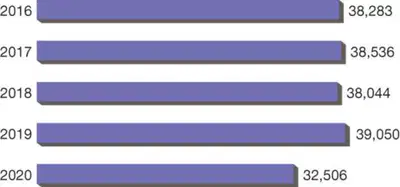
Figure 16-1 Business Bankruptcies
in the United States
Note: At the time of publication, 2020 was the most recent year for which complete statistics were available
5
Multiple Choice
The management of money and financial decisions for a person or family including budgeting, investments, retirement planning and investments is...
Investment
Personal Finance
Economics
Savings
6
Multiple Choice
The process of budgeting, saving, investing, spending or otherwise supervising the use of money by an individual or group is ...
Money Management
Savings Account
Checking Account
Investment
7
Multiple Choice
Market value of shares are decided by
the respective companies
the investment market
the government
the shareholders
8
Multiple Choice
Wealth in the form of money or other assets owned by a person or organization or available or contributed for a particular purpose such as starting a company or investing.
Consumer
Seller
Capital
Demand
9


5
Pride, Hughes, and Kapoor, Foundations of Business, 7th Edition. © 2023 Cengage. All Rights Reserved. May not be scanned, copied or
duplicated, or posted to a publicly accessible website, in whole or in part.
16-1 Why Financial Management? (1 of 2)
The Need for Financial Management
• Financial management*: All the activities concerned with obtaining money and using it
effectively
• Proper financial management must ensure that:
− Funds are available when needed both now and in the future, obtained at the lowest possible cost,
and used as efficiently as possible
− Financing priorities are established in line with organizational goals and objectives
− Spending is planned and controlled
− A firm’s credit customers pay their bills on time, and the number of past due accounts is reduced
− Bills are paid promptly to protect the firm’s credit rating and its ability to borrow money
− The funds required for paying the firm’s taxes are available when needed to meet tax deadlines
− Excess cash is invested in certificates of deposit (CDs), government securities, or conservative,
marketable securities
*Words accompanied by an asterisk are key terms from the chapter.
10

6
Pride, Hughes, and Kapoor, Foundations of Business, 7th Edition. © 2023 Cengage. All Rights Reserved. May not be scanned, copied or
duplicated, or posted to a publicly accessible website, in whole or in part.
16-1 Why Financial Management? (2 of 2)
Careers in Finance
• Managers and employees in the finance area must:
− Be honest
− Have a strong background in finance, accounting, or mathematics
− Know how to use a computer to analyze data
− Be an expert at both written and oral communication
• Typical job titles in finance include:
Chief
Financial
Officer
Vice
President of
Finance
Bank Officer
Consumer
Credit
Officer
Financial
Analyst
Financial
Planner
Loan Officer
Insurance
Analyst
Investment
Account
Executive
11
Multiple Choice
12
Multiple Choice
13
Multiple Choice
What is one difference between an accountant and an auditor?
Accountants assist auditors in recording financial transactions
Auditors speed up the process of collection money owed to the firm
Accountants work for auditors to help them verify financial records
Auditors assess the accuracy of the firm's financial statements
14
Multiple Choice
John works buying and selling stocks and bonds for his customers. John's job is an example of which type of career?
Accounting
Finance
Budgeting
Banking
15
Multiple Choice
Checking the company financial records for accuracy, writing monthly paychecks for employees, and preparing an Income Statement are classified as which type of activity?
Accounting
Banking
Budgeting
Finance
16
Multiple Choice
Bernice has a job sending bills to customers and recording their payments. Bernice's job is an example of which type of career?
Budgeting
Finance
Banking
Accounting
17
Multiple Choice
A savings and loan branch manager is an example of which type of career?
Finance
Accounting
Budgeting
Banking
18
Multiple Choice
Managing a customer's investment portfolio and giving business advice about its investments are classified as which type of activity?
Banking
Accounting
Finance
Budgeting
19
Multiple Choice
Counseling customers who want to buy corporate bonds, selling life insurance, and analyzing company spending and savings plans are classified as which type of activity?
Accounting
Banking
Budgeting
Finance
20
Multiple Choice
Accepting money that customers put in their savings accounts, counting cash to give to customers who have requested it, and processing a car loan request are classified as which type of activity?
Finance
Budgeting
Accounting
Banking
21
Multiple Choice
What is one difference between an accountant and a CPA?
Accountants must pass a national exam
CPAs usually receive a lower salary
CPAs must pass a national exam
Accountants must have more education
22
Multiple Choice
Recording payments made on account, preparing balance sheets, and preparing a quarterly income tax report are classified as which type of activity?
Finance
Budgeting
Banking
Accounting
23


7
Pride, Hughes, and Kapoor, Foundations of Business, 7th Edition. © 2023 Cengage. All Rights Reserved. May not be scanned, copied or
duplicated, or posted to a publicly accessible website, in whole or in part.
Polling Activity
Many financial managers and corporate officers have been criticized for poor
decisions, lack of ethical behavior, large salaries, lucrative severance packages
worth millions of dollars, and extravagant lifestyles.
Is this criticism justified?
24

8
Pride, Hughes, and Kapoor, Foundations of Business, 7th Edition. © 2023 Cengage. All Rights Reserved. May not be scanned, copied or
duplicated, or posted to a publicly accessible website, in whole or in part.
Pride, Hughes, and Kapoor, Foundations of Business, 7th Edition. © 2023 Cengage. All Rights Reserved. May not be scanned, copied or
duplicated, or posted to a publicly accessible website, in whole or in part.
8
16-2
The Need for Financing
25


9
Pride, Hughes, and Kapoor, Foundations of Business, 7th Edition. © 2023 Cengage. All Rights Reserved. May not be scanned, copied or
duplicated, or posted to a publicly accessible website, in whole or in part.
16-2 The Need for Financing
• Short-term financing*: Money that will be used for one year or less
− Cash flow*: The movement of money into and out of an organization
− Speculative production*: The production of goods which is followed by a time lag before
the actual sale of those goods
• Long-term financing*: Money that will be used for longer than one year
• Risk–return ratio*: A ratio based on the principle that a high-risk decision
should generate higher financial returns for a business and more conservative
decisions often generate lower returns
*Words accompanied by an asterisk are key terms from the chapter.
26
Multiple Choice
Select the reasons for short term financing.
Cash flow problems
Speculative productions
Increase inventory
All of the above
27
Multiple Choice
Long term financing is the money that will be used for longer than one year.
True
False
28
Multiple Choice
Select the steps involved in financial planning
Establishing organizational goals and objectives
Budgeting for financial needs
Identify sources of funds
All of the above
29
Multiple Choice
Short term funds include:
Hybrid financing, debt financing, long term finance
Trade credit, debt financing, equity financing
Debt financing, equity financing, hybrid financing
Trade credit, secured term loan and unsecured term loan
30

10
Pride, Hughes, and Kapoor, Foundations of Business, 7th Edition. © 2023 Cengage. All Rights Reserved. May not be scanned, copied or
duplicated, or posted to a publicly accessible website, in whole or in part.
Table 16-1 Comparison of Short- and
Long-Term Financing
Short-Term Financing Needs
Long-Term Financing Needs
Cash-flow problems
Business start-up costs
Speculative production
Mergers and acquisitions
Current inventory needs
New product development
Monthly expenses
Long-term marketing activities
Short-term promotional needs
Replacement of equipment
Unexpected emergencies
Expansion of facilities
31


11
Pride, Hughes, and Kapoor, Foundations of Business, 7th Edition. © 2023 Cengage. All Rights Reserved. May not be scanned, copied or
duplicated, or posted to a publicly accessible website, in whole or in part.
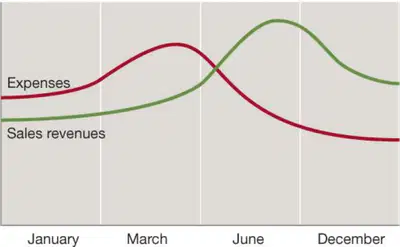
Figure 16-2 Cash Flow for a Manufacturing Business
32

12
Pride, Hughes, and Kapoor, Foundations of Business, 7th Edition. © 2023 Cengage. All Rights Reserved. May not be scanned, copied or
duplicated, or posted to a publicly accessible website, in whole or in part.
Pride, Hughes, and Kapoor, Foundations of Business, 7th Edition. © 2023 Cengage. All Rights Reserved. May not be scanned, copied or
duplicated, or posted to a publicly accessible website, in whole or in part.
12
16-3
Planning—The Basis of Sound
Financial Management
33


13
Pride, Hughes, and Kapoor, Foundations of Business, 7th Edition. © 2023 Cengage. All Rights Reserved. May not be scanned, copied or
duplicated, or posted to a publicly accessible website, in whole or in part.
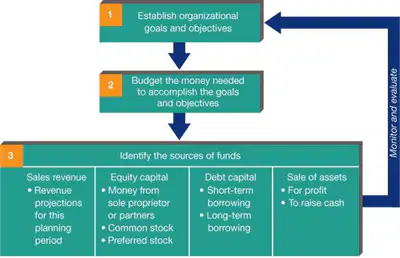
Figure 16-3 The Three Steps of Financial Planning
• Financial plan*: A plan for
obtaining and using the
money needed to
implement an
organization’s goals and
objectives
*Words accompanied by
an asterisk are key terms from the
chapter.
34


14
Pride, Hughes, and Kapoor, Foundations of Business, 7th Edition. © 2023 Cengage. All Rights Reserved. May not be scanned, copied or
duplicated, or posted to a publicly accessible website, in whole or in part.
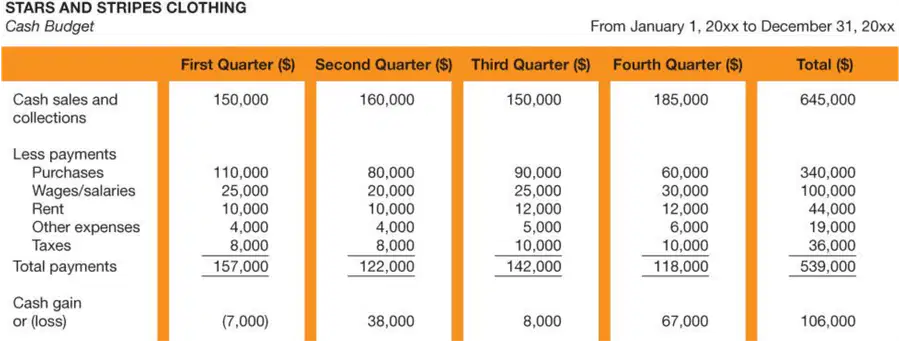
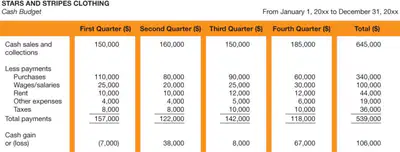
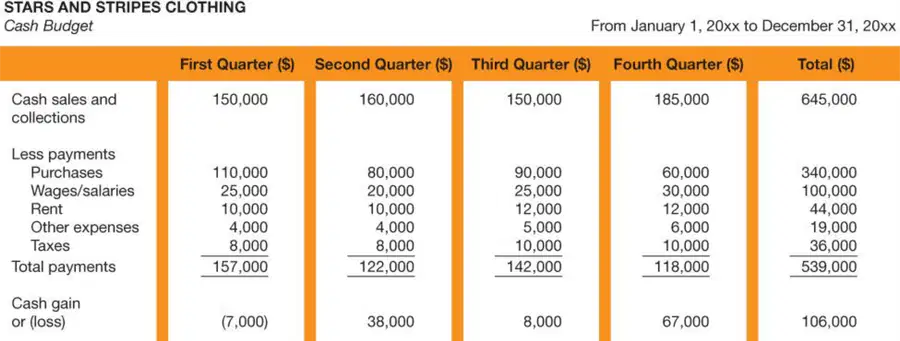
Figure 16-4 Cash Budget for
Stars and Stripes Clothing
35


15
Pride, Hughes, and Kapoor, Foundations of Business, 7th Edition. © 2023 Cengage. All Rights Reserved. May not be scanned, copied or
duplicated, or posted to a publicly accessible website, in whole or in part.
16-3 Planning—The Basis of Sound
Financial Management (1 of 3)
Developing the Financial Plan
ESTABLISHING ORGANIZATIONAL GOALS AND OBJECTIVES
• Goal: An end result that an organization expects to achieve over a one- to ten-year period
• Objective: A specific statement detailing what an organization intends to accomplish over a
shorter period of time
BUDGETING FOR FINANCIAL NEEDS
• Budget*: A financial statement that projects income, expenditures, or both over a specified
future period
− Process usually begins with the construction of departmental budgets for sales and various types of
expenses
− Cash budget*: A financial statement that estimates cash receipts and cash expenditures over a
specified period
*Words accompanied by an asterisk are key terms from the chapter.
36
Multiple Choice

37
Multiple Choice

38
Multiple Choice

39
Multiple Choice

40
Multiple Choice

41
Multiple Choice
A business may prepare for a cash deficit by:
reducing planned profits
reducing planned cash payments
reducing capital contributions
increasing loan payments
42


16
Pride, Hughes, and Kapoor, Foundations of Business, 7th Edition. © 2023 Cengage. All Rights Reserved. May not be scanned, copied or
duplicated, or posted to a publicly accessible website, in whole or in part.
16-3 Planning—The Basis of Sound
Financial Management (2 of 3)
BUDGETING FOR FINANCIAL NEEDS (continued)
• Traditional approach: A budgeting approach in which each new budget is based on the dollar
amounts contained in the budget for the preceding year, the amounts are modified to reflect any
revised goals, and managers are required to justify only new expenditures
• Zero-base budgeting*: A budgeting approach in which every expense in every budget must be
justified
• Capital budget*: A financial statement that estimates a firm’s expenditures for major assets and
its long-term financing needs
− To develop a plan for long-term financing needs, managers often construct a capital budget.
*Words accompanied by an asterisk are key terms from the chapter.
43


17
Pride, Hughes, and Kapoor, Foundations of Business, 7th Edition. © 2023 Cengage. All Rights Reserved. May not be scanned, copied or
duplicated, or posted to a publicly accessible website, in whole or in part.
16-3 Planning—The Basis of Sound
Financial Management (3 of 3)
IDENTIFYING SOURCES OF FUNDS
• Sales revenue
• Equity capital*: Money received from the owners or from the sale of shares of ownership in a
business
• Debt capital*: Borrowed money obtained through loans of various types
• Proceeds from the sale of assets
Monitoring and Evaluating Financial Performance
• It is important to ensure that financial plans are implemented properly and to catch potential
problems before they become major ones.
*Words accompanied by an asterisk are key terms from the chapter.
44


18
Pride, Hughes, and Kapoor, Foundations of Business, 7th Edition. © 2023 Cengage. All Rights Reserved. May not be scanned, copied or
duplicated, or posted to a publicly accessible website, in whole or in part.
Group Activity
Working as a team, complete the following activity:
1.
Revisit Figure 16-4 from the perspective of Stars and Stripes Clothing’s financial manager.
2.
Decide what you would do with the excess cash that the firm expects in the second, third, and
fourth quarters.
45


19
Pride, Hughes, and Kapoor, Foundations of Business, 7th Edition. © 2023 Cengage. All Rights Reserved. May not be scanned, copied or
duplicated, or posted to a publicly accessible website, in whole or in part.
Group Activity Debrief
What would you do with Stars and Stripes Clothing’s excess cash expected in the
second, third, and fourth quarters?
46

20
Pride, Hughes, and Kapoor, Foundations of Business, 7th Edition. © 2023 Cengage. All Rights Reserved. May not be scanned, copied or
duplicated, or posted to a publicly accessible website, in whole or in part.
Pride, Hughes, and Kapoor, Foundations of Business, 7th Edition. © 2023 Cengage. All Rights Reserved. May not be scanned, copied or
duplicated, or posted to a publicly accessible website, in whole or in part.
20
16-4
Financial Services Provided by Banks and
Other Financial Institutions
47


21
Pride, Hughes, and Kapoor, Foundations of Business, 7th Edition. © 2023 Cengage. All Rights Reserved. May not be scanned, copied or
duplicated, or posted to a publicly accessible website, in whole or in part.
16-4 Financial Services Provided by Banks and
Other Financial Institutions (1 of 5)
Traditional Banking Services for Business Clients
SAVINGS AND CHECKING ACCOUNTS
• Provide a safe place to store money a business doesn’t immediately need
• Certificate of deposit (CD)*: A document stating that the bank will pay the
depositor a guaranteed interest rate on money left on deposit for a specified
period of time
− A business with excess cash can earn a higher rate of interest
• Business firms also deposit money in checking accounts so that they can write
checks to pay for purchases.
*Words accompanied by an asterisk are key terms from the chapter.
48


22
Pride, Hughes, and Kapoor, Foundations of Business, 7th Edition. © 2023 Cengage. All Rights Reserved. May not be scanned, copied or
duplicated, or posted to a publicly accessible website, in whole or in part.
16-4 Financial Services Provided by Banks and
Other Financial Institutions (2 of 5)
BUSINESS LOANS
• Short-term business loans: Must be repaid within one year or less
− Line of credit*: A loan that is approved before the money is actually needed
− Revolving credit agreement*: A guaranteed line of credit
• Long-term business loans: Are repaid over a period of years
− Collateral*: Real estate or property pledged as security for a loan
− Most lenders require some type of collateral for long-term loans.
*Words accompanied by an asterisk are key terms from the chapter.
49


23
Pride, Hughes, and Kapoor, Foundations of Business, 7th Edition. © 2023 Cengage. All Rights Reserved. May not be scanned, copied or
duplicated, or posted to a publicly accessible website, in whole or in part.
16-4 Financial Services Provided by Banks and
Other Financial Institutions (3 of 5)
THE BASICS OF GETTING A LOAN
• Know potential lenders before requesting a loan.
• Check your firm’s credit rating with a national credit bureau.
• Fill out a loan application and provide current business plan, explaining how
much funding you require to accomplish your goals and how the loan will be
repaid.
• Submit current financial statements that have been prepared by an independent
certified public accountant.
• Compile a list of references that includes your suppliers, other lenders, or the
professionals with whom you are associated.
50


24
Pride, Hughes, and Kapoor, Foundations of Business, 7th Edition. © 2023 Cengage. All Rights Reserved. May not be scanned, copied or
duplicated, or posted to a publicly accessible website, in whole or in part.
Table 16-2 Consumer Payment Options
Payment Option
Percentage of People Who Prefer This Option
Debit cards
30 percent
Cash
26 percent
Credit cards
24 percent
Electronic payments
11 percent
Checks
5 percent
51


25
Pride, Hughes, and Kapoor, Foundations of Business, 7th Edition. © 2023 Cengage. All Rights Reserved. May not be scanned, copied or
duplicated, or posted to a publicly accessible website, in whole or in part.
16-4 Financial Services Provided by Banks and
Other Financial Institutions (4 of 5)
Debit and Credit Card Transactions and Mobile Pay
• Debit card*: A card that electronically subtracts the amount of a purchase from
a customer’s bank account at the moment the purchase is made
• Mobile payment*: Payment for a product or service which is made using an
electronic device or an app
Electronic Banking Services
• Electronic funds transfer (EFT) system*: A means of performing financial
transactions through a computer terminal
− Automatic teller machines (ATMs), automated clearinghouses (ACHs), point-of-sale (POS)
terminals, and electronic check conversion (ECC)
*Words accompanied by an asterisk are key terms from the chapter.
52


26
Pride, Hughes, and Kapoor, Foundations of Business, 7th Edition. © 2023 Cengage. All Rights Reserved. May not be scanned, copied or
duplicated, or posted to a publicly accessible website, in whole or in part.
16-4 Financial Services Provided by Banks and
Other Financial Institutions (5 of 5)
International Banking Services
• Letter of credit*: A legal document issued by a bank or other financial
institution guaranteeing to pay a seller a stated amount for a specified period of
time if certain conditions or requirements are met
− Conditions, such as delivery of merchandise, may be specified before payment is made.
• Banker’s acceptance*: A written order for a bank to pay a third party a stated
amount of money on a specific date
− No conditions are specified; it is simply an order to pay without any strings attached.
• Both a letter of credit and a banker’s acceptance are popular methods of paying
for import and export transactions.
*Words accompanied by an asterisk are key terms from the chapter.
53

27
Pride, Hughes, and Kapoor, Foundations of Business, 7th Edition. © 2023 Cengage. All Rights Reserved. May not be scanned, copied or
duplicated, or posted to a publicly accessible website, in whole or in part.
Pride, Hughes, and Kapoor, Foundations of Business, 7th Edition. © 2023 Cengage. All Rights Reserved. May not be scanned, copied or
duplicated, or posted to a publicly accessible website, in whole or in part.
27
16-5
Sources of Short-Term Debt Financing
54


28
Pride, Hughes, and Kapoor, Foundations of Business, 7th Edition. © 2023 Cengage. All Rights Reserved. May not be scanned, copied or
duplicated, or posted to a publicly accessible website, in whole or in part.
16-5 Sources of Short-Term Debt Financing (1 of 5)
Sources of Unsecured Short-Term Financing
• Short-term debt financing is usually easier to obtain than long-term debt
financing for three reasons:
− For the lender, the shorter repayment period means less risk of nonpayment.
− The dollar amounts of short-term loans are usually smaller than those of long-term loans.
− A close working relationship normally exists between the short-term borrower and the
lender.
• Unsecured financing*: Financing that is not backed by collateral
− Most lenders do not require collateral for short-term financing.
*Words accompanied by an asterisk are key terms from the chapter.
55


29
Pride, Hughes, and Kapoor, Foundations of Business, 7th Edition. © 2023 Cengage. All Rights Reserved. May not be scanned, copied or
duplicated, or posted to a publicly accessible website, in whole or in part.
16-5 Sources of Short-Term Debt Financing (2 of 5)
TRADE CREDIT
• Trade credit*: A type of short-term financing extended by a seller who does not
require immediate payment after delivery of merchandise
− The most popular form of short-term financing because most manufacturers and
wholesalers do not charge interest for trade credit
PROMISSORY NOTES ISSUED TO SUPPLIERS
• Promissory note*: A written pledge by a borrower to pay a certain sum of
money to a creditor at a specified future date
− Usually requires the borrower to pay interest
− Offers two important advantages to the firm extending the credit:
▪ A promissory note is legally binding and an enforceable contract.
▪ A promissory note is a negotiable instrument.
*Words accompanied by an asterisk are key terms from the chapter.
56


30
Pride, Hughes, and Kapoor, Foundations of Business, 7th Edition. © 2023 Cengage. All Rights Reserved. May not be scanned, copied or
duplicated, or posted to a publicly accessible website, in whole or in part.
16-5 Sources of Short-Term Debt Financing (3 of 5)
UNSECURED BANK LOANS
• Prime interest rate*: The lowest rate charged by a bank for a short-term loan
− A bank may require that a compensating balance be kept on deposit and that every
commercial borrower clean up (pay off completely) its short-term loans at least once a year
and not use short-term borrowing again for a period of 30 to 60 days.
COMMERCIAL PAPER
• Commercial paper*: A short-term promissory note issued by a large
corporation
− The interest rate a corporation pays when it sells commercial paper is tied to its credit rating
and its ability to repay the commercial paper.
*Words accompanied by an asterisk are key terms from the chapter.
57


31
Pride, Hughes, and Kapoor, Foundations of Business, 7th Edition. © 2023 Cengage. All Rights Reserved. May not be scanned, copied or
duplicated, or posted to a publicly accessible website, in whole or in part.
Knowledge Check Activity
Which of the following is the most popular and inexpensive form of short-term
financing?
a) Factoring
b) Promissory notes
c) Commercial paper
d) Unsecured bank notes
e) Trade credit
58


32
Pride, Hughes, and Kapoor, Foundations of Business, 7th Edition. © 2023 Cengage. All Rights Reserved. May not be scanned, copied or
duplicated, or posted to a publicly accessible website, in whole or in part.
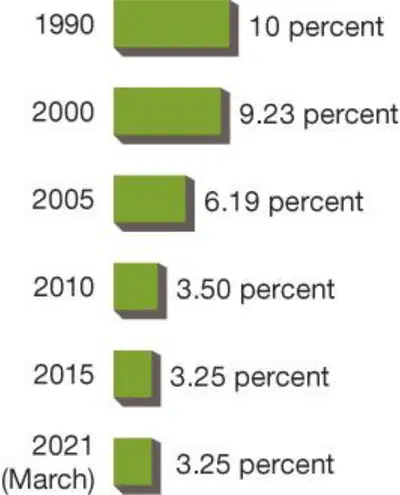
Figure 16-5 Average Prime Interest Rate Paid by
U.S. Businesses, 1990–March 2021
59


33
Pride, Hughes, and Kapoor, Foundations of Business, 7th Edition. © 2023 Cengage. All Rights Reserved. May not be scanned, copied or
duplicated, or posted to a publicly accessible website, in whole or in part.
16-5 Sources of Short-Term Debt Financing (4 of 5)
Sources of Secured Short-Term Financing
LOANS SECURED BY INVENTORY
• Finished goods, raw materials, and work-in-process inventories may be pledged
as collateral for short-term loans.
LOANS SECURED BY RECEIVABLES
• A firm can pledge its accounts receivable (amounts owed to a firm by its
customers) as collateral to obtain short-term financing.
60


34
Pride, Hughes, and Kapoor, Foundations of Business, 7th Edition. © 2023 Cengage. All Rights Reserved. May not be scanned, copied or
duplicated, or posted to a publicly accessible website, in whole or in part.
16-5 Sources of Short-Term Debt Financing (5 of 5)
Factoring Accounts Receivable
• Factor*: A firm that specializes in buying other firms’ accounts receivable
− Accounts receivable may be used to help raise short-term financing by being sold to a
factoring company
− Firm selling its accounts receivable gets less than face value, but receives cash immediately
− Shifts both the task of collecting and the risk of nonpayment to the factor
Cost Comparisons
• Trade credit is the least expensive short-term financing method.
• Secured loans and factoring of accounts receivable are typically the highest-
cost methods.
*Words accompanied by an asterisk are key terms from the chapter.
61

35
Pride, Hughes, and Kapoor, Foundations of Business, 7th Edition. © 2023 Cengage. All Rights Reserved. May not be scanned, copied or
duplicated, or posted to a publicly accessible website, in whole or in part.
Table 16-3 Comparison of Short-Term
Financing Methods
Type of
Financing
Cost
Repayment
Method
Business That May Use It
Comments
Trade credit
Low, if any
30–60 days
All businesses with good credit
Usually no finance charge
Promissory note
issued to suppliers
Moderate
One year or less
All businesses
Usually unsecured but requires
legal document
Unsecured
bank loan
Moderate
One year or less
All businesses
Promissory note is required and
compensating balance may be
required
Commercial paper
Moderate
270 days or less
Large corporations with high
credit ratings
Usually available only to large
firms
Secured loan
High
One year or less
Firms with questionable credit
ratings
Inventory or accounts receivable
often used as collateral
Factoring
High
None
Firms that have large numbers
of credit customers
Accounts receivable sold to a
factor
62


36
Pride, Hughes, and Kapoor, Foundations of Business, 7th Edition. © 2023 Cengage. All Rights Reserved. May not be scanned, copied or
duplicated, or posted to a publicly accessible website, in whole or in part.
Discussion Activity 1
Why would a lender offer unsecured short-term loans when it could demand
collateral?
63


37
Pride, Hughes, and Kapoor, Foundations of Business, 7th Edition. © 2023 Cengage. All Rights Reserved. May not be scanned, copied or
duplicated, or posted to a publicly accessible website, in whole or in part.
Discussion Activity 1 Debrief
Why would a lender offer unsecured short-term loans when it could demand
collateral?
64

38
Pride, Hughes, and Kapoor, Foundations of Business, 7th Edition. © 2023 Cengage. All Rights Reserved. May not be scanned, copied or
duplicated, or posted to a publicly accessible website, in whole or in part.
Pride, Hughes, and Kapoor, Foundations of Business, 7th Edition. © 2023 Cengage. All Rights Reserved. May not be scanned, copied or
duplicated, or posted to a publicly accessible website, in whole or in part.
38
16-6
Sources of Equity Financing
65


39
Pride, Hughes, and Kapoor, Foundations of Business, 7th Edition. © 2023 Cengage. All Rights Reserved. May not be scanned, copied or
duplicated, or posted to a publicly accessible website, in whole or in part.
16-6 Sources of Equity Financing (1 of 5)
Selling Stock
INITIAL PUBLIC OFFERING AND THE PRIMARY MARKET
• Initial public offering (IPO)*: Occurs when a corporation sells common stock to
the general public for the first time
• Primary market*: A market in which an investor purchases financial securities
(via an investment bank) directly from the issuer of those securities
− When a corporation uses an IPO to raise capital, the stock is sold in the primary market.
• Investment banking firm*: An organization that assists corporations in raising
funds, usually by helping to sell new issues of stocks, bonds, or other financial
securities
*Words accompanied by an asterisk are key terms from the chapter.
66


40
Pride, Hughes, and Kapoor, Foundations of Business, 7th Edition. © 2023 Cengage. All Rights Reserved. May not be scanned, copied or
duplicated, or posted to a publicly accessible website, in whole or in part.
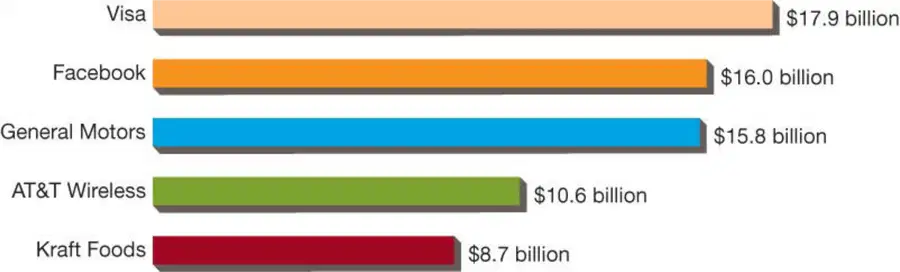
Figure 16-6 The All-Time Largest Initial Public
Offerings for U.S. Companies
67


41
Pride, Hughes, and Kapoor, Foundations of Business, 7th Edition. © 2023 Cengage. All Rights Reserved. May not be scanned, copied or
duplicated, or posted to a publicly accessible website, in whole or in part.
16-6 Sources of Equity Financing (2 of 5)
THE SECONDARY MARKET
• Secondary market*: A market for existing financial securities that are traded
between investors
• Secondary-market transactions are usually completed through a securities
exchange or the over-the-counter (OTC) market.
− Securities exchange*: A marketplace where member brokers meet to buy and sell
securities
− Over-the-counter (OTC) market*: A network of dealers who buy and sell the stocks of
corporations that are not listed on a securities exchange
*Words accompanied by an asterisk are key terms from the chapter.
68


42
Pride, Hughes, and Kapoor, Foundations of Business, 7th Edition. © 2023 Cengage. All Rights Reserved. May not be scanned, copied or
duplicated, or posted to a publicly accessible website, in whole or in part.
16-6 Sources of Equity Financing (3 of 5)
COMMON STOCK
• Common stock*: The most basic form of corporate ownership and whose
owners may vote on corporate policies
PREFERRED STOCK
• Preferred stock: Stock whose owners usually do not have voting rights but
whose claims on dividends and assets are paid before those of common-stock
owners
*Words accompanied by an asterisk are key terms from the chapter.
69


43
Pride, Hughes, and Kapoor, Foundations of Business, 7th Edition. © 2023 Cengage. All Rights Reserved. May not be scanned, copied or
duplicated, or posted to a publicly accessible website, in whole or in part.
16-6 Sources of Equity Financing (4 of 5)
Retained Earnings
• Retained earnings*: The portion of a corporation’s profits not distributed to
stockholders
• Because they are undistributed profits, retained earnings are considered a form
of equity financing.
• The amount of retained earnings in any year is determined by corporate
management and approved by the board of directors.
*Words accompanied by an asterisk are key terms from the chapter.
70


44
Pride, Hughes, and Kapoor, Foundations of Business, 7th Edition. © 2023 Cengage. All Rights Reserved. May not be scanned, copied or
duplicated, or posted to a publicly accessible website, in whole or in part.
16-6 Sources of Equity Financing (5 of 5)
Venture Capital, Angel Investors, and Private Placements
• Venture capital: Money invested in small (and sometimes struggling) firms that have the
potential to become very successful
− In return for financing, investors generally receive an equity or ownership position in the business and
share in its profits.
• Angel investor*: A wealthy investor who provides financial backing for small business start-ups
or entrepreneurs
− Focused on helping a business or entrepreneur succeed rather than earning huge profits; often
provide more favorable financial terms than venture capitalists and financial institutions
• Private placement*: Occurs when stock and other corporate securities are sold directly to
wealthy investors, banks and financial firms, insurance companies, pension funds, large
institutional investors, or mutual funds
*Words accompanied by an asterisk are key terms from the chapter.
71

45
Pride, Hughes, and Kapoor, Foundations of Business, 7th Edition. © 2023 Cengage. All Rights Reserved. May not be scanned, copied or
duplicated, or posted to a publicly accessible website, in whole or in part.
Pride, Hughes, and Kapoor, Foundations of Business, 7th Edition. © 2023 Cengage. All Rights Reserved. May not be scanned, copied or
duplicated, or posted to a publicly accessible website, in whole or in part.
45
16-7
Sources of Long-Term Debt Financing
72


46
Pride, Hughes, and Kapoor, Foundations of Business, 7th Edition. © 2023 Cengage. All Rights Reserved. May not be scanned, copied or
duplicated, or posted to a publicly accessible website, in whole or in part.
16-7 Sources of Long-Term Debt Financing (1 of 5)
• Financial leverage*: The use of borrowed funds to increase the return on
owners’ equity
− Works as long as earnings are larger than the interest charged for the borrowed money
• For a small business, long-term debt financing is generally limited to loans.
• Large corporations have the additional option of issuing corporate bonds.
*Words accompanied by an asterisk are key terms from the chapter.
73

47
Pride, Hughes, and Kapoor, Foundations of Business, 7th Edition. © 2023 Cengage. All Rights Reserved. May not be scanned, copied or
duplicated, or posted to a publicly accessible website, in whole or in part.
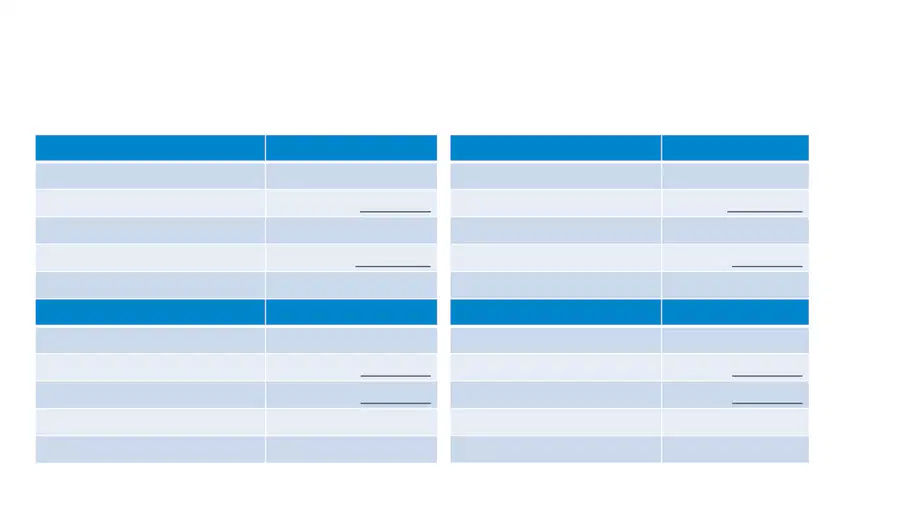
Table 16-4 Analysis of the Effect of Additional Capital
from Debt or Equity
Additional Debt
Calculation
Owners’ equity
$500,000
Additional equity
+ 0
Total owner’s equity
$500,000
Loan (@ 7%)
+ 100,000
Total capital
$600,000
Year-End Earnings
Calculation
Gross profit
$ 95,000
Less loan interest
– 7,000
Profit
$ 88,000
Return on owners’ equity
17.6%
($88,000 ÷ $500,000)
Additional Equity
Calculation
Owners’ equity
$500,000
Additional equity
+ 100,000
Total owner’s equity
$600,000
Loan (@ 7%)
+ 0
Total capital
$600,000
Year-End Earnings
Calculation
Gross profit
$ 95,000
No interest
– 0
Profit
$ 95,000
Return on owners’ equity
15.8%
($95,000 ÷ $600,000)
74


48
Pride, Hughes, and Kapoor, Foundations of Business, 7th Edition. © 2023 Cengage. All Rights Reserved. May not be scanned, copied or
duplicated, or posted to a publicly accessible website, in whole or in part.
16-7 Sources of Long-Term Debt Financing (2 of 5)
Long-Term Loans
TERM-LOAN AGREEMENTS
• Term-loan agreement*: A promissory note that requires a borrower to repay a
loan in monthly, quarterly, semiannual, or annual installments
• Interest rate and repayment terms often are based on factors such as reasons
for borrowing, borrowing firm’s credit rating, and value of collateral.
− The lender usually requires some type of collateral.
• Lenders may also require that borrowers maintain a minimum amount of
working capital.
*Words accompanied by an asterisk are key terms from the chapter.
75


49
Pride, Hughes, and Kapoor, Foundations of Business, 7th Edition. © 2023 Cengage. All Rights Reserved. May not be scanned, copied or
duplicated, or posted to a publicly accessible website, in whole or in part.
16-7 Sources of Long-Term Debt Financing (3 of 5)
Corporate Bonds
• Corporate bond*: A corporation’s written pledge that it will repay a specified
amount of money with interest
− Interest rates vary with the financial health of the company issuing the bond.
• Registered bond*: A bond registered in the owner’s name by the issuing
company
− Most corporate bonds are registered bonds.
• Maturity date*: The date on which a corporation is to repay borrowed money
*Words accompanied by an asterisk are key terms from the chapter.
76


50
Pride, Hughes, and Kapoor, Foundations of Business, 7th Edition. © 2023 Cengage. All Rights Reserved. May not be scanned, copied or
duplicated, or posted to a publicly accessible website, in whole or in part.
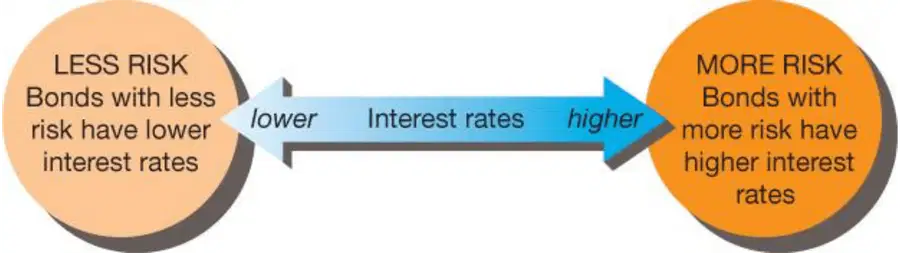
Figure 16-7 The Risk–Return Ratio for Corporate
Bond Investors
77


51
Pride, Hughes, and Kapoor, Foundations of Business, 7th Edition. © 2023 Cengage. All Rights Reserved. May not be scanned, copied or
duplicated, or posted to a publicly accessible website, in whole or in part.
16-7 Sources of Long-Term Debt Financing (4 of 5)
TYPES OF BONDS
• Debenture bond*: A bond backed only by the reputation of the issuing
corporation
• Mortgage bond*: A corporate bond secured by various assets of the issuing
firm
• Convertible bond*: A bond that can be exchanged, at the owner’s option, for a
specified number of shares of the corporation’s common stock
*Words accompanied by an asterisk are key terms from the chapter.
78


52
Pride, Hughes, and Kapoor, Foundations of Business, 7th Edition. © 2023 Cengage. All Rights Reserved. May not be scanned, copied or
duplicated, or posted to a publicly accessible website, in whole or in part.
16-7 Sources of Long-Term Debt Financing (5 of 5)
REPAYMENT PROVISIONS FOR CORPORATE BONDS
• Bond indenture*: A legal document that details all the conditions relating to a
bond issue
• A corporation may use one of three methods to ensure it has sufficient funds
available to redeem a bond issue:
− It can issue the bonds as serial bonds*: Bonds of a single issue that mature on different
dates
− It can establish a sinking fund*: A sum of money to which deposits are made each year for
the purpose of redeeming a bond issue
− It can pay off an old bond issue by selling new bonds
• Trustee*: An individual or an independent firm that acts as a bond owner’s
representative
*Words accompanied by an asterisk are key terms from the chapter.
79

53
Pride, Hughes, and Kapoor, Foundations of Business, 7th Edition. © 2023 Cengage. All Rights Reserved. May not be scanned, copied or
duplicated, or posted to a publicly accessible website, in whole or in part.
Table 16-5 Comparison of Long-Term Financing Methods
Type of
Financing
Repayment
Repayment
Period
Cost/Dividends/Interest
Businesses That May Use It
Equity
Common stock
No
None
High initial cost; low ongoing costs
because dividends not required
All corporations that sell stock
to investors
Preferred stock
No
None
Dividends not required but must be paid
before common stockholders receive
any dividends
Large corporations that have
an established investor base
of common stockholders
Debt
Long-term loan
Yes
Usually 3–7
years
Interest rates between 3 and 12 percent
depending on economic conditions, the
financial stability of the company
requesting the loan, and the amount of
the loan
All firms that can meet the
lender’s repayment and
collateral requirements
Corporate bond
Yes
Usually 1–
30 years
Interest rates between 1.25 and 8
percent depending on the financial
stability of the company issuing the
bonds and economic conditions
Large corporations that are
financially healthy
80


54
Pride, Hughes, and Kapoor, Foundations of Business, 7th Edition. © 2023 Cengage. All Rights Reserved. May not be scanned, copied or
duplicated, or posted to a publicly accessible website, in whole or in part.
Discussion Activity 2
How can a business owner or corporate manager use financial leverage to
improve the firm’s profits and return on owners’ equity?
Is there a potential danger of using financial leverage?
81


55
Pride, Hughes, and Kapoor, Foundations of Business, 7th Edition. © 2023 Cengage. All Rights Reserved. May not be scanned, copied or
duplicated, or posted to a publicly accessible website, in whole or in part.
Discussion Activity 2 Debrief
How can a business owner or corporate manager use financial leverage to
improve the firm’s profits and return on owners’ equity?
Is there a potential danger of using financial leverage?
1
Pride, Hughes, and Kapoor, Foundations of Business, 7th Edition. © 2023 Cengage. All Rights Reserved. May not be scanned, copied or
duplicated, or posted to a publicly accessible website, in whole or in part.
1
Chapter 16
Mastering Financial
Management
Pride, Hughes, and Kapoor, Foundations of Business, 7th Edition. © 2023 Cengage. All Rights Reserved. May not be scanned, copied or
duplicated, or posted to a publicly accessible website, in whole or in part.
Show answer
Auto Play
Slide 1 / 81
SLIDE
Similar Resources on Wayground

77 questions
24S2 DNA and Gene Expression
Presentation
•
12th Grade
78 questions
Unidad II Parte II
Presentation
•
University
75 questions
NUCLEAR CHANGES C8
Presentation
•
KG - University
73 questions
Travelling
Presentation
•
KG
76 questions
Health Skills Grade 11 Term 2 Chapter 4
Presentation
•
11th Grade
75 questions
(108)LT3 L8 Patterns in Action
Presentation
•
11th Grade
76 questions
Chemianalysis and Experimental Technique
Presentation
•
11th Grade
73 questions
Module No. 1: Universe, Solar System, and Earth System
Presentation
•
11th Grade
Popular Resources on Wayground
10 questions
Safety Day 2026 – Student Review

Quiz
•
9th Grade
21 questions
Continents and Oceans
Quiz
•
6th Grade
20 questions
Parts of Speech
Quiz
•
5th Grade
16 questions
Subject & Predicate
Quiz
•
5th Grade
25 questions
Multiplication Facts
Quiz
•
5th Grade
12 questions
Map Skills
Quiz
•
3rd Grade
22 questions
Continents and Oceans
Quiz
•
5th Grade
15 questions
Rounding Decimals
Quiz
•
5th Grade