

Unit 5Medieval Europe

Presentation
•
History
•
8th Grade
•
Practice Problem
•
Easy

Michael Hopper
Used 13+ times
FREE Resource
69 Slides • 8 Questions
1

2

3

4
5

6

7
Open Ended
Complete the following to show how European geography has helped shape life on the continent.
many peninsulas ------------------> ________________
North Atlantic Drift -------------> _________________
Northern Europe-----------------> _________________
many rivers---------------> ______________________
8
Open Ended
How well suited is European geography for human settlement?
9
Draw
Identify and locate the following geographical features of Europe. Draw them if needed, and label them all on the map.
Alps
Atlantic Ocean
English Channel
Mediterranean Sea
North Atlantic Drift
North European Plain
Ural Mountains
10

11
12

13
Draw
Draw a diagram that shows how the church was organized in the Middle Ages. Your diagram should include the pope, archbishops, bishops, and village priests.
14

15

16

17
Dropdown
18
Dropdown
19

20
21
Open Ended
Consider the achievements of the monks and Charlemagne in spreading Christianity throughout the Empire. Who do you think made a more lasting effect on Europe? Explain your answer.
22

23

24

25

26
Feudalism and Manorialism
Knights in Shining Armor! Damsels in Distress!
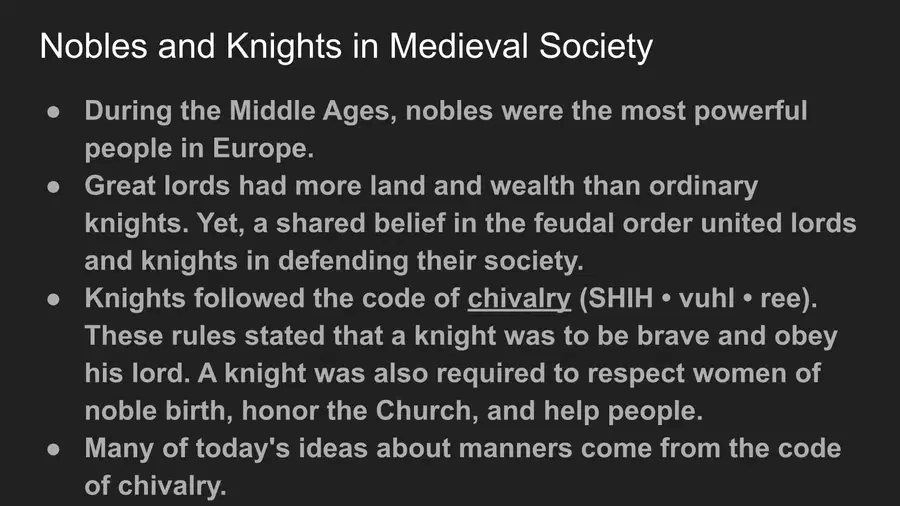
Many great books, movies, and video games tell the tales of knights in shining armor. These warriors on horseback fought bravely for their kings and queens. They rescued innocent people. They lived in magnificent castles. However, many stories about knights are only legends. But knights were real. And they were not just heroes. They were part of a system of government that held Europe together for hundreds of years. That system of government is called feudalism.
27
The Development of Feudalism—A System of Government
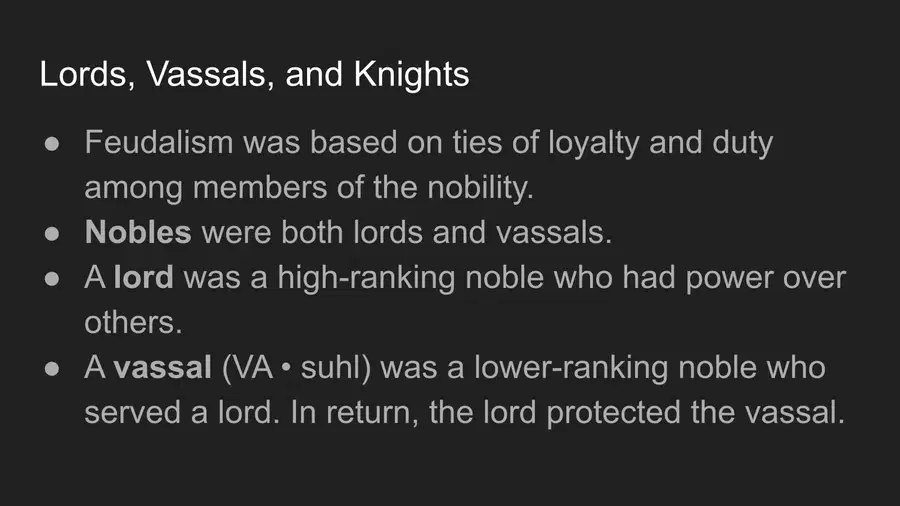
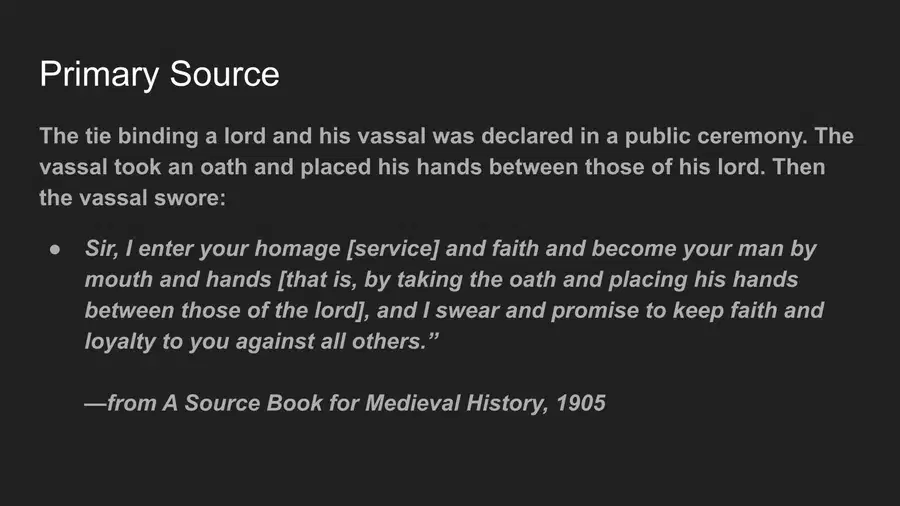
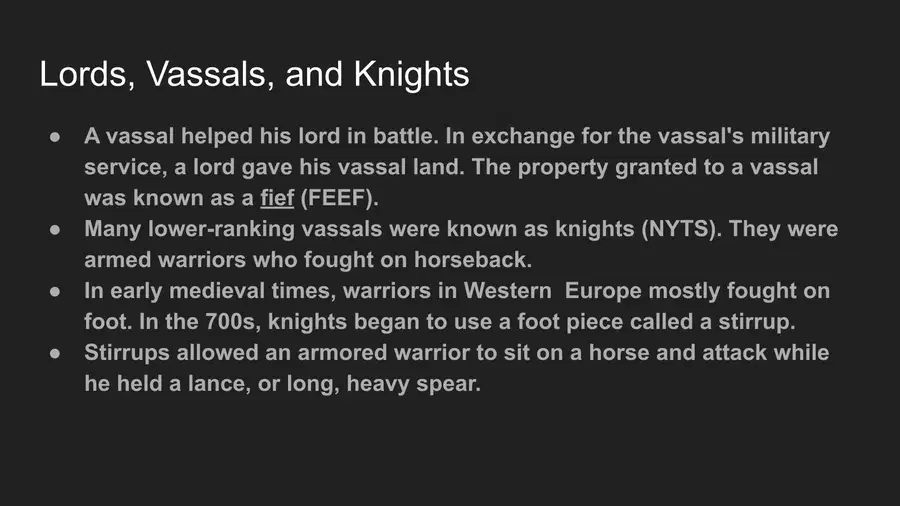
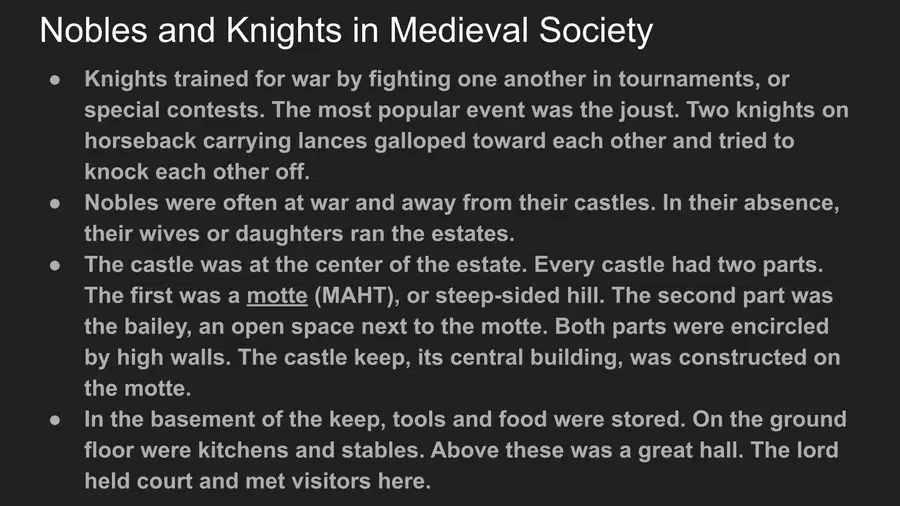
Feudalism was the system of government during the Middle Ages. Under feudalism, nobles ruled Europe. These nobles had titles you may have heard before: king or queen, baron or baroness, duke or duchess, prince or princess. Most nobles were loyal to a king. These nobles were called vassals of the king. The king was their lord, or ruler. What did a vassal get in return for his loyalty? A lot! The king gave each vassal a fief, or an estate. A fief included a large piece of land and everything on it: forests, lakes, animals, fields, and even whole towns. The vassal was the lord of his fief—the absolute ruler of all the poor peasants who lived on it. The vassal was important for economic reasons since he collected taxes to pay to his king, settled disputes between peasants, made plans for the land, and anything else you can think of.
28
The Development of Feudalism—A System of Government
Many vassals were also lords themselves. This means they divided their fiefs and gave pieces of it to their own vassals. In exchange, these lower vassals would pledge their loyalty. Many vassals had knights who were loyal to them. A knight was a horse-mounted soldier who wore armor. Horses and armor were very expensive. The lord of a fief gave his knights horses and armor in exchange for their loyalty. Knights would lead others in battles against enemies of their lords. Can you see how feudalism functioned as a government? Europe in the Middle Ages was largely ruled by kings. The kings divided their kingdoms into fiefs that were ruled by the king’s vassals. These vassals often ruled their own vassals and smaller fiefs. The lord of each fief ruled the peasants. Feudalism gave order to life in the Middle Ages, which is the basic purpose of government.
29
30
31
32
33
34
35
36
The Role of the Manor
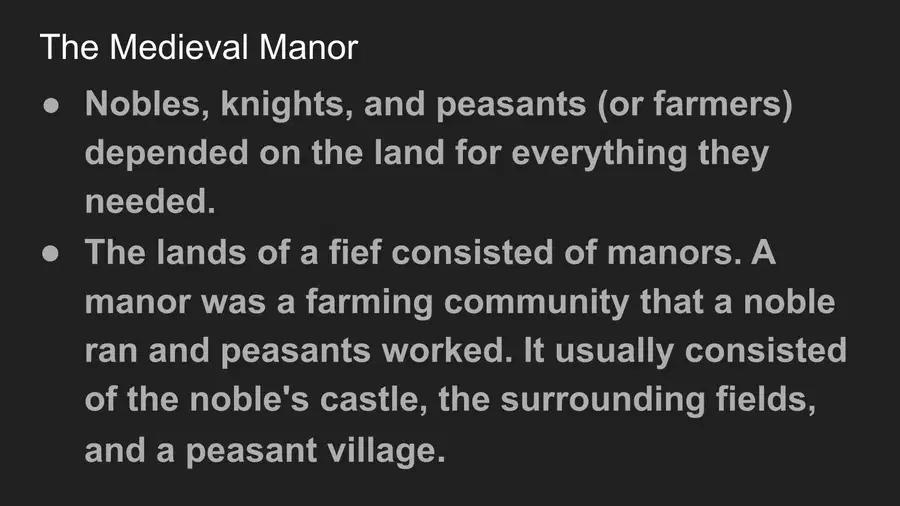
Manors played a vital role in the medieval European economy. Most manors included:
➡ the manor house. This was a large building in which the lord of the manor lived.
➡ agricultural fields. The peasants of the manor grew food crops like barley and wheat. They also raised animals like cattle and sheep. The physical geography and location of the manor influenced exactly what they raised.
➡ a village. Peasants lived in rough houses in the manor’s village. The village also included workshops for blacksmiths, people who tanned animal hides, and other workers. Manors were remarkably self-sufficient. Everything needed for life—food, clothing, buildings, and so on—were made on the manor, using local natural resources.
37
The Role of the Manor
Over time, many of the manors grew into towns. Also, many manors began to trade with each other for items they could not make themselves. Many of the crossroads where traders met grew into towns themselves. Thus, the geographic locations of manors largely determined the location of European cities and towns that exist to this very day. Simply put, the location of modern cities were influenced by the physical geography of early Europe!
38
Open Ended
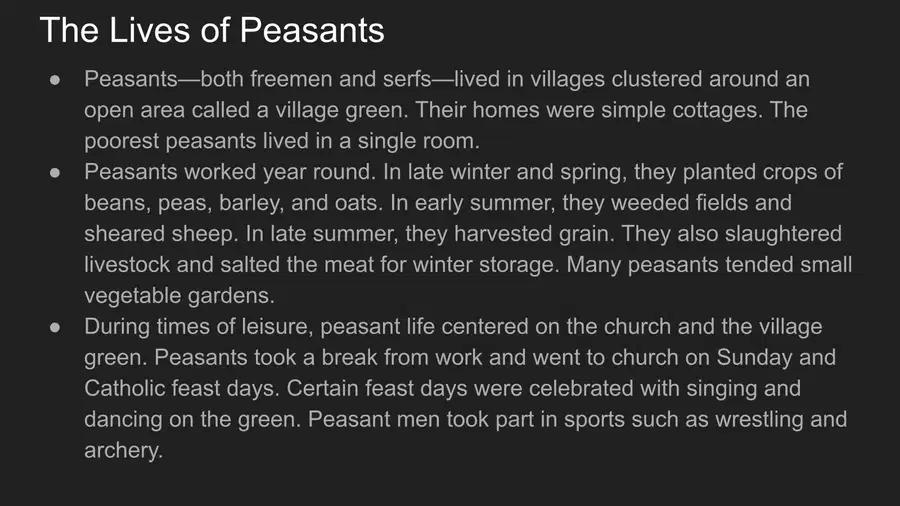
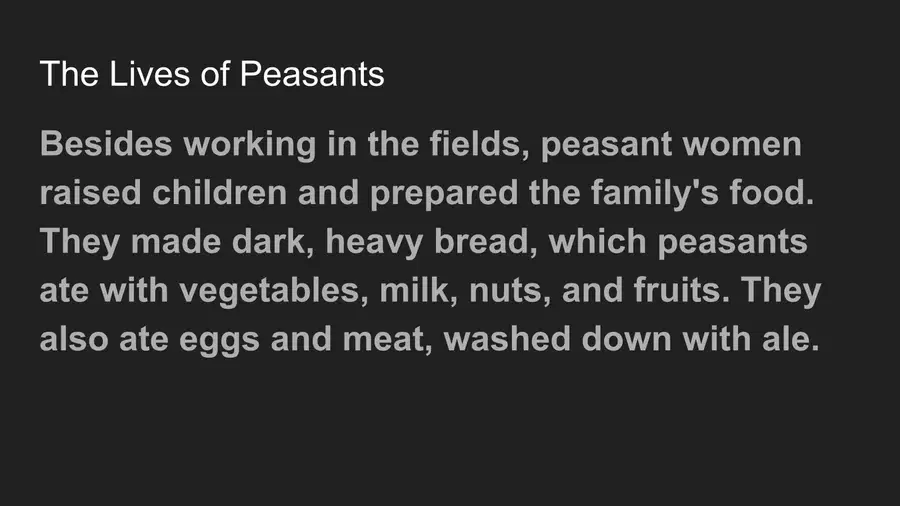
The overwhelming majority of the people in Europe during the Middle Ages were peasants, or extremely poor farm workers. Write a few sentences from the point of a peasant. Explain how you were a part of both feudalism and manorialism.
39

40

41
42
43
44
45
46

47
48
49
50
51
52
53
54

55
56
57
58
59
60
61
62
63
64
65
66
67
68
69
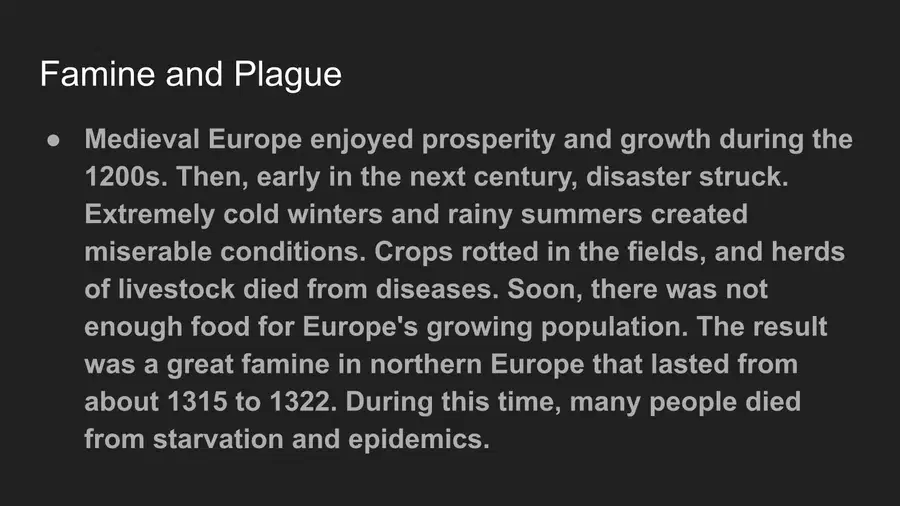
70
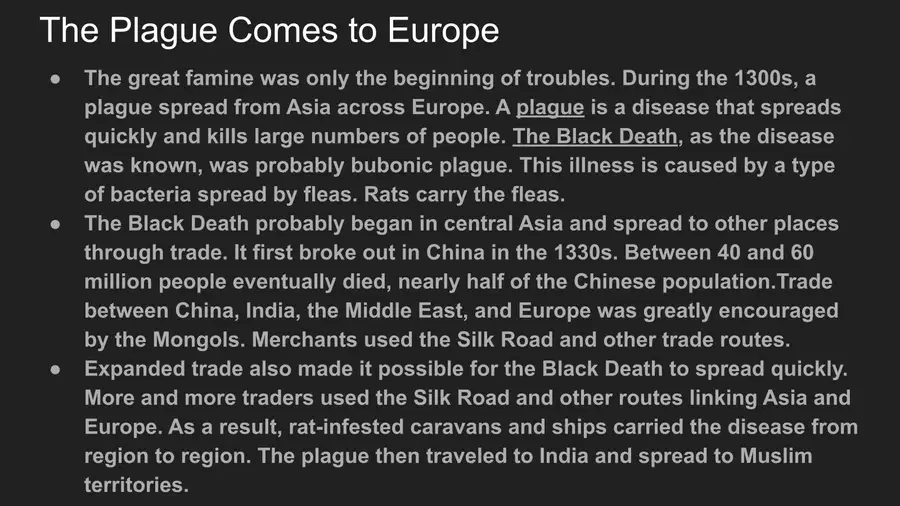
71
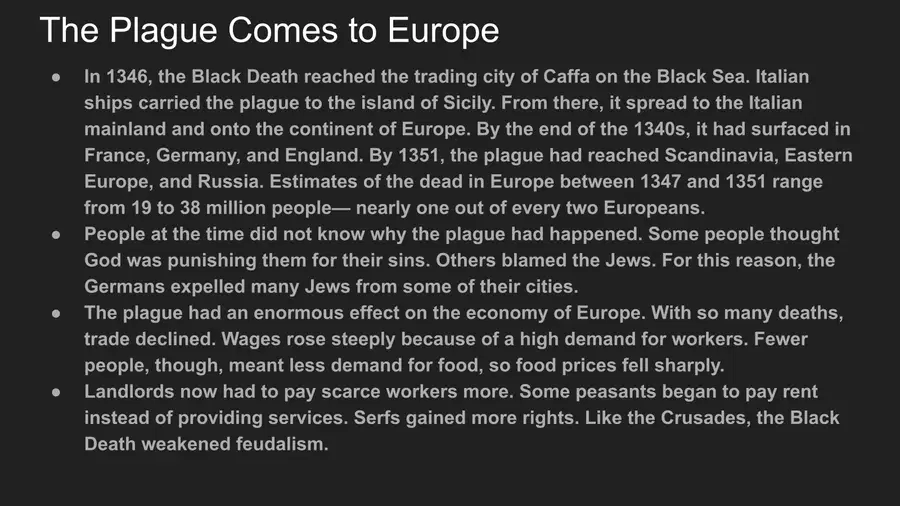
72
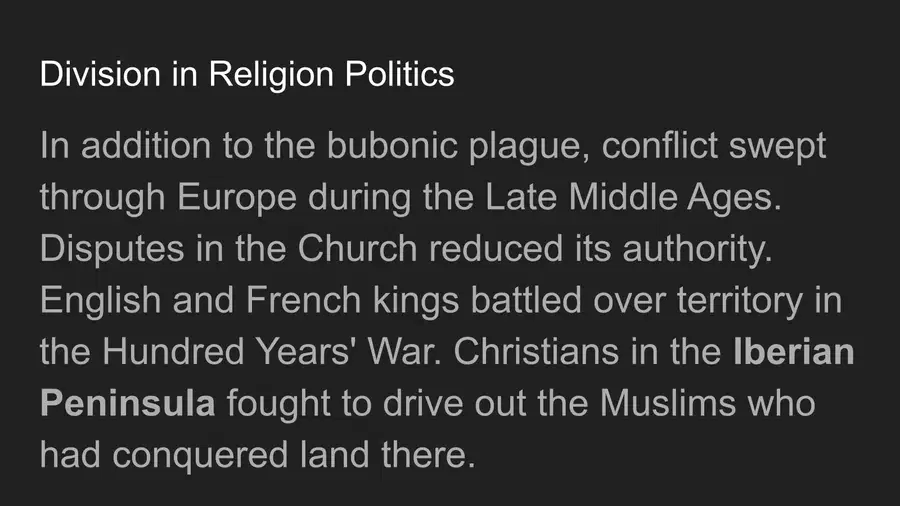
73
74
75
76
77
Show answer
Auto Play
Slide 1 / 77
SLIDE
Similar Resources on Wayground

72 questions
Lesson 16 Sessions 1,2 Mini Lesson Dilations
Presentation
•
8th Grade
72 questions
Science 8 T2 ETA Review
Presentation
•
8th Grade
69 questions
Lesson 3: Nature & Background of Futsal
Presentation
•
8th Grade
73 questions
F3 (W) Special Relationships L49
Presentation
•
8th Grade
72 questions
World War 2
Presentation
•
9th Grade
71 questions
2nd Law of Motion Quizizz Lesson
Presentation
•
8th Grade
73 questions
Moon and Tides
Presentation
•
8th Grade
67 questions
Stratigraphy and Dating Rocks
Presentation
•
8th Grade
Popular Resources on Wayground
20 questions
Math Review

Quiz
•
3rd Grade
15 questions
Fast food
Quiz
•
7th Grade
20 questions
Context Clues
Quiz
•
6th Grade
20 questions
Inferences
Quiz
•
4th Grade
19 questions
Classifying Quadrilaterals
Quiz
•
3rd Grade
20 questions
Figurative Language Review
Quiz
•
6th Grade
20 questions
Equivalent Fractions
Quiz
•
3rd Grade
10 questions
Identify Fractions, Mixed Numbers & Improper Fractions
Quiz
•
3rd - 4th Grade
Discover more resources for History
20 questions
Unit 9: Civil War
Quiz
•
8th Grade
21 questions
The Cold War
Quiz
•
8th - 11th Grade
50 questions
50 States and Capitals
Quiz
•
8th Grade
27 questions
4th Quarter Benchmark
Quiz
•
8th Grade
10 questions
Exploring the Byzantine Empire: Key Events and Milestones

Interactive video
•
6th - 10th Grade
20 questions
Civil Rights Movement
Quiz
•
8th Grade
10 questions
Exploring the American Civil War: Key Events and Figures
Interactive video
•
6th - 10th Grade
25 questions
US HISTORY REVIEW
Quiz
•
6th - 8th Grade