Search Header Logo
Tides and Seasons Review

Tides and Seasons Review

Assessment

Presentation

•

Science, Other Sciences

•

6th - 8th Grade

•

Practice Problem

•

Medium

•
NGSS
MS-ESS1-1, MS-ESS2-6, MS-PS2-4

+2

Standards-aligned

Created by

Naila N Kasem

Used 52+ times

FREE Resource

3 Slides • 70 Questions

1

Multiple Choice

Question image

Large tides, called spring tides, are experienced in the Earth's oceans when the moon is in position

1

A

2

B and D

3

B

4

A and C

2

Multiple Choice

Question image

Tides are caused by

1

Gravity

2

Heat

3

Waves

4

Winds

3

Multiple Choice

Question image

______ Tides, tides that are weaker than normal, happen when the Moon is at 1st or last quarter phase & the sun & moon interfere with

1

Spring

2

High

3

Low

4

Neap

4

Multiple Choice

Question image

Which position represents spring in the southern hemisphere?

1

A

2

B

3

C

4

D

5

Multiple Choice

Question image

Neap tides, relatively weak tides, occur when the Moon is in position(s)

1

A

2

B

3

A and C

4

B and D

6

Multiple Choice

Question image

If you live in the southern hemisphere, what season would you be experiencing in position C this diagram?

1

Fall

2

Winter

3

Summer

4

Spring

7

Multiple Choice

Question image

If the earth were not tilted on its axis, what would be the result?

1

Day length would be less than 24 hours.

2

Both sides of the moon would be visible.

3

Temperatures would be constant year round.

4

The length of the year would be more than 365 days.

8

Multiple Choice

Question image

Earth's seasons are influenced by the Earth's tilt on its axis as well as its _____________ around the Sun

1

Revolution

2

Barycenter

3

Precession

4

Rotation

9

Multiple Choice

Question image

The picture shows us how the Sun's rays strike Earth. Because of the Earth's tilt on its axis, some parts of Earth are having summer and others, winter. What letter or letters on the Earth are experiencing summer?

1

B

2

C

3

B and C

4

C and D

10

Multiple Choice

Question image

Earth orbits the Sun every 365 days, causing seasonal patterns that vary by location. In the summer, the Northern Hemisphere is tilted toward the Sun, receiving the greatest amount of solar energy than any other time of the year. What can be expected in the Northern Hemisphere during this season?

1

warmer temperatures and decreased daylight

2

cooler temperatures and increased daylight

3

cooler temperatures and decreased daylight

4

warmer temperatures and increased daylight

11

Multiple Choice

The term used to describe when the Earth spins on an axis is...

1

revolution

2

rotation

3

orbit

4

retrograde

12

Multiple Choice

What causes the seasons on Earth?

1

The movement of the moon around the Earth

2

The movement of the Sun around the Earth

3

The tilt of the Earth's axis is it goes around the sun

13

Multiple Choice

What season is it when the Earth is tlted toward the sun?

1

summer

2

fall

3

winter

4

spring

14

Multiple Choice

During which two seasons is the Earth's axis not tilted toward or away from the sun, giving mild temperatures & equal day and night?

1

Fall & Spring

2

Fall & Summer

3

Spring & Summer

4

Spring & Winter

15

Multiple Choice

During which season are the hours of night much longer than the hours of daylight?

1

Spring

2

Summer

3

Fall

4

Winter

16

Multiple Choice

What causes tides to occur on the Earth?

1
gravity
2
wind
3

ocean currents

4

the atmosphere

17

Multiple Choice

 Which part of the Earth receives the most direct sunlight from our Sun?

1

Equator

2

North Pole

3

South Pole

4

Both Poles

18

Multiple Choice

A[n] ______________ tide occurs when the sun is at right angles to the line between Earth and the moon. 
1
high
2
neap
3
low
4
spring

19

Multiple Choice

A[n] ___________ tide occurs when the sun, Earth, and the moon are nearly in a line. 
1
spring
2
high
3
low
4
neap

20

Multiple Choice

The bulge of water on the side of the Earth closest to the moon produces ___________.
1
high tide
2
low tide
3
neap tide
4
spring tide

21

Multiple Choice

Question image
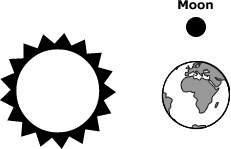
What type of tide would this arrangement of earth-moon-sun create?
1

super tide

2

spring tide

3
neap tide

22

Multiple Choice

Question image
What type of tides would this arrangement of earth-moon-sun create?
1
neap tide
2
spring tide
3

super tide

23

Multiple Choice

You visited the beach at 12 pm (noon) and it is high tide. If you return 6 hours later what tide will you see? 
1

high tide

2

low tide

24

Multiple Choice

What causes the Earth's ocean's tides?

1

The Moon and Sun's light

2

The Moon's gravity only

3

The gravitational pull of the Moon and Sun

4

Earth's rotation interacting with its revolution.

25

Rotation and Revolution

  • Earth rotation takes 24 hours causing day and night

  • One complete Revolution takes 365.5 days or 1 year

26

Multiple Choice

Day and night is caused by

1

earth's rotation

2

earth's revolution

27

Multiple Choice

Earth rotation takes

1

365 days

2

March 21

3

24 hours

28

Seasons

  • The season is caused because of the tilted axis

  • When the North is tilted toward the sun it is summer. More direct rays and longer days

  • Summer solstice- Northern Hemisphere-June 21. Southern Hemisphere December 21

  • Winter Solstice- Northern Hemisphere December 21. Southern Hemisphere June 21

  • Equinox occurs when neither end is tilted toward or away from the sun

29

Multiple Choice

Seasons are caused by

1

rotation on it axis

2

distance from the sun

3

the tilted axis

30

Multiple Choice

The longest day of the year is?

1

summer solstice

2

winter solstice

3

fall equinox

31

Multiple Choice

Question image

In point A which hemisphere is having summer.

1

northern hemisphere

2

southern hemisphere

3

neither

32

Multiple Choice

Equinox happens when

1

the northern hemisphere is tilted toward the sun

2

the southern hemisphere is tilted away from the sun

3

neither hemisphere is tilted toward or away from the sun

33

Labelling

Label the diagram to show the seasons for the Northern Hemisphere.

Drag labels to their correct position on the image

summer

winter

autumn

spring

34

Multiple Choice

The shape of the orbits of planets

1

long

2

elliptical

3

circles

35

Tides

  • Moon -greatest effect on tides

  • High tide - Part of earth facing the moon

  • Tides changes about every 6 hrs

  • Spring Tide- Moon and sun in a straight line. Produce highest high tide

  • Neap Tide- Moon and sun at 90 degree angle. Produce low high tide and normal low tide

  • spring tide during new and full moon

  • neap tide during first and third quarter

36

Multiple Choice

What is a difference between spring and neap tides?

1

Spring tides occur when the earth and sun are IN LINE with the new or full moon.

2

Spring tides occur when moon in 3rd or 1st quarter phases

3

Spring tides are LOWER than neap tides

4

Spring tides occur in Spring and neap tides can occur in any season

HIDE ANSWER

37

Multiple Choice

Question image

What type of tides would this arrangement of earth-moon-sun create?

1

spring tide

2

neap tide

3

daily tide

38

Multiple Choice

Question image

What type of tides would this arrangement of earth-moon-sun create?

1

full moon tide

2

neap tide

3

spring tide

39

Multiple Choice

How long does it take the Earth to revolve around the sun?

1

365 1/4 day

2

24 hours

3

1 week

4

30 days

40

Multiple Choice

Question image
What season is the Northern Hemisphere experiencing at position 1?
1
Winter
2
Spring
3
Summer
4
Fall

41

Multiple Choice

Question image
What season is the Northern Hemisphere experiencing at position3?
1
Winter
2
Spring
3
Summer
4
Fall

42

Multiple Choice

What do we call rising and lowering water levels in large bodies of water that occur each day?
1
Currents
2
Tides
3
Gravity
4
Waves

43

Multiple Choice

Question image
When the Earth moves in orbit around the Sun, what do we call this?
1
rotation
2
waxing
3
revolution
4
waning

44

Multiple Choice

How do the sun, Earth and moon most likely affect tides?

1

Earth's gravitational pull on the sun creates tides

2

Earth's gravitational pull on the moon creates tides

3

the sun and moon's gravitational pull on the Earth creates tides

4

The sun's gravitational pull upon the moon creates tides on Earth

45

Multiple Choice

Why are there high and low tides on Earth?

1

They are due to changes in the moon's tilt on its axis

2

They are due to the gravitational pull between Earth and the moon

3

They are due to the magnetic force between the Earth and the moon

4

They are due to changes in the moon's speed every month

46

Multiple Choice

What season is the Northern Hemisphere experiencing when it is tilted directly toward the sun?

1

Fall

2

Winter

3

Spring

4

Summer

47

Multiple Choice

Neap tides occur during which lunar phases?

1

first and last quarter moon

2

full and new moon

3

moon is waxing

4

moon is waning

48

Multiple Choice

When it is spring in the Northern Hemisphere what is the season in the Southern Hemisphere?

1

Spring

2

Summer

3

Fall

4

Winter

49

Multiple Choice

Question image

Which tide is represented in the diagram?

1

Spring Tide

2

Low Tide

3

High Tide

4

Neap Tide

50

Multiple Choice

Question image

Which tide is represented in the diagram?

1

Spring Tide

2

Low Tide

3

High Tide

4

Neap Tide

51

Multiple Choice

The term equinox means....
1
equal amount of day light and equal amount of night
2
Equal amount of winter and summer
3
Equal amounts of hot dogs for everyone
4
The longest day of the year

52

Multiple Choice

Question image
What happens when the area in which you live tilts away from the sun?
1
It is summer.
2
It is spring.
3
It is winter.
4
It is fall.

53

Multiple Choice

Why do we experience the changing of the season on the earth?
1
distance from the sun
2
rotation of the earth
3
change in solar output
4
tilt of the earth's axis

54

Multiple Choice

Question image
Why does the area around the equator stay the same temperature all year?
1
The equator rotates slower than the poles.
2
The equator remains the same distance from the sun.
3
The equator always receives direct sunlight.
4
The equator has 18 hour days.

55

Multiple Choice

Question image

In the summer, many people enjoy going to the beach. There is a beautiful beach in Argentina, which is located in the Southern Hemisphere. Which diagram shows the position of Earth when it is summer in Argentina?

1

A

2

B

3

C

4

D

56

Multiple Choice

The path of an object as it revolves around another object

1

revolution

2

rotation

3

orbit

4

gravity

57

Multiple Choice

The spinning of the Earth on its axis

1

Rotation

2

Revolution

3

Orbit

4

Inertia

58

Multiple Choice

Question image
Which body has the greater effect on Earth's tides?
1
Sun
2
Saturn
3
Moon 
4
Venus

59

Multiple Choice

Question image
If its ____ in the Northern hemisphere, then its summer in the Southern hemisphere. 
1
spring
2
summer
3
fall
4
winter

60

Multiple Choice

Question image

In the Southern Hemisphere what season is it in position C?

1

Spring

2

Summer

3

Fall

4

Winter

61

Multiple Choice

Question image

In the Northern Hemisphere what season is it in Position D?

1

Spring

2

Summer

3

Fall

4

Winter

62

Multiple Choice

Question image

In the Northern Hemisphere what season is it in position C?

1

Spring

2

Summer

3

Fall

4

Winter

63

Multiple Choice

Question image

What season is it in Position B in the Northern Hemisphere?

1

Spring

2

Summer

3

Fall

4

Winter

64

Multiple Choice

Question image
What type of tide is occurring on Earth?
1
Reverse tide
2
Quarter tide
3
Neap tide
4
Spring tide

65

Multiple Choice

Which image shows an objects rotating?

1
2

66

Multiple Choice

Which image shows an objects revolving?

1
2

67

Multiple Choice

Question image

Click on the image.

Based on the diagram, which month is the Southern half (hemisphere) of Earth experiencing summer?

1

March

2

June

3

September

4

December

68

Multiple Choice

Question image

Click on the image.

Based on the diagram, which month is the Northern half (hemisphere) of Earth experiencing summer?

1

March

2

June

3

September

4

December

69

Multiple Choice

The rise and fall of ocean water

1

Neap Tides

2

Spring Tides

3

Tides

4

Eclipses

70

Multiple Choice

Question image

Because the tidal bulge follows the moon;s revolution-Many places on Earth experience ___ high tides and ___ low tides each day.

1

4 and 4

2

1 and 1

3

2 and 2

4

3 and 3

71

Multiple Choice

Question image

_____ Tides occur when the Sun, the Earth, and the Moon are in a __________ line.

1

Spring, straight

2

Neap, straight

3

High, zigzag

4

Low, zigzag

72

Multiple Choice

A[n] ______________ tide occurs when the sun is at right angles to the line between Earth and the moon. 
1
high
2
neap
3
low
4
spring

73

Multiple Choice

A[n] ___________ tide occurs when the sun, Earth, and the moon are nearly in a line. 
1
spring
2
high
3
low
4
neap
Question image

Large tides, called spring tides, are experienced in the Earth's oceans when the moon is in position

1

A

2

B and D

3

B

4

A and C

Show answer

Auto Play

Slide 1 / 73

MULTIPLE CHOICE