

Solar system part 2

Presentation
•
Science
•
11th Grade
•
Practice Problem
•
Hard

Diana Curiel
FREE Resource
10 Slides • 0 Questions
1


Differences between
Terrestrial and Jovian Planets
The Solar System
Part 2
2


� 3 substances that make up the
planets are gases, rock, and ices.
(classification is based on melting
points)
� H (Hydrogen)and He (Helium)are the
gases on most planets
Interior of the planets
3


� Rocks are mainly silicate minerals
and metallic iron, which have
melting points above 700C
� Ices include ammonia, methane,
carbon dioxide, and water.
interior continued
4


� Terrestrial planets are dense, consisting
mostly of rocky and metallic substances,
and only minor amounts of gases and ices.
� Jovian planets contain large amounts
of gases (H and He) and Ices (water,
ammonia, and methane)
�
Terrestrial vs Jovian
planets
5


Astronomical Units (AU) are
measurements used within our Solar
system based off of the distance
between the Earth and Sun. 93.6
million miles ( 150 million km)
Astronomical Units
6


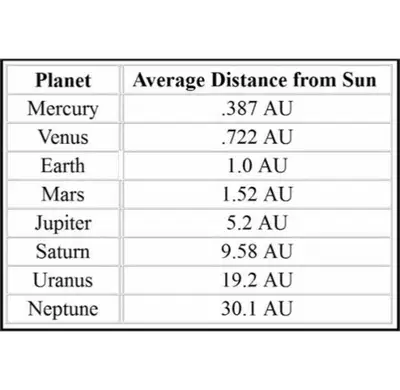
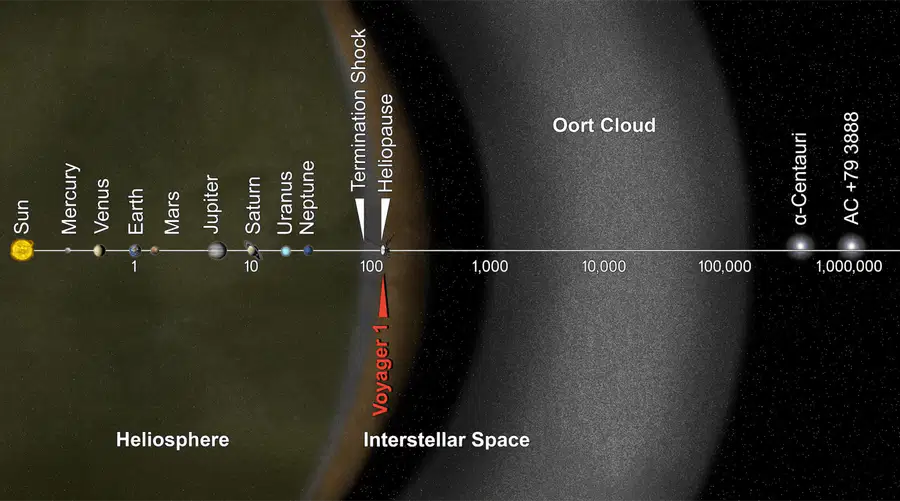
AU’s versus Lightyears
7


8


Light years: used to measure distances
of the stars and other objects outside
our solar system:
1 lightyear = 5.88 trillion Miles (9.46
trillion km)
A lightyear is how far light can travel in
one year.
Astronomical Measurements
9



Light years
10


� Light can orbit the Earth 7x in one
second at the Speed of Light
� The Milky Way Galaxy: 100,000 light
years!
�
Speed of light: 186,000m/s
Differences between
Terrestrial and Jovian Planets
The Solar System
Part 2
Show answer
Auto Play
Slide 1 / 10
SLIDE
Similar Resources on Wayground

8 questions
The building blocks of life
Presentation
•
11th Grade
9 questions
Reading Strategies
Presentation
•
6th - 8th Grade
6 questions
How to collect Hair and Fiber Evidence
Presentation
•
12th Grade
8 questions
APB Unit 1 - Review
Presentation
•
11th - 12th Grade
7 questions
Interactions of Earth's Atmosphere and Hydrosphere
Presentation
•
11th - 12th Grade
7 questions
Connectors
Presentation
•
12th Grade
11 questions
Renewable and Nonrenewable Resources
Presentation
•
11th Grade
7 questions
Upper Limb
Presentation
•
11th Grade
Popular Resources on Wayground
5 questions
A Home on the Shore

Quiz
•
3rd Grade
28 questions
US History Regents Review
Quiz
•
11th Grade
6 questions
A Horse Tale
Quiz
•
3rd Grade
20 questions
Math Review
Quiz
•
3rd Grade
10 questions
Juneteenth History and Significance

Interactive video
•
5th - 8th Grade
20 questions
Dividing Fractions
Quiz
•
5th Grade
55 questions
A Long Walk to Water Final Review
Quiz
•
6th - 8th Grade
10 questions
Equation Word Problems
Quiz
•
7th Grade
Discover more resources for Science
28 questions
US History Regents Review
Quiz
•
11th Grade
20 questions
Insurance
Quiz
•
9th - 12th Grade
10 questions
Juneteenth: History and Significance
Interactive video
•
7th - 12th Grade
10 questions
7.3-7.4 Quiz
Quiz
•
11th Grade
6 questions
Mayan Mathematics part 1
Presentation
•
9th - 12th Grade
40 questions
Flags of the World
Quiz
•
KG - Professional Dev...
10 questions
Unit 9 Quiz
Quiz
•
9th - 12th Grade
50 questions
US History Regents Practice Exam
Quiz
•
11th Grade