

2SCI | Preview: Interstellar Vocabulary

Presentation
•
Science
•
8th Grade
•
Practice Problem
•
Hard
+15
Standards-aligned

Katlyn Darling
FREE Resource
14 Slides • 10 Questions
1

Words to help you design your very own habitable planet that is not just out of this world, but out of this galaxy!
2


Understanding the surface features of the planet, including mountains, valleys, and plains, will be crucial for creating a realistic and detailed habitat.
Topography
You will need to consider the composition and structure of the planet's atmosphere, as it directly impacts climate and habitability.
Atmosphere
Knowledge of different biomes (such as deserts, forests, and tundras) will help you design diverse environments on their planets.
Biome
3


Consideration of ecological factors will help students design a balanced and sustainable ecosystem on their planets.
Ecology
Understanding the amount and distribution of solar radiation on the planet's surface is crucial for determining temperature and climate zones.
Solar Radiation
Knowledge of the planet's mass is important for understanding its gravity, atmospheric pressure, and overall physical characteristics.
Mass
Considering the distribution and movement of water on the planet will help you design realistic water cycles and bodies of water.
Hydrology
4
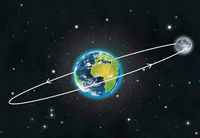


Understanding the orbit of the planet around its star is essential for determining seasonal changes and climate variations.
Orbit
Knowing about the planet's gravitational force is important for predicting how it will affect the mass and movement of objects.
Gravity
Familiarity with the concept of a star system and how it influences the conditions on your habitable planets is necessary.
Star System
5

The arrangement of the natural and artificial physical features of an area.
"The planet's diverse topography includes towering mountains, vast plains, and winding rivers."
Topography
6

The envelope of gases surrounding a celestial body, especially Earth.
"The thin atmosphere on Mars makes it challenging for humans to breathe without specialized equipment."
Atmosphere
7

A large geographic biotic unit, a major community of plants and animals with similar life forms and environmental conditions.
"The tropical rainforest is just one example of a biome characterized by its rich biodiversity."
Biome
8
Fill in the Blanks
The composition and structure of the
9
Fill in the Blanks
You should consider the needs of various species when designing different
10
Fill in the Blanks
In order to accurately represent the planet's
11

The branch of biology that deals with the relations of organisms to one another and to their physical surroundings.
"Ecology explores the intricate web of interactions between living organisms and their environment."
Ecology
12

Energy emitted by a star in the form of electromagnetic waves.
"Plants use solar radiation to convert sunlight into energy through the process of photosynthesis."
Solar Radiation
13

The measure of the amount of matter in an object.
"The mass of a planet determines its gravitational pull and overall physical characteristics."
Mass
14

The study of the distribution, movement, and properties of water in the atmosphere and on a planet's surface.
"Hydrology helps scientists understand the Earth's water cycle and the behavior of rivers and lakes."
Hydrology
15
Fill in the Blanks
You will need to consider the
16
Fill in the Blanks
The distribution of _____ __________ on the planet's surface influences temperature and climate zones.
17
Fill in the Blanks
Knowing your planet's
18
Fill in the Blanks
To create realistic water cycles and bodies of water on your planet you must consider the principles of
19

The curved path of a celestial object or spacecraft around a star, planet, or moon.
"Earth's orbit around the Sun takes approximately 365 days, resulting in a year."
Orbit
20

The force that attracts two bodies with mass towards each other.
"The strength of gravity on Jupiter is much greater than that on Earth."
Gravity
21

A group of celestial bodies, including stars and planets, that are bound together by gravity.
"Our solar system is a collection of celestial objects orbiting around the Sun, our central star."
Star System
22
Fill in the Blanks
Understanding the planet's
23
Fill in the Blanks
Your planet's
24
Fill in the Blanks
The concept of a ____ ______ will help you understand how the star you have selected influences conditions on your habitable planets.
Words to help you design your very own habitable planet that is not just out of this world, but out of this galaxy!
Show answer
Auto Play
Slide 1 / 24
SLIDE
Similar Resources on Wayground

20 questions
Plate Boundaries
Presentation
•
8th Grade
18 questions
Classification
Presentation
•
8th Grade
19 questions
Acceleration
Presentation
•
8th Grade
20 questions
Parts of an Atom
Presentation
•
8th Grade
20 questions
Short-Term & Long-Term Environmental Changes
Presentation
•
8th Grade
18 questions
Ecosystems
Presentation
•
8th Grade
18 questions
Force and Motion Review
Presentation
•
8th Grade
20 questions
Tectonic Plates
Presentation
•
8th Grade
Popular Resources on Wayground
10 questions
How much do you know about our Portrait of an Eagle?

Quiz
•
10th Grade
10 questions
Fast Food Slogans
Quiz
•
6th - 8th Grade
21 questions
Continents and Oceans
Quiz
•
6th Grade
20 questions
Parts of Speech
Quiz
•
5th Grade
16 questions
Subject & Predicate
Quiz
•
5th Grade
25 questions
Multiplication Facts
Quiz
•
5th Grade
12 questions
Map Skills
Quiz
•
3rd Grade
22 questions
Continents and Oceans
Quiz
•
5th Grade
Discover more resources for Science
20 questions
Scientific Method and Variables
Quiz
•
8th Grade
20 questions
Scientific method and variables
Quiz
•
8th Grade
27 questions
Counting Atoms - Subscripts
Quiz
•
8th Grade
20 questions
Claim, Evidence and Reasoning (CER)
Quiz
•
6th - 8th Grade
18 questions
Counting Atoms
Quiz
•
7th - 8th Grade
20 questions
Elements, Compounds and Mixtures
Quiz
•
8th Grade
10 questions
Exploring Chemical and Physical Changes

Interactive video
•
6th - 10th Grade
10 questions
Decoding the Periodic Table of Elements
Interactive video
•
6th - 10th Grade