

Unit 4: Declaration of Independence

Presentation
•
English
•
6th - 8th Grade
•
Easy
+54
Standards-aligned

Caitlin Irwin
Used 9+ times
FREE Resource
27 Slides • 36 Questions
1
Unit 4: The Declaration of Independence
2
Multiple Choice
What is a colony?
Free land that has no ruler
Land controlled by another country.
3
Multiple Choice
Who controlled the colonies in America?
Native Americans
England
The Colonists
4
Multiple Choice
What continent were the 13 colonies on?
Asia
North America
Europe
5
Multiple Choice
How many colonies were there in America?
5
7
13
21
6
Multiple Choice
British includes
France
England
Spain
7
Multiple Choice
Who was king of England during the American Revolution?
King Henry VIII
George Washington
King George III
King Edward III
8
Multiple Choice
The Thirteen Colonies were fighting for freedom from England. What is another word for freedom?
liberty
taxes
patriot
loyalty
9
Multiple Choice
10
Word Cloud
How do you think the Americans felt after they won the American Revolution?
11
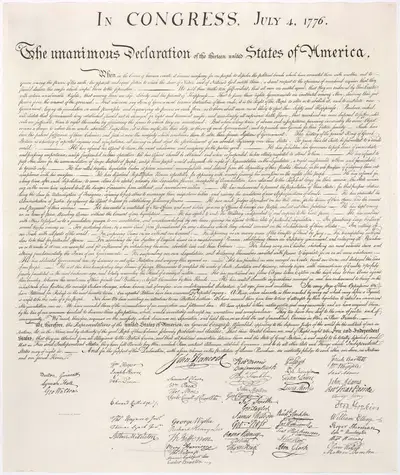
The Declaration of Independence
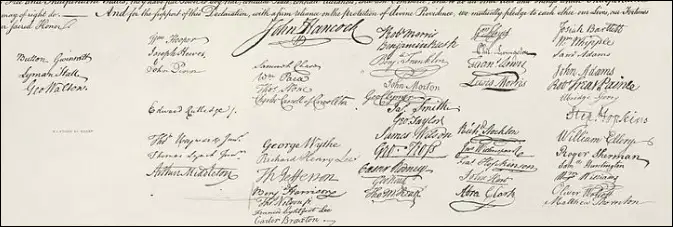
On July 4, 1776 in Philadelphia, Pennsylvania, representatives from the 13 Colonies signed this document
It listed the reasons the colonists wanted to be free
It declared that the colonies were independent states
12
Multiple Choice
When was the Declaration of Independence signed?
June 4 1976
July 4, 1776
June 29, 1776
December 25, 1976
13
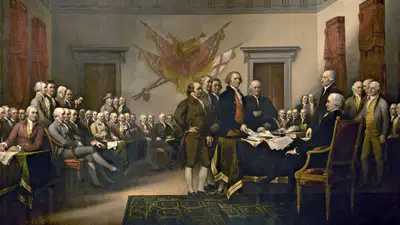

Independence Hall
Philadelphia, Pennsylvania
14
Multiple Choice
Where was the Declaration of Independence signed?
The capital building, Washington DC
The Jefferson Memorial, Washington DC
Independence Hall, Philadelphia, PA
Independence Hall, Washington, DC
15
16

17

18
19

20
Multiple Choice
A crime of trying to overthrow your country's government.
Revolution
Militia
treason
taunt
21
Declaration of Independence
We hold these truths to be self evident; all men are created equal, that they are endowed by their creator with certain inalienable rights, that among these are life, liberty, and the pursuit of happiness.

22
What does that mean?
We believe that all people are equal to each other
and are granted certain rights by their Creator (life,
liberty, and pursuit of happiness) that no
government should take away.
23
Unalienable Rights
These are rights that are impossible to take away or give up.
Life
Liberty -- Freedom
Pursuit of Happiness -- having purpose in life
24
Multiple Choice
What does unalienable mean?
comes from outer space
can't be taken away
only some people can have
25

26
Multiple Choice

Who had all the power in Europe's monarchies?
Royalty and nobility
the People
Companies
B
27

28
Multiple Choice
How is the United States different from the monarchy in Britain?
believe all men are created equal
believe the king is the most important person
believe the lower class are not as important
29
30
Grievance -- unjust or not fair things that the King had done to the colonists
Quartering British troops in the colonies.
Cutting off the colonists' trade with the rest of the world.
Taxing the colonists without their permission.
31
Multiple Choice
What is a grievance?
something unfair that happened
when a king gives up during a war
when someone writes a letter to a relative
32
33
Declaring Independence
In this document the colonists said they no longer accept King George as their leader.
They are no longer colonies of Britain
They are free states

34
Multiple Choice
Why did the colonists write the Declaration of Independence?
To officially break away from Britain
As a final attempt at peace with Britain
To form the U.S. military
To get France on their side
35
Multiple Choice
What are unalienable rights?
rights that can't be taken away
rights that can be denied
rights that are temporary
rights that can be removed at any time
36
Multiple Select
Select all that apply: The unalienable rights listed in the Declaration of Independence are...
Pursuit of Happiness
no more slavery
Liberty
Life
37
Multiple Choice
Who did the colonists declare independence from?
America
Britain
Native Americans
38
We believe that it is obvious that all men are created equal and are born with certain rights that cannot be taken away, including life, liberty and the pursuit of happiness. People make governments to help the people. People make governments to protect rights. When a government takes away those rights or acts unjustly, the people can change or create a new government.
39
Categorize
People are born with rights
All People are created equal
The government protects the rights of people
The king is always right
Taxation without representation
Soldiers can stay in any colonists' house
40
Open Ended
An unfair rule by the British was ________
41
HOWEVER...
Did everyone have these rights?
Were "All men created equal?"
42
Equality
Being equal or the same
43
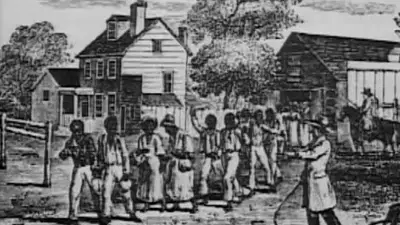
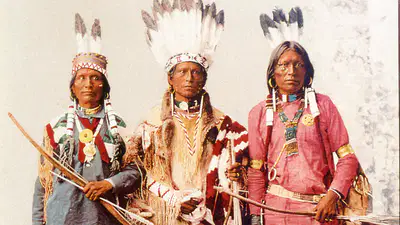
Not all Americans had the same freedoms.
Africans Americans, Native Americans and Women did not have the same rights as white men.

44
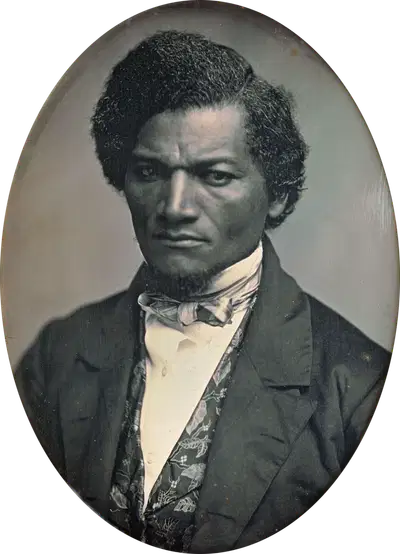
This is Fredrick Douglass. He was born Frederick Bailey in 1818, in Maryland. Frederick Douglass was born into slavery. This means that as a boy and young man, Mr. Douglass had very little control over his life. People born into slavery, or who are enslaved, have little independence over their life.

45
Fredrick Douglass’ mother was enslaved, and he was separated from her at a very young age. He had little control over where he lived or what he could do. Mr. Douglass was forced to work with no pay. He was mistreated. He was forced to move. He had very few choices because he was enslaved. Mr. Douglass did not have liberty, and he did not have rights.
Frederick Douglass wanted to escape slavery, and in 1838, he did escape.
46
It might be hard to understand today, but back then, Black and White people were not treated equally. Black people who were enslaved did not have the same rights and opportunities as White Americans.
He became an abolitionist.
An abolitionist is someone who fights against slavery.

47
Multiple Choice
What is an abolitionist?
Someone who wants to end slavery
Someone who wants to be free from Britain
Someone who lives in another country
48
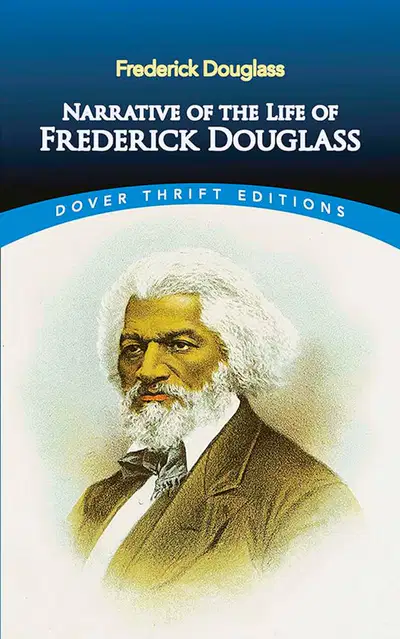
Mr. Douglass was a strong abolitionist. He wrote a book about his life and experiences, called “The Narrative of the Life of Frederick Douglass, an American Slave.” It sold many copies. The book encouraged and convinced people to fight against slavery, too.
49
Multiple Choice
Frederick Douglas's book is a:
Primary Source
Secondary Source
50
On July 5, 1852, Mr. Douglass delivered a speech called, “What, to the American Slave, is Your Fourth of July?” The speech was about how enslaved people felt about the Fourth of July.
51
What, to the American Slave, is Your Fourth of July? “A day that shows [the enslaved person], more than all other days in the year, the unjust actions which he faces. To [an enslaved person], your celebration is a lie; your liberty, your patriotism, your sounds of celebration are empty and heartless; your shouts of liberty and equality, with all your parades, are, to [an enslaved person], a thin cover over crimes which would disgrace a nation. The people of these United States are guilty of unjust crimes against [enslaved people]. I am not included in this glorious anniversary! This Fourth of July is yours not mine.”
52
Multiple Choice
Frederick Douglas's speech is a:
Primary Source
Secondary Source
53
Multiple Choice
Equality means
being treated the same
beliefs about what is important
people who live in a colony
54
Multiple Choice
The ____________________ is the document that announced that the American were breaking away from Great Britain.
Declaration of Independence
militia
Minuteman
Second Continental Congress
55
Multiple Choice
Which of these ideas was in the Declaration of Independence?
Women and men are equal.
All rights can be taken away.
Great Britain has ruled the colonies unfairly.
People should obey governments even when they are unfair.
56
Multiple Choice
The Declaration of Independence listed the grievances of the colonies. What is another word for grievance?
demands
complaints
celebrations
rights
57
Multiple Choice
At first, women, slaves, and American Indians __________ the principles in the Declaration of Independence.
refused to follow
protested against
were not covered by
58
Multiple Choice
The Declaration of Independence says that people’s natural rights __________ be taken away
cannot
can
59
Multiple Choice
The Declaration of Independence says that people establish government to _________ people’s natural rights.
protect
establish
restrict
60
Open Ended
What is one group of people who were not treated like they were "created equal"?
61
Multiple Choice

Who was the main author of the Declaration of Independence?
Benjamin Franklin
Samuel Adams
Thomas Jefferson
Paul Revere
62
Multiple Choice
Who was Thomas Jefferson referring to when he stated, "All men are created equal"?
All men
Everyone
women
Any white man
63
Multiple Choice
To Great Britain, the signing of the Declaration of Independence was
an act of loyalty.
an act of treason.
an act of bravery.
an act of insanity.
Unit 4: The Declaration of Independence
Show answer
Auto Play
Slide 1 / 63
SLIDE
Similar Resources on Wayground

58 questions
Regencia 2nd term quiz short
Presentation
•
KG
60 questions
IEW Review (Up to #4)
Presentation
•
6th - 8th Grade
60 questions
A Christmas Carol Characters
Presentation
•
6th - 8th Grade
61 questions
Present Tenses Review
Presentation
•
6th - 8th Grade
55 questions
TZ 2 Unit 4
Presentation
•
6th - 8th Grade
56 questions
สรุปบทเรียนการแทรกสอดและการเลี้ยวเบนของแสง
Presentation
•
KG
57 questions
Superminds Year 1 Revision
Presentation
•
7th Grade
58 questions
Moon Phases/Lunar Cycle Guided Lesson
Presentation
•
6th - 8th Grade
Popular Resources on Wayground
6 questions
Secondary Safety Quiz
Presentation
•
9th - 12th Grade
10 questions
MyPath Diagnostic Overview
Presentation
•
6th - 8th Grade
20 questions
Lab Safety Quiz

Quiz
•
6th Grade
21 questions
Continents and Oceans
Quiz
•
6th Grade
20 questions
Adding and Subtracting Decimals
Quiz
•
5th Grade
20 questions
Parts of Speech
Quiz
•
5th Grade
16 questions
Subject & Predicate
Quiz
•
5th Grade
21 questions
Lab Safety
Quiz
•
10th Grade
Discover more resources for English
10 questions
MyPath Diagnostic Overview
Presentation
•
6th - 8th Grade
20 questions
Context Clues
Quiz
•
6th Grade
20 questions
Types of sentences
Quiz
•
6th Grade
13 questions
Parts of Speech
Quiz
•
7th Grade
20 questions
Figurative Language Review
Quiz
•
6th Grade
18 questions
ADJECTIVES and ADVERBS
Presentation
•
5th - 7th Grade
20 questions
Figurative Language Review
Quiz
•
8th Grade
10 questions
Differentiating Primary and Secondary Sources in History

Interactive video
•
6th - 10th Grade