

Samuel Slater Hero or Traitor?

Presentation
•
History
•
7th Grade
•
Practice Problem
•
Easy

DENISE STAFOS
Used 2+ times
FREE Resource
16 Slides • 6 Questions
1


The Industrial Revolution Spreads
to North America
2


Review
• Industrial Revolution began in Britain &
became the world’s leading industrial power.
• Inventions and ideas that were developed in
Britain were then taken to other parts of the
world.
• Inventions and ideas taken to North America
by new immigrants who were settling the
land, and so began the development of American
industry.
3

Movement of Industrial Knowledge to the
United States
• Britain wanted to keep their
advantage over the rest of the world, so their
government tried to prevent the spread of
industrial technology to other countries.
• Main challenge? How to do it?
Think about it, and tell me how you think they could control this.
4

How Could Britain Try to Prevent the Movement of
Industrial Knowledge to the US?
1.
Penalties if caught smuggling plans or
blueprints of the new machines out of the
country.
2.
Laws to prevent immigration of skilled workers
to American colonies.
3.
Laws made recruiting immigrants an offense.
5
Drag and Drop
6
Video Response
Think about what you learned when studying Ancient China and the Silk Road. Didn't they try as country to keep how to make silk a secret? What did they do? What do you think England could do to keep a secret about industry?

7
8
Poll

What do you think about protecting intellectual property?
I respect other people's work and ideas. I would pay them to download their music or play their video games.
I get around paying people, and get it for free. I never thought about this as stealing before.
I will continue to steal peoples property because I can. I realize I could pay consequences for it.
I didn't know their were consequences for trying to get things free.
9

Sam Slater:
Traitor or Hero?
• born in 1768. He was just 8 years old when America gained independence from Britain.
• When he was 15, he became an apprentice in a
textile mill
• Hard worker, promoted to the position of
overseer in the mill
• Learned of recruiting agents for the Americas
• Philadelphia newspaper reported a reward of 100
pounds for anyone who could produce replacement
parts for Hargreaves’ spinning jenny.
• Goal: once his apprenticeship was complete (6 ½
years), he would immigrate to the Americas (seen
as land of promise)
10

Sam Slater:
Traitor or Hero? continued…
• 1789: at 21 years of age, Slater sailed to the newly
independent United States (after American War
of Independence)
• Memorized the technical drawings of textile
machines
• However, he needed his apprenticeship papers to
prove to the Americans that he was a skilled
textile worker – sewed them into the lining of his
coat.
11

Sam Slater:
Traitor or Hero? continued…
• Disguised himself as a farmer, boarded a ship, and
arrived in New York in November, 1789
• Heard that Moses Brown, a Quaker from
Pawtucket, Rode Island, was having trouble w/his
textile machines
• Moses Brown – mill owner
• Quaker: a member of the Religious Society of Friends.
The Quakers are a group of Christians who use no
scripture and believe in great simplicity in daily life
and in worship. Their services consist mainly of silent
meditation
12

Sam Slater:
Traitor or Hero? continued…
• Slater offered to help Brown with a
money-back guarantee: “If I do not make as
good a yarn as they do in England, I will
have nothing for my services.”
• Brown hired him
• Slater soon regretted his promise…why?
13
14

Sam Slater:
Traitor or Hero? continued…
• Brown introduced Slater to Orziel
Wilkinson
• Wilkinson owned an iron foundry, worked
w/his four sons
• Foundry was not as developed compared to
British factories, but the Wilkinsons were
skilled & Slater redrew all the parts from
memory
• Wilkinsons were able to built all the parts
15

Sam Slater:
Traitor or Hero? continued…
• December, 1790 (13 months after Slater
arrived in New York): Slater had Brown’s
72-spindle machine running properly
• 1793: Slater rebuilt the mill when it became
inadequate to meet the demand for cloth
16

Sam Slater:
Traitor or Hero? continued…
• Slater developed a partnership with David
Wilkinson.
• Son of Orziel Wilkinson
• 1809: 17 mills around Providence, Rhode
Island, w/a capacity of 14,290 spindles.
• Picture of Slater’s first mill (page 16 of your
textbook)
• What do you notice about the picture?
17

Sam Slater:
Traitor or Hero? continued…
• April 20, 1835: Sam Slater died
• a
• A
• Textile industry in the USA became the
foundation for other industries.
• Textile industry in USA remains one of the
most important industries today.
…
• Was Sam Slater a traitor or a hero?
18
Video Response

Why did he regret his promise to Brown?
Was he a traitor or a hero?
19


Water Power in New England
• Water power was essential for the new textile
machines.
• New England states fortunate because they had a
large number of streams that would supply
the needed power
The states of New England
are Connecticut, Maine,
Massachusetts, New
Hampshire, Rhode Island, and
Vermont. Together, they form
the northeasternmost point of
the United States.
20
Multiple Choice
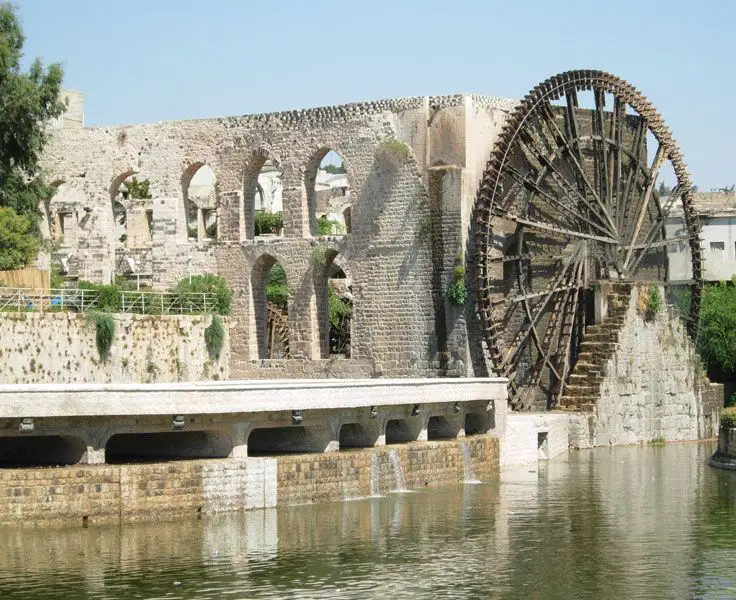
The first factory machinery ran on __________ power during the early part of the Industrial Revolution.
Steam
Electric
Water
animal
21

Considering an Essential Question
• Was the British government justified in
passing laws to prevent the export of
industrial technology?
Agree w/British gov’t
actions
Disagree w/British
gov’t actions
22
Poll
Was Britain's government justified for passing laws to keep their industrial secrets?
Yes, they are justified for protecting their industrial secrets
No, they are not justified for trying to keep ideas that can help others get ahead too.
The Industrial Revolution Spreads
to North America
Show answer
Auto Play
Slide 1 / 22
SLIDE
Similar Resources on Wayground

17 questions
Medieval Europe Vocab Quiz
Presentation
•
7th Grade
18 questions
Unit 11 - Daily Life During the War
Presentation
•
7th Grade
18 questions
Annexation and Early Statehood
Presentation
•
7th Grade
15 questions
Ch.3, Section 3: Five Pillars of Islam
Presentation
•
7th Grade
19 questions
Impact of Historical Documents on the Constitution
Presentation
•
7th Grade
19 questions
Ancient Japan
Presentation
•
7th Grade
20 questions
Bill of Rights
Presentation
•
7th Grade
20 questions
Unit 4 - 16th-27th Amendments
Presentation
•
7th Grade
Popular Resources on Wayground
6 questions
Secondary Safety Quiz
Presentation
•
9th - 12th Grade
10 questions
MyPath Diagnostic Overview
Presentation
•
6th - 8th Grade
20 questions
Lab Safety Quiz

Quiz
•
6th Grade
21 questions
Continents and Oceans
Quiz
•
6th Grade
20 questions
Adding and Subtracting Decimals
Quiz
•
5th Grade
20 questions
Parts of Speech
Quiz
•
5th Grade
16 questions
Subject & Predicate
Quiz
•
5th Grade
21 questions
Lab Safety
Quiz
•
10th Grade
Discover more resources for History
10 questions
Exploring the Journey of Early Humans

Interactive video
•
6th - 10th Grade
20 questions
Citizenship Review
Quiz
•
7th Grade
39 questions
Unit I: The Byzantine Empire (2026-2027)
Quiz
•
7th Grade
20 questions
4 Regions of Texas
Quiz
•
7th Grade
3 questions
8.19.26 DOL TEKS 7.8A
Quiz
•
7th Grade
10 questions
Exploring Types of Government
Interactive video
•
6th - 10th Grade
15 questions
Ch 1 and 2
Quiz
•
6th - 7th Grade
10 questions
Exploring the Columbian Exchange
Interactive video
•
6th - 10th Grade