Search Header Logo
Review (Whole Year w/ Slides)

Review (Whole Year w/ Slides)

Assessment

Presentation

•

Science

•

4th Grade

•

Easy

•
NGSS
MS-ESS1-1, MS-LS2-1, MS-PS2-4

+31

Standards-aligned

Created by

Zack Drake

Used 3+ times

FREE Resource

18 Slides • 50 Questions

1

media
  • Plants need 3 things for photosynthesis to happen : Sunlight/Carbon Dioxide/Water

  • If one of those things is missing, the plant will not grow.

  • During photosynthesis, 2 things are made: Oxygen/Sugar

​

Photosynthesis

2

Multiple Choice

Question image

Two students decide to do some experiments with three plants. What will happen to plant 2 (gets light, no water)?

1

The plant will grow because it can still get everything it needs from the soil and air.

2

The plant will grow because it can make its food as long as it has sunlight.

3

The plant will die because it needs water to make its food.

3

Multiple Choice

Question image

Marcia places a plant in a clear plastic bag, and leaves it in the bag on a windowsill for three weeks. What will happen to the plant?

1

Marcia's plant will survive because there is water in the soil.

2

Marcia's plant will survive because it can still get sunlight, since the bag is clear.

3

Marcia's plant will not survive due to lack of water.

4

Marcia's plant will not survive due to lack of water and air.

4

Multiple Choice

Question image

What 3 things do plants need for the process of photosynthesis?

1

Sunlight, oxygen and sugar.

2

Water, soil and oxygen.

3

Sunlight, carbon dioxide and water.

4

Sunlight, soil and water.

5

​

​

​

  • Producers: make their own food through photosynthesis

  • Consumers: eat food to meet their energy needs

    • Carnivore - eats meat

    • Herbivore - eats plants

    • Omnivore - eats both

  • Decomposers: break down dead things for their nutrients

​

Producers, Consumers, Decomposers

media
media
media

6

Multiple Choice

A producer?
1
Eats other plants and animals
2
Makes its own food
3
Eats dead plants or animals
4
Makes toys for kids

7

Multiple Choice

A consumer?
1
Makes its own food
2
Eats dead plants and animals
3
Eats plants and other animals for energy
4
Buys toys for kids

8

Multiple Choice

A decomposer?
1
Eats dead plants or animals and breaks down to put nutrients in the soil
2
Eats plants or other animals for food
3
Makes its own food
4
Machine that gathers trash

9

media
  • Food Chains show 1 single path for how energy travels in an ecosystem

  • Food Webs show multiple paths that energy can travel

  • Each arrow represents the movement of energy
    (Ex: The grass energy moves to the mouse)

​

Food Chains & Webs

10

Multiple Choice

Question image
Which of the following would be the most likely effect, if there were a sudden increase in the cricket population?
1
There would be a decrease in the small bird population.
2
There would be a decrease in the grass/flowers population.
3
There would be a decrease in the mice population.
4
There would be an increase in the grass/flowers population.

11

Multiple Choice

Question image
If the grasshopper were to be removed completely from the food web, what organism would be most effected?
1
The squirrel
2
The shrew
3
The deer
4
The rabbit

12

media
  • Animals and plants can affect the environment that they live in


    Examples:

    • Invasive plants can overtake hillsides and change how an entire area looks

    • Beavers can block rivers from flowing properly and cause flooding

​

Animals & Plants changing Environments

13

Multiple Choice

Environments can change as living things compete to meet their _____________________.

1

wants

2

needs

3

wishes

4

desires

14

Multiple Choice

Beavers change their environment by by using their strong ___________________ to cut down __________________.

1

feet, weeds

2

tails, plants

3

teeth, trees

4

noses, shrubs

15

Multiple Select

When beavers build dams, they stop the ___________________ from flowing and makes a(n) __________________ or pond. Choose the two that apply.

1

water

2

lava

3

ocean

4

pool

16

media
  • Kinetic Energy = energy of motion

  • Potential Energy = stored energy based on location or state


    Kinetic and Potential Energy can change back and forth between each other.

    The higher something is, the larger the potential energy.

    The faster an object moves, the more kinetic energy it has.

​

Kinetic and Potential Energy

17

Multiple Choice

Question image
What kind of energy is in a moving skateboard?
1
Potential
2
Kinetic

18

Multiple Choice

Question image
What kind of energy is in a rock at the edge of a cliff?
1
Potential
2
Kinetic

19

Multiple Choice

Question image
When a pendulum swings, at which point is kinetic energy highest?
1
1
2
2
3
3
4
4

20

Multiple Choice

Question image
At which point is potential energy greatest?
1
W
2
X
3
Y
4
Z

21

media
  • Energy and speed are directly related

  • The faster an object moves, the less time it
    takes to travel


    The more energy an object has, the faster
    that object travels.

    Examples:

    • Gently rolling a bowling ball results in a slow speed.

    • Throwing the ball as hard as possible would result in a very fast speed.

​

Energy and Speed

22

Multiple Choice

Which is evidence that a bowling ball has more energy when it is moving faster than when it is moving slower?

1

The bowling ball has a larger mass when it is moving faster than when it is moving slower

2

The bowling ball can knock over more pins when it is moving faster than when it is moving slower

3

The bowling ball will reach the pins in less time when it is moving faster than when it is moving slower

4

A bowling ball can knock over more pins than a soccer ball moving at the same speed

23

Multiple Choice

Question image

If you roll a ball down each ramp, which ball will hit the books harder?

1

Taller ramp

2

Shorter ramp

24

Multiple Choice

How can the speed of a dropped ball be increased?

1

Increase the height from which it is dropped to give it more potential energy

2

Decrease the height from which it is dropped to give it more potential energy

3

Drop a larger ball to increase the amount of friction

4

Roll it down a hill instead to increase the amount of friction

25

media


  • The longer an object has been

    exposed to weathering the more

    change will happen.

  • Softer rock will wear away first,

    leaving harder rock behind.

Erosion, Weathering, Deposition

  • ​​Weathering - breaking down of rock

  • Erosion - movement of rock/sediment

  • Deposition - dropped and stops moving

26

Multiple Choice

Question image

The Grand Canyon was caused by _____________________ erosion from the Colorado River.

1

water

2

wind

27

Multiple Choice

Question image

The process in which sediment settles out (drops to the bottom) of the water or wind that is carrying it

1

Weathering

2

Erosion

3

Sedimentation

4

Deposition

28

Multiple Choice

Question image

The process by which rocks are broken down

1

Weathering

2

Deposition

3

Erosion

4

Sedimentation

29

media

​There are many techniques to minimize erosion.

Some common ones are:

Planting grass to hold soil in place

Planting trees in a line to help block wind

Using mesh netting on rocky cliffs

Not planting in straight lines

Planting cover crops to help anchor soil

Preventing Erosion

30

Multiple Choice

What is one way to help prevent erosion?

1

Plant trees, shrubs, grass, etc.

2

Cover an eroded area with cement.

3

Have a sprinkler system installed in the eroded area.

31

Multiple Choice

From which hillside would erosion be the greatest?

1

A hill covered in trees

2

a bare hill with no plant cover

3

a hill covered in grass

32

media

Day and Night

Earth goes through day and night every
24 hours.

This is caused by Earth's rotation.

  • Daytime is when a point on Earth is facing towards the sun

  • Nighttime is when it is facing away from the sun.

33

Multiple Choice

Question image

When the part of the Earth you're standing on faces away from the sun, it is _____________.

1

Daytime

2

Nighttime

3

Sunset

4

Sunrise

34

Multiple Choice

How long does it take Earth to make one, full rotation?

1

365 days

2

29 days

3

1 year

4

24 hours

35

media

Years and Seasons

Earth revolves around the Sun, once every
365.25 days.

This and Earth's tilt is what is responsible
for the changing seasons here on Earth.

  • Winter is when a point on Earth is tilted away from the Sun (less daylight)

  • Summer is when a point on Earth is tilted towards the Sun (more daylight)

  • Spring and Fall is when Earth has equal amounts of daylight/nighttime

36

Multiple Choice

Question image
What happens when the area in which you live tilts away from the sun?
1
It is summer.
2
It is spring.
3
It is winter.
4
It is fall.

37

media

Layers of Earth

​Earth has 4 main layers:

Crust: Solid layer, thinnest, where we live
Mantle: Slow liquid, thickest layer
Outer Core: Liquid, made of molten metal
Inner Core: Solid, because or pressure

As you move deeper into the earth,
pressure and temperature increase.

The hottest layer is the inner core.
The thickest layer is the mantle.

38

Multiple Choice

Which layer is the thinnest?

1

crust

2

mantle

3

outer core

4

inner core

39

Multiple Choice

Temperature _____________________ as you go deeper into the earth.
1
increases
2
decreases
3
goes up and down depending on the layer
4
stays the same

40

Multiple Choice

Pressure ______________________ as you go deeper into the Earth
1
increases
2
decreases 
3
goes up or down depending on the layer
4
stays the same

41

​

​

Renewable and Nonrewable Energy

  • ​Renewable Energy can be replenished as fast as what we can use it. These are not harmful to the environment.
    Ex: Solar, Hydroelectric, Wind, Geothermal

  • Nonrenewable Energy takes longer than our lifetime to replenish the energy used. Typically takes thousands to millions of years
    Ex: Oil, Coal, Natural Gas, Nuclear.

media
media

42

Multiple Choice

Which of these is a renewable resource that supports life on Earth?

1

Oil

2

Coal

3

Natural gas

4

Solar energy

43

Multiple Choice

Which of the following is a nonrenewable source of energy?

1

Oil

2

Wind

3

Solar

4

Hydroelectric

44

Multiple Choice

Non-Renewable resources are also known as what?
1
Fossil Fuels
2
Renewable
3
Solar Energy
4
Hydroelectric Energy

45

media

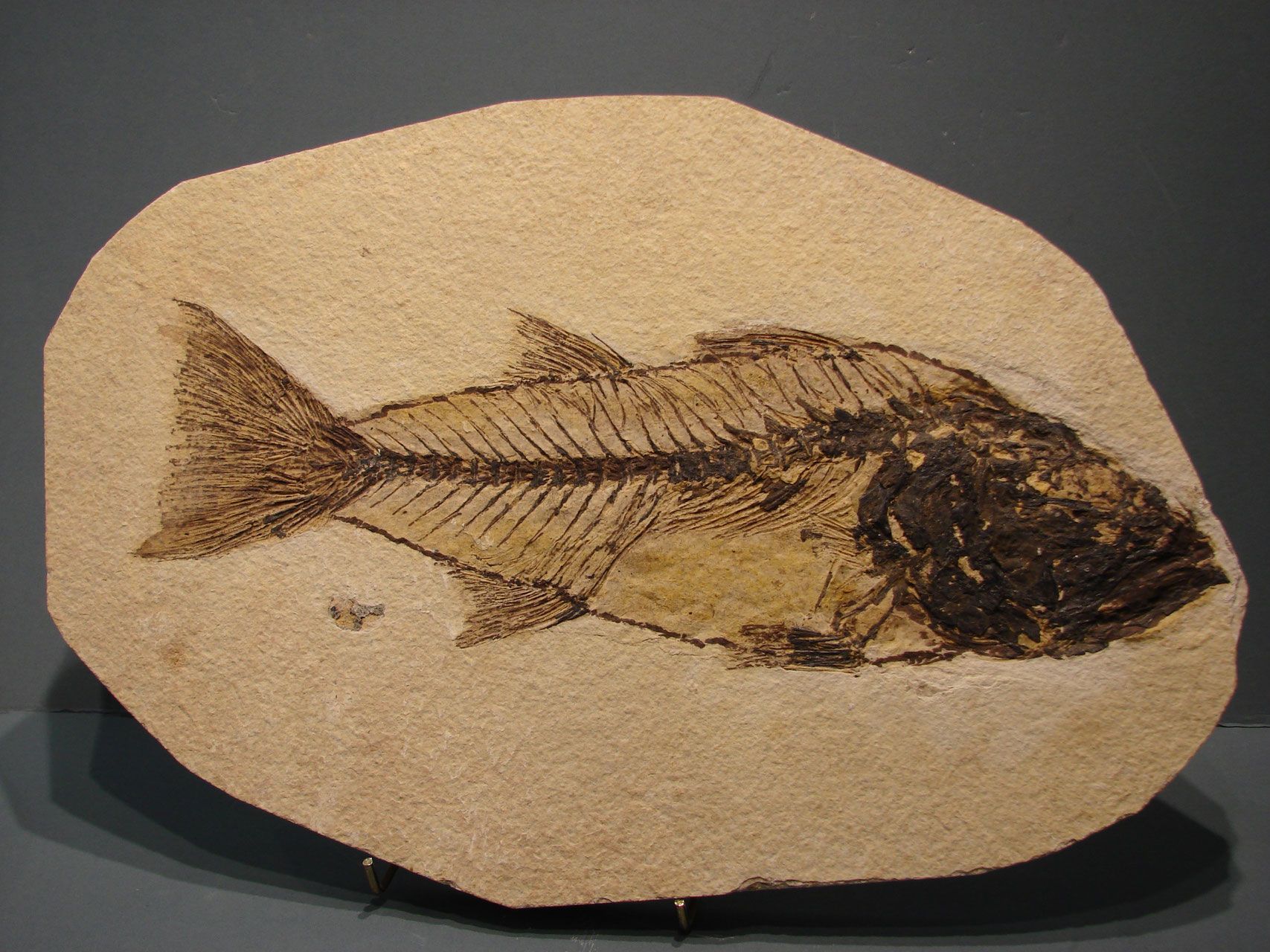
Fossils

The remains that show evidence of an organisms that lived thousands - millions of years ago.

Some may preserve entire parts of the organism, but they can also be things that the animal left behind.

All fossils involve the organism turning into a hardened form of what it used to be.

46

Multiple Choice

Question image

If a scientist found a fish fossil in the desert, what can they infer?

1

An animal ate the fish.

2

The water covered the area long ago.

3

Today's fish looks the same

4

The fish is endangered.

47

Multiple Choice

Question image

What most likely made this fossil?

1

Plant

2

Animal

3

Footprint

4

Bone

48

Multiple Choice

Preserved footprints would be an example of which type of fossil?

1
trace fossils
2

carbon film fossils

3
cast fossils
4
mold fossils

49

media

Light and Color Absorption

  • Color absorption is the way an object takes in certain colors of light and reflects or absorbs others.

  • Different objects and substances absorb and reflect light in various ways.


Example:
The water to the left absorbs the green and blue lasers, but allows the red laser to pass through because of its red color.

When I would hold a marker up to my lights, sometimes the marker would appear black/grey because of the light that was being absorbed.

50

Multiple Choice

Question image

What color is being reflected?

1

green

2

blue and yellow

3

red, orange, yellow, blue, indigo, violet

51

Multiple Choice

Question image

What colors are being absorbed?

1

red, orange, yellow

2

green, blue, indigo, violet

52

media

Reflection and Refraction

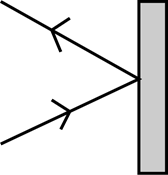
  • Reflection is when light bounces off a surface

    (Ex: Mirror, smooth surface)


  • Refraction is when light passes through and bends because of it being a different material

    (Ex: Lens, Glass, Clear Water)

media

53

Multiple Choice

Question image
The illustration shows a light ray striking an object.
In the illustration, the light ray striking the object is-
1
absorbed
2
stopped
3
reflected
4
refracted

54

Multiple Choice

Question image

When you place things into water they sometimes look bent (see the image below). What is this an example of?

1

Refraction

2

Diffraction

3

Transmission

4

Absorption

55

Types of Lens

  • Concave Lens - spreads light out in multiple directions. Makes things appear smaller. Lets you see wider area.

    (Flashlight spreading light)

  • Convex Lens - focuses light to a single point. Makes things appear larger by zooming in on one spot. Lets you see close details.

    (Magnifying Glass/Handlens)


media

56

Multiple Choice

Question image
The pictures shows what a student observed when he looked through a hand lens at a penny.
What happens to light passing through a hand lens that makes the image of the penny appear larger? The light is-
1
absorbed
2
reflected
3
refracted
4
stopped

57

Multiple Choice

Which describes a convex lens?
1
triangular in shape
2
more transparent in the middle
3
thicker on the edges than in the middle
4
thicker in the middle than on the edges

58

Multiple Choice

Question image
Is a concave lens thicker or thinner in the middle? 
1
Thicker 
2
Thinner 

59

media

Human Impact

Humans cause many negative impacts here on earth.


Some of the main impacts are:
Deforestation
Air and Water Pollution
Releasing things into Atmosphere
Overfishing
Habitat Destruction
Overuse of Resources

60

Multiple Choice

Which will most likely happen if lake water becomes polluted by humans?

1

Animals in the lake will die.

2

There will be more fish in the lake.

3

The pollution will not hurt the plants or animals in the water.

4

It will change the soil around the lake into pebbles.

61

Multiple Choice

Increased human populations can lead to the depletion of of resources within communities. Compared to other communities, which of these resources is MOST likely to be depleted in desert communities?

1

gasoline

2

water

3

oxygen

4

minerals

62

Multiple Choice

In the forest spotted owl make their home in the cavities of dead trees. The same habitat is home to rodents that owls feed on. Logging by humans have caused the population of owls to decline. What statement BEST explains the relationship between humans and the spotted owl.

1

humans have taken away resources needed by owls, so there are fewer owls.

2

Humans increased the available food for the owls, so there are more owls.

3

Humans eliminated predators of the owls, so the owls increased.

4

Humans moved the owls to the zoo, so there are less owls in the woods.

63

media

Waves

Wavelength - measure from crest to crest or trough to trough

Amplitude - how above or below the origin line that the wave reaches

Frequency - how often the wave goes up and down (the smaller the wavelength, the more frequency)

Crest - highest part of a wave

Trough - lowest part of a wave

64

Multiple Choice

Question image

Which wave has the longest wavelength?

1

Red

2

Yellow

3

Blue

4

Violet

65

Multiple Choice

Question image
What is represented by the blue lines?
1
Trough
2
Crest
3
Wavelength
4
Amplitude

66

Multiple Choice

Question image
What part is represented by the blue lines?
1
Crest
2
Resting Point
3
Wavelength
4
Amplitude

67

Multiple Choice

Which one of the diagrams represents the greatest amplitude?

1
2
3
4

68

Multiple Choice

Question image

What do waves carry and transfer?

1

Nothing

2

Only Sound

3

Only sunlight

4

Energy

media
  • Plants need 3 things for photosynthesis to happen : Sunlight/Carbon Dioxide/Water

  • If one of those things is missing, the plant will not grow.

  • During photosynthesis, 2 things are made: Oxygen/Sugar

​

Photosynthesis

Show answer

Auto Play

Slide 1 / 68

SLIDE