

Arduino Exam Revision

Presentation
•
English
•
8th Grade
•
Medium

Bayden Schellein
Used 4+ times
FREE Resource
29 Slides • 9 Questions
1
2
A network consists of two or more computers that are linked in order to share resources (such as printers and CDs), exchange files, or allow electronic communications.
The computers on a network may be linked through cables, telephone lines, radio waves, satellites, or infrared light beams.
3
4
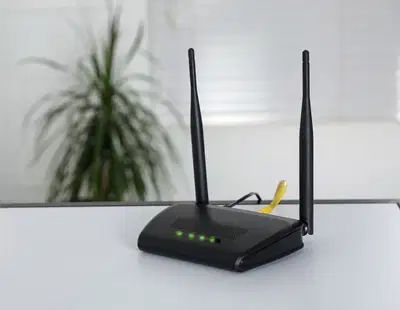
Wireless Networks
Wireless networks, like Wi-Fi, use radio waves to connect devices without cables, allowing for mobility and convenient communication and internet access within a specific area, such as a home or office.
5
Advantages - Mobility and Convenience
Devices can connect from anywhere within range, allowing users to move freely.
No need for physical cables, making it easier to connect new devices.
6
Advantages - Easy Installation and Scale
No need to run cables through walls or floors, reducing installation costs and effort.
Easy to expand—new devices can join the network without additional wiring.
7
Advantages - Flexibility
Many devices (smartphones, tablets, laptops, IoT devices) can connect at the same time.
Useful in businesses, schools, and public places where multiple users need access.
8
Multiple Select
What are the best use-case environments for wireless networks?
Large Areas such as school and university campus'
Public Areas such as parks, cafes and airports
Businesses requiring high-speed connections
Modern Homes with people working from home
9
Use Cases - Public and Large-Scale Use
Used in airports, shopping centers, and stadiums where wired networks are impractical.
Enables guest access without requiring physical network ports.
No physical cables, reducing trip hazards and making spaces more organized. Such as cafes or local spaces.
Ideal for modern office spaces and homes.
10
Disadvantages - Security
Easier for hackers to intercept data compared to wired networks.
Needs encryption (WPA2/WPA3) and strong passwords for protection.
11
Disadvantages - Interference and Reliability
Signals can be disrupted by walls, electronic devices, and other Wi-Fi networks.
More susceptible to lag, making it less reliable than wired connections.
The more users on the network the more interference is possible.
12
Disadvantages - Slower Speeds
Even with modern Wi-Fi, wired networks generally provide faster data transfer speeds.
High-bandwidth tasks (e.g., gaming, 4K streaming, cloud backups) perform better on a wired network.
13
Disadvantages - Limited Range
Wireless signals weaken over distance, requiring range extenders or stronger routers.
Large buildings may need multiple access points to ensure full coverage. Walls and objects interfere with signal strength and data packet loss.
14
Disadvantages - Higher Latency
Not ideal for real-time applications like online gaming, stock trading, or video calls due to interference and speed loss over distance.
Wired networks offer lower latency, making them better for time-sensitive tasks.
15
Multiple Choice
Why do Wireless networks have connection, latency and speed issues?
Wireless signals can be affected by interference, distance, and obstacles
They use physical cables, which slow down data transmission
16
Categorize
Mobility
Flexibility
Scale
Installation Cost
Convenient
Security
Interference
Reliability
Range
Latency
Organize these options into the right categories
17
Security Risks
Interference and Reliability
Slower Speed
Limited Range
Higher Latency / Lag
Disadvantages
Mobility and Convenience
Lower Cost
Easy to Install
Scale
Flexibility
Advantages
18
19
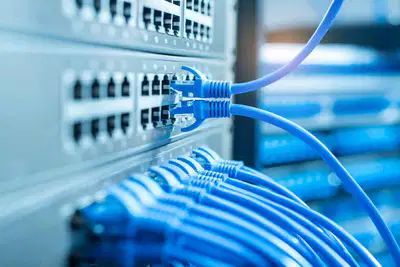
Advantages - Faster Speeds
Wired networks offer higher data transfer speeds compared to wireless. This is due to the higher bandwith cables can provide compared to radio signals.
Ideal for high-bandwidth activities like gaming, video editing, and large file transfers.
20
Advantages - Reliable and Stable
Not affected by signal interference from walls, devices, or other networks.
Provides consistent performance with fewer connection drops.
21
Advantages - Greater Security
Less vulnerable to hacking because physical access is required.
Data transmission is harder to intercept compared to wireless networks.
22
Advantages - Lower Latency
Reduces delays in online gaming, stock trading, and video conferencing.
Ensures a smoother experience for applications requiring real-time responses. This is due to the higher speed but also data packet loss is lower.
23
Advantages - Interference
Unlike Wi-Fi, wired connections are not affected by radio signals, weather, or obstacles.
Provides a stable connection in environments with heavy electronic interference.
24
Multiple Choice
A wired connection is:
25
Multiple Select
What are the advantages of a wireless network?
Select all answers that apply.
Higher user capacity than wired connections.
More mobility for users than wired connections.
Less expensive to install and maintain.
Network is more visible and can be affected by interference.
26
disadvantages - Limited Mobility
Devices must be physically plugged into the network, restricting movement as you are restricted by either cable availability or hardpoint availability (ethernet ports etc.).
Not ideal for portable devices like smartphones, tablets, or laptops.
27
disadvantages - Difficult and Costly Installation
Requires running cables through walls, ceilings, or floors.
Cables running on floors can be a trip hazard.
Can be expensive and time-consuming to set up, especially in large buildings.
28
disadvantages - Less Scalable
Adding new devices requires extra cables, ports and other hardware, making expansion harder.
Not practical for businesses or homes with frequent layout changes.
29
disadvantages - Less Scalable
Adding new devices requires extra cables, ports and other hardware, making expansion harder.
Not practical for businesses or homes with frequent layout changes.
30
Categorize
Mobility
Installation
Scale
Speed
Reliability
Stability
Security
Latency
Interference
Organize these options into the right categories
31
Much more expensive to install, operate, and maintain.
lack of mobility.
Need to be professionally installed to avoid hazards with wires.
Disadvantages
Faster speeds, and fewer connection issues because of direct cable connection.
More secure / safer connection.
Requires less maintenance.
Advantages
32

33
Open Ended

A company wants to setup a new venue for live esports contests but are unsure what type of network they need.
What would you recommend and why?
Justify your answer based on the advantages and disadvantages of each network.
The best solution for the esports venue would be to install …
This is because …
34
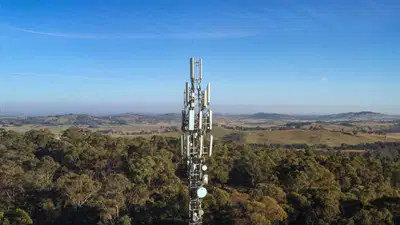
A mobile network is a telecommunications network where the link to and from end nodes (e.g. phones) is wireless and the network is distributed over land areas called cells, each served by at least one fixed-location transceiver or base station (mobile towers).
35
These base stations provide the cell with the network coverage which can be used for transmission of voice, data, and other types of content.
A cell typically uses a different set of frequencies from neighboring cells, to avoid interference and provide guaranteed service quality within each cell.
The signals from the base stations can be impacted by weather, location, and physical objects (buildings, landscapes, etc.).
36
Multiple Choice
Why do mountainous areas often have poor mobile network signals?
Mobile networks do not work in high altitudes
Mountains block signals from reaching the device
Mobile networks only work in urban areas
Phones cannot connect to satellites
37
Relies on mobile towers for the network (no network if you cannot connect to the towers).
Can be blocked or interfered with by buildings, landforms (e.g. mountains etc.)
Requires frequent maintenance.
Disadvantages
Covers a wide area.
Fast speeds (depending on location)
Reliable
Advantages
38
Open Ended

Explain why this base station is needed here for people down in the valley in the circled areas to receive a mobile signal?
Show answer
Auto Play
Slide 1 / 38
SLIDE
Similar Resources on Wayground

35 questions
Parts of a Computer
Presentation
•
7th Grade
32 questions
Y8 ICT Chapter 2 Web Design and Creation
Presentation
•
8th Grade
27 questions
Word Connotation
Presentation
•
8th Grade
35 questions
JARINGAN KOMPUTER DAN INTERNET
Presentation
•
8th Grade
33 questions
More Alike Than We Think
Presentation
•
6th - 8th Grade
30 questions
Guessing Meaning of Words from Context
Presentation
•
8th Grade
34 questions
Identifying Cause and Effect
Presentation
•
7th - 8th Grade
32 questions
Synthetic Materials: Lesson 3 - Materials Science
Presentation
•
7th Grade
Popular Resources on Wayground
10 questions
Safety Day 2026 – Student Review

Quiz
•
9th Grade
21 questions
Continents and Oceans
Quiz
•
6th Grade
20 questions
Parts of Speech
Quiz
•
5th Grade
16 questions
Subject & Predicate
Quiz
•
5th Grade
25 questions
Multiplication Facts
Quiz
•
5th Grade
12 questions
Map Skills
Quiz
•
3rd Grade
22 questions
Continents and Oceans
Quiz
•
5th Grade
15 questions
Rounding Decimals
Quiz
•
5th Grade
Discover more resources for English
25 questions
Making Inferences
Quiz
•
6th - 8th Grade
20 questions
Figurative Language Review
Quiz
•
8th Grade
20 questions
Sentences, Fragments, and Run-ons
Quiz
•
8th Grade
30 questions
The Outsiders Day Activity
Quiz
•
8th Grade
27 questions
1st Nine Weeks: ELA Final Exam Study Guide
Quiz
•
6th - 8th Grade
20 questions
Action, Linking, and Helping Verbs
Quiz
•
3rd - 8th Grade
10 questions
Exploring the Role of Setting in Storytelling

Interactive video
•
6th - 10th Grade
10 questions
Differentiating the 3 Types of Irony
Interactive video
•
6th - 10th Grade