Search Header Logo
5th Science QA3 Review Tutorial

5th Science QA3 Review Tutorial

Assessment

Presentation

Science

5th Grade

Practice Problem

Easy

NGSS
MS-ESS1-1, MS-LS2-3, MS-PS1-2

+17

Standards-aligned

Created by

Ryan Weaver

Used 27+ times

FREE Resource

20 Slides • 49 Questions

1

​Science Quarterly Assessment # 3

Tutorial

media
media
media
media
media
media

2

This review will prepare you for the 32 questions on the QA!

media

3

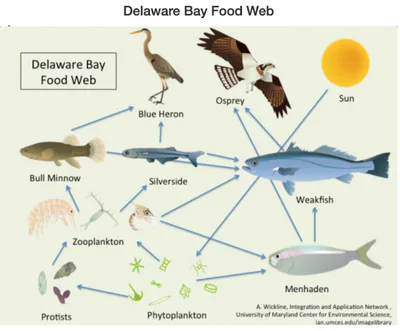
The food molecules that all animals eat originally come from plants (producers).

media

4

Multiple Choice

Question image

Where do the food molecules that the sea turtles & adult fish eat originally come from?

1

from the comb jellies & sea nettles

2

from the phytoplankton

3

from the zooplankton

4

from the filter-feeding fish

5

Multiple Choice

Question image

Where do the food molecules that the lobsters eat originally come from?

1

from the mussels & clams

2

from the phytoplankton

3

from the copepods

4

from the codfish

6

media

Plants get the materials they need for growth from air and water.

7

Multiple Choice

Question image

Shawn has a plant. He puts it in a clear plastic bag in January, and will check on it at the end of March. What will happen to Shawn's plant, and why?

1

Shawn's plant will survive because the bag is clear and the plant can still get sunlight.

2

Shawn's plant will not survive due to lack of water and air.

3

Shawn's plant will not survive due to lack of water.

4

Shawn's plant will survive as long as the soil was wet before he placed it in the bag.

8

Multiple Choice

Question image

Mr. Weaver has a small plant that he buys on March 20th. He takes a picture of it on April 10th, and May 14th. The plant has grown! Where did the matter for the change in height and weight come from?

1

from the soil

2

from water and air

3

from nutrients

4

from sunlight

9

Multiple Choice

Question image

See this plant? One month ago, it was half this size! Where did the matter that caused this plant to double in size, and grow taller and larger, come from?

1

from sunlight

2

from nutrients

3

from soil

4

from water and air

10

Multiple Choice

Plants need energy from sunlight in order to use ______ to make their own food.

1

soil and water only

2

soil and air only

3

water and air only

4

soil, water, and air

11

Plants need three things to make food - water, carbon dioxide, and sunlight.

media

12

Multiple Select

Question image

What resources do these plants need to make food molecules so they survive? Select all that apply.

1

soil

2

sunlight

3

water

4

oxygen

5

carbon dioxide

13

Multiple Select

Question image

This oak tree sprouted from an acorn and has started to grow!

What resources does this tree need to make food molecules so it will survive? Select all that apply.

1

soil

2

sunlight

3

water

4

oxygen

5

carbon dioxide

14

Matter moves between plants, animals, decomposers, and the environment.

Producers (plants) get matter by making food molecules using air and water, with energy from the sun.

media

15

Matter moves between plants, animals, decomposers, and the environment.

Consumers (animals) get matter by eating plants or animals.

media

16

Matter moves between plants, animals, decomposers, and the environment.

Decomposers get molecules by breaking down dead matter.

media

17

Multiple Choice

Question image

Wolves in this ecosystem will eat the reindeer. Where do the food molecules that the wolves eat originally come from?

1

from the toucans

2

from the water

3

from the soil

4

from the plants

18

Multiple Choice

Question image

How do mushrooms in this forest get the food molecules that they need to survive?

1

from nutrients in the soil

2

from sunlight, water, and carbon dioxide in a process called photosynthesis

3

from the matter of dead organisms

19

media

This aquarium has producers, consumers, and decomposers!

20

Multiple Choice

Question image

In the aquarium, what uses light and matter from the water to make food?

1

fish

2

plants

3

bacteria

21

Multiple Choice

Question image

In the aquarium, what eats plants?

1

fish

2

plants

3

bacteria

22

Multiple Choice

Question image

In the aquarium, what breaks down waste?

1

fish

2

plants

3

bacteria

23

The energy that animals get from their food was once energy from the sun.

media

24

Multiple Choice

Question image

Bluebirds depend on ____ for food.

1

only grasshoppers

2

only grains

3

both grasshoppers and grains

25

Multiple Choice

Question image

Bluebirds are food for:

1

only owls

2

only foxes

3

both foxes and owls

26

Multiple Choice

Question image

All animals eat:

1

plants

2

animals

3

animals or plants

27

Multiple Choice

Question image

______ are not able to make their own energy.

1

Plants

2

Animals

28

Multiple Choice

Question image

______ use energy from the Sun to make food.

1

Plants

2

Animals

29

Multiple Choice

Question image

All energy in an ecosystem originally comes from the:

1

Plants

2

Animals

3

Sun

30

We can identify and tell the difference between materials by examining their properties.

This table shows us properties for three materials - iron, aluminum, and plastic. We can use the differences to identify the materials!

media

31

Multiple Choice

Question image

Based on the information in this chart, which observation can be used to identify whether a cube is made of iron or aluminum?

1

conducts electricity

2

floats or sinks in water

3

can be picked up by a magnet

32

Multiple Select

Question image

Based on the information in this chart, which observations can be used to identify whether a tiny metal toy is made of copper or iron? Select ALL that apply.

1

attracted to a magnet

2

color

3

conducts electricity

4

dissolves in water

33

Multiple Select

Mr. Weaver is using brown sugar and cinnamon to make cookies. Brown sugar is soluble in water. Cinnamon is not.

First Mr. Weaver adds Powder 1 to water. It dissolves completely and the water looks clear.
Next he adds Powder 2 to water. It looks cloudy and brown, and then the brown powder settles to the bottom of the glass, and some floats on top.

Identify both powders - choose two answers.

1

Powder A is brown sugar.

2

Powder B is brown sugar.

3

Powder A is cinnamon.

4

Powder B is cinnamon.

34

Multiple Select

Naima is using baking soda, salt, and flour to make cookies. Both baking soda and salt are soluble in water (they will dissolve). Flour is not soluble (it does not dissolve).

First Naima adds Powder 1 to water. It dissolves completely and the water looks clear.
Next she adds Powder 2 to water. It looks cloudy and white, and then the white powder settles to the bottom of the glass.

Identify both powders - choose two answers.

1

Powder A is baking soda.

2

Powder B is baking soda.

3

Powder A is flour.

4

Powder B is flour.

35

media

36

Multiple Choice

Question image

Which picture shows a mixture?

1

A

2

B

3

C

37

Multiple Choice

Which picture could represent lemonade, which is a mixture of lemon juice, sugar, and water?

1
2
3

38

Multiple Choice

Question image

A scientist pours 5 g salt into 25 g water into Beaker A. The beaker weighs 50 g. When the scientist stirs the salt into the water, and places the beaker onto a scale to weigh it, how much will it weigh all together? (remember - the beaker itself weighs 50 g!)

1

5 g

2

25 g

3

75 g

4

80 g

39

Multiple Choice

Question image

A scientist pours 10 g salt into 50 g water into Beaker B. The beaker weighs 50 g. When the scientist stirs the salt into the water, and places the beaker onto a scale to weigh it, how much will it weigh all together? (remember - the beaker itself weighs 50 g!)

1

60 g

2

100 g

3

110 g

4

160 g

40

Multiple Choice

Question image

A scientist pours 15 g salt into 75 g water into Beaker C. The beaker weighs 50 g. When the scientist stirs the salt into the water, and places the beaker onto a scale to weigh it, how much will it weigh all together? (remember - the beaker itself weighs 50 g!)

1

75 g

2

90 g

3

125 g

4

140 g

41

But, if you add an emulsifier - which will attract to each of their molecules - they will stay mixed through the emulsifier!

When you try to mix two substances with molecules that are not attracted to each other... they will not mix!

media

42

Multiple Select

Question image

While making pancakes, Maya follows the directions to combine water and oil. When she tries to mix them together, they separate into layers. When Maya adds two egg yolks and stirs, the mixture stays mixed. Maya draws the diagram on the left to show the mixture before and after she added the egg yolks.
Which of the following statements about water, oil, and egg yolk are true? Select ALL that apply.

1

Water molecules are attracted to other water molecules.

2

Oil molecules are attracted to other oil molecules.

3

Water molecules are attracted to oil molecules.

4

Water molecules are attracted to egg yolk molecules.

5

Oil molecules are attracted to egg yolk molecules.

43

Multiple Select

Question image

While making our salad dressing recipe at home, Kerri follows the directions to combine 2 cups of balsamic vinegar and 2 cups of olive oil.  When the vinegar and oil are mixed together, the mixture separates into layers.  When Kerri adds three tablespoons of lecithin and stirs, the mixture stays mixed.

Kerri draws the diagram on the right to show the mixture before and after adding the lecithin.

Which statements are true about vinegar, olive oil, and lecithin? Select ALL that apply.

1
  1. Balsamic vinegar molecules are attracted to other balsamic vinegar molecules.

2
  1. Olive oil molecules are attracted to other olive oil molecules.

3
  1. Balsamic vinegar molecules are attracted to olive oil molecules.

4
  1. Balsamic vinegar molecules are attracted to lecithin molecules.

5
  1. Olive oil molecules are attracted to lecithin molecules.

44

The remaining 3% is freshwater.

Most of the Earth's freshwater is located in glaciers and groundwater.

97% of all water on Earth is saltwater in the oceans.

media

45

Multiple Choice

Which student corrected a correct graph to show the amount of saltwater vs. freshwater on Earth?

1

Maria's Graph

2

Kwama's Graph

3

Lismari's Graph

4

Tayshawn's Graph

46

Multiple Choice

Most of the freshwater on Earth can be found in:

1

lakes and ponds

2

the oceans

3

glaciers and groundwater

4

rivers and streams

47

Multiple Select

Question image

All water sources are either saltwater or freshwater.

Select all that are saltwater resources:

1

Icecaps

2

Swamps

3

Rivers

4

Groundwater

5

Oceans

48

Multiple Select

Question image

All water sources are either saltwater or freshwater.

Select all that are freshwater resources:

1

Icecaps

2

Swamps

3

Rivers

4

Groundwater

5

Oceans

49

Categorize

Options (6)

ice caps

swamps

rivers

lakes

groundwater

oceans

All water sources are either saltwater or freshwater. Drag and drop each water source to its correct classification.

saltwater resources
freshwater resources

50

Reorder

Question image

Order these freshwater resources from GREATEST to LEAST, using the information in the picture. Then press submit.

Glaciers

Groundwater

Lakes

Rivers

1
2
3
4

51

There are many interactions between the four spheres!

There are four spheres.

media
media

52

Multiple Choice

Question image

Which two systems interact the MOST when an alligator swims in a river, looking for prey to eat?

1

biosphere and geosphere

2

hydrosphere and biosphere

3

geosphere and atmosphere

4

atmosphere and hydrosphere

53

Multiple Choice

Question image

Which two systems interact the MOST during evaporation and precipitation?

1

biosphere and geosphere

2

hydrosphere and biosphere

3

geosphere and atmosphere

4

atmosphere and hydrosphere

54

media

55

Multiple Choice

Question image

On Thursday night Mr. Weaver decides to burn a candle as he reads a book. His dog Toby, sneaks into Mr. Weaver's book bag, takes out some papers, and rips them up to shreds! Bad Toby!

Which observation is a chemical reaction?

1

Black smoke is given off as the candle burns.

2

The paper is now in many tiny pieces.

3

The candle is made of wax.

56

Mountains can cause one side of the mountain to get lots of rain, and the other side to be very dry - a rain shadow!

media

- Wind carries water vapor from the ocean towards the mountain.
- As the air reaches the mountain, it is forced
up. Higher in the sky, the temperature is much colder. This cold causes water vapor in the air to condense, form into clouds, and fall as rain.
- By the time the air passes over the mountain, most of the water in the air has already fallen as rain - the other side of the mountain is a rain shadow (area with very little rain, because of the mountain).

57

Multiple Choice

Question image

Which city will get the most rain? Why?

1

City 2 - it is in front of the mountains.

2

City 3 - it is on the other side of the mountains.

58

Multiple Choice

Question image

Why does city 1 get much less rainfall than city 2?

1

City 1 has a lower elevation, and so it has warmer temperatures. The other two cities are colder, so more water vapor condenses in those cities.

2

City 1 is farther from the ocean than the other two cities.

3

City 1 is on the other side of the mountains, which block most of the water vapor.

59

The sun is far away from Earth. The sun appears small because it is far away from Earth.
The sun is actually a smaller star. It looks bigger and brighter to us on Earth because the sun is the closest star to Earth - the only star in our solar system.
There are stars out in space in every direction. During the day we can't see them, because the sun's light blocks or overwhelms the light of all other stars - because it is closer than they are.

media

60

Multiple Choice

Question image

A basketball and baseball are on the floor in the gym, about 10 feet away from you. If Mr. Weaver picks up just the basketball, and walks backwards 30 feet, what will happen?

1

The baseball will appear larger than it originally did.

2

The basketball will appear smaller than it originally did.

3

The basketball will appear larger than it originally did.

4

Both the basketball and the baseball will look smaller than they originally did.

61

Multiple Choice

Why does the sun appear small to us on Earth, when we look at it in the sky?

1

The Sun is the same size as the Moon.

2

The Sun is far away from Earth.

3

The Sun is the closest star to Earth.

4

The Sun is smaller than Earth.

62

Multiple Choice

Why does the sun appear small in the sky?

1

The Sun is the closest star to Earth.

2

The Sun is smaller than Earth.

3

The Sun is the same size as the Moon.

4

The Sun is far away from Earth.

63

Multiple Select

Choose all true statements. Select ALL that are true.

1

The Sun and other stars are all very far from Earth.

2

Other stars look dimmer than the Sun because they are farther away from Earth.

3

Other stars appear dimmer because they give off less light than the Sun.

4

Other stars appear smaller because they are farther away from Earth than the Sun.

5

The Sun is larger than all other stars.

64

Multiple Select

Choose all true statements. Select ALL that are true. (The answer choices are mixed up from before!)

1

Other stars appear smaller because they are farther away from Earth than the Sun.

2

The Sun is larger than all other stars.

3

Other stars look dimmer than the Sun because they are farther away from Earth.

4

The Sun and other stars are all very far from Earth.

5

Other stars appear dimmer because they give off less light than the Sun.

65

media

The Earth is always moving.

As the Earth rotates (spins), we have day as we face the sun, and it's night as we face away from the sun.


We see different constellations (stars) in the sky as the Earth orbits around the sun, because we face different areas of space as the Earth revolves.

In the picture it is night, because the side of the Earth where the red person lives is facing away from the sun. As the Earth rotates, it will become day in about 6 hours!

In the picture (March 7th at night) we can see that right now the Earth is facing towards Leo at night. In six months we will see the stars of Pegasus instead. On the same day every year, we will see the same stars of Leo - on March 7 2025, 2026, 2027...

66

Multiple Choice

Why does day and night repeat every 24 hours?

1

24 hours is how long it takes the Earth to complete one rotation on its axis.

2

24 hours is how long it takes the Sun to make a trip around the Earth.

3

24 hours is how long it takes the Earth to make one full orbit around the Sun.

4

24 hours is how long it takes the Moon to orbit once around the Earth.

67

Multiple Choice

Mr. Weaver looks up at the sky on March 7th, and sees many constellations - including Leo! When can he expect to see the constellation Leo again?

1

Every day on the same year.

2

Every 6 months.

3

On the same day every year.

4

Never.

68

Multiple Choice

Mrs. Tillery sees the stars of Pegasus in the sky during September! When can she expect to see this constellation again?

1

Every day on the same year.

2

Every 6 months.

3

On the same day every year.

4

Never.

69

You can complete this review as many times as you'd like! The more you study and practice, the more prepared you will be!

media

​Science Quarterly Assessment # 3

Tutorial

media
media
media
media
media
media

Show answer

Auto Play

Slide 1 / 69

SLIDE