

Exam Prep #1

Presentation
•
Computers
•
11th Grade
•
Practice Problem
•
Hard

Bevette Bowen
Used 5+ times
FREE Resource
50 Slides • 0 Questions
1

Exam
Prep
2

3
4
5

6
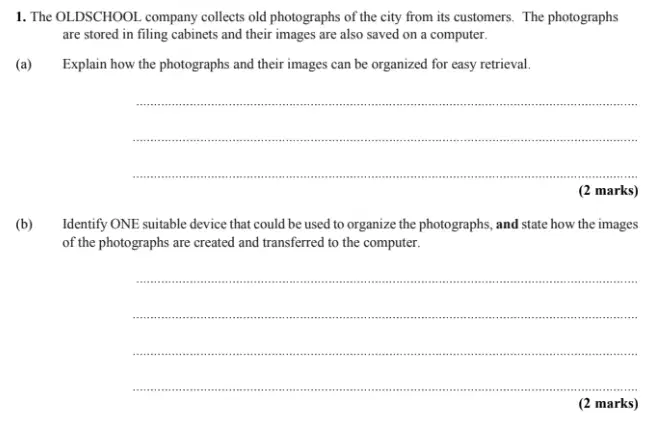
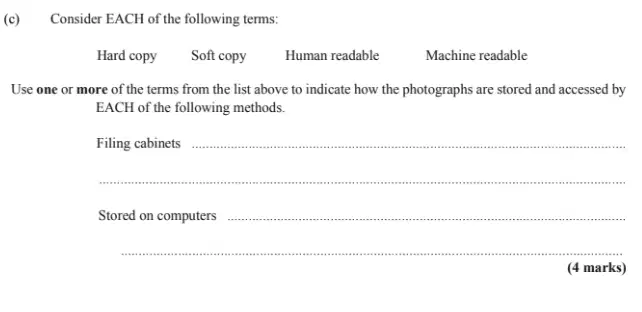
A hard copy stores data and information in the form of physical files- it may be images, texts, photographs, and more.
A soft copy has data and information in the form of virtual files saved on a computer or a drive.
7
Turnaround Document
What is a Turnaround Document?
A turnaround document is a computer-generated form that is sent to a third party, who is supposed to fill in the document and return it to the issuer. The information on the form is then used as the basis for data entry back into the computer system.
Example of a Turnaround Document
For example, an invoice is sent to a customer with a detachable section that the customer is supposed to fill in with the amount of his payment and then return along with the payment.
8
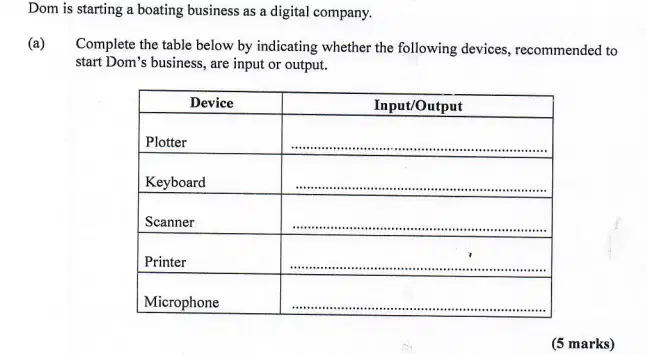
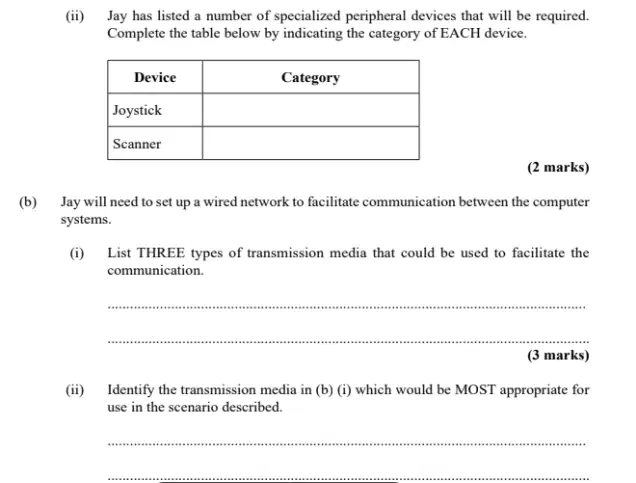
Direct data entry devices are devices that read data from a source that’s provided and transferred it directly to the computer system. Unlike, input devices which rely on physical interaction which means you’ll have to physically move or do something to the device for an outcome.
9
2
10
11
12

13
14
d
15
16
Computer Network Types
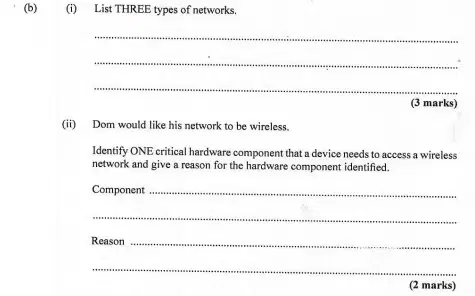
A computer network is a group of computers linked to each other that enables the computer to communicate with another computer and share their resources, data, and applications.
A computer network can be categorized by their size. A computer network is mainly of four types:
LAN(Local Area Network)
PAN(Personal Area Network)
MAN(Metropolitan Area Network)
WAN(Wide Area Network)
17
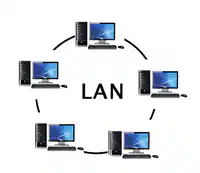
LAN(Local Area Network)
Local Area Network is a group of computers connected to each other in a small area such as building, office.
LAN is used for connecting two or more personal computers through a communication medium such as twisted pair, coaxial cable, etc.
It is less costly as it is built with inexpensive hardware such as hubs, network adapters, and ethernet cables.
The data is transferred at an extremely faster rate in Local Area Network.
18
PAN(Personal Area Network)
Personal Area Network is a network arranged within an individual person, typically within a range of 10 meters.
Personal Area Network is used for connecting the computer devices of personal use is known as Personal Area Network.
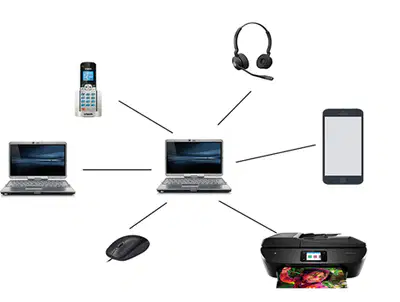
19
There are two types of Personal Area Network:
Wired Personal Area Network
Wireless Personal Area Network
Wireless Personal Area Network: Wireless Personal Area Network is developed by simply using wireless technologies such as WiFi, Bluetooth. It is a low range network.
Wired Personal Area Network: Wired Personal Area Network is created by using the USB.
20
Wired Personal Area Network: Wired Personal Area Network is created by using the USB.
Examples Of Personal Area Network:
Body Area Network: Body Area Network is a network that moves with a person. For example, a mobile network moves with a person. Suppose a person establishes a network connection and then creates a connection with another device to share the information.
Offline Network: An offline network can be created inside the home, so it is also known as a home network. A home network is designed to integrate the devices such as printers, computer, television but they are not connected to the internet.
Small Home Office: It is used to connect a variety of devices to the internet and to a corporate network using a VPN
21
3
22
23

24
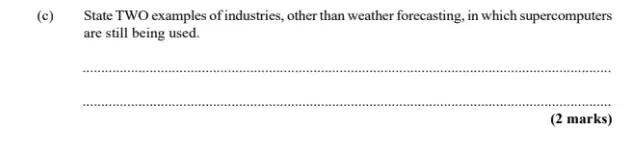
Switch or Router: Switches and routers are network devices that are used to connect multiple devices and control the flow of data between them. A switch is used to connect devices on a LAN and forward data between them, while a router is used to connect a LAN to the internet or other WANs.
25
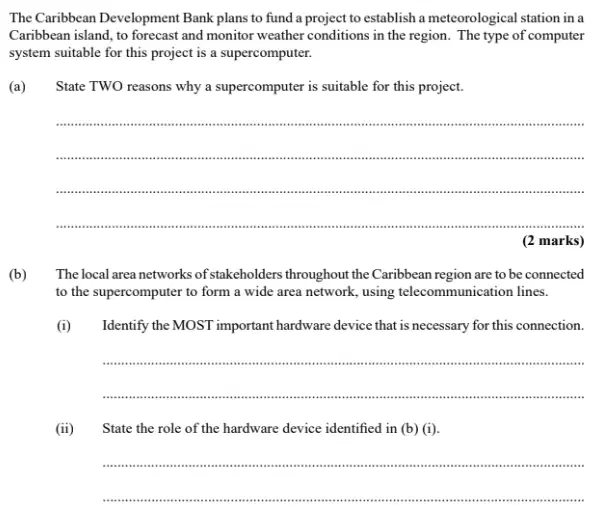
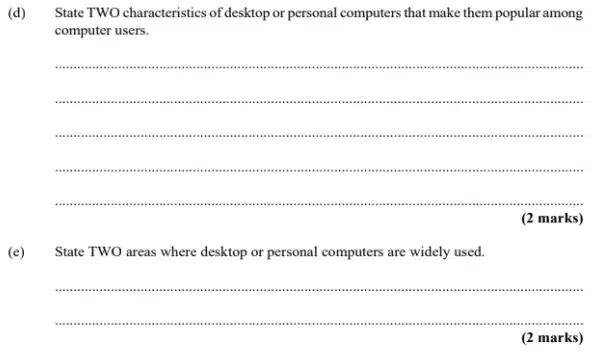
Supercomputer, any of a class of extremely powerful computers. The term is commonly applied to the fastest high-performance systems available at any given time. Such computers have been used primarily for scientific and engineering work requiring exceedingly high-speed computations. Common applications for supercomputers include testing mathematical models for complex physical phenomena or designs, such as climate and weather, evolution of the cosmos, nuclear weapons and reactors, new chemical compounds (especially for pharmaceutical purposes), and cryptology.
26
4
27
28
29
30
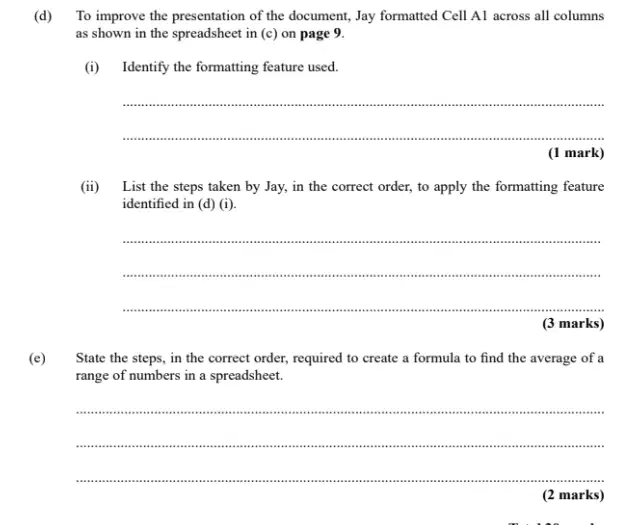
31
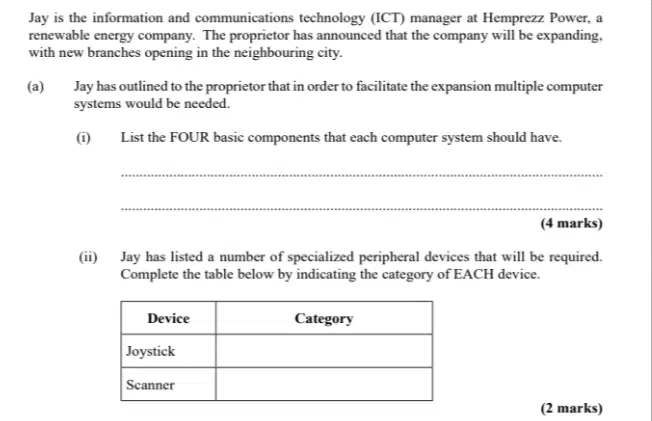
Transmission media is a communication channel that transmits information from the source/transmitter to the receiver. It is a physical path for data transfer through electromagnetic signals.
32
Unguided Transmission Media
Also known as unbounded or wireless media, they help in transmitting electromagnetic signals without using a physical medium. Here, air is the medium. There is no physical connectivity between transmitter and receiver. These types of transmission media are used for longer distances however they are less secure than guided media. There are three main types of wireless transmission media.
Learn more about wireless networking
Radio Waves
Radio waves are transmitted in every direction throughout free space. Since these are omnidirectional, sent waves can be received by any antenna. These waves are useful when the data is to multicasted from one sender to multiple receivers. Radio waves can cover large areas and even penetrate obstacles such as buildings and walls. The frequency of these waves ranges between 3 kHz to 1GHz. Due to its omnidirectional nature, issues such as interference might arise when another signal with the same bandwidth or frequency is sent.
33
Infrared
These waves are useful for only very short distance communication. Unlike radio waves, they do not have the ability to penetrate barriers. Their range varies between 300GHz – 400THz. Since they have larger bandwidth, the data rate is very high for infrared waves. These have less interference and are more secure.
Microwaves
For these waves, it is important for the transmitter and receiver antenna to be aligned. This is why it is known as line-of-sight transmission. Due to this, they are suitable for shorter distances. They comprise of electromagnetic waves with frequencies ranging between 1-400 GHz. Microwaves provide bandwidth between the range of 1 to 10 Mbps. Distance covered by the signal is proportional to the height of the antenna. For travelling to longer distances, the height of the tower should be increased. These are further sub categorized as terrestrial and satellite type microwave transmission.
34
Guided Transmission Media
Guided media are also known as wired or bounded media. These media consist of wires through which the data is transferred. Guided media is a physical link between transmitter and recipient devices. Signals are directed in a narrow pathway using physical links. These media types are used for shorter distances since physical limitation limits the signal that flows through these transmission media.
35
Twisted Pair Cable
In this type of transmission media, two insulated conductors of a single circuit are twisted together to improve electromagnetic compatibility. These are the most widely used transmission medium cables. These are packed together in protective sheaths. They reduce electromagnetic radiation from pairs and crosstalk between the neighbouring pair.
Optical Fibre Cable
Also known as fiber optic cable, these are thin strands of glass that guide light along their length. These contain multiple optical fibers and are very often used for long-distance communications. Compared to other materials, these cables can carry huge amounts of data and run for miles without using signal repeaters. Due to lesser requirements, they have less maintenance costs and it improves the reliability of the communication system. These can be unidirectional as well as bidirectional in nature.
36
Coaxial cable
These guided transmission media contain an insulation layer that transmits information in baseband mode and broadband mode. Coaxial cables are made of PVC/Teflon and two parallel conductors that are separately insulated. Such cables carry high frequency electrical signals without any big loss. The dimension of cable and connectors are controlled to give them constant conductor spacing for efficient functioning as a transmission line.
37
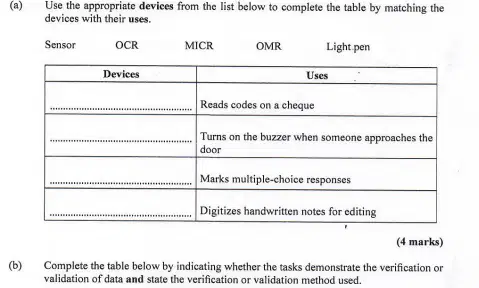
5
38
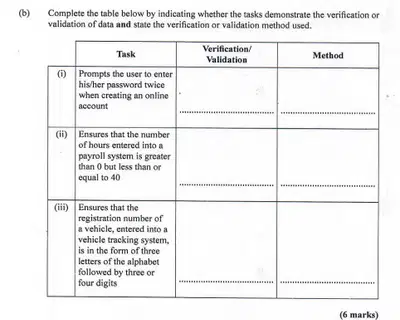
39

40
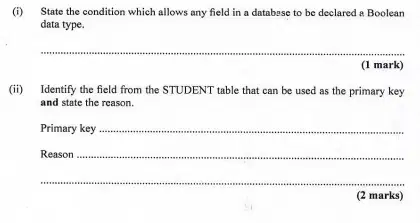
41
42
43
6
44
7
45
46
47

48

49
8
50
Exam
Prep
Show answer
Auto Play
Slide 1 / 50
SLIDE
Similar Resources on Wayground

44 questions
Polynomial Review
Presentation
•
11th Grade
43 questions
Endogenic Process: Plate Tectonics
Presentation
•
11th Grade
46 questions
MP Reading Lesson 13 - Summarize Key Ideas and Details Pt. 2
Presentation
•
11th Grade
46 questions
GDPR en wetgeving
Presentation
•
KG
44 questions
Molarity, Dilutions, & Gas Laws
Presentation
•
11th Grade
43 questions
El imperfecto
Presentation
•
10th Grade
45 questions
Quadratic Formula Day 2
Presentation
•
11th Grade
45 questions
T1-H7-2.3 Publieke goederen
Presentation
•
11th Grade
Popular Resources on Wayground
20 questions
Math Review

Quiz
•
3rd Grade
15 questions
Fast food
Quiz
•
7th Grade
20 questions
Context Clues
Quiz
•
6th Grade
20 questions
Inferences
Quiz
•
4th Grade
19 questions
Classifying Quadrilaterals
Quiz
•
3rd Grade
20 questions
Figurative Language Review
Quiz
•
6th Grade
20 questions
Equivalent Fractions
Quiz
•
3rd Grade
10 questions
Identify Fractions, Mixed Numbers & Improper Fractions
Quiz
•
3rd - 4th Grade
Discover more resources for Computers
10 questions
Fact Check Ice Breaker: Two truths and a lie
Quiz
•
5th - 12th Grade
10 questions
Video Games
Quiz
•
6th - 12th Grade
15 questions
Memorial Day Trivia
Quiz
•
KG - 12th Grade
12 questions
Name that Candy
Quiz
•
KG - 12th Grade
20 questions
Guess The App
Quiz
•
KG - Professional Dev...
30 questions
K/H Final Review Part 1
Quiz
•
9th - 12th Grade
40 questions
NCFE Earth and Environmental Science Released Test
Quiz
•
9th - 12th Grade
22 questions
Revise and Edit Final Review 3
Quiz
•
8th - 12th Grade