Plants
Presentation
•
Biology
•
9th Grade
•
Hard
Josselyne Saenz
FREE Resource
15 Slides • 26 Questions
1
2
Multiple Choice
In a Central Texas grassland, the producers incorporate 12,000 kJ of energy from the sun into their tissues. About how much energy would be incorporated into the tissues of herbivores?
1,200 kJ
12,000 kJ
10,800 kJ
1,080 kJ
3
4
Multiple Choice
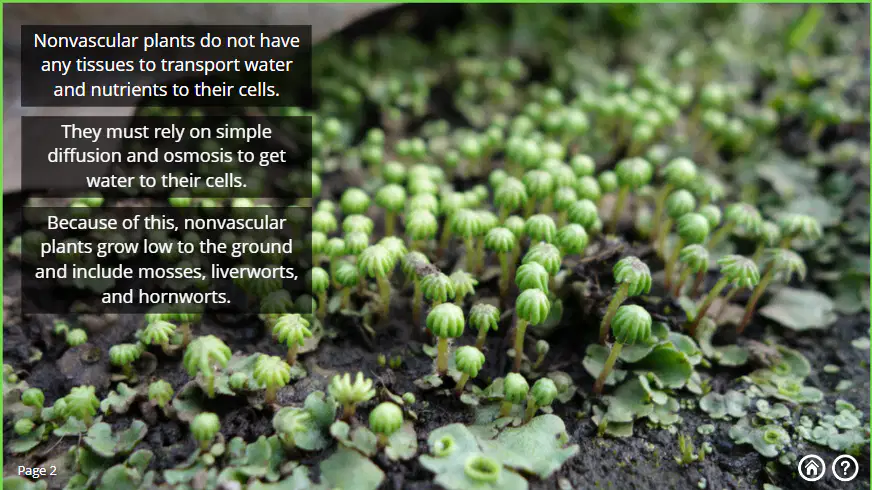
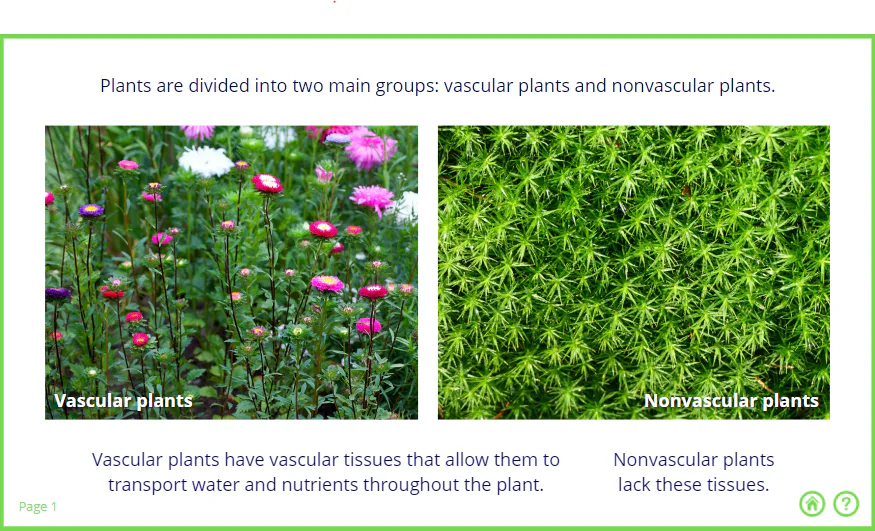
Which kind of plants do not have any tissues to transport water and glow close to the ground and use simple diffusion and osmosis?
Vascular Plants
Non-Vascular Plants
5
6
Multiple Choice
Have vascular tissues to transport nutrients and water to the plant cells, can grow tall, and are similar to human veins and arteries.
Vascular Plants
Non-Vascular Plants
7
8
Multiple Choice
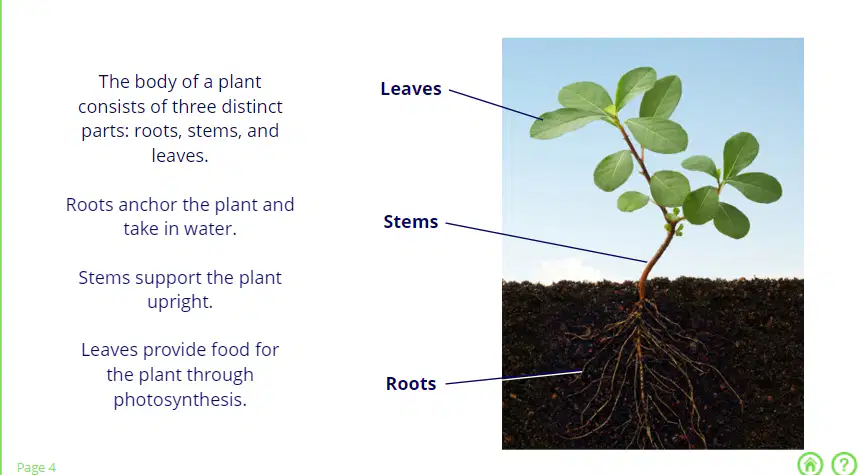
Which of the following provide food for photosynthesis?
roots
leaves
stems
9
Multiple Choice
Which of the following anchor the plant and take in water?
roots
leaves
stems
10
Multiple Choice
Which of the following support the plant upright?
roots
leaves
stems
11
12
13
Multiple Choice
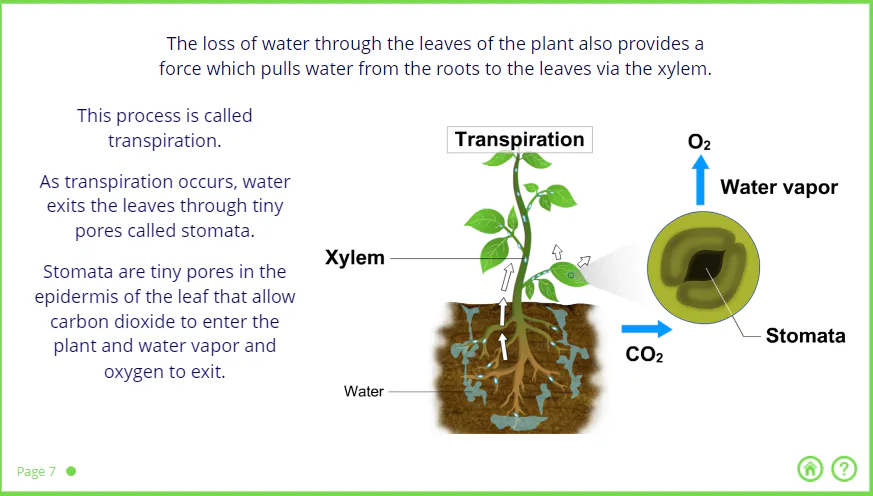
Which of the following is a tiny pore that takes in carbon dioxide and releases water vapor and oxygen in transpiration?
stomata
roots
stems
14
Multiple Choice
The stomata is similar to which of the following human body systems
respiratory
skeletal
circulatory
reproductive
15
Multiple Choice
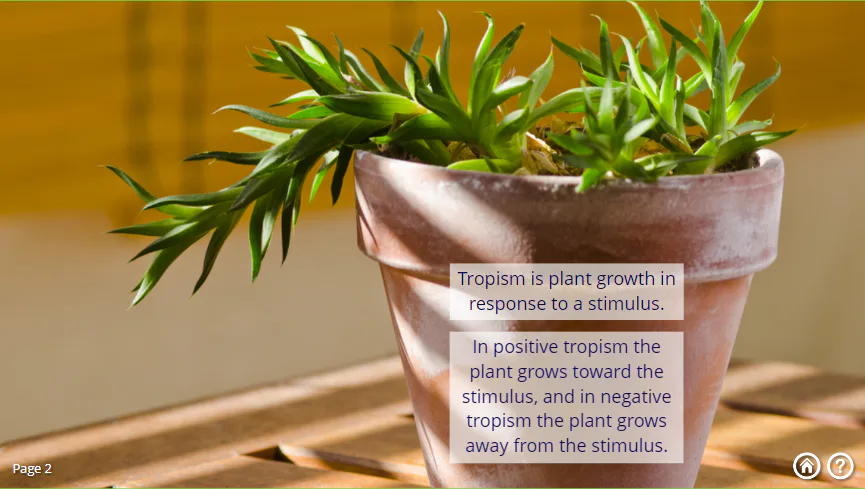
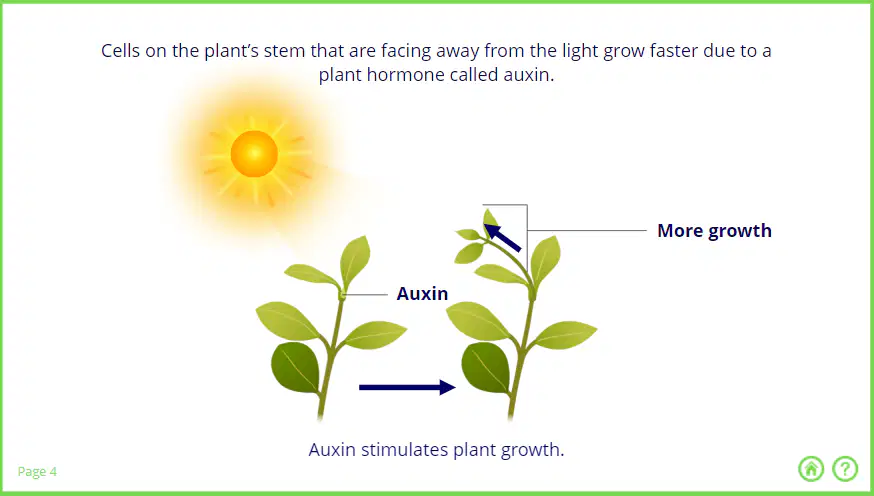
In phototropism, why does a plant bend towards the light
to get more water
light sensors of the sun stimulate the hormones in plants
the xylem absorbs more nutrients in the shade
the side facing the sun absorbs more carbon dioxide
16
Multiple Choice
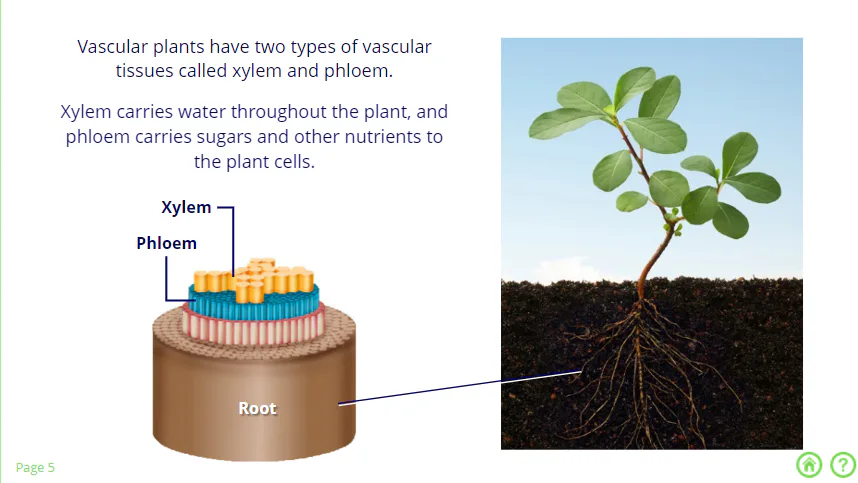
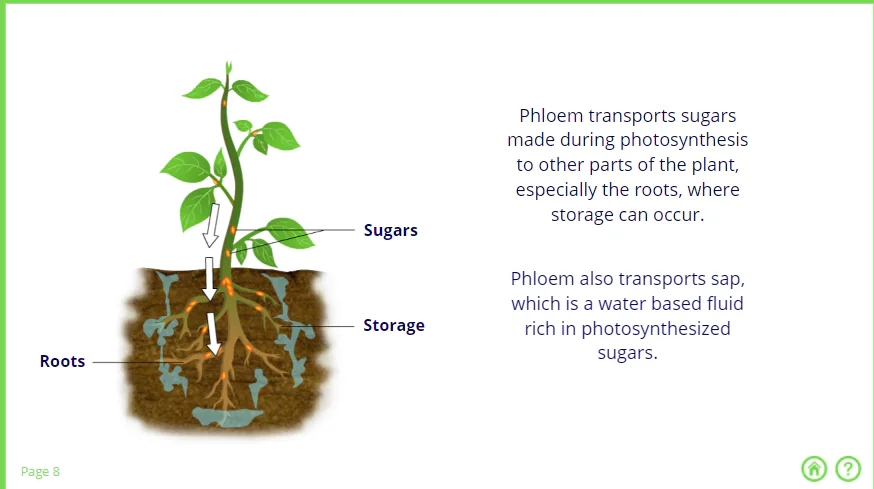
Which vascular tissue transports sugars, such as sap?
Xylem
Phloem
17
18
Multiple Choice
Which vascular tissue transports water?
Xylem
Phloem
19
20
Multiple Choice
What is it called when the plant grows towards the light source?
geotropism
phototropism
hydrotropism
thigmotropism
21
22
23
24
Multiple Choice
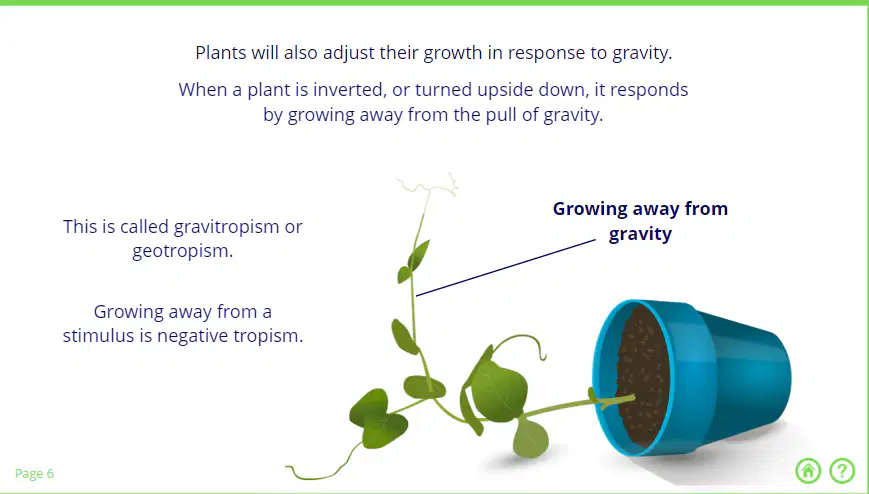
What is it called when the plant grows away from the pull of gravity?
geotropism
phototropism
hydrotropism
thigmotropism
25
26
Multiple Choice
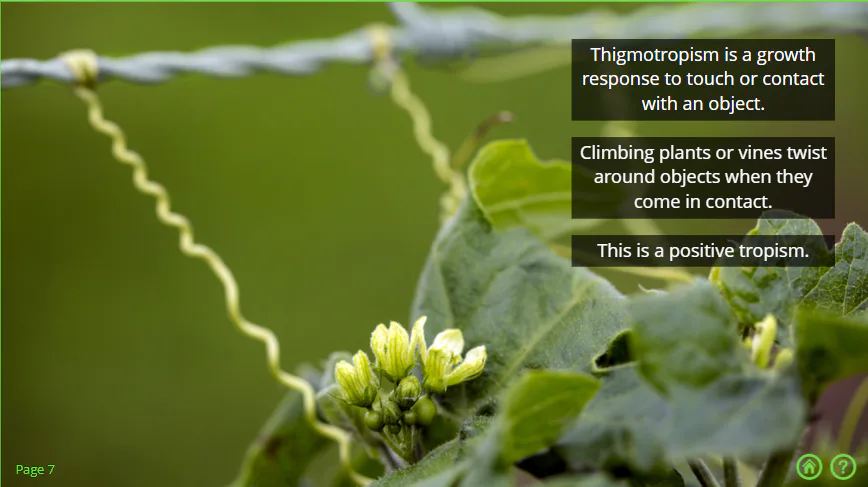
What is it called when the plant grows in response to touch or contact with an object?
geotropism
phototropism
hydrotropism
thigmotropism
27
28
29
30
Multiple Choice
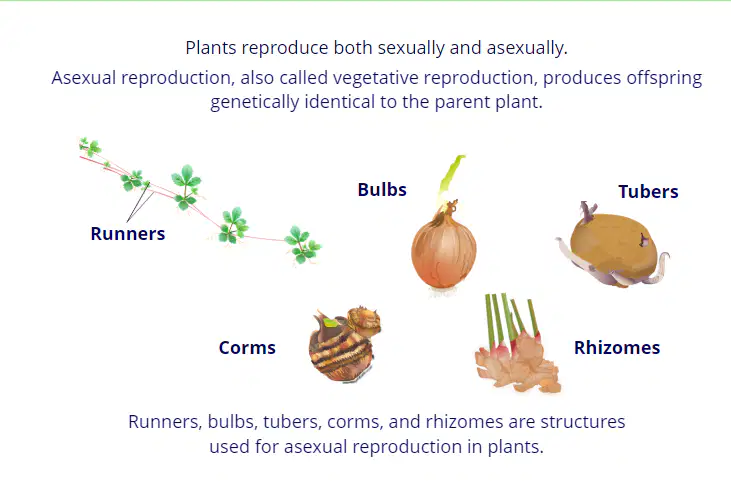
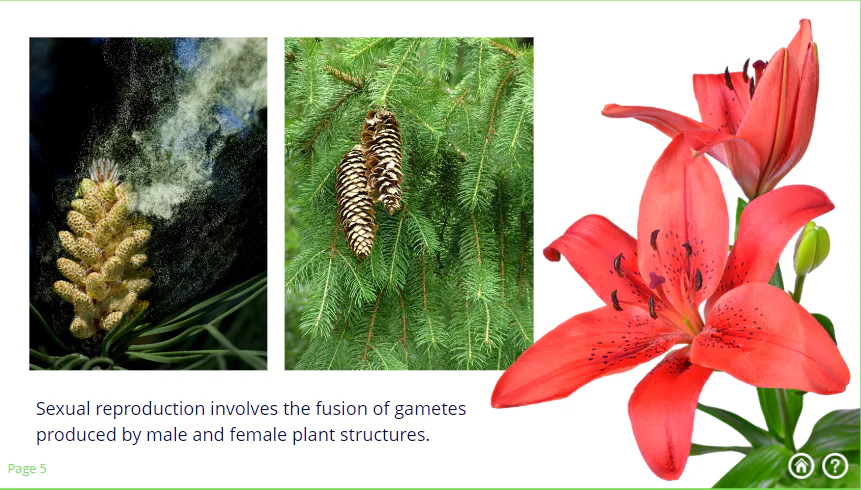
Which involves the fusion of male and female gametes?
Sexual Reproduction
Asexual Reproduction
31
Multiple Choice
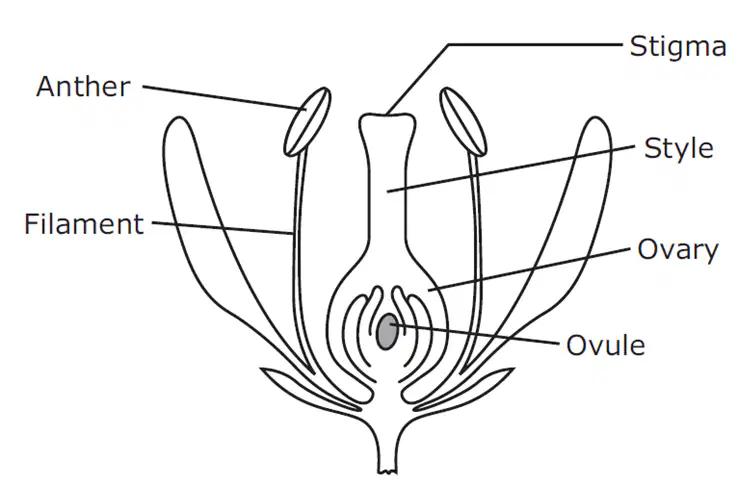
When the pollen from the anther transfers to the sigma into the ovule to fertilize the ovary in the same plant, it is called
Sexual Reproduction
Asexual Reproduction
32
Multiple Choice
A relationship where one organism benefits and the other organism does not benefit nor is harmed
Commensalism
Mutualism
Parasitism
Predation
33
Multiple Choice
A relationship where one organism benefits and the other organism is harmed
Commensalism
Mutualism
Parasitism
Predation
34
Multiple Choice
A relationship where one organism benefits and the other organism also benefits
Commensalism
Mutualism
Parasitism
Predation
35
Multiple Choice
When a predator eats a prey
Commensalism
Mutualism
Parasitism
Predation
36
Fill in the Blanks
Type answer...
37
Multiple Choice
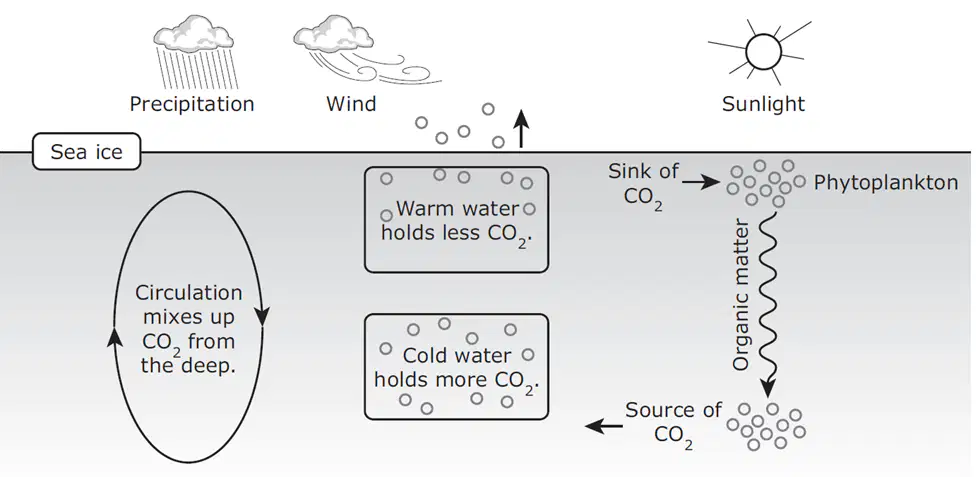
An increase in the amount of carbon dioxide in the atmosphere can cause atmospheric temperatures to increase. Which statement explains how this could affect the ocean as a carbon sink?
less atmospheric carbon dioxide would be available to phytoplankton
Dissolved carbon dioxide gas in the ocean would increase because surface winds would cause a deeper circulation pattern, making more room for the gas
less carbon dioxide gas would be contained in the ocean because increasing precipitation would dilute the carbon entering the ocean
Less carbon dioxide would be dissolved in the ocean because increasing temperatures would cause ocean temperatures to increase
38
Multiple Choice
Which is bigger a population or a community?
population
community
39
Multiple Choice
Which of the following would help the cycling of nitrogen?
plants
fish
water
40
Multiple Choice
Why are microorganisms helpful to an ecosystem?
they balance the amount of producers and consumers
they keep nutrients cycling in an ecosytem
they turn sunlight into sugars
they function as autotrophs
41
Multiple Choice
How do plants transport liquid?
Roots absorb water and minerals and moves them up to the stem, where the stem moves food produced in the leaves to the tiny tubes
roots anchor plants and stem holds them upright
roots absorb their own water and minerals, while the stem absorbs its water and minerals through the leaves
roots lose water vapor to the soil, and the stem loses water vapor through the leaves
Show answer
Auto Play
Slide 1 / 41
SLIDE

Similar Resources on Wayground
38 questions
Non-Mendelian Inheritance
Presentation
•
9th Grade
32 questions
Energy Transfer in Ecosystems
Presentation
•
9th - 10th Grade
34 questions
Motion Graphs
Presentation
•
9th Grade
35 questions
Honors Bio Meiosis Lesson
Presentation
•
9th Grade
37 questions
Meiosis
Presentation
•
9th Grade
36 questions
CPBIO: DAY 1 - PHOTOSYNTHESIS
Presentation
•
9th Grade
32 questions
2.2 Photosynthesis
Presentation
•
9th Grade
33 questions
The Rock Cycle
Presentation
•
9th Grade
Popular Resources on Wayground
15 questions
Grade 3 Simulation Assessment 1
Quiz
•
3rd Grade
22 questions
HCS Grade 4 Simulation Assessment_1 2526sy
Quiz
•
4th Grade
16 questions
Grade 3 Simulation Assessment 2
Quiz
•
3rd Grade
19 questions
HCS Grade 5 Simulation Assessment_1 2526sy
Quiz
•
5th Grade
17 questions
HCS Grade 4 Simulation Assessment_2 2526sy
Quiz
•
4th Grade
20 questions
Equivalent Fractions
Quiz
•
3rd Grade
24 questions
HCS Grade 5 Simulation Assessment_2 2526sy
Quiz
•
5th Grade
20 questions
Math Review
Quiz
•
3rd Grade
Discover more resources for Biology
35 questions
Biology EOC Review
Quiz
•
9th Grade
16 questions
AP Biology: Unit 1 Review (CED)
Quiz
•
9th - 12th Grade
50 questions
Biology EOC Review
Quiz
•
9th Grade
20 questions
AP Biology: Unit 3 Review (CED)
Quiz
•
9th - 12th Grade
21 questions
AP Biology: Unit 6 Review (CED)
Quiz
•
9th - 12th Grade
14 questions
AP Biology: Unit 4 Review (CED)
Quiz
•
9th - 12th Grade
20 questions
Food Chains and Food Webs
Quiz
•
7th - 12th Grade
20 questions
Transcription and Translation (Protein Synthesis)
Quiz
•
9th Grade