

3-18-2024-AA

Presentation
•
Mathematics
•
9th - 12th Grade
•
Hard

Steve Howard
Used 1+ times
FREE Resource
68 Slides • 12 Questions
1


Horngren’s Accounting
Fourteenth Edition
Chapter 13
Stockholders’ Equity
Copyright © 2024, 2020, 2017 Pearson Education, Inc. All Rights Reserved
2


Copyright © 2024, 2020, 2017 Pearson Education, Inc. All Rights Reserved
Chapter 13 Learning
Objectives (1 of 2)
13.1 Identify the characteristics of a
corporation
13.2 Journalize the issuance of stock
13.3 Account for the purchase and sale
of treasury stock
13.4 Account for cash dividends, stock
dividends, and stock splits
3


Copyright © 2024, 2020, 2017 Pearson Education, Inc. All Rights Reserved
Chapter 13 Learning
Objectives (2 of 2)
13.5 Prepare a corporate income
statement including earnings per
share
13.6 Explain how equity is reported
for a corporation
13.7 Use earnings per share, rate of
return on common stockholders’
equity, and the price/earnings ratio to
evaluate business performance
4



Copyright © 2024, 2020, 2017 Pearson Education, Inc. All Rights Reserved
Learning Objective 13.1
Identify the
characteristics of a
corporation
5


Copyright © 2024, 2020, 2017 Pearson Education, Inc. All Rights Reserved
Stockholders’ Equity Basics (1 of 3)
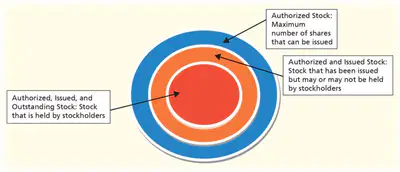
• The maximum number of shares of stock a corporation
may issue is called authorized stock.
• Issued stock has been issued by the corporation.
• Stock held by the stockholders is called outstanding
stock.
• Stockholders are issued stock certificates.
• Capital stock represents a stockholder’s ownership.
6


Copyright © 2024, 2020, 2017 Pearson Education, Inc. All Rights Reserved
Characteristics of Corporations (1 of 2)
Unique characteristics of corporations:
• Separate legal entity
• Number of owners
• No personal liability of the owner(s)
• Lack of mutual agency
• Indefinite life
• Taxation
• Capital accumulation
7


Copyright © 2024, 2020, 2017 Pearson Education, Inc. All Rights Reserved
Stockholders’ Equity Basics (2 of 3)
Exhibit F:13-2 Stock Certificate
8
Multiple Choice

Which is an advantage of a shareholder over a partner
owner cannot directly control business operation
owner can easily transfer his interest
Owner's liability is limited
b and c
9


Copyright © 2024, 2020, 2017 Pearson Education, Inc. All Rights Reserved
Stockholders’ Equity Basics (3 of 3)
Exhibit F:13-3 Categories of Stock
10
Multiple Choice
Share of stock a corporation is allowed to issue
subscribed shares
treasury shares
authorized shares
issue shares
11


Copyright © 2024, 2020, 2017 Pearson Education, Inc. All Rights Reserved
Stockholders’ Rights
A stockholder has four basic rights:
1. Vote―Each share of basic ownership in the corporation
carries one vote.
2. Dividends―Stockholders receive a proportionate part
of any dividend declared and paid.
3. Liquidation―Stockholders receive their proportionate
share of any assets remaining after liquidation.
4. Preemptive right―Stockholders have a right to
maintain their proportional ownership.
12


Copyright © 2024, 2020, 2017 Pearson Education, Inc. All Rights Reserved
Capital Stock
• Corporations issue different classes of stock:
– Common stock represents basic ownership.
– Preferred stock gives owners certain advantages
over common stock.
• Stock may carry a par value or may be no-par stock.
• Stated value stock is no-par stock that has been
assigned an amount similar to par value.
13
Multiple Choice
Shares of a company that do not guarantee a dividend and have more risk than preferred. Right to vote for board of directors as well as on issues that come before the board at annual meetings.
Preferred Stock
Investor
Common Stock
Dividends
Stockbroker
14
Multiple Choice
Shares of ownership of a company in which the shareholder is guaranteed a dividend if one is declared and whose shares are usually not as volatile as common stock; no voting rights.
Preferred Stock
Investor
Common Stock
Dividends
Stockbroker
15
Multiple Choice
Part of a company's profits (earnings) that is pays as money to stockholders.
Preferred Stock
Investor
Common Stock
Dividends
Stockbroker
16


Copyright © 2024, 2020, 2017 Pearson Education, Inc. All Rights Reserved
Stockholders’ Equity
• A corporation’s equity is called stockholders’ equity.
• The two basic sources of stockholders’ equity are:
– Paid-in capital represents amounts received from
stockholders for stock.
– Retained earnings is equity earned by profitable
operations that is not distributed to stockholders.
17



Copyright © 2024, 2020, 2017 Pearson Education, Inc. All Rights Reserved
Learning Objective 13.2
Journalize the
issuance of stock
18


Copyright © 2024, 2020, 2017 Pearson Education, Inc. All Rights Reserved
How Is the Issuance of Stock
Accounted For?
• Companies raise capital by issuing stock.
• A company can sell its stock directly to stockholders, or it
can use the services of an underwriter.
• Stocks of public companies are bought and sold on a stock
exchange, such as the New York Stock Exchange (NYSE)
or NASDAQ Stock Market.
• The issue price is the amount a corporation receives from
issuing stock.
19
Multiple Choice
The principle amount (face value)
Coupon Rate
Maturity
Par Value
Yield
20


Copyright © 2024, 2020, 2017 Pearson Education, Inc. All Rights Reserved
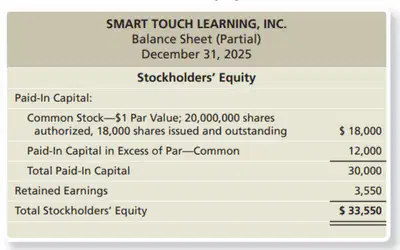
Issuing Common Stock at a
Premium (2 of 2)
Exhibit F:13-4 Stockholders’ Equity
21
Multiple Choice
Which of the following is defined as, "Skeptical/negative market conditions."
Bull Market
Bear Market
22
Multiple Choice
Which of the following is defined as, "Positive/ambitious market conditions."
Bull Market
Bear Market
23
Multiple Choice
People typically respond to bull markets by...
Buying stocks
Selling stocks
Not acting
24
Multiple Choice
People typically respond to bear markets by...
Buying stocks
Selling stocks
Not acting
25
Multiple Choice
What is the difference between common and preferred stock?
Preferred stock gives voting rights, while common stock receives dividends
Common stock has priority to dividends, while preferred stock has a higher dividend yield
Preferred stock has priority to dividends, while common stock has a higher dividend yield
26



Copyright © 2024, 2020, 2017 Pearson Education, Inc. All Rights Reserved
Learning Objective 13.3
Account for the
purchase and sale of
treasury stock
27


Copyright © 2024, 2020, 2017 Pearson Education, Inc. All Rights Reserved
How Is Treasury Stock Accounted For?
• Treasury stock is a company’s stock that it has previously
issued and later reacquired.
• Companies purchase treasury stock to:
– Increase net assets by buying low and selling high
– Support the company’s stock price
– Avoid a takeover
– Reward valued employees with stock
28
Multiple Choice
What is a possible reason a company would sell stock?
To hire more people
To expand its business
To develop new technology
All of the above
29


Copyright © 2024, 2020, 2017 Pearson Education, Inc. All Rights Reserved
Treasury Stock Basics
The basics of accounting for treasury stock:
• The Treasury Stock account has a normal debit balance.
Treasury Stock is a contra equity account.
• Treasury stock is recorded at cost, without reference to par
value.
• The Treasury Stock account is reported beneath Retained
Earnings on the balance sheet as a reduction to equity.
30


Copyright © 2024, 2020, 2017 Pearson Education, Inc. All Rights Reserved
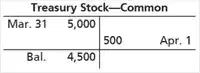
Purchase of Treasury Stock
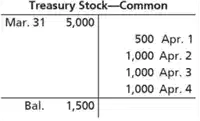
On March 31, Smart Touch Learning purchases 1,000
shares of previously issued common stock, paying $5 per
share.
31



Copyright © 2024, 2020, 2017 Pearson Education, Inc. All Rights Reserved
Sale at Cost
Smart Touch Learning sells 100 of the treasury shares on
April 1 for $5 each.
32


Copyright © 2024, 2020, 2017 Pearson Education, Inc. All Rights Reserved
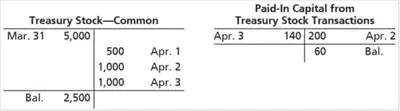
Sale Above Cost
Smart Touch Learning resells 200 of its treasury shares for
$6 per share on April 2. (Recall that the cost was $5 per
share.)
33


Copyright © 2024, 2020, 2017 Pearson Education, Inc. All Rights Reserved
Sale Below Cost (1 of 2)
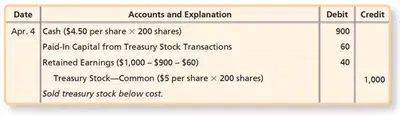
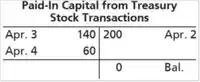
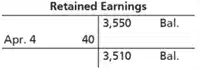
On April 3, Smart Touch Learning resells 200 treasury
shares for $4.30 each.
34


Copyright © 2024, 2020, 2017 Pearson Education, Inc. All Rights Reserved
Sale Below Cost (2 of 2)
What happens if Smart Touch Learning resells an additional 200
treasury shares for $4.50 each on April 4?
35


Copyright © 2024, 2020, 2017 Pearson Education, Inc. All Rights Reserved
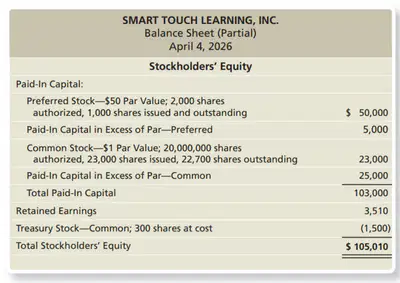
Sale of Treasury Stock (1 of 2)
Exhibit F:13-7 Stockholders’ Equity After Treasury Stock Transactions
36


Copyright © 2024, 2020, 2017 Pearson Education, Inc. All Rights Reserved
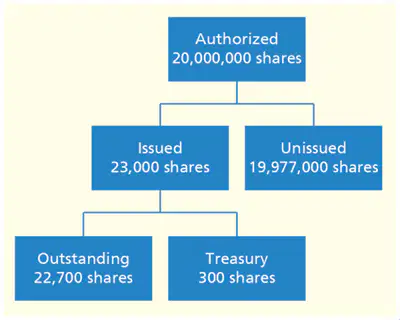
Sale of Treasury Stock (2 of 2)
How many common
shares are outstanding
on April 4?
• The 23,000 common
shares previously
issued minus 300
treasury shares
equals 22,700
outstanding common
shares.
37


Copyright © 2024, 2020, 2017 Pearson Education, Inc. All Rights Reserved
Retirement of Stock
• A corporation may retire its stock by canceling the stock
certificates.
• Retired stock cannot be reissued.
• To repurchase previously issued stock for retirement, we
debit the stock accounts and credit Cash.
– This removes the retired stock from the company’s
books.
– It also reduces total assets and total stockholders’
equity.
38



Copyright © 2024, 2020, 2017 Pearson Education, Inc. All Rights Reserved
Learning Objective 13.4
Account for cash
dividends, stock
dividends, and stock
splits
39


Copyright © 2024, 2020, 2017 Pearson Education, Inc. All Rights Reserved
How Are Dividends and Stock Splits
Accounted For?
• A profitable corporation may make distributions to
stockholders in the form of dividends.
• Dividends can be paid in the form of cash, stock, or other
property.
• Legal capital refers to the portion of stockholders’ equity
that cannot be used for dividends.
40


Copyright © 2024, 2020, 2017 Pearson Education, Inc. All Rights Reserved
Cash Dividends
Three dividend dates are relevant:
• Declaration date
– The board of directors announces the intention to pay the
dividend, and a liability is created.
• Date of record
– This is the date the corporation records the stockholders
that will receive dividend checks.
• Payment date
– This is the date the dividend is paid to the stockholders.
41


Copyright © 2024, 2020, 2017 Pearson Education, Inc. All Rights Reserved
Declaring and Paying
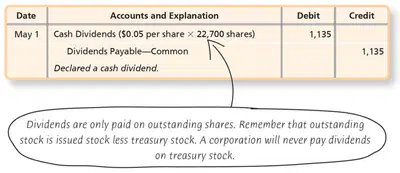
Dividends―Common Stock (1 of 3)
On May 1, Smart Touch Learning declares a $0.05 per
share cash dividend on 22,700 outstanding shares of
common stock.
42


Copyright © 2024, 2020, 2017 Pearson Education, Inc. All Rights Reserved
Declaring and Paying
Dividends―Common Stock (2 of 3)
• On May 15, the date of record, no journal entry is
recorded.
• On May 30, Smart Touch Learning pays the dividend to its
shareholders.
43


Copyright © 2024, 2020, 2017 Pearson Education, Inc. All Rights Reserved
Declaring and Paying
Dividends―Common Stock (3 of 3)
At the end of the accounting period, Smart Touch Learning
closes the Cash Dividends account to Retained Earnings.
44


Copyright © 2024, 2020, 2017 Pearson Education, Inc. All Rights Reserved
Declaring and Paying
Dividends―Preferred Stock (1 of 6)
• The cash dividend rate on preferred stock is often
expressed as a percentage of the preferred stock par
value, such as 6%.
• Sometimes, cash dividends on preferred stock are
expressed as a flat dollar amount per share, such as $3
per share.
45


Copyright © 2024, 2020, 2017 Pearson Education, Inc. All Rights Reserved
Declaring and Paying
Dividends―Preferred Stock (2 of 6)
Greg’s Games, Inc. has 1,000 outstanding shares of 6%,
$50 par value preferred stock. The dividend is computed as
follows:
Preferred dividend
Outstanding shares
Par value
Preferred dividend rate
=
1,000 shares
$50 par value per share
6%
=
$3,000=
46


Copyright © 2024, 2020, 2017 Pearson Education, Inc. All Rights Reserved
Declaring and Paying
Dividends―Preferred Stock (3 of 6)
• A preferred stock dividend in arrears is a dividend that
has not been paid for the year.
• Preferred stock can be:
– Cumulative preferred stock―Preferred stock whose
owners must receive all dividends in arrears plus the
current year dividends before the corporation pays
dividends to the common stockholders
– Noncumulative preferred stock―Preferred stock
whose owners do not receive passed dividends
47


Copyright © 2024, 2020, 2017 Pearson Education, Inc. All Rights Reserved
Declaring and Paying
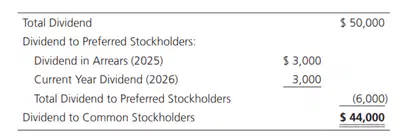
Dividends―Preferred Stock (4 of 6)
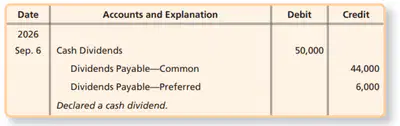
Greg’s Games, Inc. has 1,000 outstanding shares of 6%,
$50 par value cumulative preferred stock. In 2025 the
business did not pay any cash dividends. On September 6,
2026, Greg’s Games declares a $50,000 total dividend.
48


Copyright © 2024, 2020, 2017 Pearson Education, Inc. All Rights Reserved
Declaring and Paying
Dividends―Preferred Stock (5 of 6)
Greg’s Games’ entry to record the declaration of this
dividend on September 6, 2026.
49


Copyright © 2024, 2020, 2017 Pearson Education, Inc. All Rights Reserved
Declaring and Paying
Dividends―Preferred Stock (6 of 6)
Greg’s Games, Inc. has 1,000 outstanding shares of 6%,
$50 par value noncumulative preferred stock. In 2025 the
business did not pay any cash dividends. On September 6,
2026, Greg’s Games declares a $50,000 total dividend.
50


Copyright © 2024, 2020, 2017 Pearson Education, Inc. All Rights Reserved
Stock Dividends
• A stock dividend is a distribution of a corporation’s own
stock to its shareholders.
• Stock dividends have the following characteristics:
– They affect only stockholders’ equity accounts.
– They have no effect on total stockholders’ equity.
– They have no effect on assets or liabilities.
51


Copyright © 2024, 2020, 2017 Pearson Education, Inc. All Rights Reserved
Why Issue Stock Dividends?
A company issues stock dividends in order to:
• Continue dividends but conserve cash
• Reduce the market price per share of its stock
• Reward investors
52


Copyright © 2024, 2020, 2017 Pearson Education, Inc. All Rights Reserved
Recording Stock Dividends (1 of 6)
• There are three dates for a stock dividend:
– Declaration date
– Record date
– Distribution date
• A small stock dividend is less than 20% to 25% of issued
and outstanding stock.
• A large stock dividend is greater than 20% to 25% of
issued and outstanding stock.
53


Copyright © 2024, 2020, 2017 Pearson Education, Inc. All Rights Reserved
Recording Stock Dividends (2 of 6)
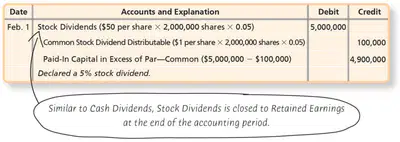
Greg’s Games distributes a 5% common stock dividend on
2,000,000 shares issued and outstanding when the market
value is $50 per share and par value is $1 per share.
Declaration date entry:
54



Copyright © 2024, 2020, 2017 Pearson Education, Inc. All Rights Reserved
Recording Stock Dividends (3 of 6)
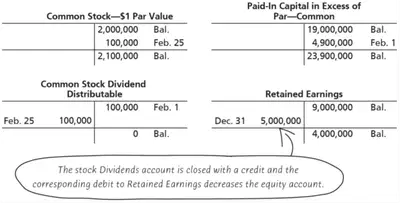
On February 25, Greg’s Games distributes the common
stock and records the following:
55


Copyright © 2024, 2020, 2017 Pearson Education, Inc. All Rights Reserved
Recording Stock Dividends (4 of 6)
After the journal entry for the declaration and issuance of the
common stock dividend and the closing entry to close Stock
Dividends to Retained Earnings, Greg’s Games’ accounts are as
follows:
56


Copyright © 2024, 2020, 2017 Pearson Education, Inc. All Rights Reserved
Recording Stock Dividends (5 of 6)
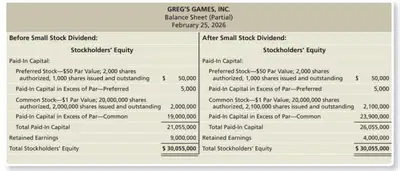
Exhibit F:13-8 Stockholders’ Equity—Small Stock Dividend
57


Copyright © 2024, 2020, 2017 Pearson Education, Inc. All Rights Reserved
Recording Stock Dividends (6 of 6)
On March 2, Greg’s Games declares a second common stock
dividend of 50% when the market value of Greg’s Games’
common stock is $50 per share.
• Cash dividends and stock dividends are always declared
based on the number of shares issued and outstanding.
58


Copyright © 2024, 2020, 2017 Pearson Education, Inc. All Rights Reserved
Stock Splits (1 of 2)
• A stock split is fundamentally different from a stock
dividend.
• A stock split increases the number of issued and
outstanding shares of stock.
• A stock split decreases the par value and the market
value per share, whereas stock dividends do not affect
par value per share.
59


Copyright © 2024, 2020, 2017 Pearson Education, Inc. All Rights Reserved
Stock Splits (2 of 2)
Assume that Greg’s Games has 3,150,000 shares issued
and outstanding of $1 par common stock. The market value
is $50 per share. Greg’s Games effects a 2-for-1 stock split.
Common Stock Before Stock Split
Blank
Common Stock After Stock Split
Blank
Common Stock—$1 Par Value; 3,150,000
shares issued and outstanding
$3,150,000
Common Stock—$0.50 Par Value;
6,300,000 shares issued and outstanding
$3,150,000
• No formal journal entry is needed.
• Instead, the split is recorded in a memorandum entry,
an entry in the journal that notes a significant event but
has no debit or credit amount.
60


Copyright © 2024, 2020, 2017 Pearson Education, Inc. All Rights Reserved
Cash Dividends, Stock Dividends, and
Stock Splits Compared
Exhibit F:13-9 Effects of Dividends and Stock Splits on the Accounting
Equation
Effect On
Cash
Dividend
Small Stock
Dividend
Large Stock
Dividend
Stock Split
Total Assets
Decrease
No effect
No effect
No effect
Total Liabilities
No effect
No effect
No effect
No effect
Common Stock
No effect
Increase
Increase
No effect
Paid-In Capital in
Excess of Par
No effect
Increase
No effect
No effect
Retained Earnings
Decrease
Decrease
Decrease
No effect
Total Stockholders'
Equity
Decrease
No effect
No effect
No effect
61



Copyright © 2024, 2020, 2017 Pearson Education, Inc. All Rights Reserved
Learning Objective 13.5
Prepare a corporate
income statement
including earnings per
share
62


Copyright © 2024, 2020, 2017 Pearson Education, Inc. All Rights Reserved
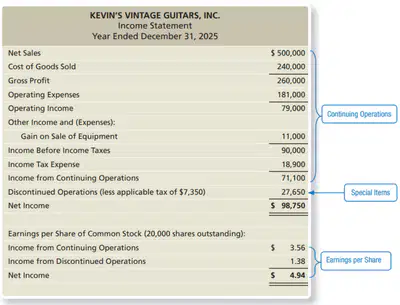
Exhibit F:13-10 Kevin’s Vintage Guitars, Inc.—
Income Statement
63


Copyright © 2024, 2020, 2017 Pearson Education, Inc. All Rights Reserved
Continuing Operations
• The first section of the Income Statement reports
continuing operations.
• Continuing operations should continue from period to
period.
• Income from continuing operations helps investors make
predictions about future earnings.
64


Copyright © 2024, 2020, 2017 Pearson Education, Inc. All Rights Reserved
Discontinued Operations
• After continuing operations, an income statement may include gains
and losses from discontinued operations.
• These gains and losses occur when a company sells or disposes of
an identifiable division.
• They are reported separately from continuing operations because
this type of disposal does not occur frequently.
• In our example, income from discontinued operations of $35,000 is
taxed at 21% and is reported net of its income tax effect:
65


Copyright © 2024, 2020, 2017 Pearson Education, Inc. All Rights Reserved
Earnings per Share
• Earnings per share (EPS) is the most widely used of all
business statistics.
• EPS reports the amount of net income (loss) for each
share of the company’s outstanding common stock.
• Earnings per share is calculated as net income minus
preferred dividends divided by the weighted average
number of common shares outstanding.
66



Copyright © 2024, 2020, 2017 Pearson Education, Inc. All Rights Reserved
Learning Objective 13.6
Explain how equity is
reported for a corporation
67


Copyright © 2024, 2020, 2017 Pearson Education, Inc. All Rights Reserved
How Is Equity Reported for a
Corporation?
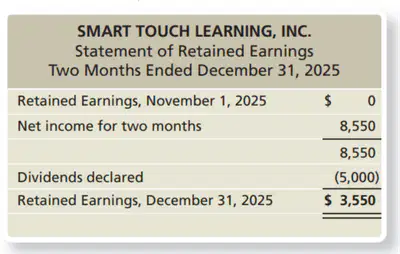
• The statement of retained earnings reports how the
company’s retained earnings balance changed from the
beginning of the period to the end of the period.
• Companies can report a negative amount in retained
earnings. This is called a deficit.
68


Copyright © 2024, 2020, 2017 Pearson Education, Inc. All Rights Reserved
Statement of Retained Earnings
Exhibit F:13-11 Statement of Retained Earnings
69


Copyright © 2024, 2020, 2017 Pearson Education, Inc. All Rights Reserved
Appropriations of Retained Earnings
• Cash dividends and treasury stock purchases require a
cash payment.
• Banks often require a company to maintain a minimum
level of stockholders’ equity.
• Appropriations of retained earnings are retained
earnings restrictions recorded by journal entries.
70


Copyright © 2024, 2020, 2017 Pearson Education, Inc. All Rights Reserved
Prior-Period Adjustments (1 of 2)
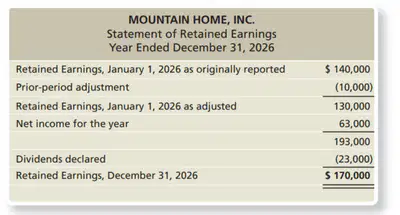
• Occasionally a company may make an accounting error as
a result of mathematical mistakes or other errors not
discovered until the following period.
• Corrections to Retained Earnings for errors of an earlier
period are called prior-period adjustments.
71


Copyright © 2024, 2020, 2017 Pearson Education, Inc. All Rights Reserved
Prior-Period Adjustments (2 of 2)
Mountain Home, Inc. recorded $30,000 of salaries expense for 2025. The
correct amount of salaries expense was $40,000. In 2026, Mountain Home
paid the extra $10,000 in salaries owed for the prior year.
Exhibit F:13-12 Statement of Retained Earnings—Prior-period Adjustment
72


Copyright © 2024, 2020, 2017 Pearson Education, Inc. All Rights Reserved
Statement of Stockholders’ Equity (1 of 2)
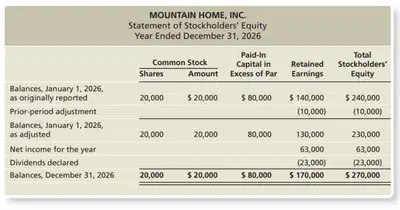
• The statement of stockholders’ equity is another option for
reporting the changes in stockholders’ equity of a
corporation.
• It reports the changes in all stockholders’ equity accounts.
73


Copyright © 2024, 2020, 2017 Pearson Education, Inc. All Rights Reserved
Statement of Stockholders’ Equity (2 of 2)
Exhibit F:13-13 Statement of Stockholders’ Equity
74



Copyright © 2024, 2020, 2017 Pearson Education, Inc. All Rights Reserved
Learning Objective 13.7
Use earnings per share, rate
of return on common
stockholders’ equity, and the
price/earnings ratio to
evaluate business
performance
75


Copyright © 2024, 2020, 2017 Pearson Education, Inc. All Rights Reserved
How Do We Use Stockholders’ Equity Ratios to
Evaluate Business Performance?
• Investors are constantly comparing companies’ profits.
• Three important ratios are used for comparison:
– Earnings per share (EPS)
– Rate of return on common stockholders’ equity
– Price/earnings ratio
76


Copyright © 2024, 2020, 2017 Pearson Education, Inc. All Rights Reserved
Earnings per Share (1 of 2)
• The final segment of a corporate income statement reports
the company’s earnings per share (EPS).
• EPS reports the amount of net income (loss) for each
share of the company’s outstanding common stock.
77


Copyright © 2024, 2020, 2017 Pearson Education, Inc. All Rights Reserved
Earnings per Share (2 of 2)
PepsiCo’s Fiscal 2021 Annual Report reports the following
amounts:
PepsiCo’s earnings per share for fiscal 2021:
(
)
Earnings per share
Net income
Preferred dividends / Average number of common shares outstanding
=
−
(
)(
)
$7,618
$0 /
1,383 + 1380 / 2
=
−
$5.51 per share=
78


Copyright © 2024, 2020, 2017 Pearson Education, Inc. All Rights Reserved
Price/Earnings Ratio
• The price/earnings ratio is the ratio of the market price of a
share of common stock to the company’s earnings per share.
• This ratio tells investors how much they should be willing to pay
for $1 of a company’s earnings.
• Assuming that PepsiCo’s Corporation has a market price of
$173.71 per share of common stock, PepsiCo’s price/earnings
ratio for fiscal year 2021 is:
=
Price/earnings ratio
Market price per share of common stock/Earnings per share
= $173.71 per share/$5.51 per share
= 31.53
79


Copyright © 2024, 2020, 2017 Pearson Education, Inc. All Rights Reserved
Rate of Return on Common
Stockholders’ Equity
• Rate of return on common stockholders’ equity, often
shortened to return on equity, shows the relationship
between net income to common stockholders and their
average common equity invested in the company.
• For PepsiCo’s the rate of return on common stockholders’
equity for fiscal year 2021:
(
)
=
−
Rate of return on common stockholders' equity
Net income
Preferred dividends
/ Average common stockholders' equity
(
)(
)
$7,618
$0 /
$16,151 + $13,552 / 2
=
−
=
=
0.51
51%
80

Copyright © 2024, 2020, 2017 Pearson Education, Inc. All Rights Reserved
Copyright
This work is protected by United States copyright laws and is
provided solely for the use of instructors in teaching their
courses and assessing student learning. Dissemination or sale of
any part of this work (including on the World Wide Web) will
destroy the integrity of the work and is not permitted. The work
and materials from it should never be made available to students
except by instructors using the accompanying text in their
classes. All recipients of this work are expected to abide by these
restrictions and to honor the intended pedagogical purposes and
the needs of other instructors who rely on these materials.
Horngren’s Accounting
Fourteenth Edition
Chapter 13
Stockholders’ Equity
Copyright © 2024, 2020, 2017 Pearson Education, Inc. All Rights Reserved
Show answer
Auto Play
Slide 1 / 80
SLIDE
Similar Resources on Wayground

68 questions
Untitled Lesson
Presentation
•
9th - 12th Grade
67 questions
Les légos de la phrase
Presentation
•
KG
79 questions
Personality
Presentation
•
KG - University
80 questions
THursday sev1e Lesson
Presentation
•
9th - 10th Grade
75 questions
INDICES AND LOGARITHM
Presentation
•
12th Grade
70 questions
Q1W5 ES Energy Sources
Presentation
•
11th Grade
69 questions
Nyala Cerdas
Presentation
•
KG - University
69 questions
EMSOP Class of 2026 Civility
Presentation
•
KG - University
Popular Resources on Wayground
6 questions
Secondary Safety Quiz
Presentation
•
9th - 12th Grade
10 questions
MyPath Diagnostic Overview
Presentation
•
6th - 8th Grade
20 questions
Lab Safety Quiz

Quiz
•
6th Grade
21 questions
Continents and Oceans
Quiz
•
6th Grade
20 questions
Adding and Subtracting Decimals
Quiz
•
5th Grade
20 questions
Parts of Speech
Quiz
•
5th Grade
16 questions
Subject & Predicate
Quiz
•
5th Grade
21 questions
Lab Safety
Quiz
•
10th Grade
Discover more resources for Mathematics
19 questions
Classify Types of Real Numbers
Quiz
•
9th - 12th Grade
16 questions
Segment Addition Postulate
Quiz
•
10th Grade
19 questions
Evaluating Algebraic Expressions
Quiz
•
8th - 9th Grade
20 questions
Order of Operations
Quiz
•
9th Grade
10 questions
1.1 (c) Area & Perimeter Polynomials
Quiz
•
9th - 12th Grade
15 questions
PEMDAS Practice
Quiz
•
10th Grade
15 questions
26-27 Lesson 1-1 Variables and Expressions
Presentation
•
9th Grade
20 questions
Points, Lines, and Planes Oh My!
Quiz
•
10th Grade