

Simple Marine Organisms

Presentation
•
Biology
•
9th - 12th Grade
•
Medium

Eric McCoy
Used 5+ times
FREE Resource
10 Slides • 11 Questions
1
Simple Marine Organisms

2
Zooplankton
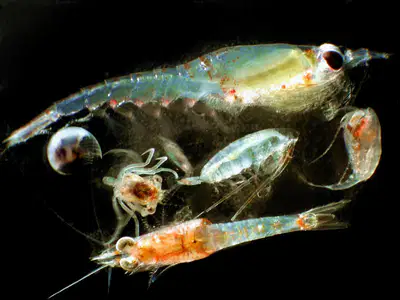
Zooplankton are the animal-like plankton that float and drift on the ocean's surface
These are different from phytoplankton which are more plantlike
3
Fill in the Blanks
4
Temporary vs. Permanent
There are both temporary zooplankton and permanent zooplankton
Temporary
embryos or larvae of fish, crabs, sponges, lobsters, clams, and other invertebrates
spend early parts of life cycle drifting near the ocean surface until they settle at the bottom to develop
Permanent
Species that remain in plankton population throughout their entire life
5
Multiple Choice
Which of the following are not an example of a permanent zooplankton?
crab larvae
copepods
lobster embryo
invertebrates
6
Three Different Types of Permanent
Foramniferan
encased in a calcium carbonate shell
cytoplasm comes out of small hole, leaving sticky surface to catch food
Radiolarian
transparent due to shell being made of silica
have long, branching spines to help with buoyancy and protection
Copepod
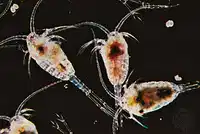
shrimp-like animal the size of a grain of sand
feeds on phytoplankton
most numerous


7
Multiple Choice
Which permanent zooplankton is shrimp-like?
foraminiferan
radiolarians
copepods
invertebrates
8
Protozoans
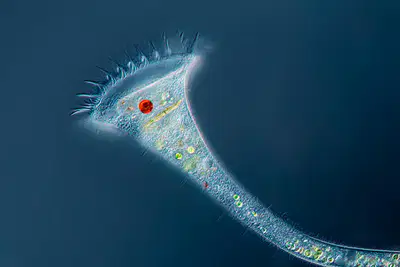
single celled organisms
ex. foraminifera and radiolarians
able to perform all kinds of life functions in just a single cell
ingestion, digestion, respiration, transportation, homeostasis, response, and reproduce
NOTE: If you want to learn more about these, pg. 151-154 go in depth into each
9
Dropdown
10
Sponges
Characteristics
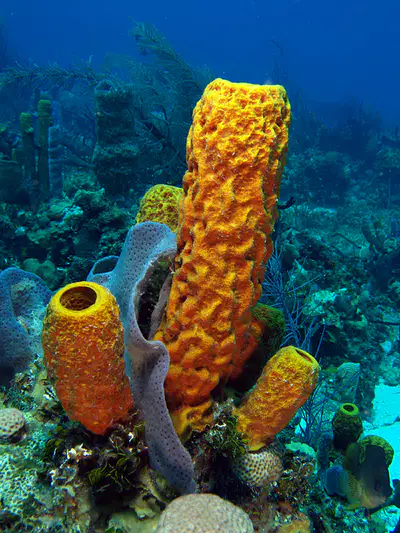
multicellular
two-layers of cells
endoderm: inner layer
ectoderm: outer layer
between these is a jelly-like substance called mesenchyme
important filter feeders
Life functions
have collar cells which beat back and forth, pumping water in and out
these cells also trap, ingest, and digest food brought in from the currents of water
11
Sponges (cont.)
Life Cycle
sponges will find and attach to a substrate after some developmental stages
sexual reproduction
zygote will continuously divide until becoming a solid ball
this will eventually become the embryo
flagella form on this ball (now called the blastula), and it swims until coming in contact with a substrate
Extra Information
can live in a large range of water temperatures
harvested for commercial purposes
come in many shapes and sizes
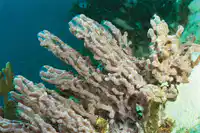
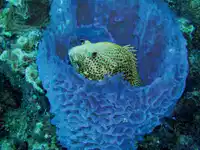
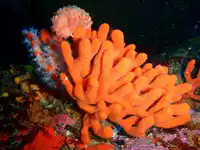
12
Multiple Choice
Which are not true about sponges?
they are commercially harvested
they come in many shapes and sizes
they can live in warm and cold water
they reproduce asexually
13
Multiple Choice
Which of the following are not characteristics of sponges?
multicellular
have two layers: endoderm and ectoderm
considered to be a colony of multiple individuals
filter feeders
14
Multiple Choice
True or false: Collar cells are vital for the survival of sponges.
True
False
15
Rotifers
Characteristics
multicellular and microscopic
can change the shape of their body to aid in movement
has beating cilia in the head region that spin, creating a current of water that brings food to the organism
have a one-way digestive track like humans
Extra Info
a part of their own phylum called Rotifera
live in moist sands along the shore and freshwater
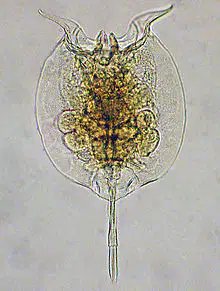
16
Rotifers (cont.)
Reproduction
Sexual
males and females have reproductive organs that create gametes
these gametes are released and unite in the water, creating a zygote that will develop into an adult
Asexual
parthenogenesis
female produces an eggs that develops into a female without fertilization

17
Multiple Choice
What similarity do rotifers have with humans?
eye structure
digestive tract
respiratory system
18
Multiple Choice
Which is true about rotifers?
they are single-celled
they can be seen without a microscope
they can only reproduce sexually
they can change their shape if needed
19
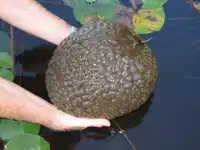
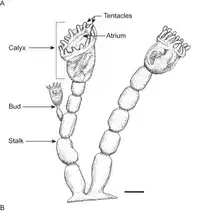
Bryozoan
Characteristics
multicellular and microscopic
lives in a compartmnet made of calcium carbonate
connect to build large colonies that cover rocks, seaweeds, and shells
have a one-way digestive system
Reproducttion
Sexual
hermaphrodites (have both ovaries and testes within the same individuals)
Asexual
budding (small individual develops on, and then separates from the larger parent body)
20
Multiple Choice
What type of asexual reproduction can bryozoans use?
binary fission
budding
fragmentation
parthenogenesis
21
Match
Match the following answers their corresponding facts.
Bryozoan
Rotifer
Copepod
Sponge
connect to build large colonies
live in moist sand and freshwater
example of a permanent zooplankton
have an ectoderm and endoderm
connect to build large colonies
live in moist sand and freshwater
example of a permanent zooplankton
have an ectoderm and endoderm
Simple Marine Organisms
Show answer
Auto Play
Slide 1 / 21
SLIDE
Similar Resources on Wayground

19 questions
4 Lesson: BIO.A.4.2 Homeostasis
Presentation
•
9th - 12th Grade
20 questions
Digestive System Crash Course
Presentation
•
KG - 12th Grade
16 questions
Computer Science Principles Unit 3 Review
Presentation
•
9th - 12th Grade
19 questions
Biomes
Presentation
•
9th - 12th Grade
17 questions
Enzymes Vocabulary
Presentation
•
9th - 12th Grade
20 questions
Concept 3: Macromolecules
Presentation
•
9th - 12th Grade
20 questions
Cellular Respiration
Presentation
•
9th - 12th Grade
13 questions
Succession Lesson
Presentation
•
9th - 11th Grade
Popular Resources on Wayground
19 questions
Naming Polygons

Quiz
•
3rd Grade
10 questions
Prime Factorization
Quiz
•
6th Grade
20 questions
Math Review
Quiz
•
3rd Grade
15 questions
Fast food
Quiz
•
7th Grade
20 questions
Main Idea and Details
Quiz
•
5th Grade
20 questions
Context Clues
Quiz
•
6th Grade
20 questions
Inferences
Quiz
•
4th Grade
19 questions
Classifying Quadrilaterals
Quiz
•
3rd Grade
Discover more resources for Biology
50 questions
Biology Final Review
Quiz
•
10th Grade
50 questions
Biology EOC Review
Quiz
•
9th Grade
15 questions
Biology EOC Review P2
Quiz
•
10th Grade
20 questions
Food Chains and Food Webs
Quiz
•
7th - 12th Grade
20 questions
Biology EOC Review 1
Quiz
•
10th Grade
50 questions
NC EOC Biology Review part 1
Quiz
•
9th - 12th Grade
15 questions
Evolution and Natural Selection Review
Quiz
•
10th Grade
10 questions
Exploring Food Webs and Energy Pyramids

Interactive video
•
6th - 10th Grade