

03/26

Presentation
•
English
•
3rd Grade
•
Practice Problem
•
Hard
Standards-aligned

Shelby Guillebeaux-Magee
Used 4+ times
FREE Resource
35 Slides • 0 Questions
1


HISD 3rd Grade
Read Write
Teacher Facing
March 26, 2024
2











2
MRS Icons
3







3
Timer Options - No Music
4





4
Timer Options - Gentle Music
5






5
Timer Options - Fun Music
6
References
●
All images used in this lesson are taken from Adobe Stock.
Adobe Stock - © stock.adobe.com.
●
“Elements of Drama” Anchor Chart from HMH Into Reading!
Texas with permission © Houghton Mifflin Harcourt Publishing
Company
●
“The Saga of Pecos Bill” (mybook) text, adapted from HMH with
permission. © Houghton Mifflin Harcourt Publishing Company.
(Module 4)
6
7

Resources
● Student Activity Page
https://creativecommons.org/licenses/by-nc-sa/4.0/
7
8
8
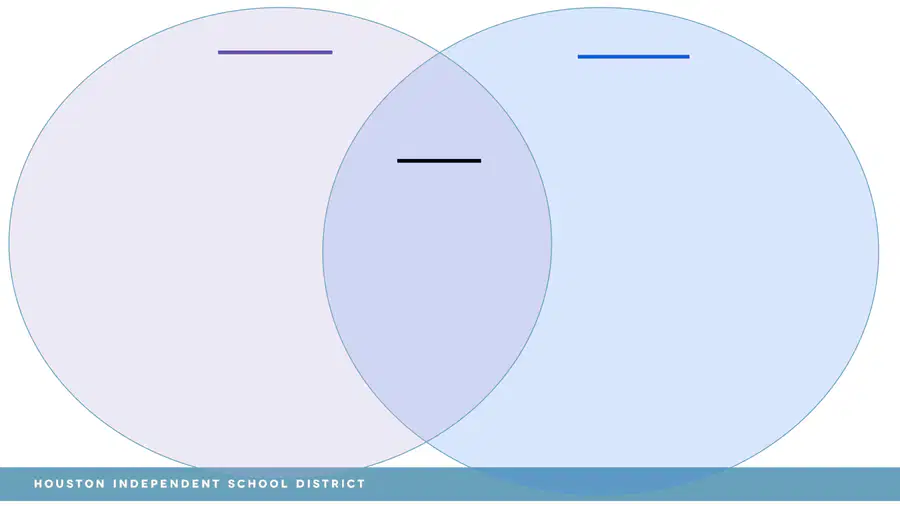
Fiction
Drama
Both
9
9
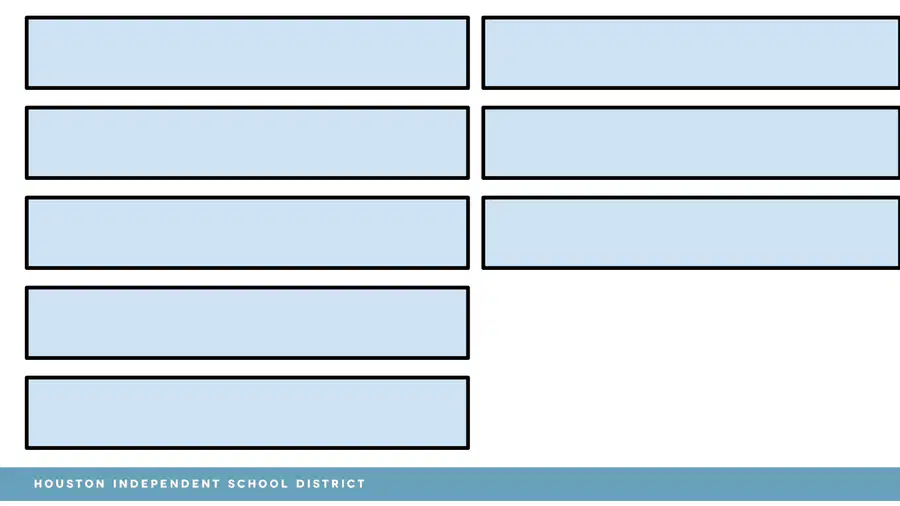
Tells a story with characters, plot, and setting.
Written to be performed in front of an
audience.
Written in lines
involves a cast and a crew
written in sentences and paragraphs
written in dialogue
Can be separated into chapters
Can be separated into acts and scenes
10

HISD 3rd Grade
Read Write
Drama
March 26, 2024
11

11
TEKS: 3.6F Make inferences and use evidence to support understanding.
TEKS: 3.9C Discuss elements of drama such a characters, dialogue, setting, and acts.
LO: SWBAT make inferences from fictional text
and use evidence to support understanding.
DOL: Given a fictional text, SW correctly make
inferences and use evidence to support
understanding in at least 4 out of 5 questions.
12

12
Do Now
[insert]
13

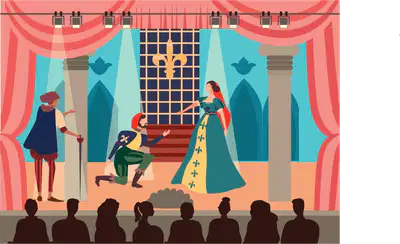

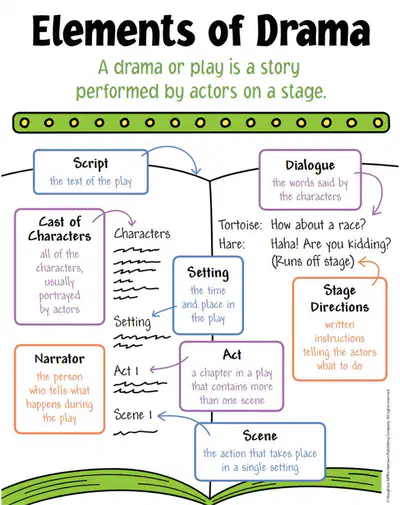
drama
play
cast of characters
a play or story that is
acted out by people in a
performance
a story that can be
performed by actors on a
stage for an audience
the people, animals, or
beings in a story
13
Academic Vocabulary
14

dialogue
stage directions
script
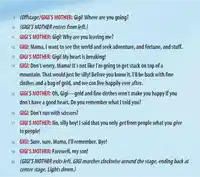
the words said by the
characters
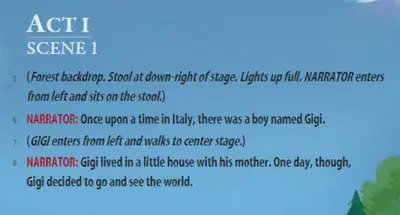
information in a drama
that tells actors where to
move, how to look or
speak, or information
about the set
the text of the play
14
Academic Vocabulary
15


15
Academic Vocabulary
background
knowledge
text evidence
what you already
know about a
topic
clues or details in
the text that
support an
answer or idea
experience
something that
happened to you
16
16
Academic Vocabulary
Inference
a smart guess that readers
make, based on clues in the
text and what they already
know
17

17
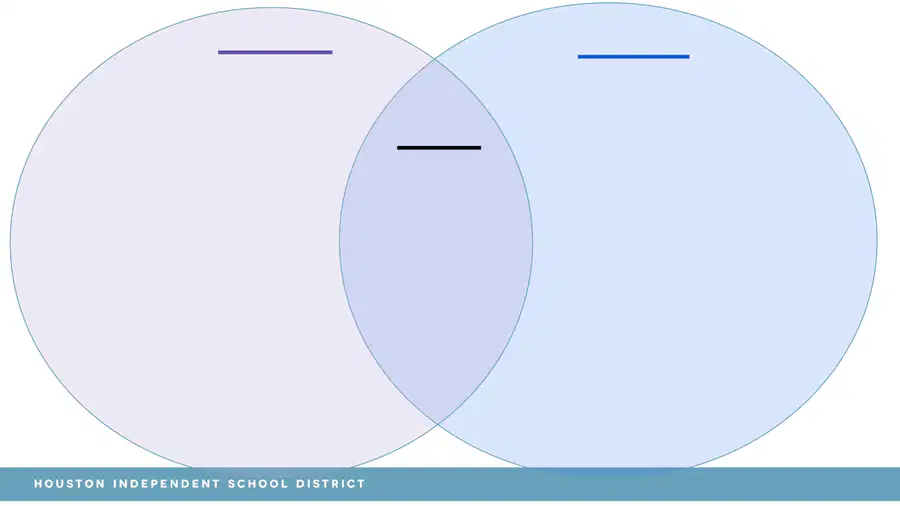
Fiction
Drama
Both
18
18
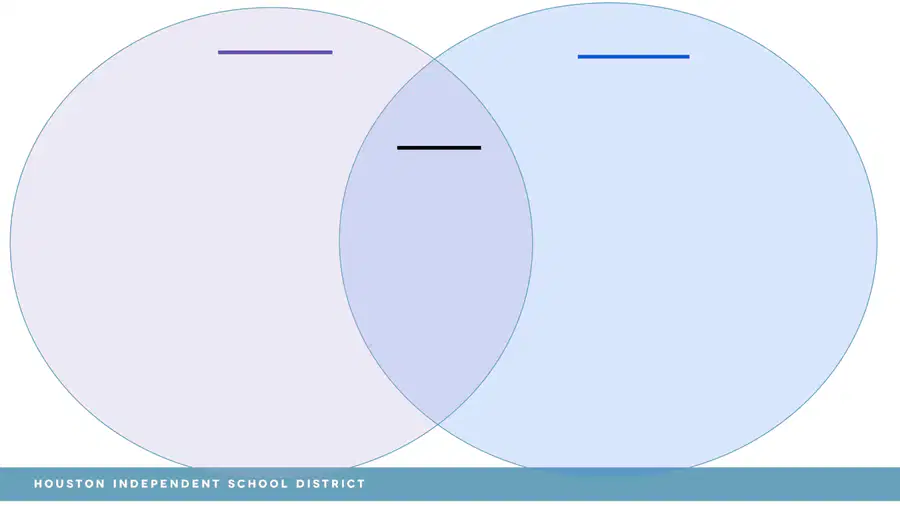
Fiction
Drama
Both
●Tells a
story with
characters,
plot, and
setting.
●Written to be performed
in front of an audience.
●Written in lines
●involves a cast and a
crew
●written in dialogue
●Can be separated into
acts and scenes
●Written in
sentences
and
paragraphs
●Can be
separated
into
chapters
19

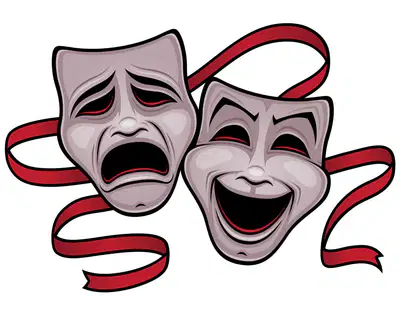

19
What is
DRAMA?
20

20
HMH
The Saga of Pecos Bill (Module 4)
21



21
What do we need to make an inference when reading an
informational text?
Text
Evidence
Background
knowledge
Readers always use evidence to support an inference.
22
22
Readers use these sentence
stems when making
inferences:
● The text says _____, I know
that ________, my inference
is_______.
● Reading ___ makes me
think ____ because I know
_____.
➔ think of what the
text reminds them
of.
➔ look for clues in the
text
When making an
inference, a reader can
23
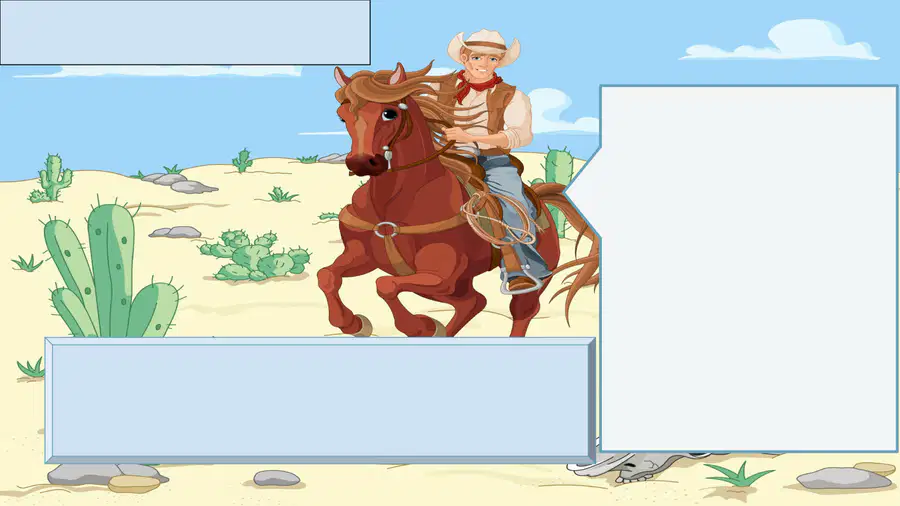
23
Apply To Text
We will examine
today’s play by
making
inferences that
will help us dig
deeper into the
text.
HMH
The Saga of Pecos Bill (Module 4)
24
24
The reader can tell that the text “The Saga
of Pecos Bill ” is drama because –
Select TWO correct answers.
A. It is written in paragraphs and
many chapters.
B. It is divided into acts and/or
scenes.
C. It has one character and a variety
of settings.
D. It has lines of dialogue and a cast
of characters.
E. It had a common theme
X
X
X
25

25
The staging directions in
paragraph 1 are included to
help —
____________________________
____________________________
____________________________
actors know how to position
themselves on the stage and
know what to do.
Why does the playwright include the stage
directions in paragraph 1?
26

26
I can infer…
that Bill’s parents had a laid-back
attitude towards parenting and believed
in letting children learn through
experiences.
Text
NARRATOR 3: Since there were so many children and animals in
the wagon, nobody noticed that Bill wasn’t in the wagon until
about a week later. By then it was too late to go look for him, but
Bill’s parents figured that any baby who could wrestle a grizzly
bear was certainly tough enough to survive in the wilds of
Texas.
What can the
reader infer
about Bill’s
upbringing?
27

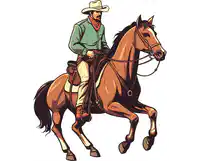
27
Read the lines.
PECOS BILL: Well, I reckon I can
help with that.
NARRATOR 2: And with that, Bill
just swung his rattlesnake
lasso round and round and he roped
up all the water from the
Rio Grande River. After that there
was no more problem with
any drought.
Based on the lines, what can the
reader infer about Pecos Bill’s attitude
towards challenges?
A. He was easily discouraged.
B. He was always eager to face
them.
C. He preferred to avoid them.
D. He asked help from others.
28
28
I can infer…
that Pecos Bill was widely admired.
Text
NARRATOR 4: And if you go and visit Texas today, you will see
lots of wide open spaces all over the state. Wide open spaces
thanks to that wrestling match between the greatest cowboy
who ever lived and one mean and wild tornado. Yup, Pecos Bill
was the best cowboy there ever was . . . the meanest, the
strongest, and the best there ever was!
What can the
reader infer about
Pecos Bill’s
reputation among
other cowboys?
29

29
Part A
What can the reader infer about
Pecos Bill’s impact on the people of
Texas?
A.
Pecos Bill was an ordinary cowboy
who kept to himself and avoided
adventures.
B.
Pecos Bill's bravery and
extraordinary defeats earned him
admiration and respect.
C.
Pecos Bill was known for causing
trouble and chaos wherever he
went.
D.
Pecos Bill's encounters with animals
were largely ignored by the people
of Texas.
Part B
What text evidence from the story supports
the answer to Part A?
A.
NARRATOR 2: They hadn’t gone but 10
miles when a 10-foot rattlesnake swung
out of a cactus plant and down on top of
them.
B.
PECOS BILL: Well, I reckon I can help with
that.
C.
NARRATOR 3: In fact, it got to be so mean
and so ornery that it tied up rivers into
knots and emptied lakes of all their water.
D.
Narrator 1: When Bill fell off, he hit the
ground so hard that the ground just sank
right below sea level. Folks in those parts
now call that part of California Death
Valley.
This question has two parts. First, answer Part A. Then answer Part B.
30

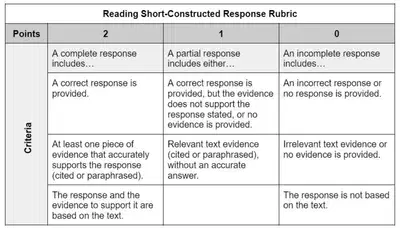

30
SCR: How does Pecos Bill’s interaction with others and his response to
challenges in the play reflect his perception of himself and his unique
qualities? Use evidence from the text to support your answer.
Pecos Bill interaction with others and his
response to challenges in the play…
R
A
C
E
31

31
DOL: Given a fictional
text, SW correctly
make inferences and
use evidence to
support
understanding in at
least 4 out of 5
questions.
32

33
34
35
HISD 3rd Grade
Read Write
Teacher Facing
March 26, 2024
Show answer
Auto Play
Slide 1 / 35
SLIDE
Similar Resources on Wayground

30 questions
OEBL-OLYMPIA-TIỂU HỌC PHÚ LÃM-L3
Presentation
•
3rd Grade
23 questions
Poetry Vocabulary
Presentation
•
3rd Grade
28 questions
Silver Packages
Presentation
•
3rd Grade
27 questions
GIỜ KÉM
Presentation
•
3rd Grade
28 questions
Unit 1 Lesson 4 The Wild Wood Speaking and Listening
Presentation
•
3rd Grade
29 questions
Ritz G3 Reading Wonders - The Impossible Pet Show
Presentation
•
3rd Grade
29 questions
Cause and Effect Mini Lesson
Presentation
•
3rd - 4th Grade
28 questions
Synonyms and Antonyms
Presentation
•
3rd - 4th Grade
Popular Resources on Wayground
16 questions
Grade 3 Simulation Assessment 2

Quiz
•
3rd Grade
19 questions
HCS Grade 5 Simulation Assessment_1 2526sy
Quiz
•
5th Grade
10 questions
Cinco de Mayo Trivia Questions

Interactive video
•
3rd - 5th Grade
17 questions
HCS Grade 4 Simulation Assessment_2 2526sy
Quiz
•
4th Grade
24 questions
HCS Grade 5 Simulation Assessment_2 2526sy
Quiz
•
5th Grade
13 questions
Cinco de mayo
Interactive video
•
6th - 8th Grade
20 questions
Math Review
Quiz
•
3rd Grade
30 questions
GVMS House Trivia 2026
Quiz
•
6th - 8th Grade
Discover more resources for English
12 questions
Figurative Language
Quiz
•
3rd Grade
20 questions
Revising and Editing Practice
Quiz
•
3rd Grade
10 questions
Context Clues
Quiz
•
3rd Grade
20 questions
Find the Main Idea and Supporting Details
Quiz
•
3rd Grade
20 questions
Reading & Test Testing Strategies
Quiz
•
3rd - 5th Grade
12 questions
Context Clues Vocabulary
Quiz
•
3rd Grade
20 questions
Prefix and Suffix Review
Quiz
•
3rd - 5th Grade
14 questions
Figurative Language Review
Quiz
•
3rd Grade