STAAR review vocabulary part 1
Presentation
•
Biology
•
9th - 12th Grade
•
Medium
+8
Standards-aligned
Stacey Ramay
Used 23+ times
FREE Resource
11 Slides • 38 Questions
1
Multiple Choice
What is the definition of LIPID BILAYER?
Molecular structure that surrounds the cell and controls what enters and leaves the cell
Movement of molecules across the cell membrane against the concentration gradient
Diffusion of water through a selectively permeable membrane
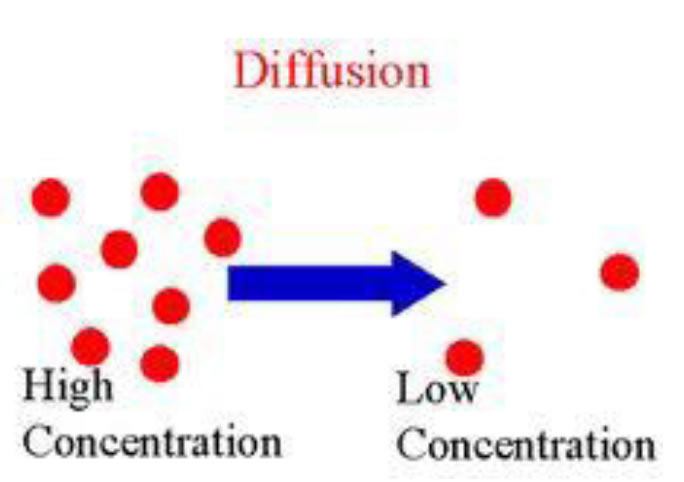
Movement of molecules across the cell membrane from an area of high concentration to low concentration
2
Multiple Choice
Identify the following structure
Phospholipid
Cell
Cell membrane
Protein
3
4
Multiple Choice
5
Multiple Choice
6
Multiple Choice
What is the definition of FACILITATED DIFFUSION?
Movement of molecules across the cell membrane from an area of high concentration to low concentration
Diffusion of water through a selectively permeable membrane
Movement of molecules across the cell membrane against the concentration gradient
Molecular structure that surrounds the cell and controls what enters and leaves the cell
7
8
Multiple Choice
9
Multiple Choice
10
Multiple Choice
11
12
Multiple Choice

13
Multiple Choice
14
Multiple Choice
In passive diffusion, substances always move...
from an area of higher concentration to an area of lower concentration
from an area with more of the molecules to an area with fewer of the molecules
from an area of lower concentration to an area of higher concentration
from an area with fewer of the molecules to an area with more of the molecules
15
16
Multiple Choice
What is the definition of ACTIVE TRANSPORT?
Movement of molecules across the cell membrane against the concentration gradient
Diffusion of water through a selectively permeable membrane
Molecular structure that surrounds the cell and controls what enters and leaves the cell
Movement of molecules across the cell membrane from an area of high concentration to low concentration
17
18
Multiple Choice
Homeostasis mechanisms...
keep everything exactly the same.
usually operate by positive feedback systems.
act to keep the internal environmental conditions outside the normal range
is the ability to maintain a relatively stable internal environment
19
Multiple Choice
A noticeable change in an organism's environment.
control center
response
stimulus
set point
20
21
Multiple Choice
What is another term for body cells?
somatic cells
gamete
stem cell
neural cell
22
23
Multiple Choice
What is the scientific term that refers to sex cells?
autosome
gamete
karyotype
chromosome
24
Multiple Choice
This term refers to the production of gametes by organisms that reproduce sexually
mitosis
binary fission
meiosis
cloning
25
26
Multiple Choice
27
Multiple Choice
28
Multiple Choice
takes over the cell's functions.
29
Multiple Choice
30
Multiple Choice
31
Multiple Choice
32
33
Multiple Choice
34
Multiple Choice
35
Multiple Choice
36
Multiple Choice
37
Multiple Choice
38
Multiple Choice
39
40
Multiple Choice
Enzymes are what macromolecule?
Nucleic Acid
Lipid
Protein
Carbohydrate
41
Multiple Choice
How does an enzymes shape relate to its function?
the shape of the enzyme has no relation to its function
the enzyme is shaped specially for certain substrates to perform a specific reaction
the enzyme shape acts as a receptor to certain products
the enzyme shape can fit into specific substrates to cease a reaction
42
Multiple Choice
Enzymes
speed up chemical reactions
slow down chemical reactions
do nothing to a chemical reaction
43
Multiple Choice
A is the
substrate
enzyme-substrate complex
products
44
Multiple Choice
B is the
substrate
enzyme-substrate complex
products
45
Multiple Choice
C is the
substrate
enzyme-substrate complex
products
46
47
Multiple Choice
An enzyme ________ the activation energy needed for a reaction to occur.
decreases
increases
does nothing to
increases then decreases
48
Multiple Choice
How does a catalyst work in speeding up a reaction?
By lowering the activation energy or reaction
by giving them more energy
by making them more available
49
Multiple Choice
A substance that increases the rate of a reaction without being used up during the reaction is called a
catalyst
product
reactant
solute
What is the definition of LIPID BILAYER?
Molecular structure that surrounds the cell and controls what enters and leaves the cell
Movement of molecules across the cell membrane against the concentration gradient
Diffusion of water through a selectively permeable membrane
Movement of molecules across the cell membrane from an area of high concentration to low concentration
Show answer
Auto Play
Slide 1 / 49
MULTIPLE CHOICE

Similar Resources on Wayground
45 questions
Unit 7 Cell cycle and DNA Replication
Lesson
•
9th - 12th Grade
43 questions
AAC Transcription and Translation
Lesson
•
9th - 12th Grade
44 questions
Nonmendelian Genetics Lesson
Lesson
•
9th - 12th Grade
43 questions
Unit 4 Review - Genetics & Biotechnology
Lesson
•
9th - 12th Grade
44 questions
STAAR review vocabulary terms 2
Lesson
•
9th - 12th Grade
45 questions
Synthetic Materials Tutorial
Lesson
•
9th - 12th Grade
45 questions
Intro to Ecology
Lesson
•
9th - 12th Grade
46 questions
Matrices; 11.2
Lesson
•
9th - 12th Grade
Popular Resources on Wayground
10 questions
5.P.1.3 Distance/Time Graphs
Quiz
•
5th Grade
10 questions
Fire Drill
Quiz
•
2nd - 5th Grade
20 questions
Equivalent Fractions
Quiz
•
3rd Grade
15 questions
Hargrett House Quiz: Community & Service
Quiz
•
5th Grade
20 questions
Main Idea and Details
Quiz
•
5th Grade
20 questions
Context Clues
Quiz
•
6th Grade
20 questions
Inferences
Quiz
•
4th Grade
15 questions
Equivalent Fractions
Quiz
•
4th Grade
Discover more resources for Biology
14 questions
Ecological Succession: Primary and Secondary
Quiz
•
9th Grade
20 questions
Cladogram Practice
Quiz
•
10th Grade
20 questions
Evolution and Natural Selection
Quiz
•
9th Grade
21 questions
Cell Cycle and mitosis
Quiz
•
9th - 10th Grade
45 questions
Unit 9 Review: Biosphere
Quiz
•
9th Grade
20 questions
Food Chains and Food Webs
Quiz
•
7th - 12th Grade
20 questions
Sex-Linked Traits
Quiz
•
9th - 12th Grade
22 questions
AP Biology: Unit 7 Review (CED)
Quiz
•
9th - 12th Grade