

USH Unit 6.3

Presentation
•
Social Studies
•
7th Grade
•
Practice Problem
•
Easy

Danny Neugent
Used 6+ times
FREE Resource
21 Slides • 16 Questions
1
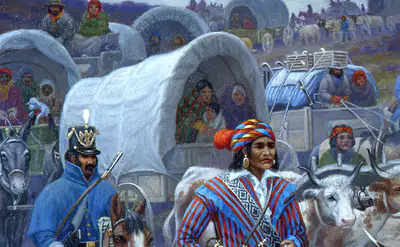
The U.S. Army captured these Seminole chiefs in 1824.
IN YOUR NOTEBOOK WRITE:
Why did white Americans oust Native Americans from their Homes?
BELL RINGER

2
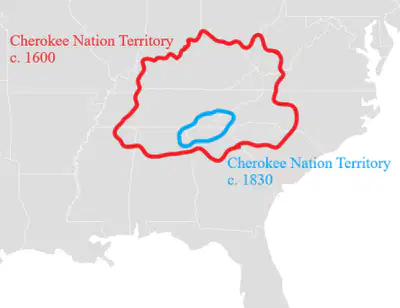
What happened to the Cherokee Nation Territory over the 200 years after 1600?
TURN AND TALK
3
Indian
Removal
Act

4
Open Ended
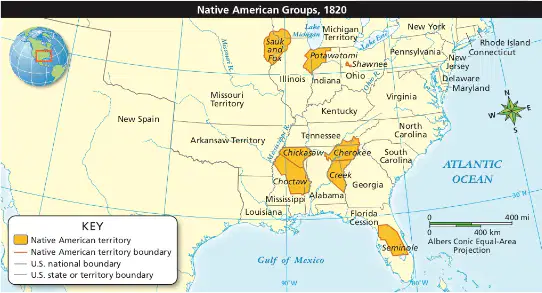
With a partner, take turns describing the location of each Native American group on the map.
Draw Conclusions
Considering where these Native American groups lived, what would happen to them as settlers continued to move west?
5
Multiple Choice
What is a reservation?
A treaty between a Native American tribe and the U.S. government
A designated period of time in which a tribe can continue to live on a plot of land
An area of land established by the U.S. government for a Native American tribe to live on
6
As American settlers moved West in the early 1800s, they often attacked Native Americans to force them to give up their land. Native Americans, in turn, attacked settlers to protect their way of life. Both groups also used violence to retaliate when they felt unfairly treated. The United States government made several peace agreements with different tribes, but the USA often broke them.
Conflict
and
Prejudice

7
Multiple Choice
What does it mean to assimilate?
To change your culture to fit in with the dominant culture
To maintain your cultural independence
To integrate new and old cultural customs
8

Settlers and government officials tried to persuade Native Americans to adopt farming and to sell land they could not use. But few American Indians were interested in giving up their land and their way of life.
Forced assimilation
9

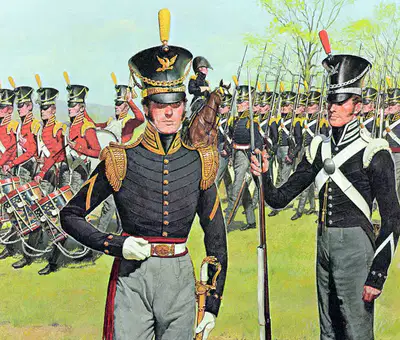
Georgia passed laws to take land from the native peoples. The U.S. Supreme Court declared these laws unconstitutional, but President Jackson ignored the rulings.
Worcester vs Georgia
He used the U.S. Army to help Georgia take land from Native Americans.
Forced Land Seizing
10
Multiple Choice
Which of the following was a common reality for many Native American tribes?
They could live on American land as long as they did not farm on it
They could keep their land as long as they signed a treaty
The treaties they signed with the American government were often broken
11

12
Trail of Tears
In 1830, the U.S. Congress passed the Indian Removal Act. This law allowed the federal government to force American Indians to move west. The government would take Indian lands in the east and give them other land west of the Mississippi River. They were given lands in what are now Kansas and Oklahoma.
Threatened by the U.S. military, most American Indian groups signed treaties agreeing to removal. They were forced to give up their homes and most possessions and to trek hundreds of miles. Most did not have adequate food, clothing, or shoes. Thousands died.
13
Multiple Choice
What was the Indian Removal Act?
A federal law that called for the forced removal of the 5 "civilized" tribes in the southeast
A decision by the U.S. government to help tribes become more "civilized" and assimilate to U.S. customs
A treaty signed by the 5 civilized tribes to sell their lands to the U.S. government
14
Multiple Choice
As a result of the Indian Removal Act where were the Cherokee, Chickasaw, Creek, Choctaw and Seminole tribes forced to move to?
Swamp lands in Florida
Mexico
Reservations in Oklahoma
Reservations in California
15
Multiple Choice
What caused the Cherokee, Creek, Chickasaw, Choctaw and Seminole to be called the 5 “civilized” tribes?
They assimilated to American culture
They fought for their right to their lands
They made treaties with the American government
16

17
Multiple Choice
Which President signed the Indian Removal Act?
Thomas Jefferson
George Washington
John Adams
Andrew Jackson
18

19

20
Multiple Choice

According to the map provided what was an effect of the Indian Removal Act?
Five tribes from different parts of the south were forced into one territory in Oklahoma
Only the Cherokee tribe were forced west
Each of the 5 tribes were given a land equal in size to the land they had occupied in the east
5 tribes from the west were forced to move to the east
21

22
Multiple Choice
Which of the following accurately describes the Trail of Tears?
The law that forced 5 tribes to move west to Okalahoma
The devastating experience of the Cherokee journey to reservations in Oklahoma
The Cherokee tribe's decision to move west
23
Indian Removal Act - Primary Sources


24
Document A: Andrew Jackson (Modified)
It gives me great pleasure to announce that the benevolent policy of Indian removal has almost been achieved. We have cried for natives of this country, as one by one, many Indian tribes have disappeared from the earth. However, we must accept this the way we accept when an older generation dies and makes room for the younger.
The policy of the Government towards the red man is generous. The Indian is unwilling to follow the laws of the United States and wants no part in our way of life. To save the Indians from dying out, the Government kindly offers them a new home, and offer to pay the whole price of removal and settlement.
I have no reason, my friends, to deceive you. I honestly want what is best for you. Listen to me, therefore, while I tell you that you cannot remain where you now are.
25
Poll
Does the author support or oppose the Indian Removal Act?
Support
Oppose
26
Open Ended
What reasons does the author give for his support of Indian Removal?
27
Document B: Letter by Cherokee Leader, Elias Boudinot (Modified)
We have lost our ways as a people. How can we fix this? A bright future is being offered to us. Removal is the only choice. Our people may finally rise up and be a great people once again. I would say to my fellow Cherokee, let us agree to terms the United States are offering.
What other choices do we have? None, I say. You want the Cherokee to live according the laws of the United States, no matter how unfair they are to us? We have the opportunity to live on our own away from the laws of the United States. If we stay here, we will suffer. Take my word. It is the sure end of our race if we do not accept this offer. There will come a time when there will be few of us left as reminders of this brave and noble race. May God protect us all.
28
Multiple Choice
Does the author support or oppose the Indian Removal Act?
Support
Oppose
29
Open Ended
What reasons does the author give for his support of Indian Removal?
30
Document B: Letter by Cherokee Leader, Elias Boudinot (Modified)
We wish to remain on the land of our fathers. We have the right to remain without worry about being bothered. The treaties we have signed with the United States guarantee our safety on this land. We only wish you uphold your end of the agreement. If we are forced to leave, it will be terrible for us. We do not know any other land but our homes. There are already other tribes living out there. Do you think we will be welcomed? These tribes are very violent and are always at war. We are a peaceful people. They will see us as easy targets.
We make this final appeal to the good American people. We appeal to your compassion and sympathy. We have lived in perfect peace with you for over 40 years. We never went to war with you. What makes you think we cannot live together? This land contains the blood and bodies of our ancestors. This land is holy to us. We believe in the people of the United States to uphold our most basic rights as humans and not to invade the home of this peace-loving people.
31
Multiple Choice
Does the author support or oppose the Indian Removal Act?
Support
Oppose
32
Open Ended
What reasons does the author give for his opposition of Indian Removal?
33
Indian Removal Act
In 1830, President Jackson pushed Congress to pass the Indian Removal Act. Over 100,000 American Indians were living in the East. The Act allowed the government to take their land and move them west of the Mississippi River. Thousands died on the Trail of Tears, a brutal journey to Indian Territories in present-day Kansas and Oklahoma.

34
Choctaw
The Choctaw signed a removal treaty in 1830, exchanging their tribal lands for land west of the Mississippi River. Between 1831 and 1833, approximately 15,000 Choctaw moved westward, escorted by American soldiers. They endured harsh conditions, with inadequate supplies and suffering from heavy rain and snow. Many walked barefoot through snow and ice for 24 hours before finding shelter.

35
In 1837, the Chickasaw people agreed to move after the U.S. government promised them $3 million for their lands. They spent $500,000 to buy land from the Choctaw in present-day Oklahoma. However, the government didn't pay them for 30 years. During the journey to their new land, many Chickasaw fell ill and died, experiencing hardship akin to the Trail of Tears.
Chickasaw
36
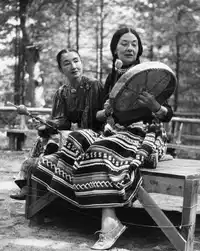
From 1838-1839, President Van Buren ordered over 15,000 Cherokee to relocate westward. Many died during the journey, especially children and the elderly. The grueling trek, known as the Trail of Tears, spanned hundreds of miles over several months.
Cherokee
37
During the Second Seminole War, led by Chief Osceola, the Seminole people in Florida resisted removal, beginning in 1835. This war was the most expensive conflict fought over Indian lands. Despite efforts to relocate them, some Seminoles persisted, leading to the Third Seminole War starting in 1855. While Indian removal under Jackson cleared land east of the Mississippi, settlers eyed lands westward. These lands were seen as the new frontier, though already inhabited by Native Americans. Settlers viewed the frontier as wild and free for the taking.
Seminole

The U.S. Army captured these Seminole chiefs in 1824.
IN YOUR NOTEBOOK WRITE:
Why did white Americans oust Native Americans from their Homes?
BELL RINGER
Show answer
Auto Play
Slide 1 / 37
SLIDE
Similar Resources on Wayground

28 questions
The Age of Contact
Presentation
•
7th Grade
30 questions
Citizenship: Review
Presentation
•
7th Grade
35 questions
China L4: The Silk Road
Presentation
•
6th - 7th Grade
35 questions
Anglo Colonization of Texas
Presentation
•
7th Grade
33 questions
The Road to Revolution
Presentation
•
7th - 8th Grade
35 questions
Geography & Early Greece
Presentation
•
7th Grade
35 questions
Disease ( Part 1 )
Presentation
•
7th Grade
30 questions
SS7E4 Economic System of Saudi Arabia
Presentation
•
7th Grade
Popular Resources on Wayground
16 questions
Grade 3 Simulation Assessment 2

Quiz
•
3rd Grade
19 questions
HCS Grade 5 Simulation Assessment_1 2526sy
Quiz
•
5th Grade
10 questions
Cinco de Mayo Trivia Questions

Interactive video
•
3rd - 5th Grade
17 questions
HCS Grade 4 Simulation Assessment_2 2526sy
Quiz
•
4th Grade
24 questions
HCS Grade 5 Simulation Assessment_2 2526sy
Quiz
•
5th Grade
13 questions
Cinco de mayo
Interactive video
•
6th - 8th Grade
20 questions
Math Review
Quiz
•
3rd Grade
30 questions
GVMS House Trivia 2026
Quiz
•
6th - 8th Grade
Discover more resources for Social Studies
35 questions
Civics EOC Review: Category 1
Quiz
•
7th Grade
45 questions
April 29 Civics EOC Prep Review Activity
Quiz
•
7th Grade
6 questions
N2Y: May the 4th be with You
Presentation
•
5th - 8th Grade
51 questions
Civics EOC Review
Quiz
•
7th - 8th Grade
48 questions
Civics EOC Review 2025
Quiz
•
7th Grade
10 questions
Exploring the Age of Exploration: Key Events and Figures
Interactive video
•
6th - 10th Grade
7 questions
20th Century Texas Politics Lesson
Presentation
•
6th - 8th Grade
50 questions
US Capitals - All 50 States
Quiz
•
7th Grade