

Evolution of R&B

Presentation
•
Performing Arts
•
6th - 8th Grade
•
Practice Problem
•
Hard

Jonathan Williams
Used 9+ times
FREE Resource
26 Slides • 0 Questions
1

R&B Music
Guide: The
Evolution of
Rhythm and
Blues
ART.M.III.6.1
ART.M.III.6.2
ART.M.III.7.2
2

Objective
• Be able to Analyze elements of music used in music of increasingly
diverse genres and styles.
• Identify and describe specific musical elements and events in a given
aural example, using appropriate terminology.
• Identify elements of music used in music of diverse genres and styles.
3

• For decades, the Billboard
Hot 100 and Top 40 charts
have been populated with
rhythm and blues, an
American musical genre
first developed by Black
artists in the mid-twentieth
century.
4

What Is R&B
Music?
•Rhythm and blues, commonly known as
R&B, is a musical genre developed by
Black Americans in the 1940s that’s been
continuously refined through the present
day. R&B derived from gospel, jazz, folk,
and traditional blues music and emerged
in tandem with rock ‘n’ roll.
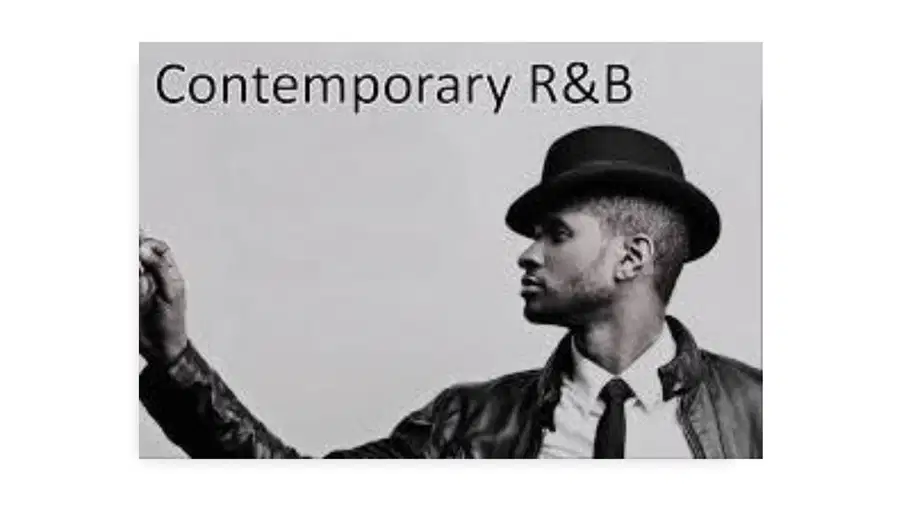
•Contemporary R&B is often driven by
keyboards, synthesizers, strong bass
lines, and looped drum beats. In this
sense, it has more in common with hip
hop than rock music. Contemporary R&B
songs regularly top charts, making R&B
one of the most commercially successful
genres in the modern music industry.
5


How many of these songs do you know?
6

A Brief History of
R&B Music
• In the 1940s, R&B music exploded in urban
centers like New York, Chicago, Detroit,
Philadelphia, and Los Angeles—all of which had
seen increased Black American presence due to
the Great Migration.
• The Great Migration was the relocation of more
than 6 million Black Americans from the rural
South to the cities of the North, Midwest and
West from about 1916 to 1970
7


Great migration
• The Great Migration was one of the largest movements
of people in United States history. Approximately six
million Black people moved from the American South
to Northern, Midwestern, and Western states roughly
from the 1910s until the 1970s.
8

Roots in southern church music
• Many musicians steeped in blues and Black American church
music brought new songs from the south, and eventually
secured recording contracts in northern cities. Their music
emphasized electric guitars, double bass, piano, and drum sets.
9

R&B meets rock ‘n’
roll:
• The genre’s early stars were
simultaneously categorized as R&B
and rock ‘n' roll. These included James
Brown, Fats Domino, and Little Richard.
10


Hardest working
man in show
business
11

R&B deviated from
rock in the 1960s
• In Detroit, soul label Motown Records
produced a commercially polished sound
centered around glamorous singers and
propulsive rhythm sections. In Memphis,
Stax Records merged southern blues with
soulful singing from the likes of Otis
Redding and Carla Thomas.
12


MARVIN
Gaye
Motown
13

Otis Redding Stax
14

R&B evolved
further in the
’70s:
• R&B musicians began
experimenting with
syncopated rhythms and more
Afrocentric lyrical content in
the 1970s. Artists such as
Isaac Hayes and the
Reverend Al Green mixed
church music, African
rhythms, and expanded
instrumentation into R&B,
leading to the development
of funk and disco.
15

Smooth R&B
• R&B music pushed away from guitars and
toward a smooth sound geared toward
dance clubs and urban radio. R&B
vocalists like Toni Braxton, Mariah Carey,
Michael Jackson, Janet Jackson, Boyz II
Men, TLC, Usher and Lauryn Hill racked
up hits and Grammys by emphasizing
melismatic, soulful singing and catchy
melodies. Beyoncé, Drake, and Mary J.
Blige have pushed the rhythmic
boundaries of R&B by collaborating with
rappers and electronic producers.
16

Brief intermission
17


3 Characteristics of
Classic R&B
•Strong overlap with rock music: Many of the best
R&B acts of this early era were co-categorized as
rock ‘n' roll. These predominantly Black artists in turn
inspired many white rock bands, including the Beatles
and the Rolling Stones.
•Guitar-based instrumentation: The electric guitar
was the central instrument in early R&B. It was
backed by drums, a double bass (later an electric
bass guitar), and piano. Melodies were performed by
lead vocalists or the occasional saxophone.
Inspiration from blues and church music: Many
early R&B artists were steeped in blues and gospel
traditions. Some R&B albums from this era contain
openly Christian themes, while others reworked blues
standards for contemporary audiences.
18
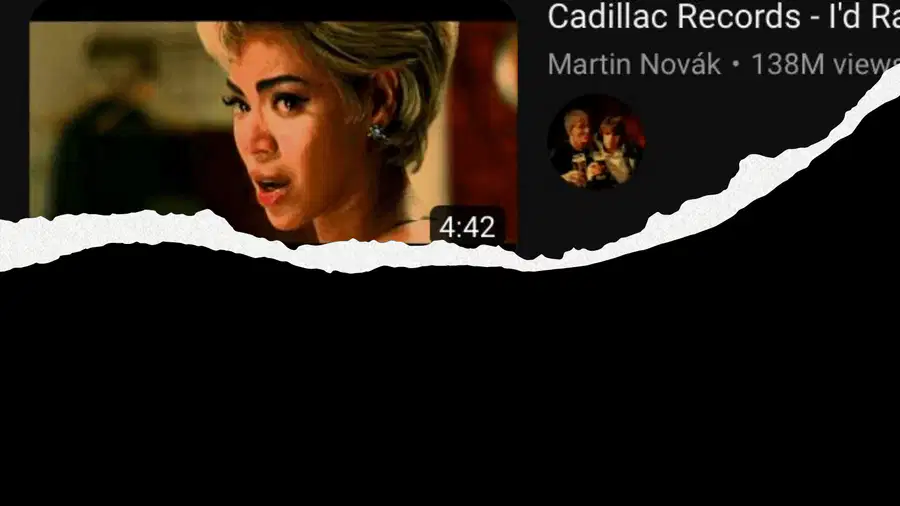
Beyoncé played Etta James in Cadillac records
19


Little Richard
20

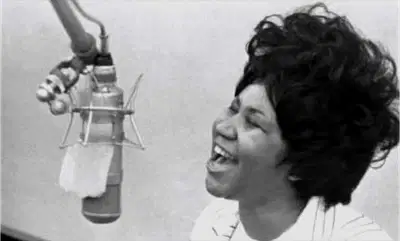
Aretha
Franklin
21
3 Characteristics of
Contemporary R&B
•1. Keyboard-based instrumentation: While early R&B was
driven by guitars, most contemporary R&B is based around
keyboards, synthesizers, and drum machines. Some R&B
singers, like Alicia Keys, favor acoustic piano, but many others
embrace electronic keyboards and software loops.
•2. Incorporation of hip hop: In recent years, the line between
hip hop and R&B has blurred. Bryson Tiller's debut
album Trapsoul and Drake's debut Thank Me Later feature
equal parts singing and rapping. The trend dates back to the
1980s, when producers Teddy Riley and Bernard Belle
introduced the "new jack swing" style of production.
•3. Smooth, melismatic vocals: R&B singers like Luther
Vandross, Whitney Houston, and Mariah Carey made vocal
virtuosity an integral part of the genre upheld by artists like
Jazmine Sullivan, Alicia Keys, and Erykah Badu.
22
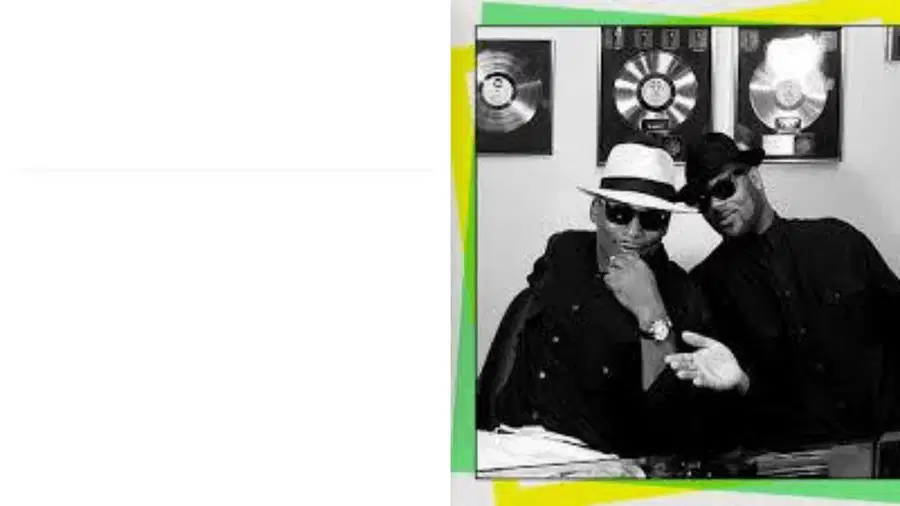
Jimmy jam and
Terry Lewis are
famous R&B
producers
23

Luther!!!
24

25
26

Tap in!
R&B Music
Guide: The
Evolution of
Rhythm and
Blues
ART.M.III.6.1
ART.M.III.6.2
ART.M.III.7.2
Show answer
Auto Play
Slide 1 / 26
SLIDE
Similar Resources on Wayground

20 questions
Mixed Numbers
Presentation
•
4th - 5th Grade
20 questions
Music notation: Staff, Treble Clef, Lines and Spaces
Presentation
•
6th - 8th Grade
19 questions
Treble Clef Video Lesson
Presentation
•
6th - 8th Grade
18 questions
Treble and Bass Clef
Presentation
•
5th - 8th Grade
20 questions
Civil Rights Movement
Presentation
•
6th - 8th Grade
20 questions
ELECTRICITY AND CIRCUITS
Presentation
•
6th - 8th Grade
20 questions
Circulatory System Review
Presentation
•
6th - 8th Grade
20 questions
Sentence Structure
Presentation
•
6th - 8th Grade
Popular Resources on Wayground
19 questions
Naming Polygons

Quiz
•
3rd Grade
10 questions
Prime Factorization
Quiz
•
6th Grade
20 questions
Math Review
Quiz
•
3rd Grade
15 questions
Fast food
Quiz
•
7th Grade
20 questions
Main Idea and Details
Quiz
•
5th Grade
20 questions
Context Clues
Quiz
•
6th Grade
20 questions
Inferences
Quiz
•
4th Grade
19 questions
Classifying Quadrilaterals
Quiz
•
3rd Grade