


b.9a-c lesson review
Presentation
•
Science
•
9th Grade
•
Medium
Jasmine Rodriguez
Used 5+ times
FREE Resource
32 Slides • 69 Questions
1
Multiple Choice
DO NOW: What is a mutation?
random changes in DNA
nucleotide sequence
nucleic acid
transcription and translation
2
Reorder
DO NOW: Reorder the following taxonomic classes starting with the largest to smallest
Domain
Kingdom
Phylum
Class
Order
3
Concept 3: Macromolecules
4
5
6
Multiple Select
What are the main macromolecules that you get from your food?
Calories
Carbohydrates
Cholesterol
Lipids
Proteins
7
8
9
Open Ended
What is something you ate today that you obtained carbohydrates from?
10
11
12
13
14
Poll
Which of the following foods would be the best source of healthy lipids?
potato chips
bacon
avocado
butter
steak
15
16
17
18
Multiple Choice
If you are playing a basketball game, what would be the best thing to eat to give you energy for the second half at halftime?
Apple Slices
Chocolate Milk
French Fries
Hardboiled Egg
19
20
21
Open Ended
If nucleic acids are not used for energy in your body, what ARE they used for?
22
Enzymes
Biological Catalysts
23
Enzymes are Biological Catalysts
They are proteins
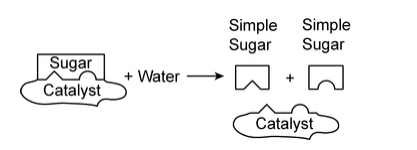
Catalysts speed up chemical reactions
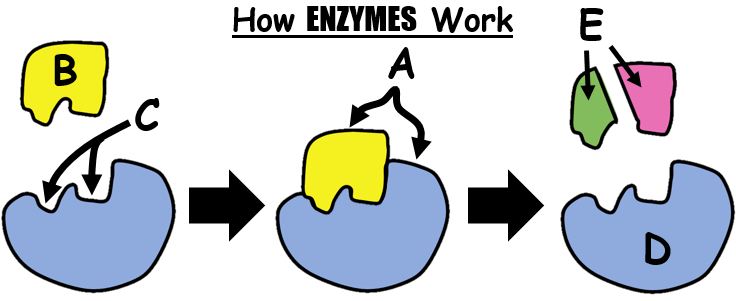
Structure = Function: Enzymes are specific to their Substrate (reactants). Active site of the enzymes fits together with the substrate(s)
Different reactions require different enzymes
24
Enzyme Specificity - The shape of the enzyme (structure) fits it's substrate (function)
25
The induced-fit model is the more accurate model
26
Multiple Choice
27
Multiple Choice
28
Multiple Choice
29
Multiple Choice
30
Multiple Choice
31
Enzymes speed up chemical reactions (Catalysts)
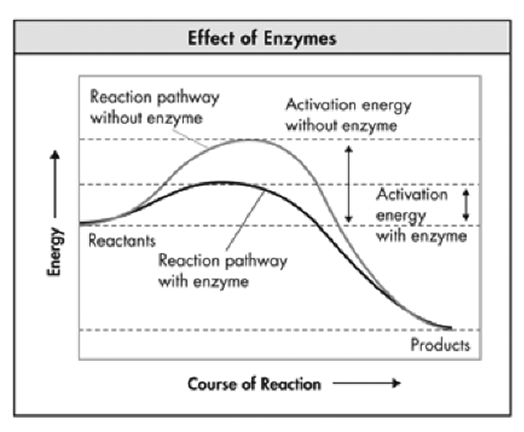
Activation energy is the energy needed to start a chemical reaction.
The less activation energy needed (smaller hill to climb) the faster the reaction will happen
Enzymes speed up reactions by lowering the activation energy
32
Multiple Choice
33
Multiple Choice
34
Multiple Choice
35
Multiple Choice
36
Factors affecting reaction rates
Substrate concentration
Enzyme concentration
pH, temperature, and ion concentrations
37
Denaturation = to lose shape
Structure (shape) = function
If enzymes lose their shape they no longer function correctly
Lower enzyme function = slower reaction rates
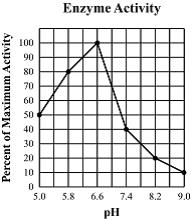
Factors that can affect shape & function of enzymes: Temperature, pH, salinity (ion concentration)
38
Optimal Enzyme Function
When the reaction rate is the highest!
39
Multiple Choice
40
Multiple Choice
41
Cellular Respiration and Photosynthesis
Photosynthesis & Cellular Respiration are processes that are part of the Carbon cycle
42
Photosynthesis & Cellular Respiration
Reactants of one process....
... are the products of the other process
43
44
Multiple Choice
What are the products of Photosynthesis?
water and ATP
carbon dioxide and water
glucose and oxygen
oxygen and water
45
Multiple Choice
What are the products of Aerobic Cellular Respiration?
Carbon dioxide, water and ATP
Oxygen, glucose, and ATP
ATP, oxygen and water
Carbon dioxide, oxygen and glucose
46
Energy renewal
Energy captured from sunlight by photosynthetic organisms is used and released in the cellular respiration of living things
The energy that living things use, must continually be renewed through photosynthesis
47
Why is Photosynthesis so important?
We must obtain glucose from plants
Plants are the first step in the food chain
The oxygen released during photosynthesis is necessary for many organisms.
48
Cellular Respiration
Once solar energy is converted to chemical energy by photosynthesis, it has to be changed to a form that can be used by the organism
Cellular respiration is the process that releases energy by breaking down food molecules in the presence of oxygen
49
Multiple Choice
Which process requires light energy?
Photosynthesis
Cellular Respiration
50
Multiple Choice
Which process gets energy from breaking bonds?
Photosynthesis
Cellular Respiration
51
Multiple Choice
Which process releases energy?
Photosynthesis
Cellular Respiration
52
Multiple Choice
Which process stores energy?
Photosynthesis
Cellular Respiration
53
Multiple Choice
Which process occurs in the mitochondria?
Photosynthesis
Cellular Respiration
54
Multiple Choice
Which process occurs in the chloroplasts?
Photosynthesis
Cellular Respiration
55
Multiple Choice
What do you breath out?
Oxygen (O2)
Carbon Monoxide (CO)
Carbon Dioxide (CO2)
Nitrous Oxide (N2O)
56
Multiple Choice
What is the correct equation for cellular respiration?
6O2 + C6H12O6 -> 6CO2 + 6H2O + Energy
6CO2 + 6H2O -> 6O2 + C6H12O6 + Energy
6O2 + C6H12O6 + Energy -> 6CO2 + 6H2O
6CO2 + 6H2O + Energy -> 6O2 + C6H12O6
57
Multiple Choice
Cellular respiration's main goal is to ...
Make ATP
make water
make glucose
make oxygen
58
Multiple Select
Select ALL the inputs/reactants for cellular respiration?
water
oxygen
sunlight
carbon dioxide
glucose
59
Multiple Choice
Cellular respiration occurs in the...
Nucleus
Mitochondria
Cytoplasm
Chloroplast
60
Multiple Choice
Carbon dioxide is a ________ by-product of cellular respiration
waste
helpful
critical
photosynthetic
61
Multiple Choice
The body switches to _______ respiration when oxygen levels are LOW.
anaerobic
aerobic
62
Multiple Choice
Glucose energy is converted to ____________during cellular respiration.
TPA
APT
Photosynthetic energy
ATP
63
Multiple Choice
Leaves breathe in _______
Carbon dioxide
Oxygen
64
Multiple Choice
Plants take in water through their
roots
stem
leaves
65
Multiple Choice
What is the food the plants make for themselves during photosynthesis?
glucose (sugar)
oxygen
water
66
Multiple Choice
Where do plants receive their energy from?
carbon dioxide from the air
water from the roots
the sun
oxygen from the air
67
Multiple Choice
In which cell organelle does photosynthesis take place?
mitochondria
chloroplast
nucleus
68
Multiple Choice
The burn you feel in your muscles from too much exercise is from ________
lactic acid
hydrochloric acid
sulfuric acid
deoxyribonucleic acid
69
Multiple Select
Which organisms can do cellular respiration?
plants
fungi
animals
bacteria
70
Practice Questions
71
Multiple Choice
72
Multiple Choice
73
Multiple Choice
74
Multiple Choice
75
Multiple Choice
76
Multiple Choice
77
Multiple Choice
78
Multiple Choice
Which macromolecule is shown?
lipid
protein
nucleic acid
carbohydrate
79
Multiple Choice
80
Multiple Choice
81
Multiple Choice
82
Multiple Choice
83
Multiple Choice
84
Multiple Choice
The building blocks for organic compounds are called...
Polygons
Polymers
Monograms
Monomers
85
Multiple Choice
___ are used by cells to get quick energy.
Carbohydrates
Lipids
Proteins
Nucleic Acids
86
Multiple Select
Which of the following elements are found in all macromolecules? (Select all that apply).
87
Multiple Choice
Which macromolecule is used as our main source of energy?
Lipids/Fats
Nucleic Acids
Proteins
Carbohydrates
88
Multiple Select
Which of the following are examples of carbohydrates? (Select all that apply).
Bread
Pasta
Olive Oil
Cheese
89
Multiple Choice
Which macromolecule stores energy?
Carbohydrates
Proteins
Lipids/Fats
Nucleic Acids
90
Multiple Select
Nucleic acids make up which of the two molecules listed below?
FDA
RNA
DNA
FDR
91
Explanation Slide...
An ENZYME is a PROTEIN.An ENZYME speeds up a reaction.
92
Multiple Choice
What COLOR is the "Enzyme" in this picture?
Green
Blue
Black
93
Match
carbohydrate
lipid
protein
carbohydrate
lipid
protein
94
Match
Match the MACROMOLECULES and their MONOMERS.
Hint: Monomer = a single unit
carbohydrate
lipid
protein
nucleic acid
monosaccharide
fatty acid & glycerol
amino acid
nucleotide
monosaccharide
fatty acid & glycerol
amino acid
nucleotide
95
Explanation Slide...
DNA is a NUCLEIC ACIDMonomer = NucleotideDNA stores genetic information
96
Multiple Choice
What is this?
water
DNA
a snake
97
Match
Match the following MONOMERS and MACROMOLECULES
Nucleic Acid
Protein
Lipid
Carbohydrate
Nucleic Acid
Protein
Lipid
Carbohydrate
98
Explanation Slide...
Lipids are fats.Lipids give us long-term energy.Examples: Butter, oil, waxes, fats
99
Multiple Choice
Which macromolecule gives LONG-TERM energy?
lipid
carbohydrate
nucleic acid
100
Multiple Choice
101
Multiple Choice
DO NOW: What is a mutation?
random changes in DNA
nucleotide sequence
nucleic acid
transcription and translation
Show answer
Auto Play
Slide 1 / 101
MULTIPLE CHOICE

Similar Resources on Wayground
96 questions
Chapter 6 Summary (Part I)
Presentation
•
9th Grade
96 questions
SSWH 18
Presentation
•
9th Grade
93 questions
Willowridge DNA RNA replication Structure Base Pairing
Presentation
•
9th - 10th Grade
95 questions
Introduction to Professional Communication
Presentation
•
9th Grade
96 questions
The Odyssey review
Presentation
•
9th - 10th Grade
95 questions
Lesson #16 - Uncovering Problems at the Turn of the Century
Presentation
•
10th Grade
94 questions
Willowridge Mendelian Genetics
Presentation
•
8th - 10th Grade
92 questions
questões evolução
Presentation
•
9th Grade
Popular Resources on Wayground
5 questions
A Home on the Shore
Quiz
•
3rd Grade
28 questions
US History Regents Review
Quiz
•
11th Grade
6 questions
A Horse Tale
Quiz
•
3rd Grade
20 questions
Math Review
Quiz
•
3rd Grade
10 questions
Juneteenth History and Significance
Interactive video
•
5th - 8th Grade
20 questions
Dividing Fractions
Quiz
•
5th Grade
55 questions
A Long Walk to Water Final Review
Quiz
•
6th - 8th Grade
10 questions
Equation Word Problems
Quiz
•
7th Grade
Discover more resources for Science
20 questions
Insurance
Quiz
•
9th - 12th Grade
10 questions
Juneteenth: History and Significance
Interactive video
•
7th - 12th Grade
20 questions
Summer Geometry QUIZ (Week 2)
Quiz
•
9th Grade
6 questions
Mayan Mathematics part 1
Presentation
•
9th - 12th Grade
25 questions
Biology Regents Review
Quiz
•
9th Grade
40 questions
Flags of the World
Quiz
•
KG - Professional Dev...
10 questions
Unit 9 Quiz
Quiz
•
9th - 12th Grade
60 questions
Biology Regents Review
Quiz
•
9th Grade