Search Header Logo
  1. Resource Library
  2. Science
  3. Biology
  4. Cell Transport
  5. Bio 1.d Cell Transport Mooney
BIO 1.D Cell Transport Mooney

BIO 1.D Cell Transport Mooney

Assessment

Presentation

•

Science

•

9th - 12th Grade

•

Medium

•
NGSS
HS-LS1-3, MS-ESS1-1, MS-PS1-4

+5

Standards-aligned

Created by

Kyndaliln Mooney

Used 5+ times

FREE Resource

1 Slide • 20 Questions

1

BIO 1.D. Cellular Transport and the Cell Membrane


CLICK HERE TO FIND THE VIDEO--WATCH ALL 7!!


Take notes while you watch each of the 7 videos. Write down any questions you miss with the correct answer.

media

2

Multiple Choice

Which of the following diagrams shows equilibrium?

1
2
3

3

Multiple Choice

Question image

Looking at this diagram, which way would the blue particles move?

1

To the left

2

To the right

3

The particles wouldn't move

4

Multiple Choice

Question image
Which cell is in a hypertonic environment?
1
A
2
B
3
C

5

Multiple Choice

Question image
_______ regulates what enters and leaves a cell.  
1
Cell Membrane
2
Nucleus
3
Mitochondria
4
Cytoplasm

6

Multiple Choice

Question image
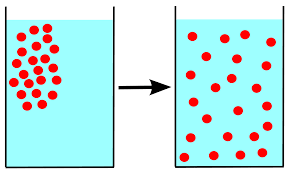
The picture below is an example of _________________.
1
osmosis
2
isotonic
3
diffusion
4
active transport

7

Multiple Choice

Which property of the cell membrane helps it to maintain a cell's homeostasis?

1

selective permeability

2

fluid mosaic

3

imbedded cholesterol

4

flexibility

8

Multiple Choice

In which type of solution would a red blood cell shrink?

1

hypotonic solution

2

isotonic solution

3

hypertonic solution

9

Multiple Choice

Question image

This is an example of which method of getting molecules across a cell membrane?

1

facilitated diffusion

2

active transport

3

simple diffusion

4

bulk transport

10

Multiple Choice

Question image

This is an example of which method of getting molecules across a cell membrane?

1

facilitated diffusion

2

active transport

3

simple diffusion

4

bulk transport

11

Multiple Choice

Question image

This method of getting molecules across the cell membrane requires energy.

1

facilitated diffusion

2

active transport

3

simple diffusion

4

diffusion

12

Multiple Select

Which of the following methods of getting molecules across a cell membrane require a protein? (pick 2)

1

facilitated diffusion

2

active transport

3

simple diffusion

4

bulk transport

13

Multiple Choice

Question image

What is the name of the yellow portion of this picture?

1

glycoproteins

2

phospholipid bilayer

3

carrier protein

4

cell wall

14

Multiple Choice

Question image

What does the purple part of this picture represent?

1

glycoprotein

2

phospholipid

3

cell wall

4

channel protein

15

Multiple Choice

Which of the following is NOT a function of the cell membrane?

1

active transport

2

protection

3

protein production

4

recognition of chemical signals

16

Multiple Choice

What is the energy source required during active transport?

1

ATP

2

protein

3

oxygen

4

glucose

17

Multiple Choice

Osmosis may occur in either direction across the cell membrane.

1

true

2

false

18

Multiple Choice

How do small molecules like oxygen and carbon dioxide cross the cell membrane?

1

active transport

2

endocytosis

3

protein pumps

4

simple diffusion

19

Multiple Choice

ATP is used to move molecules from a concentration of low molecules to a concentration of high molecules.

1

true

2

false

20

Multiple Choice

Question image

Osmosis uses energy to move water away from high concentrations of solute.

1

true

2

false

21

Multiple Choice

In which type of solution would a red blood cell swell and possibly burst.

1

hypertonic solution

2

isotonic solution

3

hypotonic solution

4

supertonic solution

pattern-tertiary
BIO 1.D. Cellular Transport and the Cell Membrane


CLICK HERE TO FIND THE VIDEO--WATCH ALL 7!!


Take notes while you watch each of the 7 videos. Write down any questions you miss with the correct answer.

media

Show answer

Auto Play

Slide 1 / 21

SLIDE