
- Resource Library
- Science
- Chemistry
- Conservation Of Matter
- Coachbook Chapter 1 Lesson 5: Law Of Conservation Of Matter
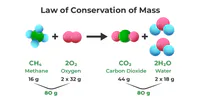
Coachbook Chapter 1 Lesson 5: Law of Conservation of Matter

Presentation
•
Science
•
8th Grade
•
Practice Problem
•
Medium
+4
Standards-aligned

Melody Head
Used 16+ times
FREE Resource
4 Slides • 3 Questions
1
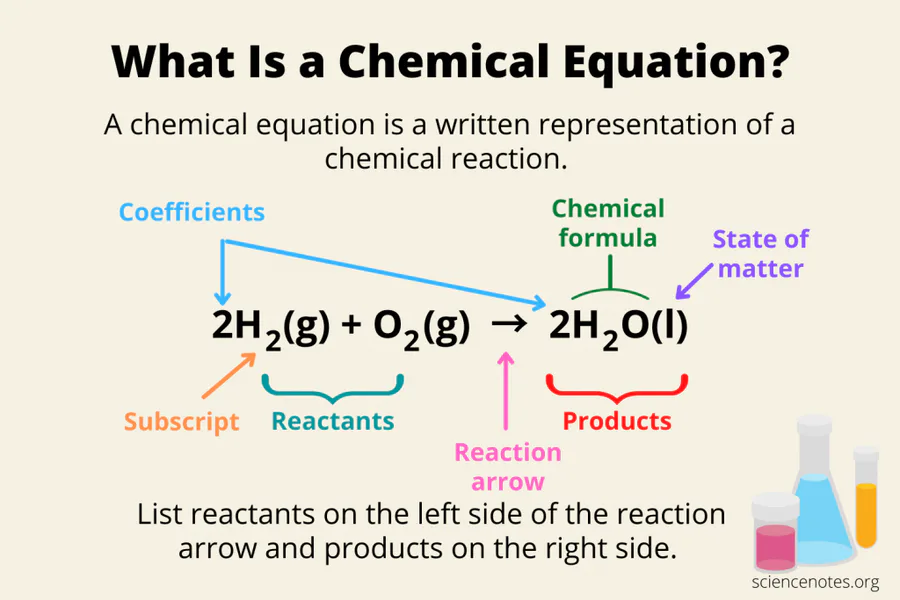
A chemical equation is a representation of a chemical equation that uses chemical symbols and formulas.
Reactants: the substances that are present before the reaction takes place
Products: the substances that are present after the reaction takes place
Coefficient: the number before a chemical formula (multiply by the subscript)
Subscript: a small-sized number on the bottom right of the symbol. It refers to the number of atoms of the element
2
3
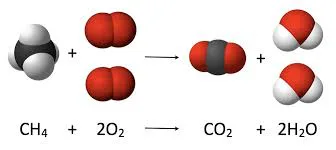
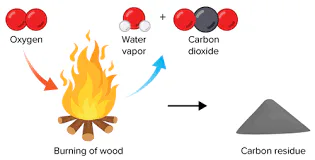
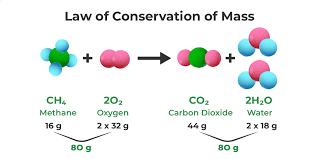
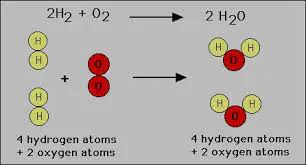
During a chemical reaction, atoms do not change from one element to another. They merely rearrange into different molecules. The number of atoms of each element remains the same. This is true for EVERY chemical reaction.
"Matter cannot be created or destroyed"
4
5
Multiple Choice
According to the Law of Conservation of Matter, which of the following is true in a chemical reaction?
total mass of the reactants is greater than the total mass of the products
the total mass of the reactants is equal to the total mass of the products
Elements change into other elements, but new matter is not created
matter cannot change form, but new matter can be created
6
Multiple Choice
Look at the incomplete equation below.
Ca+Cl2 → ?
The reactants are shown. How many Chlorine (Cl) must be present in the product that forms from this reaction?
1
2
3
4
7
Multiple Choice
During a chemical reaction, methane (CH4) and oxygen (O2) combine to produce carbon dioxide (CO2) and water (H2O). The balanced chemical equation identifies the reactants and products for this reaction, along with some of their masses.
CH4+2O2 → CO2+2H2O
16g + ? = 44g + 36g
16g
36g
44g
64
A chemical equation is a representation of a chemical equation that uses chemical symbols and formulas.
Reactants: the substances that are present before the reaction takes place
Products: the substances that are present after the reaction takes place
Coefficient: the number before a chemical formula (multiply by the subscript)
Subscript: a small-sized number on the bottom right of the symbol. It refers to the number of atoms of the element
Show answer
Auto Play
Slide 1 / 7
SLIDE
Similar Resources on Wayground

7 questions
Fossil Inferences
Presentation
•
8th Grade
8 questions
Ellipsis and Dashes
Presentation
•
8th Grade
3 questions
Chapter 7 Quizziz
Presentation
•
8th Grade
10 questions
Lesson 6: Acceleration
Presentation
•
8th Grade
6 questions
Lesson 3: Experimentation and Studies
Presentation
•
8th Grade
7 questions
U2L4: Renewable Resources
Presentation
•
8th Grade
10 questions
Air pollution
Presentation
•
8th Grade
7 questions
Genetics/Heredity Practice
Presentation
•
8th Grade
Popular Resources on Wayground
10 questions
How much do you know about our Portrait of an Eagle?

Quiz
•
10th Grade
10 questions
Fast Food Slogans
Quiz
•
6th - 8th Grade
21 questions
Continents and Oceans
Quiz
•
6th Grade
20 questions
Parts of Speech
Quiz
•
5th Grade
16 questions
Subject & Predicate
Quiz
•
5th Grade
25 questions
Multiplication Facts
Quiz
•
5th Grade
12 questions
Map Skills
Quiz
•
3rd Grade
22 questions
Continents and Oceans
Quiz
•
5th Grade
Discover more resources for Science
20 questions
Scientific Method and Variables
Quiz
•
8th Grade
20 questions
Scientific method and variables
Quiz
•
8th Grade
27 questions
Counting Atoms - Subscripts
Quiz
•
8th Grade
20 questions
Claim, Evidence and Reasoning (CER)
Quiz
•
6th - 8th Grade
18 questions
Counting Atoms
Quiz
•
7th - 8th Grade
20 questions
Elements, Compounds and Mixtures
Quiz
•
8th Grade
10 questions
Exploring Chemical and Physical Changes

Interactive video
•
6th - 10th Grade
10 questions
Decoding the Periodic Table of Elements
Interactive video
•
6th - 10th Grade